


Paragraph One: The Dreamer and the Concrete Wasteland
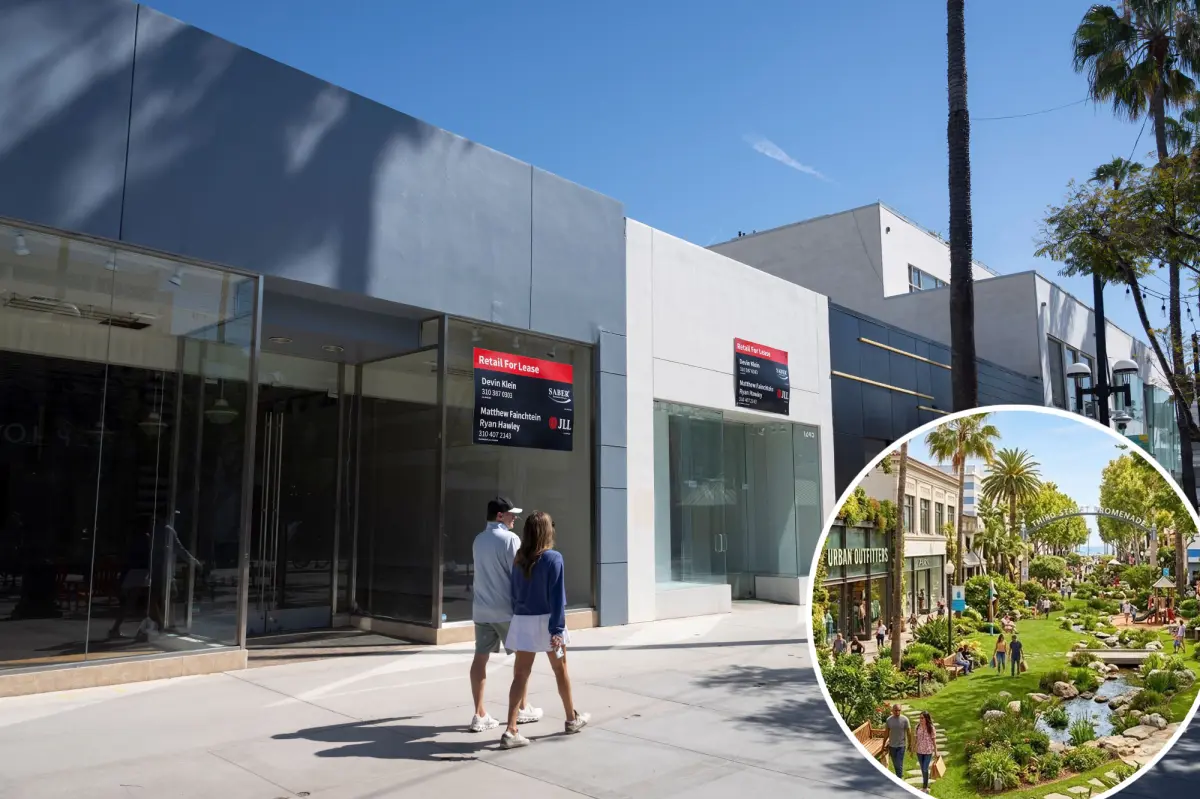
The Third Street Promenade in Santa Monica has seen better days. Once a gleaming emblem of Californian cool, a place where the ocean breeze mingled with the scent of roasted coffee and the rhythmic thrum of street performers, it now often feels like a faded photograph of its former self. The wide, concrete walkway that once hosted throngs of carefree shoppers now bears the heavy scuffs of time and neglect. Empty storefronts, their windows papered over with the dreams of past ventures, stare out at pedestrians like hollow eyes, while the persistent shadow of the homelessness crisis has added a layer of complex, visible struggle to the city’s civic fabric. It’s a narrative that has become tragically familiar in post-pandemic America: a thriving retail hub that lost its magnetic pull, its primary anchors, and quite arguably, its soul. But scrolling through the endless stream of X, formerly Twitter, one particular post stood out, a jolt of green defiance in a sea of digital gray. Raad Mobrem, a tech entrepreneur, didn’t pause to lament the decay. Instead, he unleashed a vision so audacious, so lush, and so fundamentally hopeful that it made people stop mid-scroll and gasp. His rendering wasn’t a simple renovation proposal; it was a botanical coup d’état. He envisioned a complete transformation of the concrete artery into a dense, verdant park, complete with babbling creeks and cascading vertical gardens. The image didn’t just get attention—it went viral, amassing nearly 70,000 views and igniting a fierce, passionate debate about the future of urban spaces. In an instant, this city’s failure became the canvas for a breathtaking reimagination of what a public street could be.
Paragraph Two: A Creek in the City
Mobrem’s rendering is less an architectural blueprint and more a work of speculative fiction, a glimpse into a future where nature has not so much reclaimed the city as been thoughtfully invited back in. The familiar harshness of the pavement is gone, dissolved into a meandering system of winding stone paths that invite slow, mindful strolling. Vertical gardens cascade down the facades of the major retailers—Zara, Apple, Urban Outfitters—turning their glass storefronts into peekholes from a lush, living jungle. But the true centerpiece is the water. A gentle, sparkling creek, not a sterile concrete culvert, snakes down the middle of the spaced, its banks softened with native grasses, wildflowers, and rounded, moss-speckled rocks. Yet, it’s the people in the rendering that truly tell the story. They aren’t darting between stores with impatient energy; they are lounging on curved, natural stone seats, sunbathing on grassy terraces, or gathering around communal tables with coffee and pastries. Mobrem explained his philosophy succinctly on the platform, stating, “I think a great way to save Third Street Promenade and have it thrive is to turn it into a park. Instead of it just being a shopping spot, it’s a place people can come hang out, eat, drink, catch some sun, and do some shopping.” This simple inversion of priorities is the radical core of his idea. He’s not suggesting a shopping district with a nice green space attached; he’s proposing a public park with retail on the periphery. This re-framing shifts the primary purpose from consumption to congregation, from transactional to experiential, directly responding to a deep-seated human need for spaces that prioritize connection, leisure, and the simple, unscripted joy of being outdoors.
Paragraph Three: The Practicalities of Paradise
While the vision feels like pure fantasy, Mobrem was careful to show that he wasn’t entirely detached from reality. In a subtle nod to civic code, he presented an alternate rendering that carves out a single central lane designated for emergency vehicles, ensuring that a firetruck or ambulance isn’t trapped behind a barricade of plants and pedestrians. This small but crucial detail grounds the dream, signaling that his idea isn’t just a lazy internet pipe dream, but a suggestion meant to be taken seriously. And people are taking it seriously. The virality of the post—the thousands of likes, the deluge of replies—points to a profound psychological shift in the way we view urban living post-2020. The pandemic fundamentally rewired our relationship with outdoor spaces. We learned that being outdoors is a destination in itself, not just a prelude to going inside. We crave the feeling of sunlight on our skin, the smell of damp earth, and the tranquil sound of running water. We crave a place to simply be, without the pressure to spend money. The concrete promenade, with its hard edges and visually noisy signage, fails to offer that. It is designed for transit, for moving past storefronts; it is not designed for lingering. A park-based promenade, however, offers a sanctuary. It invites you to stay for hours with no intention of buying anything, to meet a friend, to read a novel, to let your kids run wild. This emotional resonance—the desire for unhurried human connection in a space that feels alive—is precisely what captured the imagination of thousands. It offered a vision of a slower, greener, and more humane daily rhythm.
Paragraph Four: The Fall From Grace
To truly appreciate the audacity of this proposal, one must understand the staggering fall of the Promenade. In its prime, particularly through the 80s and 90s, it was the beating heart of the Westside, a destination that drew tourists and locals alike with the promise of multiplex cinemas, trendy global brands, and a quintessential Southern California energy. The open-air layout was a feature, not a bug, creating a perpetual street festival. But the world changed. The 2008 recession chipped away at its retail base, but it was COVID-19 that delivered the knockout punch. The rise of remote work annihilated the daytime office crowd, and the closure of the massive cineplex complex—the area’s primary anchor—removed the magnetic force that pulled thousands of visitors each evening. As foot traffic evaporated, stores shuttered, creating a cascading effect of economic decay. Adding to this commercial blight is the tragic human crisis of homelessness. The Promenade became a visible epicenter for encampments and panhandling, creating a sense of unease that further discouraged shoppers. It became a classic doom loop: fewer people meant more vacancies; more vacancies led to a perception of danger; the perception of danger drove even more people away. This is the harsh reality that Mobrem is addressing. It’s a space that lost its purpose once the shopping-as-entertainment model collapsed, and it now stands as a monument to a bygone era of American consumption, aching for a new identity.
Paragraph Five: Incrementalism vs. Boldness
The city of Santa Monica has not been standing idle, but its efforts, while well-intentioned, feel painfully incremental compared to Mobrem’s sweeping vision. In March, the city approved a $3 million economic development fund, a significant sum earmarked for tenant improvement assistance, business recruitment, and capital renewal studies. These are all pragmatic, necessary steps to bandage the wound, but they operate entirely within the existing framework. They hire leasing agents to find new tenants for old boxes, and they commission studies to fix cracked concrete. They do not challenge the fundamental premise of the space. Last year, the city launched an “Entertainment Zone,” allowing people of legal drinking age to carry alcoholic beverages outdoors from participating restaurants. This has added a festive, late-night buzz, but criticism remains that it’s a rather superficial fix—a way to get people drunk in public rather than a way to get them to truly connect with the city. It prioritizes consumption of alcohol over the consumption of culture or nature. These policy moves, while helpful, essentially apply a fresh coat of paint to a house that needs a new foundation. They fail to ask the most important question: what should this space be in the 21st century? They treat the symptoms—the empty storefronts—rather than the disease—the lack of a compelling reason for people to leave their homes and be present in that specific location.
Paragraph Six: The Echo of a Dream
The ultimate power of Mobrem’s viral image, however, lies not in its literal feasibility, but in the discussion it has generated. Whether a real creek ever carves its way through the Santa Monica earth is almost irrelevant. The image serves as a powerful Rorschach test for our urban anxieties and desires, forcing us to confront a fundamental question: What do we actually want from our downtowns? Do we want to give up on them entirely as relics of a consumerist era, or do we want to reinvent them as social and ecological hubs? The most successful revitalization projects in recent memory—think of the High Line in New York City or Millennium Park in Chicago—succeeded precisely because they prioritized the human and the environmental experience over pure retail metrics. They treated the park as the main attraction, and the commerce followed the crowds. Mobrem’s rendering taps directly into that successful formula. It presents a future where a street is not just paved with asphalt but is a functioning ecosystem. It’s a sharp critique of the timid, business-as-usual approach that has plagued so many municipal revitalization projects. Ultimately, the image is a beacon of hope. It reminds us that our environment is not fixed; it is a product of our collective will. It challenges us to dream bigger, to demand more from our shared spaces—not just as places to buy things, but as places to feel alive, to breathe, to connect. It shows that paradise isn’t necessarily lost; it just needs to be planted, one beautiful, viral vision at a time.