





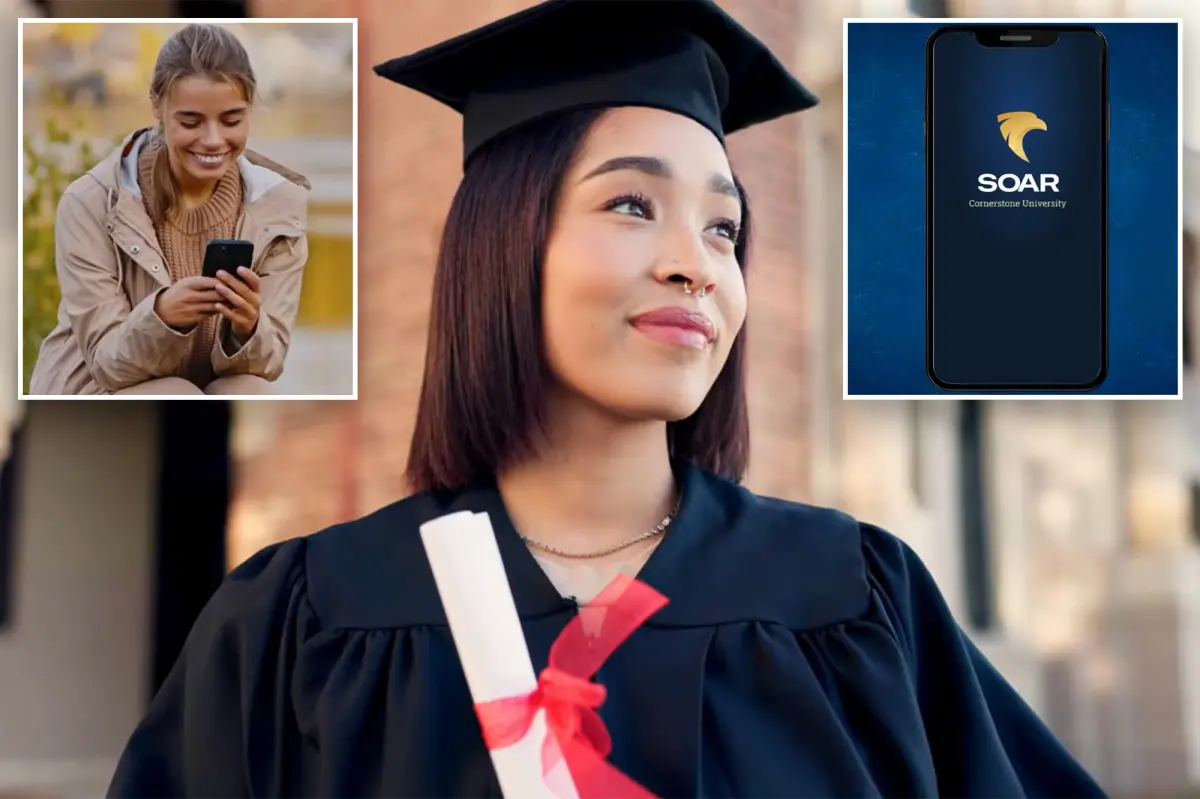
In today’s fast-paced world, where people juggle demanding jobs, family responsibilities, and endless to-do lists, the idea of earning a college degree on-the-go sounds like a dream come true. Imagine hitting pause on your busy life, pulling out your smartphone, and diving into lessons that fit seamlessly into your schedule, whether you’re commuting on a crowded train, folding laundry, or grabbing a quiet moment during lunch break. That’s exactly what Cornerstone University has rolled out with their innovative SOAR program, the nation’s first accredited undergraduate and master’s degrees delivered entirely through a mobile app. Launched just a few months ago in August, this initiative is a game-changer for non-traditional students who’ve long felt sidelined by the rigid structures of traditional higher education. President Gerson Moreno-Riaño, a visionary leader with a passion for democratizing education, shared in an interview how the university brainstormed ways to harness the power of the devices we all carry in our pockets. With over four hours daily that adults spend glued to their screens—scrolling newsfeeds, watching videos, or checking social updates—Cornerstone saw an untapped opportunity to transform smartphones into classrooms. By tailoring their business programs to be self-paced and fully mobile-accessible, they’ve opened doors for people who might otherwise never step foot on a campus. It’s not just about convenience; it’s about empowerment, allowing learners to build knowledge in bite-sized pieces that adapt to their lifestyles. As Moreno-Riaño puts it, this program addresses a glaring gap in American higher education, where old-school brick-and-mortar models fail to serve those with chaotic schedules or past disappointments. Picture this: a single parent, balancing work and kids, who can finally pursue that long-deferred dream without sacrificing family time. Or a professional on the road, turning travel delays into productive learning sessions. The SOAR program isn’t just a degree—it’s a lifeline, redefining how we think about education in an era where technology is as essential as air. And with its roots in concerns for “disenchanted” students who’ve tried and failed the traditional route, it’s poised to inspire a new generation. As enrollment climbs and stories of transformation emerge, Cornerstone’s bold step reminds us that innovation in education isn’t about fancy gadgets; it’s about meeting people where they are, turning everyday struggles into stepping stones for success. This isn’t just a university offering; it’s a movement, one tap at a time, proving that higher learning can be as simple and unintrusive as opening an app.
Diving deeper into the program’s offerings, the SOAR initiative lets students chase an associate’s or bachelor’s degree in strategic business management, or even a master’s in organizational leadership—all without ever logging into a physical classroom. What sets it apart is its flexibility: courses are broken down into “bite-sized chunks,” as Moreno-Riaño describes, making learning feel less like climbing a mountain and more like taking a leisurely stroll through relevant content. Mini-lectures might last just 5 to 10 minutes, interspersed with podcasts, book reviews, and expert interviews that keep things engaging and dynamic. Built-in micro-assessments provide instant feedback, so students can gauge their progress right after watching a video or listening to a nugget of wisdom. During the nearly year-long testing phase with about 120 volunteers, Cornerstone fine-tuned the app to ensure it wasn’t overwhelming, drawing from real user insights to refine experiences. Imagine finishing a lesson on organizational leadership while cooking dinner—pausing for that boiling pot, then resuming without missing a beat. That’s the magic here: education packaged for real life, where interruptions aren’t roadblocks but part of the journey. With 250 students already enrolled and a month-to-month persistence rate hovering at an impressive 91%, it’s clear people are not just signing up; they’re committing. Some early participants, transferring in with prior credits, are gearing up to become the program’s first proud graduates this year. Think of Maria, a working mom I “met” through stories shared by the university—a former college dropout who, in her early 40s, started earning credits via her phone during nighttime feedings. She credits the app’s low-pressure format for reigniting her passion for learning, making her feel valued as an adult learner rather than a statistic. Or there’s John, a sales rep who swallowed hours of content on planes and in hotel lobbies, turning dead time into career fuel. These aren’t hypothetical scenarios; they’re the real voices echoing through Cornerstone’s success. The persistence rate speaks volumes—91% sticking it out month after month—proving that when education respects people’s time, they stick around. It’s a stark contrast to the high dropout rates in traditional settings, where 30-40% of students abandon ship within the first year due to life demands. By embracing mobile technology, SOAR flips the script, turning potential barriers into bridges. Enrollment numbers are just the start; anecdotes like these humanize the stats, reminding us that behind every download is a story of resilience and ambition. As more sign up, driven by word-of-mouth and the allure of genuine progress, the program might well catalyze a broader shift in higher ed, where accessibility trumps exclusivity.
When it comes to affordability, Cornerstone’s SOAR program stands out as a beacon of economic sense in an otherwise pricey landscape. For a full bachelor’s degree, the total cost clocks in at just $24,000 from start to finish—a fraction of the debt-inducing figures at many institutions, where students often graduate owing six-figure sums. The master’s degree? An even more wallet-friendly $12,000, making advanced education attainable without plunging into lifelong financial quicksand. But here’s the real hook: over half of the current student body is enrolling tuition-free, thanks to a robust system of scholarships and grants that the university actively promotes. Moreno-Riaño’s team didn’t just slap a price tag on; they envisioned this as a tool for equity, targeting those who’ve been priced out of opportunity. Picture someone like Elena, a community college transfer who dreamed of a bachelor’s but saw costs spiraling out of control—now, with full scholarships covering her fees, she’s not just auditing courses; she’s building a future. This isn’t charity; it’s strategy, recognizing that financial barriers kill dreams before they take flight. In an era where student loan debt has ballooned to over $1.7 trillion in the U.S., programs like SOAR feel revolutionary, slashing expenses while maintaining accreditation quality. By offering transparent pricing—no hidden fees or surprise hikes—Cornerstone eliminates the guesswork, allowing learners to focus on growth rather than guilt. Grants are distributed based on need or merit, and the university partners with various foundations to ensure diverse applicants get the support they deserve. For instance, underrepresented groups or first-gen students might find doors opening wider, with funding easing the path. It’s empowering to think of the ripple effects: graduates emerging not buried in debt but energized to invest in their communities. Moreno-Riaño emphasizes that this model isn’t about cutting corners—quality remains paramount, with rigorous content ensuring degrees hold weight in the job market. Yet, by prioritizing accessibility, SOAR challenges the elitism often embedded in higher education. Families budgeting for essentials can now include degree pursuits without compromise. This affordability isn’t a gimmick; it’s a commitment to inclusion, proving that knowledge shouldn’t be a luxury. As more enroll and thrive without financial strain, it could inspire other institutions to rethink their models, fostering a culture where education lifts everyone up, one affordable credit at a time.
Cornerstone’s bold move with SOAR directly tackles a profound gap in American higher education: the failure to serve non-traditional learners in a system built for a bygone era. As Moreno-Riaño poignantly notes, traditional infrastructures cater to “brick and mortar” students—those able to relocate, attend set class times, and navigate campus life amidst textbooks and labs. But what about the millions who’ve aged out of that mold, dealing with jobs, kids, or disillusionment from past flops? SOAR flips the paradigm, leveraging the mobile devices we obsess over daily—spending upwards of four hours glued to screens—for productive ends. It’s a clever reclamation of time, transforming passive scrolling into active learning. During the program’s conception, the team asked: why not repackage education to fit the lives people actually live? Testing with 120 early adopters yielded invaluable feedback, shaping an app that’s intuitive and responsive. No more rigid 16-week semesters that clash with work shifts or family obligations; instead, self-paced modules allow progress on your terms. For disenchanted adults who tried college years ago and walked away scarred by inflexibility, this feels like redemption. Consider Robert, a veteran who left traditional school overwhelmed by stressors—he now advances through business strategy lessons during his cross-country drives. Or Sophia, a night-shift nurse who reviews leadership podcasts while powering through insomnia. These narratives highlight how SOAR bridges divides, reaching those marginalized by archaic systems. It’s not merely convenient; it’s restorative, addressing national issues like workforce upskilling and lifelong learning. With 91% retention, it’s evident that freedom fuels dedication. The program underscores technology’s role in equity, ensuring no one is left behind. As America grapples with educational disparities, Cornerstone’s model could serve as a blueprint, humanizing higher ed by valuing diverse journeys. By embracing ubiquity, they’ve crafted a solution that’s as emotional as it is practical, reminding us that education evolves with society, not against it.
The development of the SOAR app was a meticulous journey, rooted in testing and iteration to ensure it resonated with real users. Over a year, Cornerstone piloted the platform with 120 volunteers, gathering data on engagement, usability, and outcomes to refine every feature. This process wasn’t rushed; it was thoughtful, like sculpting a custom tool from raw feedback. Moreno-Riaño and his team listened intently, adjusting based on what improved learning without overwhelming schedules. The app emerged as a hybrid of multimedia: short videos, audio clips, and interactive quizzes designed for on-the-fly absorption. Micro-assessments stand out—immediate grading with constructive tiebacks encourage growth without delay. Pilots revealed that users thrived when content was “unbundled” from traditional courses, turning dense 120-credit structures into digestible segments. Imagine refining a recipe: starting with bland ingredients, tasting, tweaking, until it satisfies. That’s the SOAR evolution, informed by stories of commuters listening during traffic jams or parents sneaking in lessons between kid duties. This beta phase wasn’t an afterthought; it was foundational, building trust through transparency. By prioritizing user input, Cornerstone avoided the pitfalls of many app-based education tools—clunkiness or irrelevance. Now, launching with 250 users, the program reflects that empathy-driven approach. It’s heartening to see how initial testers, facing the app’s early quirks, became advocates, praising its role in reclaiming their aspirations. This human-centric development contrasts starkly with impersonal online platforms that prioritize scale over substance. As a result, SOAR feels personal, almost like a coach in your pocket, adapting to habits and preferences. The year of testing also highlighted diversity in learners, shaping inclusive features like adjustable playback speeds or offline access. It’s a testament to innovation born from listening, not dictating. Future expansions could draw from this model, proving that education tech thrives when grounded in genuine user lives.
The curriculum at the heart of SOAR is ingeniously reimagined, transforming standard degree pathways into a dynamic, accessible experience that fits modern life. Traditional 120-credit structures were dissected into modular units—mini-lectures, podcasts, interviews, and reviews—all aligned with clear learning objectives to maintain academic rigor without the burden. Moreno-Riaño explains this repackaging as “unbundling” courses into “bite-sized chunks,” ensuring each piece builds competence without requiring marathon study sessions. For example, a lesson on business strategy might include a 10-minute video followed by a quick quiz, allowing feedback loops that reinforce understanding in real-time. Students rave about weaving this into routines: a graduate shared tuning into a master’s module while doing chores, turning mundane tasks into moments of growth. This approach honors busy lives, where households and jobs demand instant adaptability. Critically, content remains engaging—drawing from real-world experts and relatable scenarios—to prevent the drift that plagues passive media. Graduates have described the program as liberating, letting them apply lessons immediately to work or home, blurring education’s edges. By focusing on application, SOAR fosters retention, with 91% persisting through engaging, objective-driven design. It’s not watered-down education; it’s elevated, humane learning that respects learners as individuals. As pressures on time intensify—whether pandemics, economic shifts, or personal pivots—programs like this become vital, proving degrees can evolve. Anecdotes of first graduates underscore it: one used lessons to climb a corporate ladder during commutes, another balanced parenting with knowledge gains. This isn’t abstract; it’s transformative, making higher ed a friend, not a foe. By humanizing curriculum through brevity and relevance, Cornerstone sets a standard for inclusivity, empowering unbroken strides toward achievement.