






There is a unique kind of comfort found in the simple, nostalgic pleasures of childhood, and few beverages capture that sweet, slow-paced innocence quite like Yoo-hoo. To understand how a humble chocolate-flavored drink grew into an American cultural powerhouse, we have to travel back to the early 1920s in New Jersey. Behind the counter of his bustling neighborhood grocery store, an enterprising man named Natale Olivieri desperately wanted to create a unique treat to supplement the fresh, vibrant fruit juices he regularly sold to his local customers. Olivieri experimented eagerly with various ingredients in his kitchen, eventually landing on a smooth, chocolaty concoction that stood drastically apart from the traditional sodas and heavy, easily perishable milkshakes of the era. Decades later, by the time the swinging sixties rolled around, Yoo-hoo had transformed from a local New Jersey delicacy into a bona fide nationwide sensation. This explosive rise was largely propelled by the enthusiastic endorsements of charismatic sports icons, most notably the legendary New York Yankees catcher and baseball Hall of Famer Yogi Berra. Alongside several of his teammates, Berra championed the unique beverage as “the drink of champions,” splashing its vibrant yellow logo across television screens, cardboard stands, and newspaper ads throughout the country. It was an era of pure, uncomplicated marketing where larger-than-life athletes genuinely seemed to love the products they promoted, and American families gladly welcomed Yoo-hoo into their home refrigerators and school lunchboxes. For a long time, the brand sat comfortably and undisturbed on its throne, dominating a highly specific niche of the drink market that combined the luxury of a sweet chocolate treat with the convenience of a shelf-stable beverage. However, this uncontested dominance eventually caught the attention of the massive corporate titans in the soda industry, who watched the rising popularity of this quirky chocolate drink with hungry, competitive, and highly ambitious eyes.
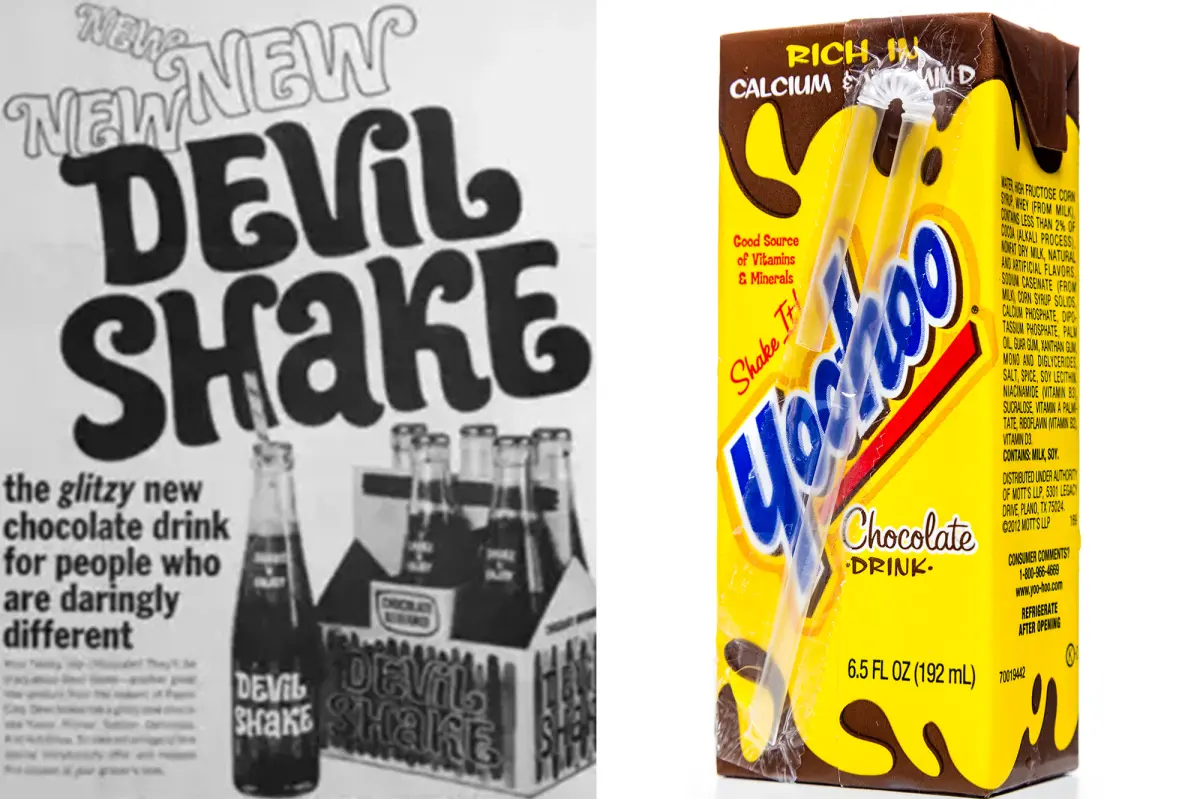
Among the giants watching from the sidelines was PepsiCo Inc., a company never known to back down from a good retail battle. Seeing the massive success that Yoo-hoo was enjoying with the younger demographic, Pepsi decided that it was high time to design a chocolate-flavored beverage of its own and seize a massive share of this highly lucrative market. Thus, in 1966, the corporate giant proudly introduced “Devil Shake” to the public, a bold and edgy name meant to capture the attention of teenagers and young adults who wanted something a bit more rebellious than the wholesome, baseball-associated image of Yoo-hoo. Pepsi was incredibly confident in this new venture, relying heavily on corporate projections and intensive consumer research. In fact, a highly publicized, staggering $100,000 internal study—which was an immense fortune in the mid-1960s—confidently predicted that Devil Shake would not only compete with Yoo-hoo but would absolutely crush it in sales, estimating a dominant margin of five to three. Armed with this robust corporate optimism, Pepsi poured significant resources into promoting Devil Shake, securing distribution networks, and designing eye-catching packaging to ensure the brand hit the ground running. The launch was accompanied by a wave of corporate excitement, as Pepsi believed its immense corporate machinery, deep pockets, and marketing expertise would easily overwhelm the smaller, established favorite. This was supposed to be a David versus Goliath story where Goliath had all the advantages, and on paper, there was absolutely no reason to doubt that Devil Shake would become a permanent fixture in American grocery stores. Yet, as history has shown time and again in the volatile world of consumer goods, even the most meticulous corporate strategies and expensive market studies can completely fall apart when faced with the harsh, unpredictable realities of production, chemistry, and established consumer loyalties.
The fatal flaw in Pepsi’s ambitious master plan did not lie in their marketing or the flavor profile of Devil Shake, but rather in a massive scientific oversight regarding the shelf-stability of the beverage. Producing a bottled chocolate drink that can sit on room-temperature store shelves for months without spoiling or separating is an incredibly difficult chemical challenge, and it was here that Yoo-hoo held a secret weapon. Yoo-hoo is famously unique because it contains absolutely no liquid milk; instead, its ingredients consist of water, cocoa powder, sugar, and stabilizers, along with powdered milk and whey proteins. This precise combination allows the liquid to stay completely smooth, beautifully blended, and fresh without relying on traditional dairy, which would spoil rapidly without constant, heavy refrigeration. But the real magic behind Yoo-hoo’s longevity was its proprietary use of a massive commercial machine called a hydrostatic sterilizer. The production process involves blending the ingredients, heating them, pasteurizing the mixture, quickly cooling it, and then sealing it tightly in bottles. Interestingly, the inspiration for this highly advanced, industrial sterilization process came from a remarkably humble household routine. Natale Olivieri had watched his wife carefully sterilize glass jars in boiling water while she canned home-grown tomatoes in their family kitchen. Realizing that the same heat-sterilization principles could prevent his chocolate drink from spoiling, he adapted the kitchen technique into a groundbreaking industrial process. Ultimately, Yoo-hoo secured the legal rights and patents to this crucial hydrostatic technology, creating an impenetrable barrier for competitors like Pepsi, who suddenly realized they had no viable, scalable way to keep their own chocolate drinks shelf-stable and smoothly mixed over long periods without their bottles quickly curdling or separating.
Faced with this insurmountable technical hurdle, Pepsi was forced into an awkward and highly embarrassing compromise, turning to the very competitor they had planned to conquer. In a desperate bid to keep Devil Shake alive, the beverage giant initiated a brief, complicated partnership with Yoo-hoo, agreeing to pay their competitor an astronomical sum of approximately $1 million to use their facilities and production technology to manufacture the drink. It was a bizarre twist of fate where Yoo-hoo was actively bottling the product designed to destroy them, pocketing massive manufacturing fees in the process. However, this arrangement proved to be financially unsustainable for the corporate giant, as the high costs of outsourcing production severely ate into Pepsi’s profit margins. Despite pouring millions of dollars into development, distribution, and marketing, Pepsi watched its grand chocolate dreams translate into devastating financial losses. Realizing that they could not compete under these absurdly disadvantageous conditions, Pepsi chose to cut their losses and pull the plug on the product after only a year on the market. In a final, humiliating white flag of surrender, Pepsi sold the entire Devil Shake brand and its remaining physical operations directly to Yoo-hoo for the symbolic, rock-bottom price of just one single dollar. It was an astonishing corporate defeat, proving that even with unlimited financial backing and a $100,000 statistical promise of victory, a multinational conglomerate could be completely outmatched by superior technology, clever patents, and the simple kitchen-inspired wisdom of a New Jersey grocer and his tomato-canning wife. Through this acquisition, Yoo-hoo not only neutralized their biggest threat but also absorbed their manufacturing assets, effectively turning Pepsi’s massive, multi-million-dollar failure into a cheap victory that solidified Yoo-hoo’s undisputed reign over the sweet drink market.
Despite this legendary victory over Pepsi, the path of success was not always perfectly smooth for Yoo-hoo, as the company had to navigate its own share of head-scratching beverage flops over its long century of operation. In an effort to keep up with changing demographics and shifting consumer tastes, the brand’s flavor laboratories occasionally experimented with unusual taste combinations that did not quite resonate with the public. Over the decades, bold experiments like chocolate-banana, double fudge, and island coconut were introduced to supermarket shelves with high hopes, but they ultimately failed to capture the hearts or tastebuds of consumers. Some of these variations were criticized for overpowering sweetness, while others simply felt too synthetic or strayed too far from the beloved, classic chocolate profile that people associated with the brand name. These missteps served as a powerful reminder that even an industry giant with an incredibly loyal fan base cannot force an unnatural product onto the market, and that innovation must always be balanced with respect for what made the brand successful in the first place. Yet, unlike Pepsi’s disastrous Devil Shake debacle, these minor flavor failures did not threaten the core existence of the company. Instead, they became fun footnotes in the brand’s long and colorful history, showing a playful willingness to take creative risks. The company consistently learned from these flops, quickly retiring the unpopular flavors and refocusing its resources on perfecting and celebrating the classic recipe that had made them a household staple since the days of Yogi Berra, ensuring that the brand survived through shifting decades, changing corporate ownerships, and the rise of healthier beverage trends.
Today, clean lines of nostalgia and comforting, familiar flavors define the modern identity of Yoo-hoo as it proudly celebrates over a century of refreshing American families. Owned by the beverage conglomerate Keurig Dr Pepper, Inc., the brand has chosen to actively embrace its historical legacy, leaning heavily into a warm marketing strategy that highlights its status as “the delicious taste loved for generations.” By positioning itself as a comforting bridge to the past, the drink reminds modern parents of their own cheerful, energetic, and fun-filled childhoods, encouraging them to pass that sweet experience down to their own children. Keurig Dr Pepper expressed immense pride in this ongoing journey, highlighting in statements how their classic chocolate flavor, alongside beloved variations like strawberry and cookies and cream, continue to invite consumers of all ages to step back in time and enjoy a sweet moment of peace. The enduring story of Yoo-hoo and the forgotten defeat of Pepsi’s Devil Shake serves as a heartwarming corporate fable. It reminds us that in the fast-paced, cutthroat world of global business, success is not always determined by the biggest budget, the grandest marketing campaign, or the most confident internal studies. Sometimes, true longevity is built on simple, practical ideas conceived in a local grocery store, protected by clever engineering, and fueled by a deep, emotional connection to the golden memories of our youth that time can never truly wash away. In a world of constantly changing trends, where new health drinks, energy beverages, and artificial concoctions compete for attention daily, Yoo-hoo remains a steady and welcome constant—a sweet yellow-carton reminder of the power of keeping things simple.