





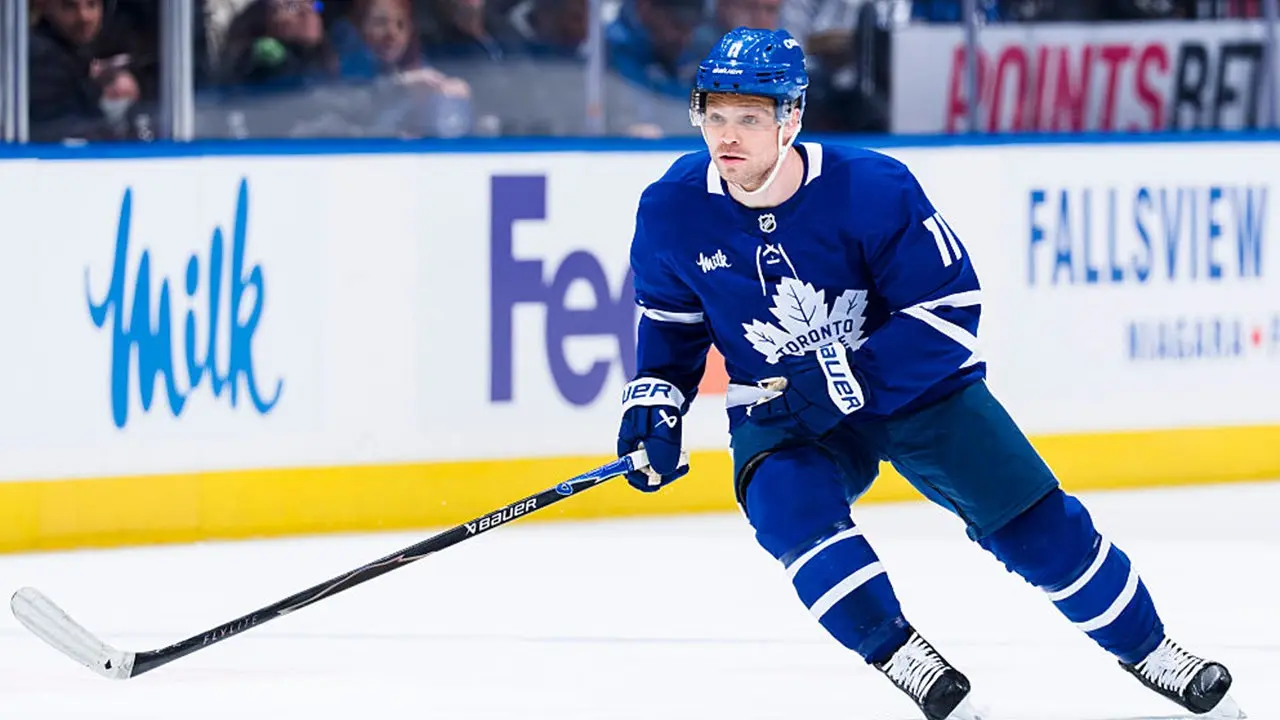
Modern hockey fans often view NHL players as indestructible, modern-day gladiators—larger-than-life figures who glide effortlessly across frozen sheets of ice, absorb bone-crushing collisions, and rise immediately to do it all over again the very next night. Yet, behind the heavy layers of protective gear, Kevlar, and plastic lies a fragile human frame susceptible to the same devastating physical realities, vulnerabilities, and medical crises as anyone else. This harsh truth was brought into sharp, sobering focus when the Toronto Maple Leafs released an abrupt and chilling update regarding their veteran forward, Max Domi. The team announced that the 31-year-old athlete had undergone major surgery to address a lingering physical issue that he had quietly, stoically, and painfully fought through during the grueling course of the 2025-26 season. While professional hockey players routinely hide agonizing and debilitating injuries during the relentless march of the regular season and playoffs, the Maple Leafs’ disclosure took a deeply ominous turn when they revealed that Domi would be sidelined indefinitely due to unexpected, highly severe complications arising in the immediate aftermath of the medical procedure. For a city like Toronto that lives and breathes hockey, and for a passionate fan base that has watched Domi pour his heart, soul, and heritage onto the ice, this sudden news instantly transformed the excitement of the offseason into a collective moment of deep anxiety, transforming a routine sports transition into a profound concern for a local hero’s basic quality of life.
The gravity of the situation became terrifyingly clear when subsequent reports began to shed light on the specific nature of Domi’s procedure and the harrowing recovery process he now faces behind closed doors. According to an investigative report by the Toronto Sun, the surgery was performed on Domi’s back—a notoriously delicate, high-risk area of the human anatomy, particularly for elite athletes whose sport demands constant twisting, explosive acceleration, sudden changes of direction, and repeated high-impact violence. More frighteningly, the report revealed that in the agonizing days following the operation, Domi found himself completely unable to walk. This shocking detail sent ripples of concern through the sporting world, instantly shifting the conversation from a standard sports injury update to a raw, deeply human drama about a young man facing his absolute worst nightmare. For an elite athlete whose entire identity, livelihood, mental well-being, and daily joy have been intimately tied to the mastery of physical movement since childhood, the sudden inability to take a step represents an existential crisis of the highest order. The profound fear, vulnerability, and isolation of lying in a hospital bed, wondering if your body will ever again respond to your mind’s commands, is a heavy emotional burden that transcends the boundaries of professional hockey and speaks directly to our shared human fragility.
Adding another layer of complexity to this emotionally charged situation is the revelation that Domi chose to chart his own medical path, opting for a surgeon of his own personal choosing rather than the medical staff recommended by the Toronto Maple Leafs organization. In the high-stakes, multi-billion-dollar ecosystem of professional sports, where franchises invest tens of millions of dollars in their athletic assets, the decision of a player to seek outside medical counsel is both a fierce declaration of personal autonomy and a high-stakes gamble. While such choices are becoming increasingly common in the modern era of athlete empowerment, they highlight the delicate, often uncomfortable tension between a sports franchise’s corporate interests and an individual’s fundamental right to retain absolute control over their own body and medical destiny. Domi’s choice of an independent specialist was undoubtedly made with the singular, hopeful intention of securing the absolute best long-term outcome for his health and career longevity, yet the subsequent failure of the procedure to yield a smooth, successful recovery has cast a somber shadow over that decision. As veteran journalist Steve Simmons noted, whatever transpired in the operating room was not deemed successful, leaving Domi’s athletic status in serious doubt and raising unresolved questions about the delicate intersection of player agency, team alignment, medical advice, and the relentless pressure to perform at all costs.
To truly comprehend the depth of Max Domi’s current struggle, one must examine the fierce spirit and relentless resilience that have defined his entire life and career. As the son of the legendary Maple Leafs enforcer Tie Domi, Max grew up under the intense, unforgiving spotlight of the Toronto media, inheriting not just a famous last name but a relentless work ethic and an ironclad determination to carve out his own unique legacy. Furthermore, Domi’s journey has been uniquely defined by his lifelong battle with Type 1 Diabetes, a chronic disease he was diagnosed with at just twelve years old, which requires constant, meticulous monitoring of his blood sugar levels both on and off the ice. Rather than allowing this condition to derail his dreams, Domi became a global beacon of inspiration for millions of children, writing books and speaking openly about how discipline, courage, and a refusal to back down can overcome even the most daunting physical limitations. His ability to navigate the extreme, exhausting demands of an NHL career while managing a serious chronic illness speaks to a rare depth of character and mental fortitude. It is this exact fighter’s mentality that allowed him to endure severe back pain and play through eighty games this past season, sacrificing his physical well-being for his teammates, and it is this same internal strength that he must now summon to face the absolute hardest, most frightening fight of his life.
Domi’s connection to the city of Toronto runs far deeper than a standard player-team relationship; it is a profound homecoming and the ultimate fulfillment of a family legacy. After being drafted in the first round by the Arizona Coyotes in 2013 and embarking on a nomadic journey through several NHL franchises—including a spectacular career-high 72-point season with the rival Montreal Canadiens in 2018-19—Domi finally arrived back in Toronto on a one-year contract in 2023. His gritty, high-energy style of play, combined with his elite playmaking ability and willingness to stand up for his teammates, instantly endeared him to the passionate Toronto market, ultimately earning him a coveted multi-year contract extension. Over his three seasons wearing the historic blue and white maple leaf, Domi established himself as an indispensable, ironclad presence in the lineup, playing in at least 74 games each fiscal year and contributing 12 goals and 36 points this past season while quietly suffering in silence. His presence on the roster provided the team with an emotional spark and a living link to the franchise’s storied past, making his sudden absence not just a tactical void on the ice, but an emotional wound for a locker room that viewed him as a leader. The realization that this vibrant, passionate hometown kid may now have his dream career put on permanent pause is a heartbreaking narrative that has left teammates, coaches, and fans in a state of quiet, reflective mourning.
As the dust settles on this shocking announcement and the reality of the situation sinks in, the focus must inevitably shift away from statistics, contract values, and roster spots, and settle firmly on the human being named Max Domi. The road that lies ahead of him is no longer measured in goals scored, points accumulated, or playoff victories, but rather in the agonizingly slow, quiet, and painful milestones of physical rehabilitation and neurological healing. At just 31 years of age, Domi faces a life-altering journey that is fundamentally about reclaiming his basic quality of life—relearning to trust his own body, recovering his lower-limb mobility, and finding a way to live a pain-free existence. The hockey world, which is often criticized for its stoic silence, emotional detachment, and commodification of its players, must now stand in complete solidarity with a man who has given so much of his physical self to the game. While the looming NHL season will inevitably go on, the thoughts and prayers of the entire hockey community will remain with Domi in those quiet, lonely hours of physical therapy, holding onto the hope that the same fierce resolve that carried him through childhood diabetes, intense media pressure, and the physical gauntlet of professional hockey will guide him back to his feet, allowing him to stand tall once more, regardless of whether he ever steps back onto the ice.