





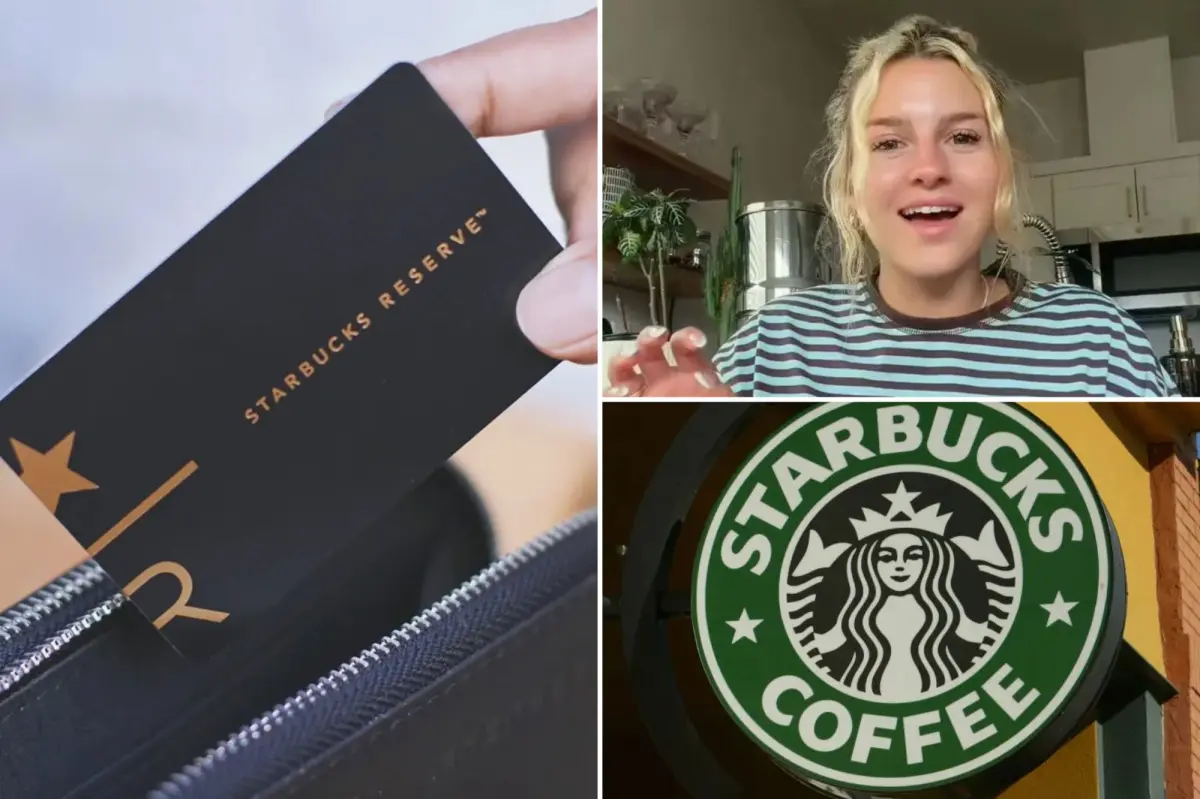
In a contemporary landscape where daily consumer choices are increasingly elevated to a form of deeply personal self-expression, our morning routines have slowly transformed into highly visible signifiers of status, taste, and lifestyle. This modern intersection of mundane habit and curated prestige recently collided in a spectacular fashion across the social media landscape when a TikTok video posted by professional aesthetician Madison Dahl went viral, pulling back the curtain on a quiet but highly calculated evolution within the corporate gamification of customer loyalty. In her video, Dahl shared the unadulterated, aesthetic satisfaction of unboxing a sleek, matte-black, personalized metal card sent to her directly by Starbucks—a tangible, heavy emblem of distinction reserved strictly for members of the coffee giant’s newly minted, top-tier Reserve system. As Dahl dropped the heavy metal card onto a hard surface to let its metallic clang ring out to her audience, echoing the physical heft of premium credit cards like the American Express Centurion, she marveled at her name neatly etched onto its premium, fingerprint-resistant surface. Her visible excitement captured the absolute peak of modern brand devotion, with her humorously admitting to her followers that they were looking at the ultimate proof of a severe, unchecked Starbucks addiction. While her video initially resonated on TikTok as a satisfying, ASMR-style, aesthetic showcase of a personalized collector’s item, it was quickly shared and reposted across other platforms, transforming her moment of innocent joy into the ground zero of a major culture war regarding the psychological manipulation of consumer habits and the true price we are willing to pay to feel exclusive in a world dominated by inflationary pressures and corporate standardization. Today’s consumers do not just purchase simple morning beverages; they purchase the comforting feeling of belonging, of being recognized and valued by the massive brands they patronize daily, and this heavy metal card represents the ultimate physical manifestation of a society obsessed with elevating the ordinary to the extraordinary.
The initial wave of aesthetic excitement was quickly met with a sharp, calculated counter-response when the viral footage was cross-posted by the prominent, finance-focused online account known as @WallStreetApes, which immediately challenged the card’s prestige by labeling the rewards program as an “insane corporate scam” that preys on loyal customers. With a massive, highly engaged following that counts figures like tech billionaire Elon Musk and media personality Joe Rogan among its ranks, the account stripped away the glamorous allure of the matte-black metal card by performing a rigorous math check on what it actually takes to earn and keep it. According to their detailed breakdown of the rewards structure, reaching the coveted Reserve tier requires an individual to accumulate a staggering 2,500 rewards stars within a rolling twelve-month period—a milestone that forces customers to spend roughly $1,470 per year on Starbucks products just to maintain their status, since the qualification criteria reset annually. Critics were quick to point out a glaring, deeply frustrating irony embedded within this new tiered framework: under the company’s old, democratic rewards system, every single registered user earned a flat two stars for every dollar spent without having to jump through corporate hoops or cross steep financial thresholds. By shifting to a tiered structure where even the most elite, high-spending, metal-card-carrying “Reserve” members only receive a rate of 1.7 stars per dollar spent, Starbucks has managed to reduce its overall rewards payout while simultaneously packaging the downgrade as a luxury, high-status privilege. This mathematical discrepancy has fueled widespread accusations of corporate greed, with critics arguing that the company is successfully gaslighting its most passionate supporters into spending thousands of dollars annually in exchange for fewer rewards and a heavy piece of metal that acts as a physical marker of financial extravagance. If an average Starbucks beverage now clocks in at around nine dollars, a customer would need to buy a drink nearly every other day for an entire year just to retain the right to carry this piece of metal, revealing the aggressive economics driving this modern brand loyalty scheme.
This mathematical exposure of the new loyalty program quickly divided the internet, spark-plugging an incredibly fierce ideological battle on microblogging platforms like X, formerly known as Twitter, where users split into two deeply entrenched camps: those who see the program as a predatory exploitation of human psychology and those who view it as a perfectly logical expression of free-market capitalism. Critics of the coffee empire did not hold back in their condemnation, with one widely shared comment noting that Starbucks had brilliantly managed to “turn inflation into a collectible” by wrapping an aggressive price hike in an elegant, modern aesthetic, while another commenter bitterly described the card as a “$1,470 loyalty tax” designed primarily to prove that one is comfortable overpaying for automated espresso drinks. Others mockingly pointed out the class dynamics at play, joking that the same demographic boasting about their expensive, matte-black metal coffee cards is often the exact same demographic complaining about their inability to cope with rising student loan payments and basic living costs. Conversely, a vocal contingent of brand defenders and free-market pragmatists went on the offensive, arguing that the outrage was entirely hollow and hypocritical because participation in a corporate loyalty program is completely voluntary and costs nothing extra for those who were already planning to buy their drinks anyway. These defenders pointed out that private corporations are under no moral obligation to maintain financially unsustainable rewards structures and that it is only natural for a business to focus its most exclusive, high-value incentives on its highest-spending super-fans, suggesting that complaining about the restructure of a voluntary coffee rewards tier represents the height of modern consumer entitlement. As one vocal platform commentator pointed out, no one is holding a gun to consumers’ heads forcing them to order premium lattes, and businesses must be allowed to restructure their marketing programs to maintain profitability in a shifting marketplace without being accused of committing economic crimes.
To fully understand the intensity of this digital dispute, one must examine the intricate mechanics of Starbucks’ current loyalty ecosystem, a highly regimented, three-tiered “caffeine caste system” that divides the customer base into “Green,” “Gold,” and “Reserve” categories depending on their annual expenditure. Under this currently implemented framework, entry-level Green members earn a baseline of a single star for every dollar they spend, intermediate Gold members receive 1.2 stars per dollar, and the elite, big-spending Reserve members are granted 1.7 stars per dollar, which is paired with an assortment of lavish, experiential perks specifically engineered to appeal to high-income earners. To make the steep, annual financial commitment of $1,470 feel like a highly exclusive, luxurious lifestyle choice rather than a simple transaction, Starbucks offers its Reserve members specialized experiential incentives, such as priority access to book paid, highly curated “global coffee experiences” in major international coffee epicenters like Milan, Tokyo, and Costa Rica, where they can learn about the artisanal roasting process firsthand. Additionally, these elite loyalty members are pampered with at least six extra “Double Star Days” distributed throughout the year, stars that never expire even if they temporarily decrease their daily caffeine intake, and an extended, highly convenient thirty-day window to claim their annual complimentary birthday rewards. By wrapping these behavioral incentives in a highly stylized, gamified digital and physical package, the company has created an effective psychological lock-in loop, leveraging the human desire for status and progress to turn routine caffeine consumption into a competitive sport where the ultimate prize is a physical token of elite corporate recognition. Regular members must watch their hard-earned points expire within a matter of months, whereas the Reserve elite enjoy an indefinite accumulation of coffee currency, further widening the gap between casual drinkers and the dedicated coffee nobility.
This aggressive, top-down reorganization of customer loyalty does not exist in a corporate vacuum, but rather serves as a key pillar of Starbucks’ broad, multi-million-dollar turnaround effort, officially dubbed the “Back to Starbucks” initiative, which was launched to rescue the company from a period of sluggish global sales, declining store traffic, and mounting operational friction. Over the past year, the Seattle-based coffee giant has committed a staggering $500 million to completely overhaul its physical retail footprint and increase staffing levels across its thousands of locations, acknowledging that the rising tide of customer complaints regarding long wait times and chaotic mobile-order queues was actively destroying the “premium experience” that the brand relies on to justify its premium prices. Some of these beverages now clock in at a highly controversial $9 per cup, a steep pricing model that the company’s executive leadership team has repeatedly defended as a fair reflection of the handcrafted quality and upscale atmosphere that Starbucks prides itself on providing to its global consumer base. To help smooth out the logistical nightmares that frequently plague busy metropolitan locations during peak morning rushes, the company has deployed hundreds of new in-store “coach” roles dedicated to keeping the assembly line of espresso pullers, customized syrup pumps, and food orders running efficiently, ensuring that customers are met with a sense of calm order rather than stressful chaos. This massive capital investment demonstrates that the company is fully aware that premium status symbols like the Reserve card cannot exist solely in the digital realm; they must be backed up by a flawless, reliable, and genuinely high-end in-store experience that makes the consumer feel that their hard-earned dollars are actually buying a moment of daily luxury. By fusing high-tech loyalty gamification with physical store improvements, Starbucks is betting its future on the idea that customers will happily pay a premium if they feel both respected as valued patrons and pampered by an efficient, aesthetically pleasing service model.
Ultimately, the structural success or failure of Starbucks’ high-stakes premiumization strategy will not be decided by corporate executives analyzing spreadsheets in Seattle or by passionate debaters on social media, but at the physical countertops of local cafes where overworked baristas must bring these loyalty tiers to life for a demanding public. Recognizing that the critical anchor of the customer experience has always been the physical human connection, Starbucks recently announced plans to distribute performance-based bonuses of up to $1,200 starting this fall to reward front-line employees who hit operational targets and deliver exceptionally warm, efficient customer service. This approach—balancing the gamification of employee labor through cash bonuses with the gamification of customer loyalty through elite metal cards—presents a highly fascinating study in modern mass-market economics, showcasing the delicate tightrope that a massive corporation must walk to protect its profit margins while keeping both its labor force and its customer base happy. As the internet continues to bicker over whether the heavy, matte-black Starbucks Reserve card is an elegant status symbol or an expensive monument to corporate greed, the card itself stands as a perfect metaphor for the modern consumer experience: a beautifully designed, premium object that promises a sense of elite belonging, but ultimately comes with a very clear, very steep, and endlessly recurring price tag. In a world where even our smallest daily rituals are increasingly commodified and sorted into tiered hierarchies, this controversial metal card forces us to ask ourselves where our brand loyalty ends and where our financial common sense begins, turning a simple, comforting cup of coffee into an ongoing debate about class, status, and the cost of keeping up appearances. By connecting the baristas’ morale directly to customer service scores, Starbucks hopes to create a virtuous cycle of speed, smiles, and high-margin sales, but only time will tell if a collection of tiered rewards and incentivized grins can truly sustain an empire built on nine-dollar cups of coffee.