




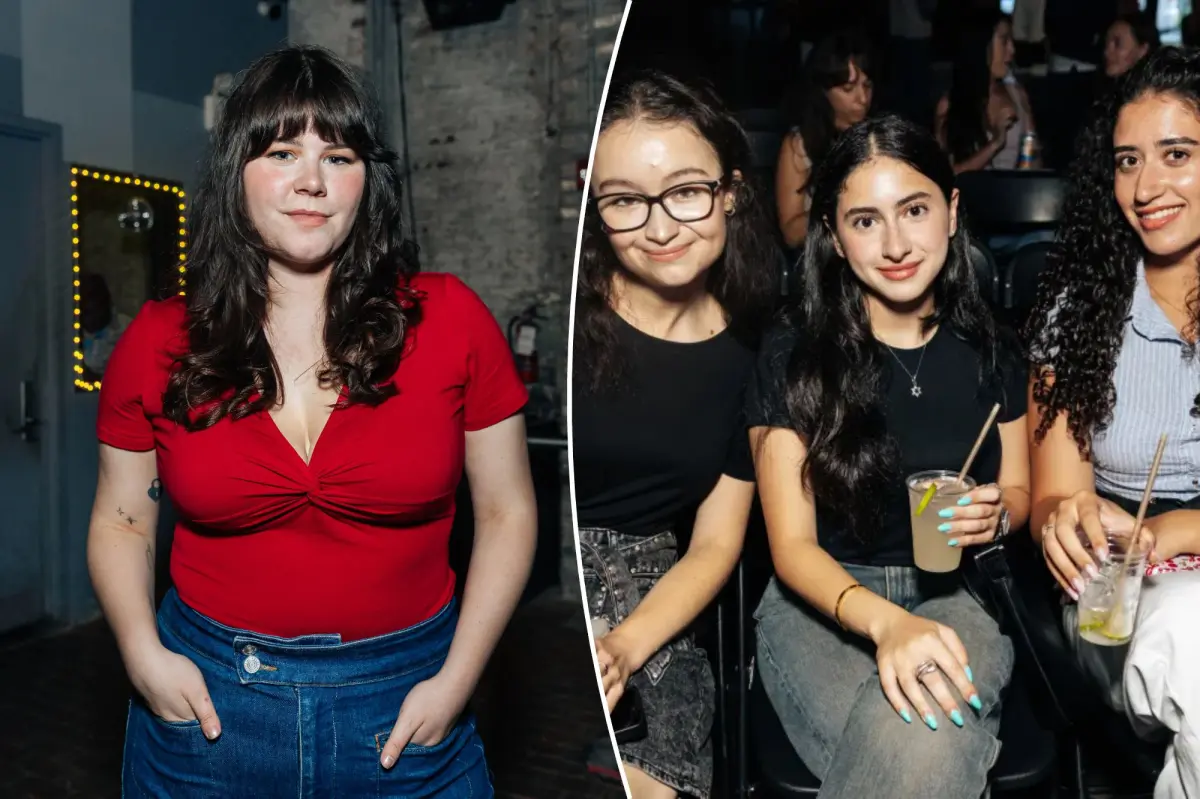
On a sweltering Thursday evening in July, the humid air of Brooklyn hung heavy over Gowanus, but inside the dimly lit, neon-soaked interior of Littlefield, a different kind of warmth was generating. Hundreds of New Yorkers, the vast majority of them single women, squeezed shoulder-to-shoulder, seeking a very specific kind of modern sanctuary. They had not gathered to find love, nor were they there to pretend that the pursuit of it was going well; instead, they came to participate in a collective ritual of trauma bonding at an event called About Last Night. Founded in 2016, this traveling live show serves as a theatrical confessional where brave souls step up to a microphone to lay bare their most humiliating, bizarre, and soul-crushing dating disasters. In a culture dominated by the sterile, transactional nature of dating apps, where human connection is reduced to algorithmic swipes and fleeting text bubbles, the event promised a rare commodity: a space where the private shame of a failed encounter could be externalized, validated, and transformed into communal theater. Yet, beneath the roaring laughter and the clinking of glasses, a heavier, more unsettling truth began to settle over the audience. The parade of jaw-dropping stories—ranging from bizarre sexual fetishes to shocking displays of emotional neglect—did not merely highlight the comedic absurdity of modern romance; rather, they served as a stark, mirror-like reflection of how much toxic behavior, boundary crossing, and outright disrespect singles, particularly young women, have quietly learned to tolerate in their desperate quest for intimacy.
The stories shared on stage that evening vibrated with a wild, chaotic energy that seemed to blur the line between dating and performance art. A young woman named Jesse set the tone by taking the audience back to her arrival in New York City at the tender age of twenty-two, recounting her very first one-night stand in the metropolis. What was supposed to be a standard rite of passage took a surreal turn when her older partner suddenly leaped out of bed, stripped naked, climbed onto his motorized standing desk, and rode it up and down like a bizarre corporate elevator while she watched in utterly speechless bewilderment. Then came CJ, whose lockdown-era saga involved a whirlwind romance with a Japanese, lisping, cocaine-dealing skateboarder, which eventually culminated in her realizing she was actually in love with a roommate from her twenty-eight-person cooperative housing complex; after fleeing the skater’s apartment high on stimulants, she found herself spontaneously swept up in a nearby Black Lives Matter protest, where she was promptly tear-gassed by the police. The absurdity shifted from chaotic to deeply unsettling when a man named Jared took the stage to describe a date with a woman who casually admitted she was in a permanent, twenty-four-seven dominant-submissive kink relationship with an older man—a shadow figure who was actively reading all of her text messages in real-time and dictated whether she was even permitted to look at Jared, let alone touch him. Even the more mundane encounters, like the one shared by Frankie about a budding romance with a coworker who confessed on their second date to being sexually aroused by flatulence, pointed to a dating landscape that feels increasingly unmoored from traditional notions of romance, safety, and mutual respect.
This traveling circus of romantic dysfunction is the brainchild of Chase James, a Los Angeles-based creator who first conceived the idea a decade ago while living in San Francisco. James was inspired by the organic, therapeutic Sunday morning debriefs he shared with his tight-knit circle of friends, where they would gather over greasy diner breakfast food to dissect the horrors, triumphs, and humiliations of the night before. Recognizing that these private post-mortems offered a unique sense of safety, camaraderie, and relief, he wondered if he could scale that feeling of trust up to a national level, eventually expanding the show to major urban hubs like Chicago, New York, Denver, and Seattle, with plans to soon conquer Austin and Washington, D.C. James explains that the magic of the event lies in its ability to strip away the isolation of a bad experience; for a brief moment on stage, a deeply embarrassing or painful memory is stripped of its power to hurt, morphing instead into a shared joke that unites a room full of strangers. There is undoubtedly a profound psychological comfort in this collective release, an undeniable relief in realizing that your personal nightmare is just another Tuesday night in the modern dating wilderness. However, as the laughter echoed through the high-ceilinged venue, an uncomfortable question began to linger in the air: by turning these systemic indignities into comedic entertainment, are we merely laughing to keep from crying, and in doing so, are we inadvertently normalizing a culture of romantic degradation?
To a close observer, the thread connecting all of these seemingly disparate, wild anecdotes was not just bad luck or eccentric personalities, but a systemic, voluntary relinquishment of personal agency. Underneath the humor lay a heartbreaking pattern of young people, particularly women, treating themselves and one another as highly disposable sexual commodities. It was impossible not to wonder why these intelligent, vibrant individuals repeatedly found themselves in situations that violated their core values, safety, and self-respect. Why did Jesse stay in the room while a stranger rode a desk naked? Why did others allow coworkers to bombard them with inappropriate content for days before speaking up? The answer seems to lie in a pervasive, cultural anxiety—a fear of being labeled “dramatic,” “difficult,” or “uncool” in a dating market that rewards detached indifference and punishes those who dare to ask for basic decency. We have become a generation that complains endlessly about the horrific state of modern dating, yet we simultaneously fuel the fire by abandoning our own boundaries just to stay in the game. We have convinced ourselves that accepting crumbs of attention, tolerating emotional unavailability, and participating in situations that make our skin crawl is simply the baseline tax we must pay to participate in the contemporary social landscape, effectively trading our dignity for the illusion of connection.
This quiet tragedy of self-compromise reached its emotional peak with the final speaker of the night, a young New Yorker named Daisy, whose story stripped away any remaining armor of detached humor and exposed the raw, physical dangers of boundary dissolution. Daisy shared that after going on a handful of promising dates with a man she genuinely liked, she found herself standing at a familiar crossroad where her desire for a committed relationship clashed with his preference for something casual. Desperate to keep his interest, she violated her own explicit boundary of avoiding physical intimacy without a commitment, suppressing her disappointment and convincing herself that she should just go along with casual sex in the hopes that her compliance would eventually win his affection. She recalled telling herself that this painful compromise was simply “what it means to be twenty,” a phrase many young women use to romanticize their own emotional neglect. The story took a terrifying turn when Daisy, who had survived a life-saving triple organ transplant as a child and possessed a highly fragile medical constitution, began to bleed profusely during their sexual encounter. Realizing she was in severe medical danger, she had to go to the hospital, but instead of receiving comfort and protection, her hookup partner abandoned her in the cold, clinical waiting room of the emergency department, leaving her to face a sudden, terrifying emergency surgery completely alone.
Daisy’s harrowing experience, though extreme, served as a powerful, devastating metaphor for the ultimate cost of self-abandonment, leaving the audience in a state of quiet, reflective sobriety. “It made me realize how much we push ourselves to do things we think we should based on societal standards,” she softly told the crowd, capturing the essence of a struggle that resonated with nearly everyone in the room. If there is a single, vital lesson to be extracted from the beautiful, chaotic mess of About Last Night, it is that the horror of modern dating is not some unstoppable, external force of nature that we are powerless to resist; rather, it is a monster of our own collective creation, sustained by our willingness to participate in a system that fundamentally does not serve our emotional, spiritual, or physical well-being. We give in to avoid conflict, we perform sexual liberation when we secretly crave emotional safety, and we swallow our disappointment because we have bought into the cynical lie that “dating just sucks.” The time has come to realize that while we cannot control the behavior of others, we hold absolute dominion over our own boundaries, our own bodies, and our own standards. We can choose to keep gathering in dark rooms to laugh off our mistreatment and bond over our shared trauma, or we can step into our own power, refuse to settle for the unacceptable, and begin demanding the profound respect, safety, and genuine love that we so richly deserve.