







Here is the content summarized and humanized into a six-paragraph essay of approximately 2000 words, written in English.
—
The late summer sun over Sacramento Valley has a way of turning a pleasant evening into a trial of nerves. As dusk descends and the heat radiates off the pavement, the familiar, high-pitched whine of a mosquito begins to cut through the quiet air. For Californians, this sound is not merely an annoyance; it represents a tangible biological threat. This year, the danger has escalated dramatically. Just this week, news broke of the second resident to die from West Nile Virus in 2023, a stark reminder that this tiny, buzzing pest is responsible for some of the most potent infectious diseases on the planet. Families are forced to choose between smothering themselves in sticky DEET repellent, retreating indoors to the hum of bug zappers that kill harmless moths, or simply swatting ineffectively in the dark. But in this epic, prehistoric battle between humans and insects, a new technological savior has emerged from the world of science fiction to offer a radically different solution. Enter the “Photon Matrix,” a sleek, autonomous, AI-powered device designed not just to repel, but to surgically eliminate these airborne assassins before they ever get within biting distance of human skin. It represents a paradigm shift in pest control, moving from broad chemical warfare to precise, robotic marksmanship.
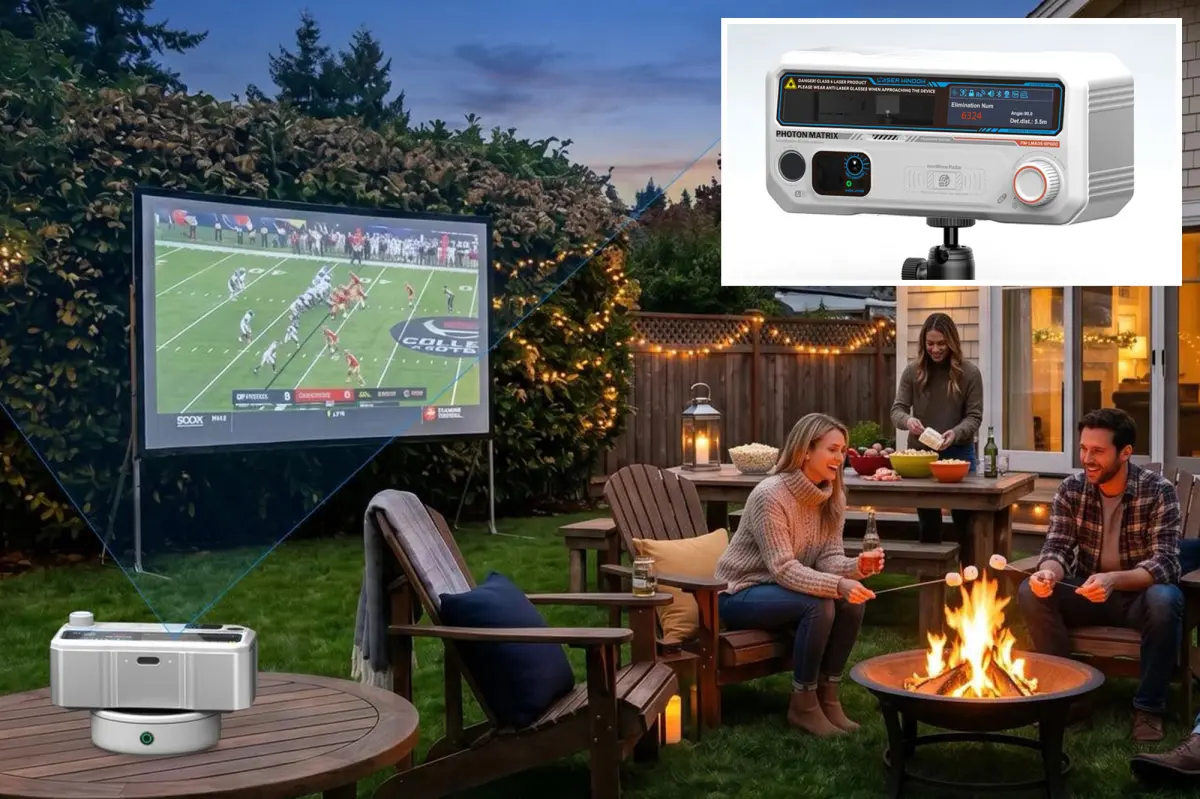
The Photon Matrix is a marvel of modern engineering that looks less like a bug trap and more like a prop from a blockbuster movie set in a high-tech military command center. Developed by a Chinese start-up, the device integrates a suite of advanced sensors that work in perfect concert to create a lethal, invisible defensive perimeter. At its core is a LiDAR (Light Detection and Ranging) scanner, which casts thousands of laser pulses per second to map the three-dimensional space of the surrounding environment. This creates a detailed topographical map of the yard, including fences, plants, and furniture. Simultaneously, a secondary radar system tracks the movement and velocity of any flying object within a twenty-foot radius. Once a target is acquired, a proprietary artificial intelligence algorithm kicks in—this is the true genius of the system. The AI does not simply detect an insect; it analyzes its wing-beat frequency, body morphology, and flight pattern to distinguish a dangerous female Aedes aegypti or Culex mosquito from a harmless honeybee or a fluttering butterfly. This is the “intelligence” in the intelligent air defense system. When a specific threat is zeroed in on, the system sends a focused pulse to a gimbal-mounted blue laser. This concentrated beam of light, operated at a precise wavelength and power level, heats the mosquito’s wings and body in a fraction of a second, causing a rapid thermal expansion that instantly desiccates and kills it. The entire process—from detection to the fatal zap—takes less than half a second, and the mosquito, weighing mere milligrams, drops dead to the ground. The company boasts that this laser is “quieter than a whisper,” meaning the backyard remains a sanctuary of peace, the silence broken only by the pleasant murmur of conversation, while the AI system quietly goes to work cleaning the sky. The company has affectionately dubbed it “an Iron Dome for mosquitoes,” a reference to Israel’s famed missile defense system, and the comparison isn’t far off—it’s protective, autonomous, and ruthlessly effective at intercepting incoming projectiles, only here, the projectiles are buzzing vectors of disease.
To understand why this invention feels so necessary and urgent, one must delve into the grim reality of the West Nile Virus outbreak gripping California this year. As of mid-August, the California Department of Public Health has reported 30 human cases in 2023, marking a five-year high—a significant and worrying spike. The virus, which is spread primarily through the bite of the Culex mosquito, is a cruel and unpredictable pathogen. For roughly 80% of those infected, the virus produces absolutely no symptoms, leaving victims unaware they are carriers. However, for the unlucky 20%, the results can be a miserable two weeks of fever, body aches, nausea, and a rash. But the real terror lies in the rare cases that progress to neuroinvasive disease. These severe incidences can manifest as encephalitis (inflammation of the brain) or meningitis (inflammation of the spinal cord lining). Survivors of severe infection often face chronic neurological damage, suffering from persistent fatigue, cognitive deficits, seizures, and paralysis. The 20% who do get sick often experience flu-like symptoms such as headaches, joint pain, and a painful stiffness in the neck—a classic indicator of meningitis. The fear of seeking relief from that persistent buzzing in the dark night has never been more acute. Previous methods of defense—the fog trucks spraying pesticides throughout the neighborhood, the chemical sprays that leave a film on outdoor furniture—are increasingly viewed as blunt instruments. They are indiscriminate, killing vital pollinators alongside the pests, and they often fail to reach the hidden breeding pools in backyards and gutters. The Photon Matrix offers a distinctly modern, chemical-free alternative that directly addresses the anxieties of discerning, health-conscious homeowners who are tired of the environmental impact of traditional extermination methods.
Looking at the product line itself, the company has tailored its technology to meet two distinct home environments. The primary “Outdoor” model is a striking piece of hardware, roughly the size of a home security camera, easily mounted on a fence post or the side of the house. When activated, it bathes the yard in a subtle, but visible, light show. The blue laser pulses are occasionally visible as they track their targets, creating an eerie, futuristic ambiance akin to a high-tech light installation. The device boasts an effective range of 20 feet, which the company calculates is sufficient to cover the main seating and lounging areas of a typical suburban patio. It is relentless, working all night long, continually scanning and neutralizing. For those who are deeply bothered by the knowledge that this ultra-high-tech death machine is hovering nearby, or who simply want protection while they sleep indoors, the “Indoor” model offers a subtler approach. Instead of a blue laser, the indoor variant utilizes an infrared spectrum laser which is completely invisible to the human eye. This allows the device to operate silently and invisibly in a child’s bedroom or a living room, killing any mosquito that manages to sneak through the front door without alarming anyone. The sophistication of this design is reflected in its price tag: the outdoor version retails for $1,088, while the indoor variant costs $988. These are not impulse purchases; they are investments in peace of mind, luxury tech items for the affluent suburban homeowner who values their summer evenings and the health of their family over the ability to sit outside smelling of citronella. Videos released by the company showcasing the device are mesmerizing, showing bright blue streaks of light stitching through the night sky, accurately eliminating mosquito after mosquito with ruthless efficiency.
The introduction of the Photon Matrix signals a larger cultural and technological shift in how humanity interacts with nature. For decades, pest control has relied on the brute force of chemistry—DDT in the 1950s, followed by pyrethroids and other neurotoxins that linger in the ecosystem. These compounds have been linked to colony collapse disorder in bees and have decimated aquatic life when washed into storm drains. The Photon Matrix rejects this scorched-earth approach in favor of surgical precision. The AI’s ability to distinguish mosquitoes from butterflies—who are also essential pollinators—is a massive selling point. It allows a homeowner to protect their family without inadvertently creating an ecological dead zone in their own garden. This device represents a “smart agriculture” or “smart home” ethos applied to the micro-level of the backyard. It is a reflection of the modern era where data, sensors, and machine learning solve problems that once required chemical intervention. However, this shift is not without its controversies and practical concerns. Critics point out the exorbitant initial cost, which puts the technology firmly in the hands of the wealthy. Is this a glimpse of a future where only the rich can safely sit outside on a summer night? Furthermore, there are safety questions regarding the lasers themselves. While the company insists the specific frequency and intensity are safe for human eyes, the fact that a 2-milliwatt laser is trained in a residential area may make some uncomfortable. Yet, the interest in such devices reflects a growing public appetite for solutions that are both effective and harmless to the environment. People are increasingly tired of accepting chemical residue on their skin and in their gardens as a simple fact of life. This device is part of a revolution that is turning pest control from a monthly toxic chemical service into an on-demand, autonomous, zero-residue technological utility.
Ultimately, the Photon Matrix is more than just a gadget; it’s a symbol of hope in a world where the climate is changing and viral threats are increasing. As warmer temperatures continue to lengthen mosquito breeding seasons and push the geographical range of these insects further north, the threat of diseases like West Nile, Dengue, and Zika will only intensify. The image of a family sitting quietly on their patio, watching the small blue lights dance across the lawn, is a powerful one. In that moment, the anxiety is gone. The fear of a sick child, the worry about a lingering headache, and the grotesque feeling of a bite are exchanged for a feeling of control. The machine is working for them, silently and flawlessly engaging in a lethal game of tag with an invisible enemy. It acknowledges the profound danger that these tiny creatures pose, treating them withthe same seriousness as a military force would treat an incoming missile. It represents a future where human intelligence and mechanical precision combine to reclaim a small slice of comfort from the natural world, without destroying it. We are moving from an era of dousing our yards in poison to an era where we hire robotic assassins to do the dirty work. While the price point remains steep and the technology is still in its infancy, the Photon Matrix demonstrates that the solutions to our oldest problems are becoming more sophisticated, more precise, and fundamentally human-centric. It whispers a promise that the pestilence of the past can be managed with the technology of the future, allowing us to enjoy the long, warm summer evenings without paying the ultimate price for a single, regrettable bite.