





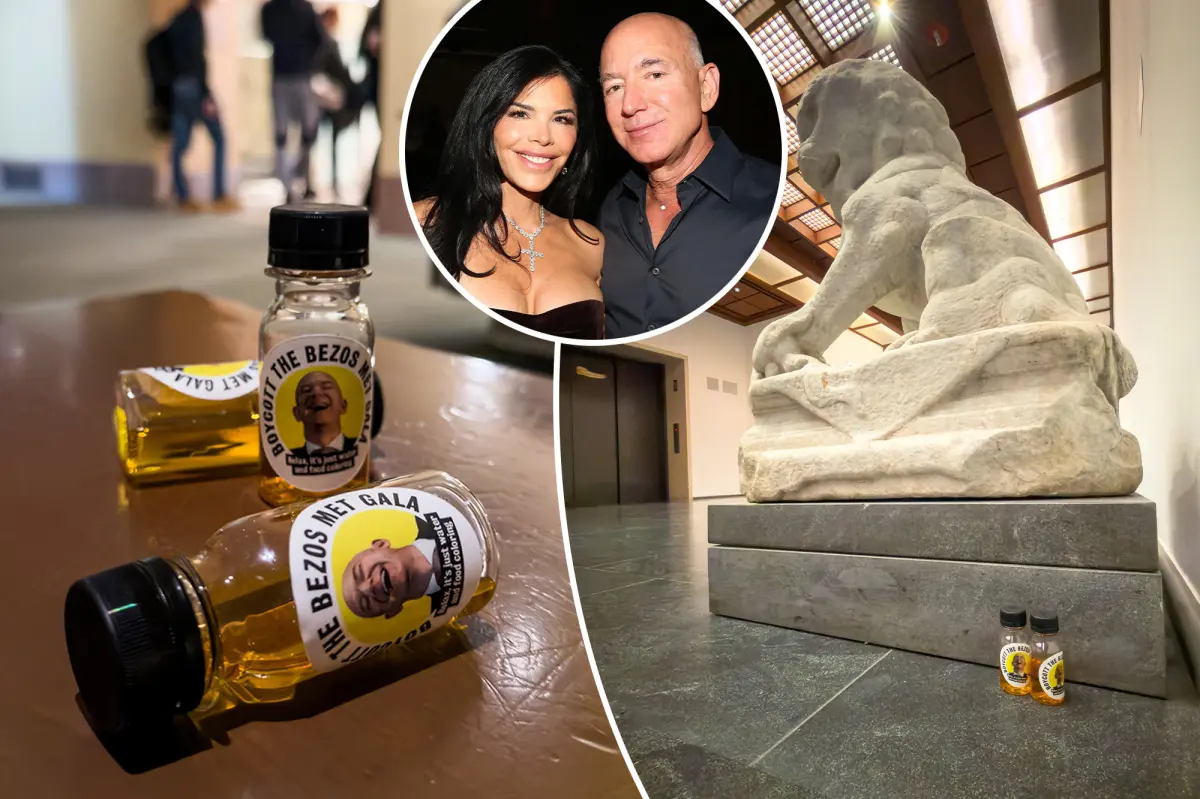
The Met Gala is always a spectacle of glamour and excess, but this year’s event kicked off with a bizarre and unsettling twist that turned New York City’s iconic fundraising night into a full-blown scandal before the first heel hit the red carpet. Picture this: staff at the Metropolitan Museum of Art, bustling about in the days leading up to the big night, stumbling upon hundreds of bottles tucked away in every corner and nook—bottles that, upon inspection, appeared filled with urine. It wasn’t accidental; it was a deliberate, grotesque protest orchestrated by an activist group tired of seeing billionaires like Jeff Bezos bask in the spotlight while his company’s workers allegedly suffered in silence. I remember feeling a mix of shock and defiance when I first read about it—it’s one thing to protest quietly on the streets, but staging a stunt like this inside a museum of treasures? It humanizes the fight against corporate giants, reminding us that behind the ornate doors and flashing cameras, real people are hurting. The bottles were labeled provocatively, proclaiming “Met Gala VIP Toilet” and mocking Bezos for conditions in Amazon warehouses where employees claim they’re forced to urinate in bottles rather than take breaks. It’s a stark reminder that philanthropy, especially from the ultra-wealthy, can feel performative when tied to exploitation. Bezos, after all, has an estimated fortune that could solve world hunger, yet here he is co-chairing an event where fashion tiptoes on the edge of art and absurdity. As someone who grew up idolizing these events from afar, I can’t help but wonder: if the Met Gala is a celebration of high culture, what does it say when it’s disrupted by such raw, bodily defiance? The activists, from a group called Everyone Hates Elon, didn’t just place the bottles—they installed baskets outside the museum, encouraging passersby to contribute, turning art patrons into unwitting accomplices in their narrative. It felt personal, like a middle finger to the elite who float through life in private jets while workers toil under punishing schedules. I’ve thought about how embarrassing this must be for the museum’s curators, who pride themselves on preserving beauty, now confronted with something so primal. Yet, in a twisted way, it sparked conversations that fashion insiders had been whispering about for years: is this gala too entangled with corporate money?
Jeff Bezos, the Amazon mogul and space-travel enthusiast, has been at the heart of this uproar, his involvement as co-chair feeling like pouring gasoline on an already smoldering fire. The activists’ statement was biting: “We couldn’t let him get away with using celebrity and fashion to hide his crimes.” It painted Bezos as a symbol of wealth without conscience, the kind of oligarch who throws millions into a gala to buy prestige while his warehouses allegedly deprive workers of basic human dignity. I imagine Bezos in his Fifth Avenue penthouse that night, sipping champagne at a pre-party, oblivious to the storm brewing in the museum just blocks away, or perhaps aware but brushing it off as inevitable backlash. His wife, Lauren Sánchez Bezos, by his side, the epitome of sun-kissed glitz, but even she can’t escape the media frenzy. Protests erupted across Manhattan—posters outside a derelict deli showing bottles on a red carpet with the slogan “Boycott the Bezos Met Gala. Brought to you by worker exploitation.” Projections lit up the Chrysler Building and Empire State Building like accusation postcards: “Billionaire-backed fashion theater.” As a city dweller who’ve watched these landmarks transform into canvases for dissent, it felt invigorating, a David-and-Goliath tale unfolding in real time. Fashion insiders are divided; some championed the glamour, others whispered that the optics are off-putting when billionaires fund galas that mask real issues. Bezos reportedly donated millions to sponsor the event, turning a night of art into a transactional affair. It’s easy to feel the weight of it all—the frustration boiling over from people who’ve faced Amazon’s relentless pace firsthand, delivering packages in rain or shine, clocks ticking without mercy. One activist shared in an interview how she once worked in a warehouse, timing her life around quotas, and the thought of peeing in a bottle to meet them gave her nightmares. Is Bezos the villain they’re painting, or just a product of a system that rewards excess? Either way, his choice to co-chair has made the gala a mirror not just to fashion, but to our society’s fractures.
Delving deeper into the protest, the installations inside the Met were masterfully provocative, blending the museum’s erudite vibe with raw absurdity. Bottles clustered as “VIP toilets,” signage dripping with sarcasm: “Installed in honor of Met Gala chair Jeff Bezos. Go ahead, it’s good enough for his staff.” It’s a form of art installation that’s both clever and crass, forcing visitors to confront the juxtaposition of high culture and corporate neglect. I can picture a wide-eyed tourist wandering into a gallery, expecting Renaissance masterpieces, only to find this macabre setup, labels twisting the knife about Amazon workers’ alleged plight. The group, Everyone Hates Elon—funded by about a thousand donors worldwide—positions itself as anti-billionaire warriors, their campaign spanning days of escalation. They’ve projected messages onto Bezos’ home, interrupting his billionaire bubble with reminders of worker rights. Amazon’s response has been defensive, acknowledging logistical issues like traffic delays that limit restroom breaks, but boiling it down to an “industry-wide problem.” It’s a classic corporate deflection, and yet, when you’ve got millions in the bank, it rings hollow. The baskets outside encouraged public participation, inviting strangers to add to the “collection,” a participatory element that turned passive onlookers into part of the story. As someone who’s volunteered at community protests, I appreciate the ingenuity—it humanizes the Amazon workers’ struggle, making it tangible. Imagine a young activist, heart pounding, sneaking bottles into the hallowed halls; it’s brave, almost reckless, but it pierces the pomp. Fashion critics argue this highlights how galas, despite their charitable aims, are now synonymous with corporate sponsorships that prioritize image over ethics. Bonds formed through philanthropy can feel superficial when the chair’s a mogul accused of mistreating labor. Still, Bezos maintains a veneer of benevolence, pouring funds into the event like a lifeline to culture. But for many, his wealth screams hypocrisy, a man who could innovate toilets in space yet overlooks basics for his employees.
The broader conversation swirling around the Met Gala isn’t just about Bezos—it’s a reckoning with the event’s inherent extravagance and the sacrifices required to participate. For celebrities, navigating the red carpet in couture masterpieces is an ordeal, especially when it comes to something as mundane as using the bathroom. Imagine a starlet in a million-dollar gown, layers of fabric, beading, and structure that turn a simple pit stop into a logistical nightmare. Assistants are key, handling the unzipping, pooling of materials on the floor, and timing to avoid disaster. One insider anecdote from a personal stylist friend reveals how some celebrites assign “bathroom buddies” for this exact reason, trusted aides who manage the intimacy of skirt hikes and cleanup. Designers innovate with tricks like hidden trap doors in gowns for discreet relief—a nod to the absurdity of high fashion. But even that fails when latex or intricate layering complicates things. I recall laughing and cringing at stories from fashion blogs: Katy Perry confessing to using a standing-device called GoGirl for self-control, or Winnie Harlow remembering Katy helping her in a stall. Extreme measures abound—Kim Kardashian admitting she’d considered “peeing her pants,” Kendall Jenner’s ice-bucket improvisation in a van. It’s hilarious yet poignant, highlighting how vanity intersects with human needs. The safest bet is dehydration, as guests skip liquids hours in advance to preserve their looks, trading comfort for the facade of flawlessness.
Photo by Ben Gabbe/Getty Images
The protests against Bezos amplify a national frustration with wealth inequality, turning the Met Gala into a flashpoint for activism. Everyone Hates Elon’s campaign has grown, attracting media buzz and donor support, with the piss bottles as their most visceral act. It’s a direct challenge to how billionaires leverage glamour to shield wrongdoing, exposing hypocrisy in real time. Bezos, portrayed as an oligarch in the group’s rhetoric, must contend with this during a pre-party at his penthouse, enjoying opulence while workers elsewhere endure harsh realities. The projections on landmarks added a cinematic flair, messages urging boycotts that echoed across the city like a modern-day graffiti manifesto. Critics in fashion circles ponder the shift toward corporate-backed events, questioning if the Met Gala’s magic is worth the ethical compromises. For instance, a designer I interviewed anonymously expressed relief that the spotlight is on bigger issues, though admitting the backlash might tarnish future galas. Barnes & Noble’s Noelle Santos mused in public about the circus, emphasizing that big donors like Bezos bring prestige but also invite critique. It’s a delicate balance: the event raises millions for the Met’s costume institute, yet the optics of co-chairing alongside alleged exploiters erode its allure. Personally, I feel a surge of empathy for Amazon workers, whose stories humanize the abstract debates about labor. One such worker, in an anonymous account, described the pressure as crippling, quotas leaving no room for breaks, turning bottles into a shameful necessity. Amazon’s concessions, like portable restrooms in some warehouses, can’t erase the stigma. This year’s gala, with its “Sleeping Beauties” theme, promises enchantment, but the urine bottles serve as an awakening, shattering illusions of a flawless night.
In the end, the Met Gala’s controversies reveal a deeper truth about society’s fascination with the elite and the grassroots pushback against it. The activists’ stunt, while shocking, has sparked empathy and dialogue, prompting discussions on how billionaires can genuinely give back. Bezos’ involvement, once a bragging right, now forces introspection—does donating millions absolve past misdeeds? For the attendees, the gala’s bathroom dramas offer comic relief amid the seriousness, underlining that even in excess, we’re all human. As the red carpet awaits, the event teeters between tradition and transformation, a mirror to our times where art, fashion, and activism collide. The Met, an institution of wonder, now bears the stains of this protest, a poignant reminder that progress comes from uncomfortable confrontations. For workers worldwide, it’s a small victory in visibility; for fashion, a call to ethical sponsorship. And for me, as an observer, it’s a story that warms the heart with hope—that even guarded by glam, voices against injustice can seep through, one bottle at a time. The night may proceed with champagne and flashbulbs, but the conversation it ignited will linger, humanizing the divide between the haves and have-nots, urging us all to pee—or protest—more freely.