






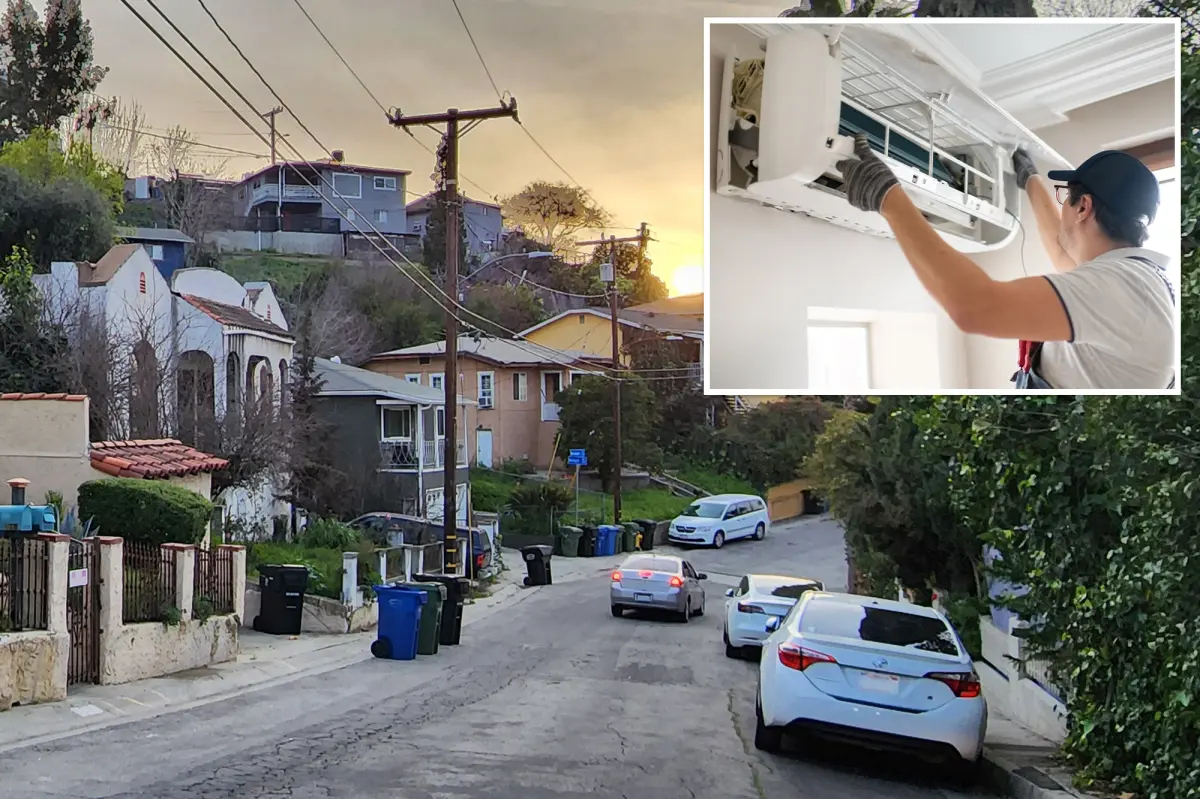
The idyllic narrative of “California cool”—a cultural dream built on the foundation of endless ocean breezes, golden coastlines, and mild Mediterranean climates—is rapidly evaporating under the relentless glare of a warming planet. Today, the Golden State is facing a starkly different meteorological reality, one that is forcing policymakers to demand actual, mechanical cold to keep its most vulnerable residents alive. Nowhere is this struggle more apparent than in Los Angeles County, where local government officials are turning up the administrative pressure on property owners by legally mandating that they turn down the indoor thermostat. Beginning on January 1, 2027, landlords overseeing residential properties in the unincorporated territories of LA County will be legally required to ensure their rental units do not exceed a maximum temperature of 82 degrees Fahrenheit. This landmark regulatory shift represents a profound evolution in how local governments define a baseline “livable” home. For decades, habitability standards focused on historical necessities of the industrial era, such as reliable heating, weatherproof roofing, and consistent hot running water. By elevating indoor cooling to this same tier of essential human survival needs, Los Angeles is acknowledging that in the modern era of climate change, an apartment that transforms into a stifling, stagnant sauna during the summer months is no longer just an uncomfortable nuisance; it is a direct and unacceptable threat to human life.
Behind this sweeping policy change lies a grim scientific reality that Southern Californians can no longer afford to ignore. According to research conducted by the prestigious Scripps Institution of Oceanography, California’s average summer temperatures have already climbed by approximately three degrees Fahrenheit since the late 19th century, with projections suggesting another two-degree spike by the year 2040 if greenhouse gas emissions continue on their current trajectory. More alarmingly, the very nature of Southern California’s heat is undergoing a dangerous mutation. Climate scientists point out that the region’s historically famous “dry heat” is increasingly being replaced by oppressive, muggy humidity transported by warming ocean waters. This shift is much more than a matter of personal discomfort; high humidity severely impedes the human body’s natural ability to cool itself through the evaporation of sweat, dramatically escalating the risk of heat exhaustion, heat stroke, and cardiovascular failure. Furthermore, climate scientists warn of the deadly phenomenon of elevated nighttime temperatures. When older, poorly insulated urban apartment buildings absorb intense solar radiation all day and are unable to cool down overnight, the human body is deprived of the critical nocturnal recovery period it desperately needs to shed thermal stress, creating a compounding biological crisis for those trapped inside.
However, the geographic boundaries of this new protective ordinance highlight a deeply fractured landscape of tenant rights, exposing a “zip-code lottery” where a renter’s physical safety in extreme heat depends entirely on which side of a municipal border they happen to live. Because the new mandate applies exclusively to the unincorporated communities of Los Angeles County, millions of tenants residing within incorporated cities like Santa Monica, Pasadena, Glendale, Inglewood, and the City of Los Angeles proper are completely excluded from these automatic protections. For these urban renters, many of whom occupy aging, historical brick and concrete buildings that act as heat traps, the question of whether their landlord is obligated to provide relief remains unanswered. While the Los Angeles City Council has directed various municipal departments to conduct feasibility studies regarding a similar indoor temperature ceiling, no concrete citywide legislation has been passed. This leaves tenant advocates deeply frustrated, pointing out the painful irony that an Angeleno living in an unincorporated pocket of East Los Angeles will soon have a legally enforceable right to a cool home, while another renting an identical apartment just a few blocks away in an incorporated city neighborhood must continue to suffer through dangerous indoor heat waves with zero legal recourse.
Implementing this regulatory transition promises to be an extraordinarily complex and financially contentious endeavor, as the high-minded ideals of climate adaptation clash directly with the harsh economic realities of low-income housing. The county’s guidelines do not immediately mandate the installation of expensive, energy-guzzling central air conditioning systems; instead, they allow landlords to meet the 82-degree threshold through passive, cost-effective interventions such as high-efficiency insulation, thermal window coverings, exterior shade structures, and ceiling fans. However, in cases where these structural modifications fail to beat the rising external heat, property owners will have no choice but to install mechanical cooling systems. This raises a monumental question that terrifies low-income renters: who is going to pay the electric bill? Tenant defense attorneys and legal aid organizations point out that even if a landlord installs a functional air conditioning unit, the financial burden of operating that machinery falls squarely on the tenant. For families already living on the precipice of poverty—balancing sky-high rents, soaring grocery prices, and escalating utility costs—the choice between turning on the air conditioner to prevent heat exhaustion or skipping meals to pay the utility bill is a terrifyingly real dilemma that could render the new safety standards practically useless for those who need them most.
Navigating the bureaucratic enforcement of these new rules will likely prove to be a grueling marathon for tenants, rather than the swift breeze of relief they desperately need during a mid-summer heatwave. When the ordinance officially takes effect in 2027, renters living in sweltering conditions will be able to file formal complaints through the Los Angeles County Department of Public Health’s Rental Housing Habitability Program. However, public health officials have explicitly stated that their initial strategy will focus on an “education first” philosophy, prioritizing communication and cooperation with property owners over immediate punitive measures. Landlords who can demonstrate genuine financial or logistical hurdles will be granted generous compliance extensions, meaning that a tenant living in a suffocating apartment might have to wait through multiple consecutive heat waves before any tangible cooling infrastructure is actually installed. Because of these built-in bureaucratic delays, tenant advocacy groups are urging renters to aggressively document their living conditions by keeping detailed logs of indoor temperatures using reliable wall thermometers, taking photos and video evidence of malfunctioning windows or lack of ventilation, and keeping paper trails of all written communication with their landlords. This proactive documentation will be vital, as many tenants may ultimately have to wage protracted, exhausting legal battles in housing court to force negligent property owners to comply with the law.
Ultimately, the struggle over residential cooling in Los Angeles is merely one flashpoint in a much larger, systemic failure of California’s infrastructure to adapt to the accelerating realities of the climate crisis. This domestic housing dilemma closely mirrors the ongoing crisis in the state’s public education system, where school districts across California have struggled for years to protect children from extreme classroom temperatures. Despite the optimistic launch of state-funded initiatives like the California Schools Healthy Air, Plumbing, and Efficiency (CalSHAPE) program in 2020—which was specifically designed to help underfunded schools upgrade obsolete, failing heating, ventilation, and air conditioning systems—the state ultimately cut the program’s funding short in 2024, leaving hundreds of school districts stranded with half-finished upgrades and classrooms that remain dangerously hot during the late summer months. Whether analyzing the public school classroom or the private rental apartment, the fundamental question facing the state remains identical: as the natural climate of the West Coast becomes increasingly hostile, is California truly prepared to invest the immense capital and political will required to keep its citizens safe? As temperatures continue their inevitable march upward, the defining struggle of the 21st century in the Golden State may no longer be about preserving a lifestyle of coastal luxury, but about establishing reliable, equitable cooling as a non-negotiable, fundamental human right.