




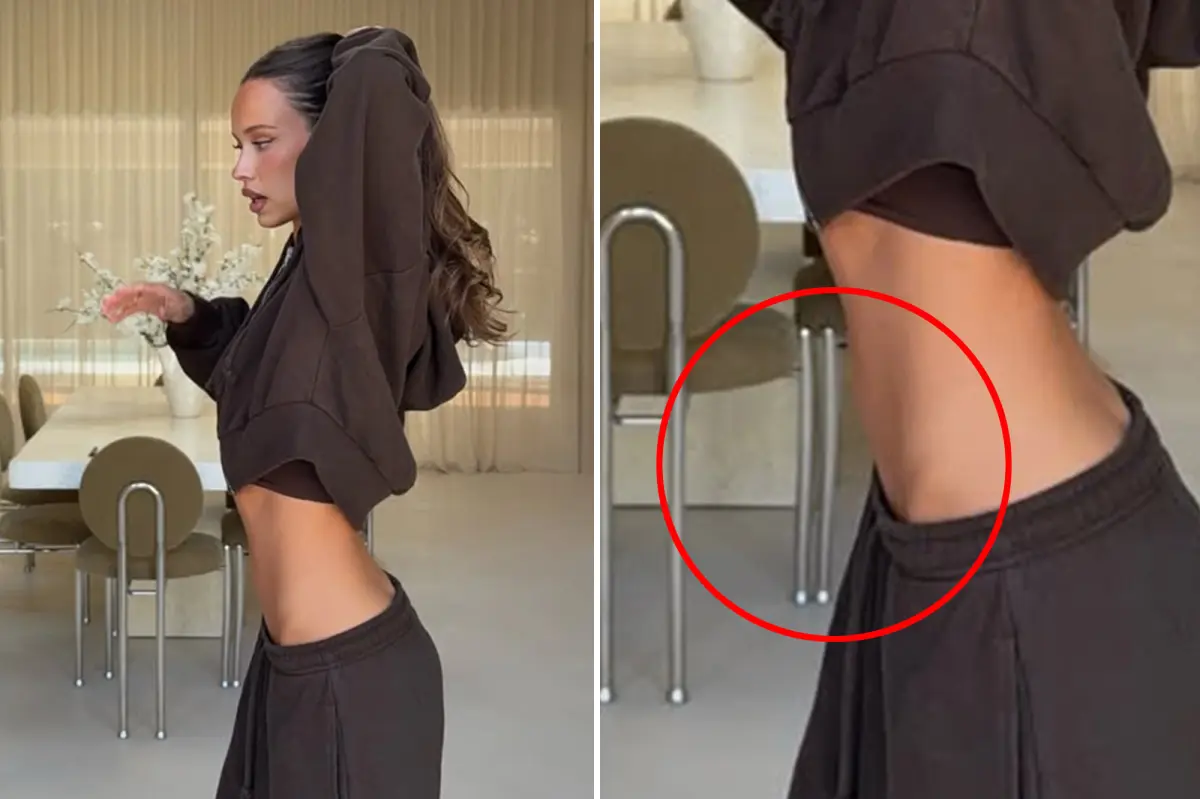
Isabelle Mathers, a 27-year-old Australian influencer with over two million followers, lives her life under a digital microscope where her career is built on the curation of an aspirational, flawless lifestyle. However, this delicate illusion shattered recently when she shared a promotional post for an activewear brand. Dressed in a cozy brown cropped sweatshirt and matching sweatpants, Mathers showcased her incredibly toned torso to her massive audience. Instead of receiving the usual round of applause, she found herself at the center of an intense online storm. The very platform that catapulted her to fame turned into a digital courtroom, as followers accused her of secretly thinning her waistline and distorting her natural body to project an impossible standard of physical perfection.
Social media users have developed a keen, almost cyber-forensic eye for spotting digital alterations in an era saturated with curated imagery. Over on online forums like Reddit, amateur sleuths pooled their observations, zooming in with intense scrutiny on the background of Mathers’ photos. The giveaway wasn’t her body itself, but the laws of physics bending around her, revealing warped dining chairs and unnaturally curved lines in the surrounding furniture. Commenters expressed deep disappointment, questioning why someone who is already conventionally beautiful and athletic would feel compelled to alter her photos. This collective dissection highlights a growing exhaustion among internet users who are tired of being sold a manufactured version of reality, reflecting a cultural shift where digital honesty is increasingly demanded but rarely delivered.
Beyond the mere embarrassment of getting caught, the backlash highlights a deeply human pain point: the psychological toll on those on the receiving end of these images. For many young women, seeing a seemingly flawless body triggers intense feelings of self-doubt and physical inadequacy. One follower candidly shared how Mathers’ post made her feel insecure about her own stomach not being perfectly flat, only to feel a wave of relief—and subsequent anger—upon realizing the photo had been edited. These minor, subtle “micro-edits” are often far more insidious than obvious, theatrical filters because they masquerade as attainable reality. They distort our collective perception of what a normal human body looks like, leaving young, vulnerable audiences to internalize unrealistic physical standards that no real human can naturally maintain.
What makes this phenomenon so tragic is the unnecessary nature of these digital tucks, as Mathers undoubtedly possesses a stunning, athletic physique in real life. Yet, the pressure to maintain a permanent state of photographic perfection apparently drove her to erase any sign of natural human fluctuation. Bloating is a completely normal, daily biological process that affects everyone, yet in the highly sanitized world of Instagram, it is treated as a failure to be digitally eradicated. This refusal to show the body in its natural, resting state perpetuates a toxic cycle where both the influencer and the audience are trapped in a fragile ecosystem of performance, where simply being human is not allowed.
This incident is not an isolated case of insecurity; it is symptomatic of a broader, more deceptive trend sweeping the creator economy where reality is entirely optional. Recently, fellow influencer Lauren Blake Boultier faced massive outrage after she was caught editing her own face onto the body of Black model Tatiana Elizabeth, falsely claiming she was courtside at a tennis tournament. When the undeniable similarities in outfits, poses, and backgrounds were exposed by internet detectives, Boultier deflected blame onto an external AI content agency. This level of fabrication transcends simple vanity, moving into the realm of identity theft and complete digital deceit. It showcases a dystopian shift where creators are no longer just refining their flaws, but are actively replacing entire human experiences with fabricated narratives.
Ultimately, these controversies expose the increasingly fractured relationship between social media and actual reality. As sophisticated AI tools and hyper-realistic editing applications become cheap and accessible, the line between what is real and what is manufactured is completely vanishing. Influencers, once celebrated for being more relatable than traditional Hollywood celebrities, have now become the purveyors of an even more unattainable, algorithmic fantasy. If we are to survive this digital landscape with our mental health intact, there must be a cultural reckoning. We must learn to celebrate the messy, beautifully imperfect reality of our actual lives, and demand that the creators we follow value human truth over the cold, distorted perfection of a photoshopped screen.