





In the bleak, uncertain spring of 2021, Midtown Manhattan felt less like the pounding heart of global commerce and more like a ghost town of towering steel and glass. The COVID-19 pandemic had dealt a devastating blow to the neighborhood, leaving once-bustling office buildings eighty percent empty and turning the streets around Grand Central Terminal eerily quiet. Iconic institutions that had defined the New York dining landscape for generations—including the legendary 21 Club, Chinatown’s beloved Jing Fong, and Chef Daniel Boulud’s own DB Bistro Moderne—had shut their doors forever, leaving locals and food lovers grieving the loss of their culinary community. It was against this backdrop of widespread anxiety and economic standstill that Boulud, alongside real estate giant SL Green, dared to dream of a grand new opening. Under the shadow of doubt, they envisioned Le Pavillon: a high-end culinary sanctuary nestled inside the sleek, newly constructed One Vanderbilt skyscraper. To many, launching a luxury restaurant during such a profound crisis seemed like structural madness, but to Boulud, it represented an essential act of faith in the city’s future survival and a love letter to the resilient soul of New York.
The road to opening Le Pavillon, however, required much more than creative menus and architectural drawings; it demanded high-stakes political maneuvering behind closed doors. At the time, city restaurants were suffocating under strict government health mandates that restricted indoor dining to a mere fraction of their total capacity. Recognizing that running a world-class, fine-dining establishment at twenty-five or thirty-five percent capacity was economically impossible, Chef Daniel Boulud and Sebastien Silvestri, the CEO of Dinex Group, made a daring move. They approached then-Governor Andrew Cuomo and then-Mayor Bill de Blasio with a bold, uncompromising ultimatum: Le Pavillon would not open its doors until the administration guaranteed that capacity limits would be lifted entirely. Eager to showcase One Vanderbilt as a glittering symbol of New York’s recovery and resilience, the politicians capitulated, paving the way for the full restoration of indoor dining capacity across the city. This critical gamble by Boulud not only saved his own business model but acted as a lifeline for the entire metropolitan restaurant industry, demonstrating that recovery could not be achieved by halves, but required a full-throated commitment to normal life.
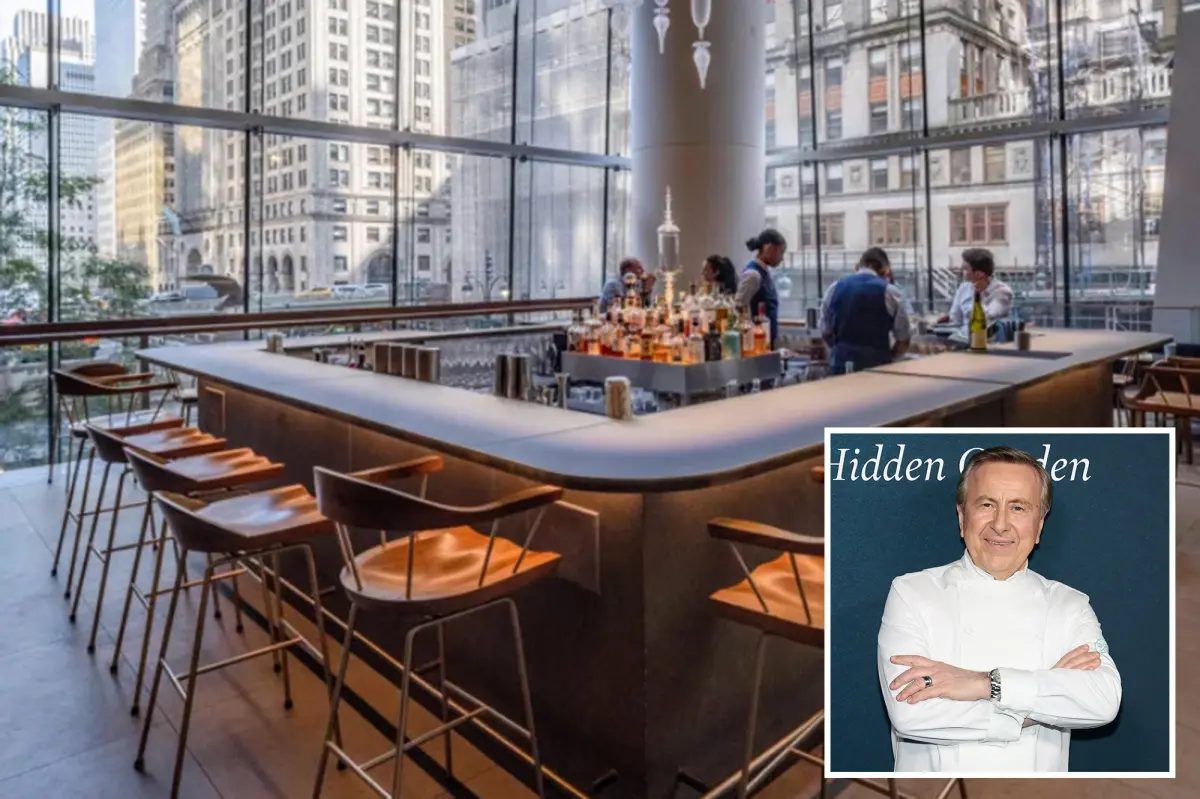
When Le Pavillon finally opened its doors in April 2021, it felt like stepping into an ethereal, living oasis designed to heal a city’s frayed nerves. Architecturally, the space was nothing short of breathtaking, featuring soaring sixty-foot ceilings, massive glass windows offering dramatic views of the historic Chrysler Building, and an extraordinary indoor forest of nearly one thousand lush, living plants. The design created a soothing, arboretum-like atmosphere that carried directly into the menu, which leaned heavily on fresh, sustainable seafood and vegetable-based dishes rather than heavy, traditional meats. Boulud took notable culinary risks, presenting an innovative menu that challenged the standard expectations of French fine dining; for example, his Oysters Vanderbilt bypassed the classic heavy spinach purée in favor of a bright, crunchy gratin of breadcrumbs, seaweed, and parsley. Asking diners to embrace unfamiliar flavors at a fixed price of $125 per head (which has since evolved to $145) during a time of widespread financial insecurity was a significant risk, but the sheer beauty of the space and the novelty of the experience offered an irresistible escape from the gloom of the prior year.
For shell-shocked New Yorkers, Le Pavillon quickly became a sacred space for emotional and social resuscitation, offering a tangible sign that the city they loved was finally waking up. Regular patrons and community members flocked to the dining room not just for the Michelin-starred food, but for the profound sense of connection and hope it provided after fifteen months of isolation and misery. Real estate executive Lauren Mitinas-Kelly recalls visiting the restaurant with her late husband, Scott, describing the venue as a “pearl in the sky” and a stunning testament to the city’s ultimate survival. For long-time locals like adviser Peter Bazeli, walking into the vibrant, sun-drenched space was a transformative experience that allowed people to feel optimistic about Manhattan’s future once again. The restaurant served as a collective living room for a grieving populace, where the clinking of wine glasses and the hum of lively conversation drowned out the lingering fears of the pandemic, proving that the human desire to gather, celebrate, and share a meal under one roof could never be snuffed out by a crisis.
The success of Le Pavillon sent massive shockwaves through the hospitality industry, triggering a monumental recovery throughout Midtown Manhattan that many experts had thought impossible. Fellow culinary icon Eric Ripert of Le Bernardin observed with surprise and admiration how quickly the neighborhood bounded back, catalyzed in part by the immense confidence Boulud’s venue generated. Andrew Rigie, the executive director of the NYC Hospitality Alliance, noted that the restaurant’s opening did far more than revitalize a desolate corner of the city—it served as a powerful declaration to real estate developers and officials that restaurants were the primary economic engines of urban recovery. This triumph sparked a major neighborhood trend, inspiring the launch of other high-profile dining establishments like Avra on Sixth Avenue, Fasano, Jean-Georges Vongerichten’s Four Twenty Five, and Le Rock. Urban policy experts, including NYU professor Mitchell Moss, credit Le Pavillon with fundamentally shifting how modern developers view office buildings, prompting them to integrate superstar restaurateurs and world-class dining into new corporate skyscrapers to draw employees back to the physical workplace.
Today, as Le Pavillon celebrates its triumphant fifth anniversary, it stands as a shining icon of survival, innovation, and the enduring magic of New York. The four-sided bar beneath a shimmering chandelier of diamond-like stalactites has become legendary in its own right, hosting a daily phenomenon known as the “power hour.” Starting around 4:30 PM, a buzzing crowd of finance executives from neighboring institutions like the Carlyle Group, local power brokers, and culinary enthusiasts pack the bar area to capacity, transforming the space into a hotbed of networking and celebration. What began as a high-stakes, highly controversial gamble in the darkest days of the pandemic has matured into a beloved Midtown anchor, proving that courage, vision, and a refusal to compromise can write a glorious new chapter for a city. Chef Daniel Boulud’s legacy with Le Pavillon is not merely defined by his Michelin star or his masterfully curated dishes, but by his unwavering belief that even in the face of absolute disaster, New York City will always pull up a chair, raise a glass, and find a reason to celebrate.