






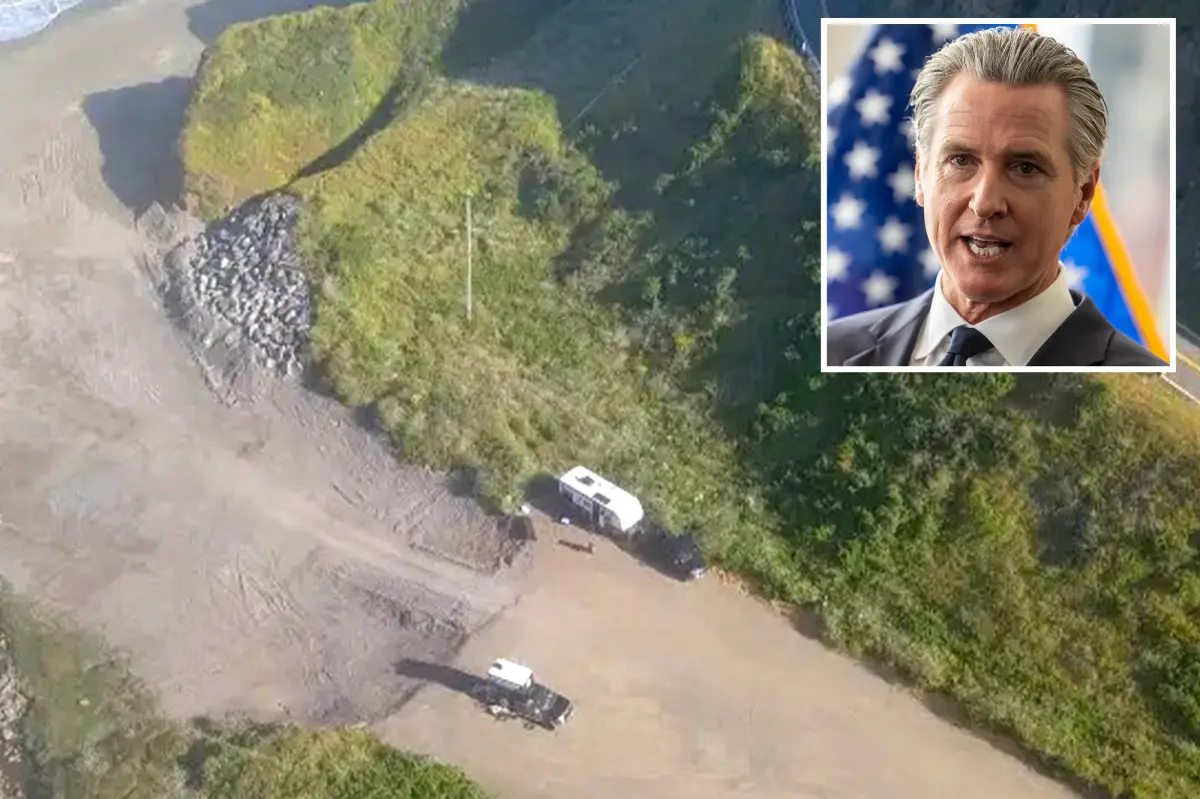
Along a raw and wind-scoured stretch of Northern California coastline, where the Pacific hurls itself against ancient cliffs and the air carries the tang of salt and sage, a profound homecoming has quietly taken place. A breathtaking 136-acre parcel of Mendocino County shoreline—including Blues Beach and a hallowed village site known as K’etim—has been returned to the Indigenous tribes whose ancestors lived, loved, and were buried there long before California became a state. For the Coastal Yuki, the name K’etim itself is a kind of prayer, a word that carries the weight of generations. For decades, this land was held by the California Department of Transportation, a bureaucratic custodian with little connection to its soul. Now, after a decades-long battle to reclaim ancestral ground, it belongs again to the people who know its stories: the Sherwood Valley Band of Pomo Indians, the Round Valley Indian Tribes, and the Coyote Valley Band of Pomo Indians, represented together by the tribal nonprofit Kai Poma. The transfer is far more than a legal handover. It is an acknowledgment that some places are too sacred to be reduced to a scenic overlook, too alive to be treated as mere real estate. To walk these bluffs today is to sense the presence of those who came before. Beneath the windblown grasses and shifting dunes lie centuries of buried ancestors. In the crash of the waves, elders still hear the echoes of Seaweed Woman, a figure woven into Coastal Yuki origin lore, alongside Coyote the trickster. The return of this land is therefore not a symbolic gesture but a literal restoration of the tribes’ ability to care for their own dead, teach their own children, and practice their own culture without asking permission from a state agency. Tribal leaders have been careful about revealing every detail of their plans, but they have made one thing clear: this is not about closing the coast to outsiders. It is about reopening a relationship—between the land and the people, between the past and the future, between the tribes and the wider community that has finally begun to understand what was lost.
At the heart of this homecoming is a set of legal promises that balance tribal sovereignty with public access. Under the terms of the deed transfer from Caltrans to Kai Poma, the shoreline must remain open to everyone, forever, with zero admission fees and no gates. Commercial development is explicitly prohibited; no hotels, gift shops, or private enclaves will rise among the dunes. And in an unusual safeguard, if the nonprofit ever fails to maintain the site or dissolves entirely, ownership would revert back to Caltrans. These conditions ensure that the land cannot become a commodity, even as it becomes a home for ceremonies and traditional education. The public access requirement is not a concession; it is a continuation of Indigenous hospitality, a tradition of welcoming strangers while protecting the sacred. Some may wonder whether a publicly accessible beach can also be a sacred ceremonial site. The tribes have answered that question by refusing to choose. They welcome visitors, but they expect respect—for the graves, for the ecology, and for the living culture that is once again rooted in this soil. The state originally acquired the shoreline and cliffs in the 1960s to support the expansion of Highway 1 and to establish a scenic overlook for motorists, according to a California Coastal Commission report. At the time, that probably seemed like a routine infrastructure project, a place where travelers could pull over, snap a photo, and watch the waves. But for the tribes, the acquisition was another chapter in a long history of dispossession, in which an ancestral village and burial ground became, in the eyes of the law, a roadside amenity. The reverter clause is a reminder of that history, but it is also a guarantee of the tribes’ enduring commitment: they intend to hold this ground, steward it, and pass it on intact to the next generation. The public is welcome, but the rules are clear—this is a place of reverence, not recreation.
Now that the ink has dried and the land is officially in tribal hands, leaders are beginning to share their vision for what comes next. Eddie Knight, chairman of Kai Poma and historic preservation officer for the Coyote Valley Band of Pomo Indians, told environmental news outlet Mongabay that the first priority is simply protection. “We want to protect the natural habitat,” he said. But protection is not passive. Knight, who is of Coastal Yuki descent, envisions a living, breathing cultural landscape where young tribal members learn the old ways—how to harvest native foods, gather seaweed and kelp, fish the cold Pacific waters, and read the tides the way their ancestors did. “Allowing our youth to get an idea of how they can use it in the future and use it now,” he added. “It’s going to take a little time, but we do have a plan.” Knight’s voice, as quoted by Mongabay, is calm but firm, the voice of a man who has waited decades and knows that patience is part of the work. That plan is rooted in the belief that the best way to honor the past is to prepare the future. Imagine a group of teenagers standing on Blues Beach at dawn, listening as an elder points to a cluster of bull kelp and explains which parts can be eaten, which can be used for medicine, and which should be left alone to regenerate. Imagine a fire ring on the bluff, not for tourists but for ceremony, where songs that were nearly silenced rise again with the smoke. This is not a museum exhibit or a cultural theme park; it is a way of life being restored, one lesson, one tide, one harvest at a time. The tribes are under no illusion that the work will be quick. Decades of disconnection cannot be undone in a single season. But the land itself is a patient teacher, and now it is finally free to teach. In a time when so many young people feel disconnected from the natural world, this coastal classroom offers something rare: a place where identity, ecology, and spirit are braided together, and where the past is not a distant curiosity but a living instruction manual for the future.
To understand what this land means, you have to understand what was taken. For the Coastal Yuki, K’etim was not just a village; it was a place where ancestors were laid to rest, where children were born, and where the boundary between the human world and the spirit world felt thin. The origin stories of the area speak of Seaweed Woman and Coyote, figures whose actions shaped the coastline and the people who live there. Such stories are not fairy tales. They are maps—ways of understanding the land, the sea, and the moral order of the universe. When the state took the land in the 1960s, it did not just take acreage; it took a sacred geography. The pain of that loss became visceral in 2005, when tribal members came to the area and discovered that grave robbers and off-road truck drivers had been tearing through the dunes. Artifacts were being pillaged. Human remains were being unearthed and scattered. The dunes that should have been a silent sanctuary had been turned into a crime scene. It was, by every measure, a desecration—a violation not only of the law but of the deepest human bonds between a people and their ancestors. Tribal leaders begged Caltrans to step in, to fence the area, to protect the graves. For years, their requests were dismissed. The state agency that owned the land seemed to see it only as an empty stretch of coast, not as a cemetery with centuries of stories buried beneath the sand. The trauma of seeing ancestors’ remains treated as curiosities or trash is not something that can be measured in court filings. It is carried in the bodies and memories of tribal members, passed down like the stories themselves. The return of the land cannot undo that pain, but it can begin to heal it. It can transform a site of violation into a site of ceremony. It can give the ancestors back their names, their dignity, and their living descendants.
The road to justice was long and frustrating, but it was eventually paved by political will. For years, Caltrans declined to transfer the land, offering excuses and delays. Tribal members and their allies refused to give up. They organized, testified, and built support among elected officials. Finally, state Senate leader Mike McGuire stepped forward and passed legislation allowing the highway authority to hand over the land for free in 2021. The law was a simple but profound act of repair: it recognized that the state had no rightful claim to a place it had acquired by the blunt instrument of eminent domain, and it gave the tribes a path to ownership without requiring them to buy back what had been stolen. J. Carlos Rivera, tribal chairman of the Sherwood Valley Band of Pomo Indians, described the enormity of the moment to the Los Angeles Times. “It’s enormous from our tribal perspective that we are basically obtaining the land that our people once lived on before colonization,” he said. The word “basically” is telling. It hints at how surreal the victory felt after so many years of being told no. The transfer was not a handout. It was a homecoming. It was also a lesson in what can happen when a community organizes, when allies in power listen, and when the moral clarity of a people who refuse to forget finally breaks through bureaucratic inertia. The collaboration between the tribes and McGuire shows that even deeply flawed systems can be nudged toward justice when enough people demand it. The legislation did more than change a title; it changed a relationship. It said, in effect, that the state was no longer the owner of this place, but merely a witness to its return. For the tribes, the victory also carries responsibility: to care for the land, to protect it from future harm, and to ensure that the lessons learned here are shared widely.
What happens next will be watched closely, not just by tribal members but by anyone who cares about the growing movement to return land to Indigenous stewardship. This is land back in the truest sense—not a symbolic acknowledgment, but a physical, legal, and spiritual restoration. The tribes have made clear that their plans are both ambitious and careful. They want to protect the natural habitat, host ceremonies, and teach younger generations how to live off the land and sea. They want to harvest native foods, seaweeds, and kelp, to fish and gather as their ancestors did, and to ensure that these practices continue long into the future. At the same time, they are honoring the public trust: the beach will stay open, admission will remain free, and the land will never be developed commercially. In an age of climate change, species loss, and spiritual disconnection, this small stretch of coastline offers a different kind of hope—a vision of stewardship rooted in reciprocity rather than extraction. The land is not a resource to be mined or a backdrop for selfies; it is a relative to be cared for. For the Coastal Yuki and Pomo peoples, the return of K’etim is a chance to heal old wounds and to model a new way of being on this continent. It is also a gift to the next generation, who will grow up knowing that their ancestors’ land is theirs, not by permission, but by right. Eddie Knight said it plainly: it is going to take time, but there is a plan. And plans, like seeds, need the right soil, the right rain, and the right people to tend them. Here, at last, the soil is ready. The people are home. And the sea, patient as ever, continues to speak in the ancient language of waves—waiting to be heard.