




Paragraph 1: The Grocery Store Shock
The meat counter at your local supermarket might seem like an odd place to witness an economic earthquake, but that’s exactly where millions of American families are feeling the tremors. Standing in the refrigerated aisle, staring at a pack of ground chuck that costs more than a gallon of gas but weighs a fraction of it, shoppers are beginning to ask a frustrating question: why is beef so impossibly expensive? The answer, stripped of its jargon and complex supply-chain graphs, is actually a heartbreaking story about the American landscape, the farmers who tend it, and the animals that dot its pastures. The Department of Agriculture tracks the retail value of Choice beef, a middle-of-the-road grade that most families buy, and the numbers paint a stark picture. In August of 2024, that average price sat at roughly $8.51 per pound. By July of 2026, it had climbed to over $10.49 per pound—a staggering jump of nearly 23% in just under two years. This isn’t just inflation hitting the grocery bill; this is a fundamental structural shortage that reaches all the way back to the open ranges of Texas, Montana, and Wyoming. It’s a shortage that has been brewing for years, and it’s now colliding with the dinner tables of ordinary people, forcing everyone to rethink their menus, trim their budgets, and abandon long-cherished cooking traditions. The steak that used to be a weekly staple has become a rare treat, and a simple pack of ground beef now feels like a luxury purchase that warrants a deep breath before tossing it into the cart.
Paragraph 2: The Silent Disappearance of the Herd
To understand the price on the tag, one must first understand the sheer scale of the disappearing American cattle herd. The United States Department of Agriculture recently released data that sent a chill through the agricultural community, revealing that the nation entered 2026 with roughly 86.2 million cattle and calves. That number, while massive on its own, represents a historic low—the smallest herd the country has seen since the early 1950s, a time before the interstate highway system, before the modern suburban boom, and long before consumers took cheap, plentiful beef for granted. To truly grasp the severity, consider that back in 2019, the herd stood at approximately 94.7 million animals. That means America has lost over eight million cattle in just seven years—a loss tantamount to wiping out a small country’s entire livestock population. This isn’t a blip on the radar; it’s a systemic collapse of the foundational supply chain. The severity of this crunch is so pronounced that it has forced major corporations to make drastic, painful decisions. Tyson Foods, one of the largest meatpacking giants in the world, announced recently that it will permanently close beef facilities in Illinois and Utah, and is actively pursuing the sale of another facility in Washington state. This is not a casual restructuring; Tyson explicitly cited what they called one of the most historic cattle shortages the country has ever experienced, acknowledging that the USDA’s recent data indicates these brutal supply constraints are likely to persist for the foreseeable future. When the corporate giants start shedding their massive physical infrastructure—the plants that employ thousands and feed millions—you know the problem is far bigger than just a bad season or a temporary market dip.
Paragraph 3: The Rancher’s Heartbreak
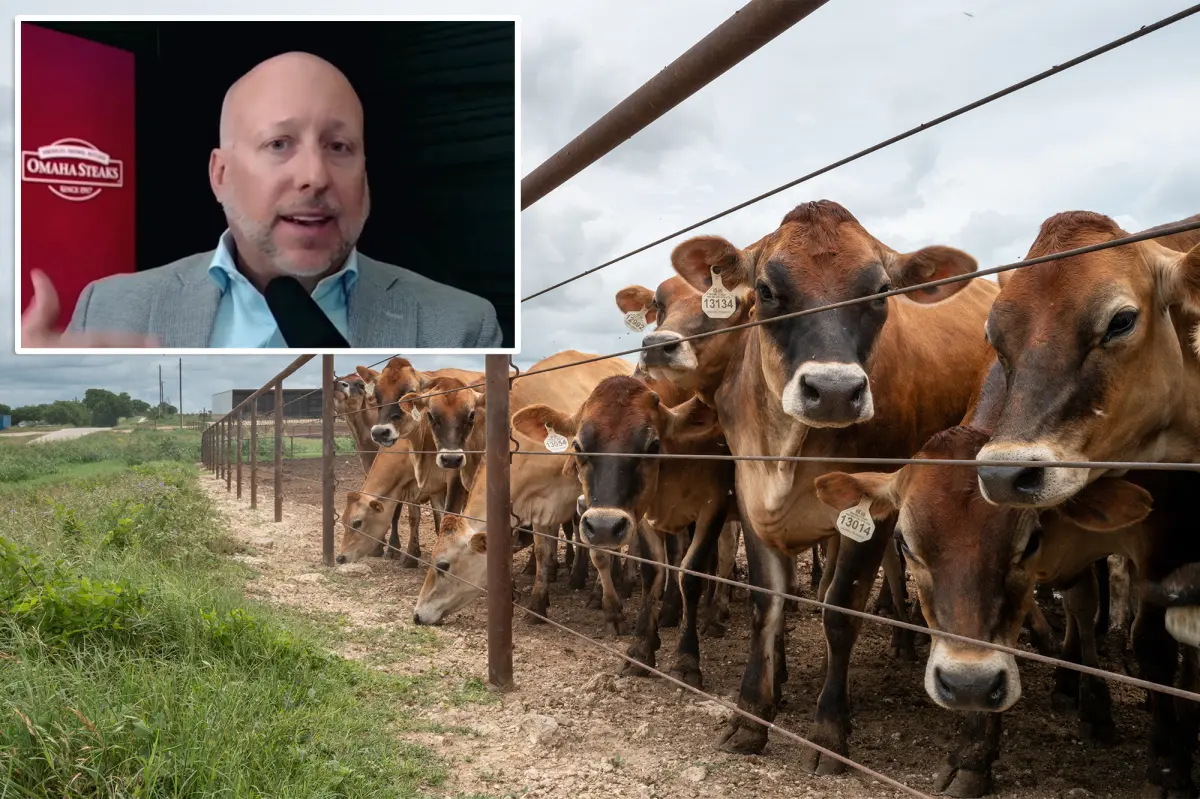
Behind these cold statistics and corporate announcements lies the human heart of this crisis: the American rancher. These are the hardy, independent souls who spend their lives in the blistering heat of July and the biting chill of January, tending to herds that often represent their family’s entire net worth and their legacy for generations. The reason their herds are shrinking isn’t because of a lack of demand or a drop in profit margins—it’s because of the ground beneath their feet. “The biggest thing has been drought,” explains Eric Belasco, the head of the agricultural economics department at Montana State University. Those are simple words that mask a world of pain. Years of relentless, unyielding dryness have fractured the ecological backbone of the West and the Great Plains. The grasslands that once swayed with golden waves of nutritious forage are now brittle, brown stubble. Water sources that once trickled reliably through summer have slowed to muddy puddles or dried up completely. When there is no grass and no water, there is no way to feed the herd, and hay prices skyrocket to unaffordable levels. Ranchers are forced into a tragic corner: they either buy expensive hay they can’t afford to haul in for months on end, watching their savings drain away, or they sell off their livestock in droves before the animals starve. In many cases, they were forced to sell cattle early just to survive the season. The most heartbreaking part of this fire sale is what they are forced to part with. To rebuild a herd, you need mother cows—the brood stock that produces the next generation of calves. Yet, given the drought, ranchers were forced to sell off these very same cows, liquidating their breeding capital just to pay the mortgage, buy fuel, and keep food on their own tables. By selling the mothers, they sold the future, guaranteeing that the recovery will be agonizingly slow, because you cannot simply flip a switch and restock a ranch. It takes time for a calf to grow into a mother, and that biological clock is ticking against us.
Paragraph 4: The Ripple Effect on Main Street
The shrinking herds don’t just stay in the pastures; they ripple outward with the force of a tidal wave, crashing into the industrial heartland where beef is processed. When thousands of cattle disappear from the open range, the massive processing plants—those sprawling, steel-and-chrome facilities that operate with robotic precision—suddenly find themselves with far too much plant capacity and far too few animals coming through the gates. This is the exact scenario that has unfolded for Tyson Foods. The closures in Illinois and Utah, along with the sale of the Washington facility, are a direct consequence of this harsh arithmetic. A beef plant isn’t like a small bakery; it processes thousands of heads of cattle every single day. When the supply of cattle drops below a critical threshold, the fixed costs of running the plant—utilities, night-shift labor, maintenance, and logistics—become impossible to cover. Operating at half capacity is a one-way ticket to bankruptcy, and no amount of efficiency engineering can overcome the simple lack of raw material. So, the corporate decision-makers, looking at the grim data, made the call to shutter operations. But this corporate strategy has devastating human consequences that extend far beyond a boardroom. For the towns in Illinois, Utah, and Washington where these plants are located, the news is a gut punch to the community’s core. These are often the largest employers in rural areas, providing good-paying jobs that sustain entire local economies. The truck drivers who haul the livestock, the shop owners who serve the plant workers’ lunch, the school districts that depend on the property taxes from the facility, the real estate agents selling homes to the employees—everyone feels the pain. When the plant closes its doors, it doesn’t just put two hundred workers on the unemployment line; it drains the lifeblood from a community, leaving empty storefronts, anxious children asking parents why they’re moving, and a palpable sense of doom as families wonder about their next paycheck, all because the drought two states away starved their local economy.
Paragraph 5: The Consumer’s Crunch
For the millions of consumers who have never set foot on a ranch, the complexity of the cattle cycle boils down to one simple, maddening truth: the cost of a decent steak or a package of ground beef has become a serious financial burden that impacts daily living. The 23% increase in retail prices is not just a number on a government spreadsheet; it’s a tangible shift in how families plan their meals, budget their paychecks, and experience their culture. Parents are swapping out beef for cheaper cuts of chicken or pork, or simply stretching the ground beef into tacos and chili that can feed a family with less meat. Grilling season, once a celebration of abundance with thick ribeyes and sizzling burgers, has become a luxury experience reserved only for major holidays or a rare Tuesday night splurge. Trips to the butcher counter are now exercises in careful budgeting, with shoppers scrutinizing the price per pound, calculating the cost of a Sunday roast, and often silently turning away in disappointment. This isn’t just about economics; it’s about cultural identity. The backyard barbecue, the holiday prime rib, the celebratory steak dinner—these are culinary cornerstones of American life, woven into the fabric of family gatherings, summer vacations, and romantic anniversaries. When they become priced out of reach, it feels personal, an insult to tradition. The sense of exasperation is palpable in online forums, social media threads, and local grocery store lines, where shoppers vent their frustration, blaming greedy corporations, global conflicts, or the government. But the truth is far simpler and sadder: there just aren’t enough cows left in America. The empty pastures and cracked earth in the hinterlands are physically manifesting as empty wallets and compromised meal plans at the supermarket checkout. This is a shared sacrifice, an invisible tax levied by years of harsh weather, impacting rich and poor alike as they adjust their expectations of what a weekly grocery haul should cost.
Paragraph 6: The Long, Arid Road to Recovery
The most frustrating part of this entire saga is that there is no quick fix, no magic pill, and no emergency policy that can immediately refill the meat case with affordable beef. The path to relief lies in the slow, deliberate, and deeply biological process of rebuilding the American cattle herd, a journey measured in years, not weeks. Consider the unforgiving timeline: to get a calf to a market weight of around 1,300 pounds takes roughly 18 to 24 months of feeding and careful husbandry. And to even get that calf, you need a mother cow, which itself takes roughly two years to raise to breeding age, followed by a nine-month pregnancy. This means that the cows that were sold off during the worst drought years represented a pipeline that is now permanently broken for the near term. Even if a miraculous rainmaker were to dump unending precipitation on the West tomorrow, the ranchers wouldn’t immediately run out and buy new breeding stock; they’d be cautious, saving their precious capital to first repair their own finances, mend fences, and ensure the grass truly returns before risking their future on the next calf. They need years of sustained relief—adequate moisture, recovering pastures, and profitable prices that allow them to sleep at night—before they feel confident enough to start rebuilding their herds by retaining their heifers instead of selling them off to balance the books. Until that confidence returns, the cattle supply will remain tight, and so will the prices at the grocery store. It is a waiting game, a testament to the unpredictable vagaries of nature and the cyclical nature of agriculture. While technology and genetics have sped up many aspects of farming, the gestation period of a cow remains an unchangeable biological constant, a stubborn reminder that some things cannot be rushed. As analysts and experts like Belasco note, the supply constraints are likely to persist, meaning shoppers should prepare for a prolonged period of higher prices well into the future. It’s a humbling lesson in the interconnectedness of our food system—a reminder that a drought in Montana isn’t just a regional weather event; it’s a personal financial strain on a family in Ohio trying to grill a couple of steaks for their kids’ graduation party. The road back to abundance is long, paved with the resilience of ranchers who refuse to quit, the grit of towns that have survived economic booms and busts, and the patience of consumers who will, out of necessity, learn to appreciate the true cost of the food on their plates.