



Paragraph 1: The Weight of Walled Discipline
Standing on a quiet side street in Heidelberg, you wouldn’t expect to find a queue, but there it is—a line of curious visitors snaking toward an unassuming doorway. They are not waiting for a club or a museum, but for something far stranger: a university jail. Climbing a narrow set of stairs and pushing through a spiked metal gate, you enter the Studentenkarzer, a series of tiny, graffiti-covered cells where misbehaving students were locked away for centuries. It is a peculiar thing to find at a center of learning, yet it reveals a profound truth about the history of education. In Germany, possessing a prison was a mark of prestige for a university; it proved the institution held legal authority over its members, operating like a miniature state. And they used it. Students were not the polite scholars we imagine—they were rowdy, boisterous, and prone to absurd antics. They were punished for stealing and cooking pigeons, or for dressing up as women and causing public chaos. The walls of these cells are etched with names, dates, and doodles, testaments to the boredom and humiliation of confinement. This disciplinary rigor was not unique to Germany. In England, similar mischief was met with corporal punishment. In Uppsala, Sweden, the stakes were unthinkably higher; the final student to be condemned to death there faced his execution as recently as 1772. The university was never just a place of lofty ideas—it was a physical battleground of rules, a bureaucratic fortress, and a crucible of social control that literally shaped the bodies and freedoms of the young men who entered it.
Paragraph 2: The Stench of Curiosity and the Hunger for Books
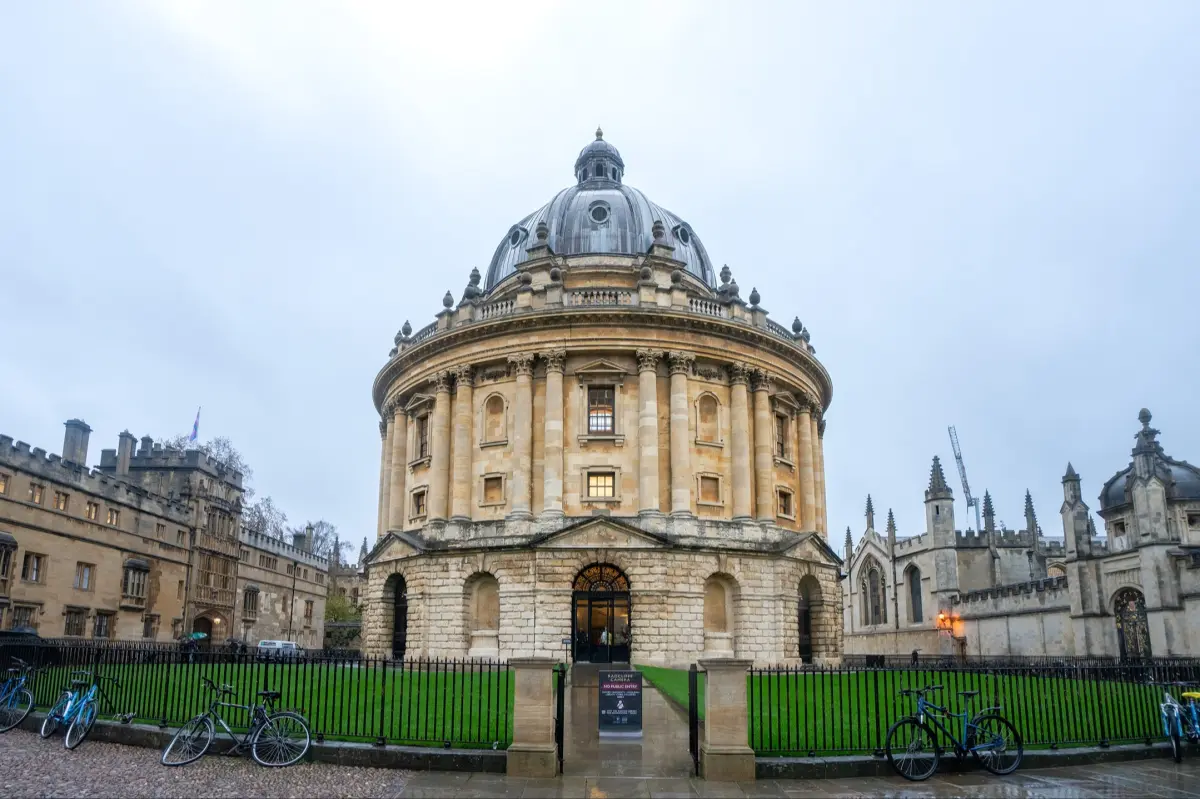
If the jail was the dark heart of the old university, the anatomy theater was its thrilling, gory stage. At the University of Padua in 1595, a six-tiered wooden amphitheater opened, designed not merely for the advancement of science, but as a brazen recruitment tactic. Dissections were public spectacles, often lasting for weeks—or at least until the corpse grew too unpleasant to handle. Imagine the atmosphere: the claustrophobic heat, the stench of decay mingling with the sweat of hundreds of students crammed into the steep, narrow galleries, craning their necks to watch a professor delicately slice into a human body. It was terrifying, mesmerizing, and macabre, yet it lured crowds from across Europe. The academic who organized it understood that without these students, the town of Padua itself would be a “dead body,” culturally and economically annihilated. This obsession with the physical extended to books. In 1264, Padua’s statutes bluntly declared: “Without copies, there would be no university.” Texts were so treasured that scholars would pawn them as collateral for loans, treating a manuscript with the same gravity as a gold bar. The buildings to house these treasures became monuments in their own right, though sometimes priorities went comically awry. In 18th-century Oxford, donors were so spellbound by the prospect of building the glorious, domed Radcliffe Camera that they spent every penny on the structure itself—leaving absolutely no money to buy the books it was meant to contain. A stunning architectural triumph sat hollow and empty, a testament to how sacred and irrational the physical form of knowledge could truly be.
Paragraph 3: The Cold Magic of Concrete
Skip forward to the 20th century, and the university landscape transformed into a sea of grey concrete. It is almost a cliché to joke that these brutalist blocks must have been a mix-up—that the blueprints for a prison or a lunatic asylum were accidentally swapped with those for a school. But those jokes misunderstand the deep optimism embedded in those stark, uncompromising surfaces. Buildings like Simon Fraser University in Canada were not accidents; they were deliberate, defiant declarations. Born out of the ashes of World War II, they represented a robust belief in a new, technocratic, globalist age. From 1944 to 1989, the number of universities globally more than doubled, fueled by a post-war boom. Concrete was the chosen medium, so popular that Mexicans affectionately nicknamed it “el polvo magico”—the magic powder. There was something astonishingly democratic about this material. It was utilitarian, inexpensive, and capable of rising to incredible heights. It promised to house the engineers, physicists, and social scientists who would solve the world’s problems. The harsh, cold surfaces were not meant to evoke medieval cathedrals; they were meant to look like spaceships ready for launch. To the students entering these halls, the very texture of the walls suggested a break from the aristocratic past, a vision of a clean, rational future where human intelligence, unburdened by tradition, could reshape society. It was cold to the touch, but it burned with the feverish heat of progress.
Paragraph 4: The Sky-High Arms Race of Bigness
Scale has always been a weapon. In the New World, the competition to be the biggest was incredibly fierce, as a massive building was the clearest symbol of a colony’s intellectual maturity. When Harvard opened in 1642, it stood as the largest building in all the North American Colonies. A little over a century later, Princeton snatched the title in 1756, and Brown was described—with perhaps a touch of hyperbole—as “a College near as large as Babel.” Each expansion was a civic boast, a physical manifestation of the belief that education was the bedrock of the nation. This obsession with magnitude reached its apotheosis during the Cold War, when architectural ambition became a geopolitical battleground. Joseph Stalin personally commissioned the monumental headquarters of Moscow State University, a towering skyscraper that seemed to punch the heavens. It was impossibly vast—20 miles of twisting corridors, 5,000 rooms, and crowned with a colossal, 12-ton five-pointed red star. There was no ambiguity about the message: this university was a fortress of Soviet intellect. Yet even within the Communist court, the human scale was questioned. Khrushchev, looking at the soaring spire, condemned the hubris. “Why fly to the sky?” he demanded. “What’s wrong with the ground?” The question was rhetorical, but it struck at the heart of a truth—that while these monumental structures inspired awe, they could also dwarf the human spirit, turning students into tiny ants scurrying through an impersonal labyrinth of overweening state power.
Paragraph 5: The Catastrophic Pile of Red Gowns
It wasn’t just stone and concrete that carried profound meaning; it was the very fabric on people’s backs. The history of universities is woven with silk, wool, and bitter, bitter pride. In 18th-century France, arguments over academic robes were not trivial matters of fashion—they were existential battles over hierarchy. The university woke up each morning to decades-long disputes over who had the right to don the prestigious red gown as opposed to the lesser, humbler black. Imagine the petty resentments, the whispered conspiracies in the lecture halls, the officious meetings where academics tore each other apart over the color of a cuff or the length of a train. These sartorial squabbles became indicative of the absurd rigidity of the Ancien Régime. So poisonous did these disputes become that they are considered one of the contributing factors that tipped France into the revolution. The university, riven by internal status anxiety, ultimately disbanded, and the contentious red gowns lost their meaning entirely. This story humanizes the Ivory Tower with a vengeance. It shows that the material structure of the academic world—the robes, the regalia, the cushioned chairs—is never innocent. These artifacts regulate ego, confer prestige, and create jealousy. A piece of cloth could stand in for a life’s work, and an argument over a hat could sow the seeds of a society’s collapse.
Paragraph 6: The Immutable Need for a Place to Stand
Today, as millions of students log onto Zoom lectures and online portals, we are told the physical university is obsolete. Yet even in this digital exodus, the imagery of the university persists. Every single online program advertises itself with beautiful, photoshopped images of historic campuses—ivy-covered brick, ancient oaks, and domed libraries. Why? Because deep inside, we know that people form universities, but universities also form people. The material structure of a campus wields an enormous, silent influence on our psyche. A walk across a quad, the echo of footsteps in a stone corridor, the musty smell of an old library, the sight of a brutalist concrete facade—these all shape our memories, our sense of belonging, and our expectations of what learning can be. The university has acquired a distinguished, visceral history over nearly a millennium, and that history is embedded in its physical tissues. The future will undoubtedly be virtual in many ways, but it will also be material. We will always crave a tangible home for what we hold sacred. As William Whyte, author of The University: A History in Stone, Silk, and Blood, reminds us, the next revolution will not erase the need for a physical ground to stand on. The stones may change—they may become glass, steel, or recycled plastic—but the human desire to gather, to build, and to march across a shared campus remains immutable. The university will have a material future because we are, and always will be, creatures of brick and blood.