







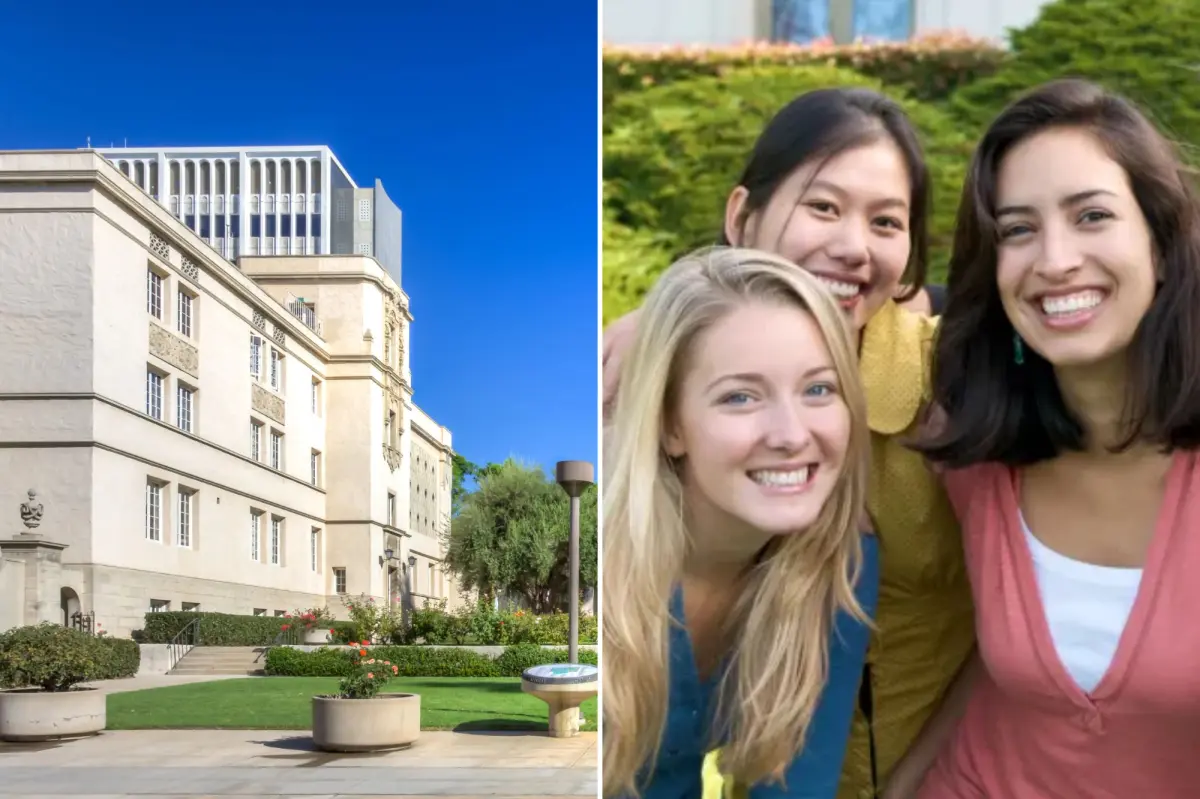
Every spring, an invisible wave of anxiety washes over high school campuses across the globe as millions of teenagers sit before glowing screens, waiting for the pixelated letters that will dictate the trajectory of their adult lives. In the high-stakes theater of American higher education, this annual rite of passage has become increasingly brutal, characterized by plummeting acceptance rates and rising standards that can make even the most accomplished valedictorians feel inadequate. At the absolute pinnacle of this hyper-competitive landscape stands a quiet, palm-shaded sanctuary of scientific genius in Southern California: the California Institute of Technology, affectionately known to the academic world as Caltech. Located in the picturesque city of Pasadena, this elite private university has recently been crowned by Business Insider as the absolute hardest college to gain admission to in the United States, surpassing historic East Coast powerhouses to claim the top spot. With a student body of just over 2,400 minds, Caltech maintains an astonishingly exclusive acceptance rate of a mere 3 percent, transforming the admission process into a modern needle’s eye through which only the most mathematically gifted and intellectually curious can pass. Yet, for the chosen few who receive that coveted acceptance letter, the rewards of entry are unparalleled. Caltech offers a breathtakingly intimate three-to-one student-to-faculty ratio, a pedagogical luxury that virtually eliminates the traditional barriers between undergraduate students and world-renowned researchers. Instead of sitting in the back rows of massive, sterile lecture halls, Caltech students find themselves working side-by-side with Nobel laureates and field-defining pioneers in state-of-the-art laboratories, fostering a collaborative habitat where the next generation of scientific breakthroughs is nurtured in real-time. This unique blend of extreme exclusivity and deep, personalized mentorship has solidified Caltech’s reputation, established since its founding in 1891, as one of the world’s most formidable crucibles of science and engineering, proving that sometimes the grandest intellectual achievements come from the most tightly knit communities.
To truly understand the magnetic pull of Caltech, one must look past the dry statistics and delve into the human experience of those who inhabit its classrooms, where academic pursuit is treated not merely as a career path, but as a consuming life calling. The university, ranked eleventh nationally by U.S. News & World Report, is not a place for the faint of heart; its culture is defined by an uncompromising work ethic and a deep, shared passion for solving the world’s most complex puzzles. The campus hums with the intense energy of young minds majoring in demanding disciplines like Mechanical Engineering, Computer Science, Bioengineering, Chemistry, and Mathematics—fields that represent the very frontier of human technological capability. Confronting these cerebral challenges also means face-to-face confrontation with a formidable financial reality, as annual tuition and fees skyrocket past the $68,000 mark before any financial aid is applied. In an era where student debt is a national crisis, such a price tag can evoke a sense of dread in prospective families, yet the long-term economic calculus of a Caltech education remains incredibly compelling. Despite the initial financial hurdle, the university ranks an impressive sixth nationally for overall educational value, serving as a powerful engine of social and economic mobility. This high rating is largely driven by the spectacular career trajectories of its graduates, who command average starting salaries exceeding $130,000 a year immediately upon entering the workforce. This lucrative return on investment helps to humanize and justify the immense pressure and financial sacrifice required to attend, transforming what could be a crushing financial burden into an extraordinarily secure investment in a student’s future. By offering deep financial aid packages to ensure that brilliant minds are not locked out due to systemic economic barriers, Caltech strives to make this dream accessible, ensuring that talent remains the ultimate currency of exchange on its campus.
While Caltech represents the pinnacle of traditional, research-heavy scientific excellence, the school sitting directly behind it on the rankings represents a radical, modern reimagining of what an elite higher education can look like. Minerva University, situated in the culturally vibrant and tech-forward city of San Francisco, shocked academic traditionalists by claiming the second spot on the list, matching Caltech’s country-leading 3 percent acceptance rate. However, the structural similarities between these two institutions largely end there, showcasing the highly diverse pathways that modern academic prestige can take in the current era. Unlike the traditional, highly localized campus model in Pasadena, Minerva operates on a highly innovative, global rotation system where students live and learn in up to seven different international cities—ranging from Seoul to Berlin to Buenos Aires—throughout their four-year undergraduate journey, utilizing a specialized virtual seminar format to facilitate active learning. This highly unconventional approach is reflected in its fourteen-to-one student-to-faculty ratio, which, although significantly larger than Caltech’s hyper-intimate ratio, still provides a dynamic and deeply participatory learning format designed to foster critical thinking on a global scale. In these international hubs, Minerva students live together in communal residence halls and cook together in shared kitchens, making collaborative cross-cultural exchange a daily reality rather than an abstract concept. The rise of Minerva to the absolute upper echelons of national selectivity highlights a profound shift in the psychology of today’s college applicants, many of whom are eager to break away from standard campus boundaries in favor of real-world global citizenship and entrepreneurial agility. The fierce competition to get into Minerva suggests that the definition of an elite education is expanding, proving that contemporary students are increasingly willing to trade historic lecture halls, quiet libraries, and collegiate sports culture for global exposure, diverse peer groups, and decentralized learning. By standing shoulder-to-shoulder with Caltech at the peak of American selectivity, Minerva demonstrates that bold educational innovation and deep historical tradition are equally powerful magnets for the brightest young minds of our time.
The remarkable dominance of Caltech and Minerva at the summit of this list is not an isolated phenomenon, but rather part of a broader, unmistakable westward shift in the geographic center of American educational prestige. For generations, the northeastern corridor of the United States, with its historic Ivy League institutions, held an unchallenged monopoly on the concept of academic exclusivity. Today, however, California has emerged as a powerhouse of academic selectivity, claiming seven of the top thirty-five slots on Business Insider’s list despite facing relentless competition from long-standing institutions across the nation. Chief among these West Coast titans is Stanford University, situated in the fertile entrepreneurial landscape of Silicon Valley, which secured the fifth spot overall. With an acceptance rate of just 4 percent and an enviable six-to-one student-to-faculty ratio, Stanford represents an almost mythical destination for young dreamers who wish to combine elite academic theory with immediate real-world disruption. The Stanford campus, with its sun-drenched sandstone corridors and iconic palm trees, serves as the ultimate incubator for the tech industry, drawing ambitious applicants who dream of launching the next revolutionary startup or engineering software that changes the fabric of daily life. This unique West Coast ethos, which pairs rigorous research with a casual, forward-thinking optimism, stands in stark contrast to the historic solemnity of New England’s oldest schools. The massive influx of applications to California’s elite universities reveals a fundamental truth about the desires of the modern student: they are drawn to environments that are not just historical monuments of knowledge, but dynamic engines of future progress. This cultural magnetic pull is reinforced by the sheer concentration of venture capital and intellectual capital in the region, creating a feedback loop where students do not merely study the world; they actively build it. As a result, California’s selective campuses have become the default choice for a generation that measures success not by old-world titles, but by real-world disruption and creative utility.
The rich tapestry of California’s presence on this elite list highlights a diverse array of institutional cultures, showing that selectivity is not a one-size-fits-all metric but a quality shared by vastly different campuses. Further down the rankings, Pomona College in the tranquil town of Claremont sits at number twenty-one, offering an idyllic liberal arts experience where undergraduate education is fiercely protected from the distractions of large graduate programs. Just down the road, Claremont McKenna College occupies the thirty-third slot, cultivating a close-knit, highly career-oriented student body focused on leadership, economics, and public affairs. Meanwhile, the legendary cultural and athletic rivalry of Los Angeles is represented by the University of Southern California (USC) at number thirty-one, renowned for its fiercely loyal “Trojan Family” alumni network, and the University of California, Los Angeles (UCLA) at number twenty-six. UCLA holds a particularly proud and significant distinction on this list as the sole public university from California to break into these highly competitive rankings, proving that public institutions can achieve the same level of academic rigor and prestige as their multi-billion-dollar private counterparts while serving a much broader socio-economic student demographic. Rounding out California’s impressive showing is Stanbridge University in Irvine at number thirty-five, an institution focused on high-demand healthcare and technical programs, proving that selectivity is also highly valued in specialized, professional fields. Together, these institutions offer a rich spectrum of experiences—ranging from the intimate, intellectual discussions of Claremont to the high-energy, Division I sports-fueled spirit of Westwood and the professional focus of Orange County. This excellence is not achieved by accident, but through a deliberate commitment to pulling the absolute best out of every single student, creating a distinct breed of graduates who are as versatile as they are competent. From the quiet libraries of Claremont to the sunlit plazas of Los Angeles, these campuses represent the beautiful, complex multifaceted reality of what it means to learn and grow in California.
To formulate these compelling rankings, Business Insider analyzed raw data from the National Center for Education Statistics’ College Navigator database, focusing strictly on institutions admitting ten percent or fewer of their applicants for the 2024-25 academic year, using total application volume to break ties between schools with identical acceptance rates. Yet, while these formulas provide clean, objective rankings, they also invite us to look closer at the human element that breathes life into these cold percentages. Behind every low acceptance rate, every tie-breaker, and every elite ranking is an incredibly intense human narrative: teenagers pulling all-nighters, parents pooling their life savings, and teachers writing heartfelt recommendation letters in the hope of helping a young person secure a brighter future. The obsession with getting into a “top” school can easily become a source of overwhelming anxiety, making it easy to forget that a university’s selectivity is not a direct measure of a student’s inherent value, potential, or happiness. As we look at the breathtaking success of California’s institutions, from the scientific wonders of Caltech to the global classrooms of Minerva, we must recognize that the ultimate value of education is not found in the gatekeepers who control the doors, but in the passion and resilience of the young minds who pass through them. These rankings are a celebration of academic excellence and the relentless pursuit of knowledge, but they should also serve as a reminder of the beautiful diversity of talent across America. By shifting our focus from the stress of exclusion to the joy of learning, we can begin to see college admissions not as a brutal sorting mechanism, but as an opportunity for self-discovery and growth. In the end, the most important acceptance letter is the one we write to ourselves, embracing our own potential to make a difference, regardless of the brand name printed at the top of our degree.