


The Unseen Threat to America’s Favorite Vegetable
Picture a typical American dinner table. There’s likely a protein, perhaps some rice or potatoes, and, if you’re lucky, a vibrant green pile of steamed broccoli. It’s a staple of healthy eating, a side dish so common it’s practically invisible. But what if we told you that this simple, dependable vegetable is at the center of a quiet, looming crisis? It turns out that America’s favorite green might be in trouble, not because people are eating less of it, but because of where—and how—it’s grown. The entire country’s supply is hanging by a thread, a thread that is not only delicate but also incredibly dry. The source of this vulnerability isn’t a plague or a pest, but something far more elemental and increasingly unpredictable: water. And the epicenter of this potential problem is a single state that holds an almost unbelievable monopoly over the broccoli on our plates.
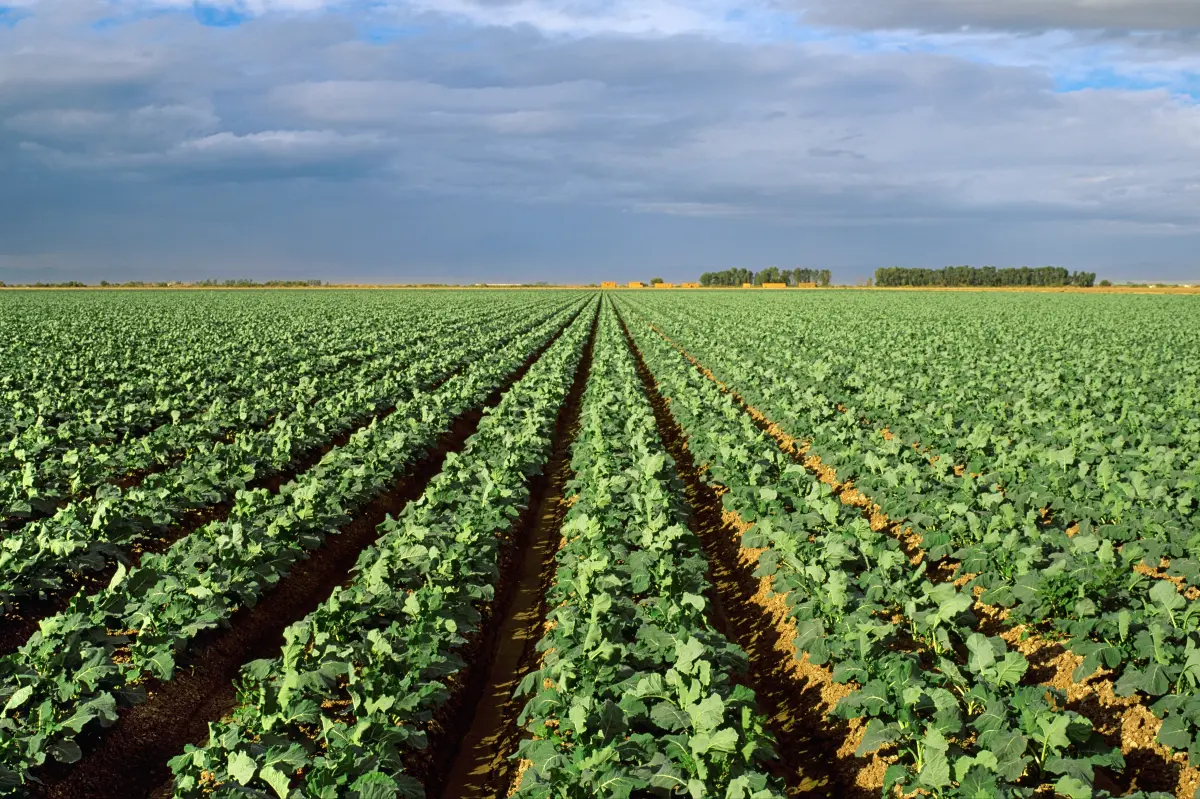
The numbers are striking. When you bite into that crunchy, verdant floret, there’s a better than nine-in-ten chance it was grown in the sun-drenched fields of California. This isn’t just a majority; it’s a near-total dominance. California alone produces over 90% of the fresh broccoli consumed in the United States. This arrangement has worked for decades, providing Americans with a consistent, relatively inexpensive supply of the vegetable. But this geographic concentration, this single point of failure, is what keeps agricultural economists and supply chain experts up at night. When you put all your eggs—or in this case, your broccoli florets—in one basket, the risk isn’t just significant; it’s existential. And the primary threat to that basket is the increasingly volatile and drought-prone climate of the Golden State.
A recent study from researchers at Cornell University, published in the Agribusiness journal, has put a sharp focus on this risk. The researchers dug deep into decades of data, analyzing twenty years of shipping records and federal drought information from the year 2000 onward. They constructed a sophisticated model to understand how the nation’s broccoli supply responds to the stress of water shortages. The findings are a wake-up call. Their model simulated 14 different potential sources for the country’s broccoli, from the dominant California Fields to Arizona, Mexico, Canada, and even a coalition of 10 eastern states. The results painted a stark picture: a severe, multi-year drought in California could trigger a catastrophic 20% drop in the total broccoli shipments across the country. Even a more moderate drought would cause a significant 9% decline. This isn’t a hypothetical future scenario; the report notes that the California drought of 2007-2009, which produced a 20% decline in this crop, shows what can happen. This immediate, tangible past event proves we are not talking about a theoretical risk, but a recurring reality.
The underlying mechanics are simple: when water is scarce, crops suffer. The study found that during these periods of drought, broccoli crop yields have diminished, and farmers have been forced to reduce the amount of acreage they plant. You can’t cultivate a thirsty plant like broccoli in a desert. This reduction in supply, if it were to happen on a large scale, would send shockwaves through the American food system. Prices at the grocery store would spike, and in more severe scenarios, shelves could literally be empty. The convenience and low cost that consumers take for granted would evaporate as quickly as the moisture from the parched California soil. The current, stable system is showing cracks, and the Cornell researchers, including Bingyan Dai, have highlighted that drought events in California have become more frequent and intense in recent years, making the reliable access to this “humble” vegetable far less certain.
So, what is the proposed solution to avert this potential food crisis? The answer, according to the Cornell team, is diversification. The study suggests that the key to a more resilient future is to stop relying so heavily on a single region. This means expanding broccoli cultivation to other parts of the country, specifically the East Coast. It’s a strategy of distributed risk. If California gets hit by a historic drought, the East Coast could help fill the gap, preventing a national shortage. The researchers believe that growing more broccoli in eastern states could significantly strengthen the supply chain. Their model even suggests that such a move could reduce supply chain costs by millions of dollars under a severe drought scenario, as the shorter shipping distances from East Coast farms to major population centers on the Eastern Seaboard would offset some of the increased production costs. This idea of “sensible diversification” is seen as a critical buffer against climate unpredictability.
However, not everyone agrees with the urgency of this warning. Christopher Valadez, the president and CEO of the Grower-Shipper Association of Central California, pushes back against the pessimism of the study. He argues that the “doom and gloom” narrative overlooks California’s incredible resilience. In his view, California’s farmers have proven time and time again that they can adapt. They have navigated the state’s cyclical droughts for generations, developing innovative irrigation technologies and water management practices. From their perspective, California’s growing regions boast a “proven adaptive capacity and quality advantages” that have allowed them to continue supplying the country with top-tier broccoli even during the toughest dry spells. He views diversification not as a necessary overhaul, but as one tool among many in a broader risk management strategy, rather than a fundamental redesign of the supply chain.
Despite this reassurance, the Cornell researchers remain steadfast in their conclusion. They agree that California will, for the foreseeable future, be a critical production hub. But they see a future where a more varied geographic footprint would create a steel-reinforced safety net. The goal isn’t to abandon California, but to build a system where no single drought can cripple the national diet. As Bingyan Dai states, a more diversified supply chain that includes the East Coast could create a more resilient and robust system for the entire country. By spreading the risk across different climates and water sources, Americans can shield themselves from the worst impacts of climate change. It’s a complex problem with a seemingly simple, yet challenging, solution: we need to start growing our food in more places to continue enjoying it in all of them. The next time you steam a head of broccoli, it might be worth thinking about the long, vulnerable journey it took to get to your plate, and the water it needed to get there.