



From Meme Coins to Real-World Assets: The New Chapter in Solana’s Growth Story
As speculative trading cools, a wave of tokenized finance is quietly reshaping the network’s economic foundation
The launchpad that changed the game
In the fast-moving world of cryptocurrency, few stories have captured attention quite like Solana’s emergence as the premier hub for meme coin trading. At the center of that explosion sits Pump.fun, a token launchpad that has grown into one of the most powerful revenue engines in the entire blockchain industry. The numbers are striking by any measure: the platform generated roughly $39 million in trailing 30-day revenue, a figure that represents about 20 percent of all Solana application revenue. Add in Pumpswap, the exchange layer that emerged from the same ecosystem, and the total climbs another $15 million. For context, that kind of recurring fee generation places Pump.fun in the same conversation as the largest protocols in crypto, not just on Solana but across every major blockchain network. The platform essentially transformed the act of creating a token into a consumer product — something anyone with a few dollars and an internet connection can do in under a minute. That accessibility ignited a cultural and financial phenomenon, pulling in waves of retail users drawn by the spectacle of meme coins, the thrill of volatility, and the lure of overnight gains. The launchpad’s success became synonymous with Solana’s broader identity, shaping the network’s reputation as a fast, cheap, and slightly chaotic place where anything could happen. But the story of Solana’s consumer economy is no longer just about meme coins. Beneath the surface, recent data from Castle Labs reveals a more nuanced picture, one in which the network’s heavy dependence on speculative trading is beginning to ease — and a second, more structural growth story is quietly taking shape.
A consumer economy in transition
The clearest sign of that shift is the changing shape of Solana’s consumer revenue distribution. According to the Castle Labs data, weekly consumer-app revenue across the Solana ecosystem ranged from $13.5 million to $42.6 million over the past year, with a median of $18.2 million. Those are healthy numbers by any standard, but the more telling detail is how that revenue is spreading out. Eight of the ten largest applications from late 2025 remained in the top ten by the third quarter of 2026, a level of stability that the meme coin era was never known for. At the same time, the combined share of consumer revenue held by the top three applications fell from 64 percent to 50.2 percent. That is a meaningful change. It means that while the biggest players are holding their ground, a wave of newer products is carving out significant market share. The diversification is not happening at the margins; it is happening at the core of Solana’s consumer economy. New entrants in areas like social trading, prediction markets, gaming, and niche DeFi tools are attracting real usage and real revenue. The platform’s early reputation as a place where a handful of meme coin platforms captured nearly all of the activity is fading. What is emerging in its place is a more layered ecosystem, one where consumer attention is distributed across a wider range of products and use cases. In the broader context of blockchain adoption, this kind of diversification is often a precursor to maturation — a sign that a network is moving beyond the boom-and-bust cycles that define early-stage crypto markets. For Solana, that transition is happening in real time, and the data is beginning to reflect it in ways that investors and developers are starting to notice.
RWAs: the quiet revolution
While the consumer side of Solana shows signs of healthy diversification, the bigger structural shift is happening in a quieter corner of the market: tokenized real-world assets, or RWAs. The numbers here are dramatic. Solana’s RWA market value climbed more than 600 percent in a single year, jumping from roughly $700 million to $4.37 billion. To put that in perspective, Ethereum — long considered the default network for institutional-grade tokenization — grew its RWA holdings from $15.5 billion to just $16.6 billion over the same period. The contrast is stark. Ethereum remains the larger market in absolute terms, but the growth trajectory tells a different story. Solana is closing the gap at a pace few expected, and it is doing so by attracting projects that bring real financial assets onto the blockchain. RWAs encompass a broad category: tokenized versions of stocks, bonds, credit instruments, commodities, and other traditional financial products that are issued on-chain. For years, the promise of tokenization has been one of the crypto industry’s most talked-about opportunities, yet actual adoption was slow to materialize. That is changing now, and Solana is emerging as one of the primary beneficiaries of this shift. The network’s speed and low transaction costs make it an attractive home for platforms looking to build liquid markets for tokenized assets. As the infrastructure matures and more institutional players enter the space, the question is no longer whether tokenization will happen, but which blockchain will capture the largest share of the market. The early returns suggest Solana is a serious contender, and the pace of growth is accelerating with each passing quarter.
Tokenized stocks and yield-bearing assets take hold
Nowhere is that trend more visible than in the market for tokenized stocks. Over the past year, the value of tokenized equities on Solana jumped from $63 million to $455 million, driven by platforms including xStocks and Backpack. These platforms allow users to trade tokenized versions of major publicly traded companies, bringing traditional equity markets into the crypto ecosystem in a way that feels native to the chain’s existing user base. More telling still, more than $65 million of those tokenized equities are already being used to earn yield. That is a crucial detail. It signals that these assets are not just sitting in wallets as speculative holdings; they are being integrated into Solana’s broader DeFi ecosystem as working capital. Yield-bearing RWAs represent a convergence of two worlds that have historically been kept separate. On one hand, they offer crypto users access to traditional financial assets that were previously out of reach. On the other, they offer traditional asset holders a way to put their holdings to work in decentralized finance, earning returns through lending protocols, liquidity pools, and other DeFi instruments. The broader picture is equally compelling. Active RWA value in Solana DeFi now exceeds $500 million, roughly 8 percent of the network’s net value locked. That might sound modest in absolute terms, but it represents a significant vote of confidence in the chain’s ability to support real financial use cases beyond speculation. The infrastructure being built around RWAs — lending protocols, yield aggregators, collateralized borrowing — is creating a foundation that could support far larger volumes in the years ahead, and the momentum shows no signs of slowing.
Can growth outlast speculation?
All of this raises a question that is becoming increasingly central to Solana’s investment thesis: can growth outlast speculation? The honest answer, based on the data, is that Solana still depends heavily on speculative consumer activity. Meme coins remain a dominant source of attention and revenue, and the volatility that comes with them is baked into the network’s character. But the Castle Labs data also shows that the ecosystem is actively building around that core. Lending markets are deepening. Tokenized credit is emerging as a new asset class. Equities are being brought on-chain. Yield-bearing assets are finding real users. Each of these developments adds a layer of economic activity that does not rely on the next meme coin going viral. The investment case for Solana is therefore shifting. It is no longer enough to evaluate the network purely on the strength of its consumer meme coin economy, nor should it be dismissed as a speculative casino. The reality is more complex and more interesting. Solana is becoming a hybrid ecosystem, one that retains the energy and retail appeal of a consumer platform while quietly building the infrastructure for institutional-grade finance. Whether those two identities can coexist in the long term remains an open question, but the early evidence is encouraging. The platforms building on Solana are not choosing between speculation and substance; they are finding ways to combine them, and that combination is what makes the network’s current trajectory so compelling to a growing number of market participants.
A foundation for the next phase
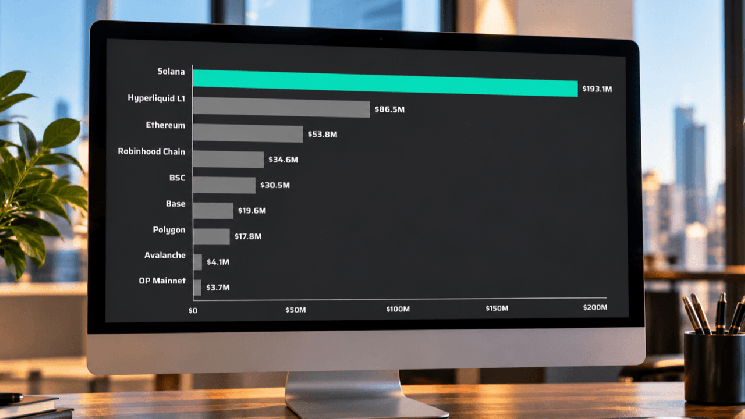
Looking ahead, the next phase of Solana’s evolution will not be judged by how many meme coins launch on its network, but by whether the consumer revenues that defined its rise can coexist with deeper lending markets and productive real-world assets. If that happens, the $193 million in monthly application revenue that the ecosystem currently generates may look less like a cyclical peak and more like a foundation for what comes next. The infrastructure is being built now, in real time, by a wave of developers and entrepreneurs who see Solana as a platform capable of supporting both the frivolous and the fundamental. Meme coins brought the attention; RWAs are bringing the substance. Together, they are forming an ecosystem that is more resilient, more diverse, and more difficult to dismiss than either one would be alone. For investors and observers watching from the sidelines, the takeaway is clear: Solana’s story is no longer just about speculation. It is about whether a blockchain built on speed and accessibility can evolve into a home for the broader financial system. The early signs suggest it can. The next year will determine whether that promise becomes reality, and whether the revenue engine that meme coins built becomes the foundation for something far more enduring — a digital economy that can weather the cycles, attract institutional capital, and finally deliver on the long-promised vision of blockchain as infrastructure for the global financial system.