


Solana’s Quiet Pivot to China: The Tech Company Play That Has Binance’s CZ Taking Notes
In a move that has sent ripples through the digital asset industry, Solana has managed to accomplish something that has eluded many of its rivals: establishing a tangible, on-the-ground presence in the Chinese market. The surprise was so palpable that even Binance founder Changpeng Zhao, better known as CZ, took a moment to acknowledge the milestone. “It’s amazing to see that Solana was able to advertise and even get an office in China. BNB Chain was not able to do this, so far. Hopefully, what’s good for one industry player is also good for the rest,” he declared, offering a rare tone of respect for a competing ecosystem. The circumstances surrounding this breakthrough, however, are far more nuanced than the spectacle of a public marketing campaign. Rather than engaging in a head-on collision with Beijing’s longstanding ban on cryptocurrency trading, Solana appears to be executing a carefully calibrated, long-term strategy—rebranding itself not as a crypto powerhouse, but as a forward-thinking technology enterprise pushing the boundaries of artificial intelligence and robotics. The implications of this subtle repositioning could redefine how Western blockchain entities approach the world’s second-largest economy.
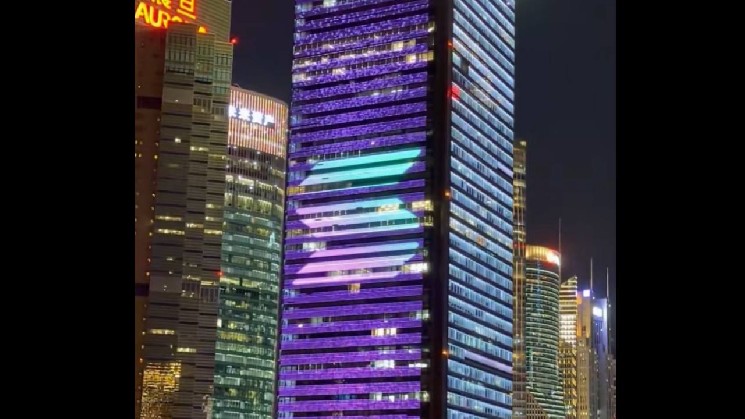
The ignition point for this wave of speculation was as flashy as it was fleeting. Reports surfaced that a Solana-branded light show had illuminated the Shanghai skyline, a visual spectacle designed to capture attention and generate social media buzz. Yet, the digital footprint of that event proved to be highly contested. Social media sources noted that videos of the Solana light show were actively taken down on Douyin, the Chinese equivalent of TikTok, with searches for “$SOL Shanghai” allegedly being flagged and classified as a violation of platform policies. This aggressive moderation might sound like a death knell for immediate mainstream visibility, but many industry observers have reframed the narrative entirely. They argue that the disappearance of these videos is not necessarily a sign of failure, but rather a consequence of the uncomfortable straddle Solana is attempting. By avoiding the language of tokens and trading, the project is trying to slip past the regulatory censorship that targets financial speculation, yet the mere association with a cryptocurrency name still triggers algorithmic caution. This duality—entering as a builder, not as a broker—represents the core of Solana’s new approach to a daunting jurisdiction.
Digging beneath the surface of the light show and the social media crackdown, credible local reports indicate that this entire endeavor is part of a deliberate push to enter China strictly under the guise of a tech company. According to Techflow, a prominent industry media outlet, Solana’s groundwork began months ago, well before the recent spectacle. By March, the Solana Foundation had reportedly inked a partnership with the prestigious Shanghai Hongqiao Alibaba Center, a key innovation hub, to launch what was dubbed the “Shanghai Builder Station.” Perhaps most striking is that this initiative is said to have received an endorsement from local government bodies. For a sector that has historically been treated with extreme suspicion by Chinese officials, securing any form of governmental nod—even for a tech-centric initiative—is a massive diplomatic victory. It signals a willingness from local authorities to separate the wheat (technological development) from the chaff (speculation). By aligning with the Alibaba ecosystem, Solana is effectively embedding itself within China’s state-sanctioned tech infrastructure, leveraging the infrastructure of e-commerce and cloud computing giants to quietly build a beachhead.
To substantiate its commitment to this “tech-first” narrative, Solana is rolling out the Solana Accelerate China event across four major innovation hubs: Shanghai, Hangzhou, Shenzhen, and Beijing. The itinerary is a masterclass in political sensitivity. The agenda reportedly focuses exclusively on themes such as artificial intelligence, robotics, “physical AI,” emerging markets, and local business development. Notably, there is a conspicuous absence of topics directly linked to market speculation, trading volumes, or the utility of the $SOL token itself. This is a stark divergence from the typical crypto conference circuit, where price analysis and DeFi yields dominate the speakers’ list. Instead, Solana is positioning its blockchain as the underlying rails for next-generation technological infrastructure—a layer that enables AI agents to transact, robots to coordinate, and physical infrastructure to communicate. By shifting the discourse from “digital currency” to “digital infrastructure,” Solana is effectively reframing the value proposition for a Chinese audience that cannot legally buy its token but can legally utilize its open-source protocols and developer tools. This move is designed to attract the best engineering talent in China without ever running afoul of financial regulations.
From a strategic standpoint, this holistic approach signals that the Solana Foundation is prepared to play the long game, patiently awaiting a potential pivot in China’s regulatory stance. It is an open secret that Beijing maintains a hardline ban on cryptocurrency transactions, viewing them as a threat to financial stability. However, the same government has simultaneously published white papers advocating for blockchain technology, suggesting a bifurcated view: the technology is good, the speculation is bad. Solana is betting that this rift in policy—between the “chain” and the “coin”—is an opportunity. By embedding itself as a builder in the AI and robotics sectors, Solana positions itself to be the logical beneficiary should China eventually relax its stance on digital assets. While competitors like BNB Chain have struggled to even secure a physical office, let alone a government-endorsed partnership, Solana is proactively cultivating relationships with local developers and enterprises. This ensures that if and when the regulatory dam does break, Solana will not be a newcomer trying to learn the ropes; it will already have a fully operational network of partners, offices, and deployed applications. It is a tactic reminiscent of the “trojan horse,” but rather than hiding soldiers inside a wooden structure, Solana is hiding legitimate technological utility in plain sight.
The ultimate question remains whether this strategy will pay off—and the answer carries significant weight for the broader crypto ecosystem. If Solana successfully navigates the Chinese market, it will not only secure a foothold in one of the world’s most dynamic tech landscapes but also set a precedent for how other networks might follow suit. CZ’s comments regarding BNB Chain’s inability to do the same highlight the competitive anxiety that exists among the top-tier platforms. However, there is a distinct possibility that Solana’s “leg up” is actually double-edged. If Beijing moves to crack down on this “tech company” disguise, Solana could face severe reputational and operational backlash. Yet, if the gambit works, Solana will have achieved something monumental: demonstrating that blockchain networks can exist in China without being defined by the speculative frenzy of their token prices. The next few months will be critical, as the Solana Accelerate China tour moves from city to city. Whether or not China formally changes its crypto policy, the groundwork being laid today ensures that when the moment of change arrives, Solana won’t just be knocking on the door—it will already be sitting at the table, having long ago claimed its seat in the vibrant, fast-paced world of Chinese technological innovation.