






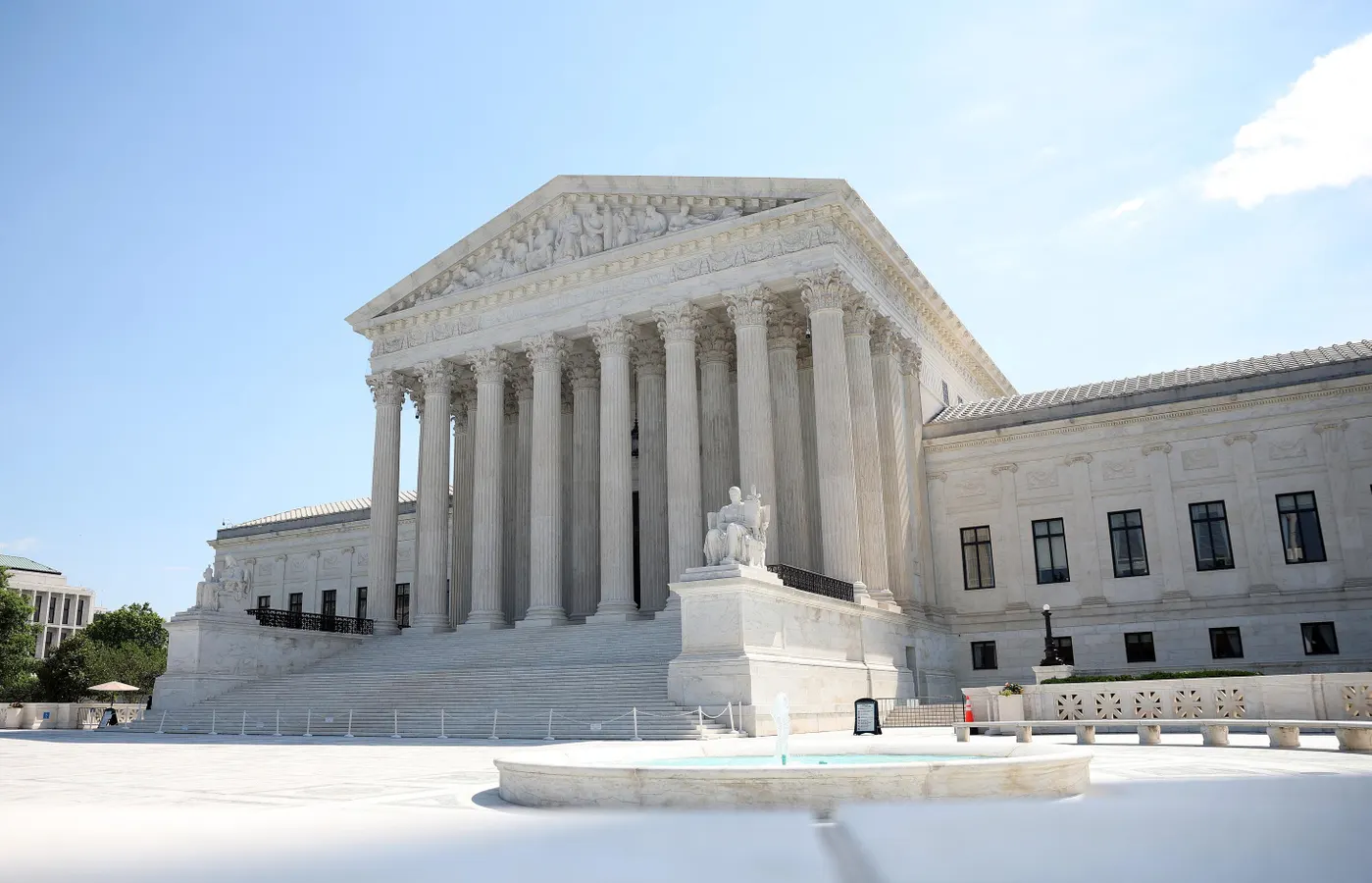
On a Tuesday afternoon that will likely reshape the landscape of American democracy for generations to come, the Supreme Court handed down a monumental 6–3 decision that dismantled decades-old limits on how political parties can coordinate their spending with individual candidates. For years, the legal boundaries of campaign finance functioned like high, albeit leaky, walls designed to keep political parties from acting as direct financial proxies for the politicians running under their banners. By striking down these coordination caps, the conservative majority of the nation’s highest court has effectively rewritten the playbook for the upcoming November midterms and beyond. What was once a highly regulated, compartmentalized dance of campaign contributions has now become a direct, unimpeded pipeline of cash. The ruling represents a profound shift in how power is brokered in Washington, turning what used to be a complex web of independent expenditures into a synchronized, highly centralized money-moving machine. At its core, the decision represents a major philosophical victory for those who argue that financial contributions are a form of political speech protected by the First Amendment—a challenge championed by the National Republican Senatorial Committee and former Senator J.D. Vance, now the Vice President. Yet, beneath the high-minded legal arguments about constitutional liberties lies a raw and immediate political reality: a massive structural advantage has just been handed to the Republican Party, while raising deep, systemic anxieties about the creeping influence of ultra-wealthy donors on the American electoral system.
To understand the sheer magnitude of this decision, one must look at the meticulously calibrated, almost labyrinthine rules that previously governed American campaigns. Before this ruling, political parties were strictly constrained in how much they could spend in direct, strategic coordination with their candidates—meaning they could not simply sit down with a candidate’s campaign manager and decide how to spend party funds on targeted advertisements, staff, or rallies. The law maintained strict, seemingly arbitrary hard caps: a party could only spend between $65,300 and $130,600 on an individual House candidate, between $130,600 and roughly $4 million on a Senate candidate, and up to $32.4 million on a presidential nominee. These boundaries were built on the premise that candidates and parties must operate in somewhat separate worlds to prevent political parties from becoming mere shell companies for wealthy special interests. By erasing these limits, the Supreme Court has cleared away the legal friction that once kept campaign strategists awake at night. Now, party leadership can coordinate directly, down to the very cent, with any candidate’s campaign, planning joint advertising blitzes and synchronized state-level campaigns with a level of efficiency that was previously illegal. For political operatives, this represents the end of an era of frustrating workarounds, allowing them to finally merge their financial arsenals with the campaigns of the candidates themselves.
This newly deregulated financial landscape is expected to arrive as an immediate godsend for the Republican Party, exposing a deep structural divide in how the two major parties raise their money. Historically, the Democratic Party has excelled at building highly successful, grassroots digital fundraising apparatuses, relying on millions of regular citizens contributing small amounts of ten, twenty, or fifty dollars directly to individual candidate accounts. These small-dollar donations are highly valuable because they go straight to the candidate, but they are difficult to scale quickly. Republicans, conversely, have long possessed a distinct advantage in cultivating massive, high-net-worth mega-donors who are eager to write six-figure checks. However, because individual contributions to a single candidate have historically been legally capped at a modest $7,000 per election cycle—split evenly between the primary and the general—these wealthy conservative donors previously had very limited avenues to support their favorite candidates directly. Now, they can bypass those individual caps by writing massive, legally permissible checks to national and state party committees, which are capped at a much more generous $44,000 for national parties, alongside an additional $132,900 for specialized accounts. With the coordination hurdles removed, the Republican Party can now take these massive checks and inject them directly into the campaigns of candidates who might otherwise be struggling to match the grassroots fundraising of their Democratic opponents. The GOP was so confident in this outcome that they had been stockpiling cash in anticipation of the ruling, boasting a massive $125.5 million cash reserve compared to the Democratic National Committee’s meager $14.9 million and lingering debt, prompting party leaders to warn their opponents not to write their electoral obituary just yet.
Behind the celebration of the Republican victory, however, lies a dark and urgent warning from the court’s liberal minority, who see this decision as an open invitation to systemic corruption. In a stinging, deeply concerned dissent joined by Justices Sonia Sotomayor and Ketanji Brown Jackson, Justice Elena Kagan painted a bleak picture of an electoral system where wealthy donors can now easily buy direct access and influence over future lawmakers. The court’s conservative majority argued that federal “earmarking” laws—which prohibit donors from explicitly dictating that their party donation must go to a specific candidate—would prevent any corrupt behavior. But the dissenting justices dismissed this notion as naive, pointing out that in the real world of backroom politics, explicit written instructions are rarely needed. Through the rise of joint fundraising committees, where a candidate and a party manage a single pool of raised funds together, the line between party money and candidate money has been completely blurred. Sotomayor warned of simple, devastatingly legal “quid pro quo” arrangements where a candidate might ask a donor to contribute to their joint victory fund with the unspoken, but mutually understood, promise of future political favors or regulatory concessions. By allowing political parties to act as direct financial laundering units for wealthy patrons, the dissenters argue that the court has effectively legalized a system where the loudest voices in our democracy are those with the deepest pockets, further eroding the average citizen’s trust in the integrity of their government.
Yet, beyond the abstract debates over campaign finance theory and constitutional ethics, this ruling will have an immediate, sensory impact on the daily lives of ordinary citizens, most notably through the television screens in their living rooms. Under federal communications law, television and radio broadcasters are legally required to offer political candidates the “lowest unit charge” for advertising space, a massive discount that is not extended to political parties or independent Super PACs, who are forced to pay premium, highly inflated rates. Historically, this meant that Democrats, with their cash-rich candidate campaign accounts, could buy significantly more airtime for the same price than Republican party organizations could. Tuesday’s ruling completely upends this dynamic by allowing national political parties to bypass their own high advertising rates; they can now coordinate directly with candidates to purchase ads at those highly discounted candidate rates. The practical consequence of this technical legal shift is that the airwaves in battleground states are about to be absolutely flooded with cheap, coordinated, and highly targeted political advertising. Rather than seeing a diverse array of independent group ads, voters will now be subjected to a relentless onslaught of highly polished, party-funded campaigns produced at a fraction of the previous cost, turning local television broadcasts into high-volume political battlegrounds ahead of the crucial midterms.
As the dust settles on this landmark ruling, the future of American campaign finance remains highly uncertain, setting the stage for an intense, retaliatory arms race between the two parties. While Republicans are positioned to reap the immediate benefits in the upcoming midterms, political analysts warn against assuming this advantage will remain permanent. The history of American politics is a story of rapid adaptation, and Democratic strategists are undoubtedly already back at the drawing board, designing new joint fundraising structures and fundraising networks to exploit these newly erased spending limits for themselves. What is certain, however, is that the firewall between candidate campaigns and national party organizations has been permanently breached, accelerating a trend toward the nationalization of local elections. As local congressional races are increasingly funded and run by centralized national party committees armed with unlimited mega-donor cash, the unique, localized voices of individual candidates risk being entirely drowned out. Ultimately, this Supreme Court decision represents far more than a technical adjustment to campaign rules; it is a profound realignment of democratic power, leaving ordinary voters to navigate an political landscape where the boundaries of money and influence have been redrawn, and where the true cost of a vote has never been higher.