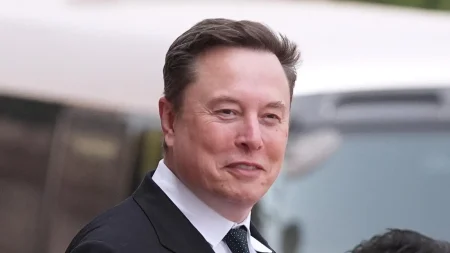







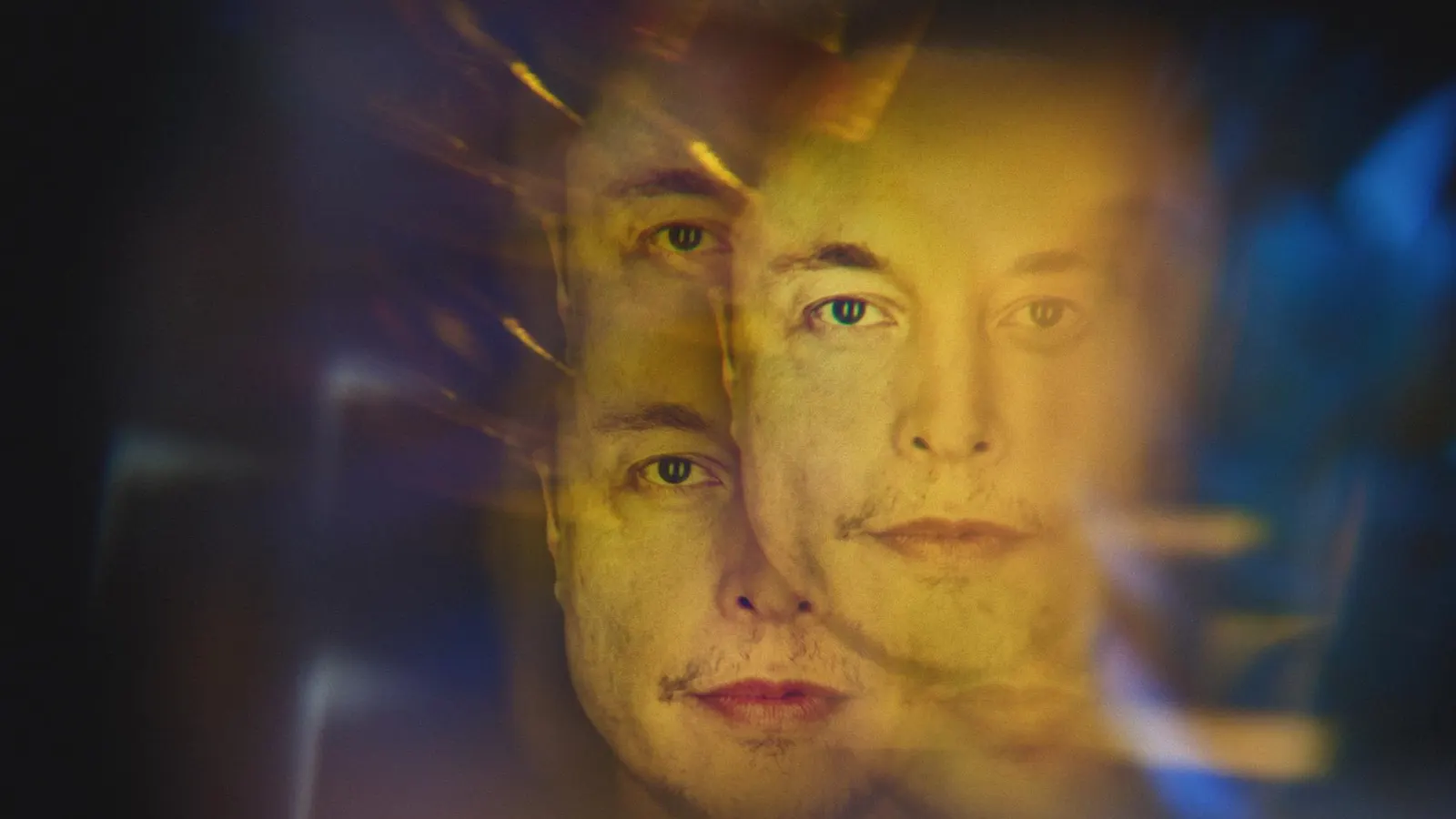
The global financial landscape is standing on the precipice of an unprecedented epoch, driven by the astronomical ambitions of a single individual and the rocket engines of his most celebrated enterprise. Later this month, SpaceX is poised to price its highly anticipated initial public offering (IPO) at a staggering valuation of $1.75 trillion, equivalent to $135 per share. This landmark public debut is not merely a watershed moment for the aerospace industry; it is the catalyst that is expected to propel 54-year-old Elon Musk into a financial dimension never before occupied by a human being: the world’s very first trillionaire. According to Forbes’ real-time tracking, Musk’s net worth stood at an already unfathomable $825 billion as of Wednesday afternoon. However, the impending IPO is set to rewrite the record books. According to a prospectus filed last month, Musk holds a commanding stake of 4.8 billion shares—representing roughly 42% of SpaceX’s common stock—alongside 350 million stock options carrying a modest exercise price of $8.39 per share. When the opening bell rings and SpaceX stock begins trading at its target price of $135, this colossal cache of shares and options will instantaneously be worth $688 billion. While conservative estimates had previously pinned the value of Musk’s SpaceX holdings at a lesser $500 billion—a figure tied to the private $1.25 trillion merger in February with his artificial intelligence and social media venture, xAI—the public markets are preparing to unleash the true, unrestricted value of his spacefaring empire, officially pushing his personal wealth into the elusive thirteen-digit territory.
To fully understand the gravity of Musk’s impending trillionaire status, one must look at the broader, intricately woven tapestry of his diversified industrial empire, which stretches far beyond the launchpads of Cape Canaveral. Beyond his massive equity in SpaceX, Musk retains an 12% stake in the electric vehicle pioneer Tesla, valued at approximately $174 billion, alongside a parallel war chest of Tesla stock options worth an additional $121 billion. This is further augmented by his ownership in Neuralink, the brain-computer interface startup seeking to merge human consciousness with computational power, and The Boring Company, his subterranean infrastructure organization, not to mention billions of dollars in liquid capital harvested from previous strategic sales of Tesla stock. This multi-industry dominance has created a wealth chasm between Musk and the rest of the global elite that is historically unprecedented. Only eight months ago, in October, Musk became the first human to cross the $500 billion threshold, and only one other person in history—Oracle’s visionary co-founder Larry Ellison—has ever managed to eclipse the $400 billion mark. Today, Musk is nearly three times wealthier than the world’s second-richest person, Google co-founder Larry Page, whose fortune sits at a comparatively modest $295 billion, while Ellison has slipped to third place with a net worth of $283 billion. This staggering disparity humanizes the sheer scale of Musk’s economic reach, illustrating how a modern industrialist has managed to accumulate personal resources that rival, and in many cases exceed, the gross domestic products of entire sovereign nations.
The primary engine of this historic wealth accumulation has undoubtedly been SpaceX, a company that has defied traditional market gravity and transformed from a cheeky alternative to government space agencies into an indispensable pillar of global defense, telecommunications, and scientific discovery. Since crossing the $100 billion valuation milestone during a private secondary transaction in 2021, SpaceX has grown its market value more than twelvefold in a span of just a few years. What makes this meteoric rise particularly fascinating to market analysts and everyday observers alike is the stark contrast between the company’s valuation and its current bottom-line reality. In 2025, SpaceX reported an annual revenue of $18.7 billion, yet it simultaneously posted a net loss of $4.9 billion. In a traditional corporate environment, such a deficit might trigger panic among shareholders, but SpaceX is no ordinary company. Investors are eager to pay a premium because they are buying into a grand, long-term vision of humanity’s future. The company’s financial allure is anchored in the exponential expansion of its Starlink satellite constellation, which aims to blanket the planet in high-speed internet, and its highly disruptive plans to construct solar-powered data centers directly in Earth’s orbit. By placing artificial intelligence infrastructure in the cold vacuum of space, SpaceX seeks to solve the immense cooling and energy challenges plaguing terrestrial data centers, effectively merging the AI boom with the final frontier and positioning itself as the infrastructure backbone of the twenty-first century.
Yet, for all the stellar promise of SpaceX, Musk’s path to the trillion-dollar crown remains intimately tethered to the terrestrial challenges of his first major corporate love, Tesla. The path to becoming and remaining a trillionaire is a delicate tightrope walk, and even a modest downturn in Tesla’s stock price could delay or temporarily derail this historic milestone. The relationship between Musk and the electric carmaker is governed by a complex web of corporate agreements that require his constant, undivided focus—a taxing demand for a man split between half a dozen revolutionary enterprises. Under the strict terms of an updated incentive agreement signed in April, Musk faces a high-stakes ultimatum: he must forfeit his entire $121 billion stash of Tesla stock options if he fails to remain active as the company’s Chief Executive Officer, or at least as an executive officer directly responsible for product development and operations, until January 2028. This clause acts as a set of corporate golden handcuffs, designed by the board to ensure that the mercurial founder does not abandon the pioneering automotive brand to chase his Martian ambitions or focus entirely on his social media and artificial intelligence plays. If Musk yields to distraction or shifts his focus too radically over the next eighteen months, he risks losing a twelve-figure fortune in a heartbeat, a reality that adds a layer of intense personal drama to his daily operational decisions.
Despite these binding constraints, the symbiotic relationship between Musk and Tesla continues to produce corporate compensation packages that defy imagination, driven by a shareholder base that remains deeply loyal to his disruptive governance. In November, Tesla shareholders approved a record-breaking, performance-based pay structure specifically designed to keep Musk focused on the electric vehicle giant’s long-term horizon. This monumental award could grant Musk an additional $1 trillion worth of Tesla stock, before accounting for taxes and the capital costs required to unlock the highly restricted shares. To unlock this next-level fortune, however, Musk must not only maintain his leadership position at Tesla but also guide the enterprise through what the board describes as “Mars shot” performance milestones. Chief among these targets is a mandate to grow Tesla’s total market capitalization more than eightfold over the coming decade. It is a daring, high-stakes gamble that transforms standard executive compensation into a grand experiment in hyper-growth capitalism. This incentive structure ensures that even as Musk conquers the cosmos with SpaceX, his financial destiny will remain forever anchored to the factory floors and autonomous driving labs of Tesla, pushing both companies to achieve engineering feats that borders on science fiction.
When the dust settles on SpaceX’s upcoming public offering, the world will likely witness the consolidation of an era defined by the rise of the sovereign individual. If the IPO meets its target valuation and Tesla’s stock avoids a major downward slide, Elon Musk will secure his place in the history books as the first official trillionaire to ever walk the Earth. It is a milestone that transcends simple arithmetic; it marks a cultural shift where private citizens possess the personal capital to fund interplanetary colonization, control global satellite telecommunications, and dictate the development of artificial general intelligence. As SpaceX prepares to open its books to public investors, the narrative is no longer just about rocket launches or electric cars, but about the sheer velocity of human ambition when fueled by unlimited capital. For Musk, reaching the trillion-dollar mark is likely not a destination, but merely a refueling station on a much longer journey. With the “Mars shot” incentives at Tesla of a potential second trillion-dollar payout and the exponential expansion of his space-bound networks, the world may soon find itself recalculating his net worth toward the unimaginable threshold of two trillion dollars, steering humanity into an uncharted future where the sky is no limit at all.