






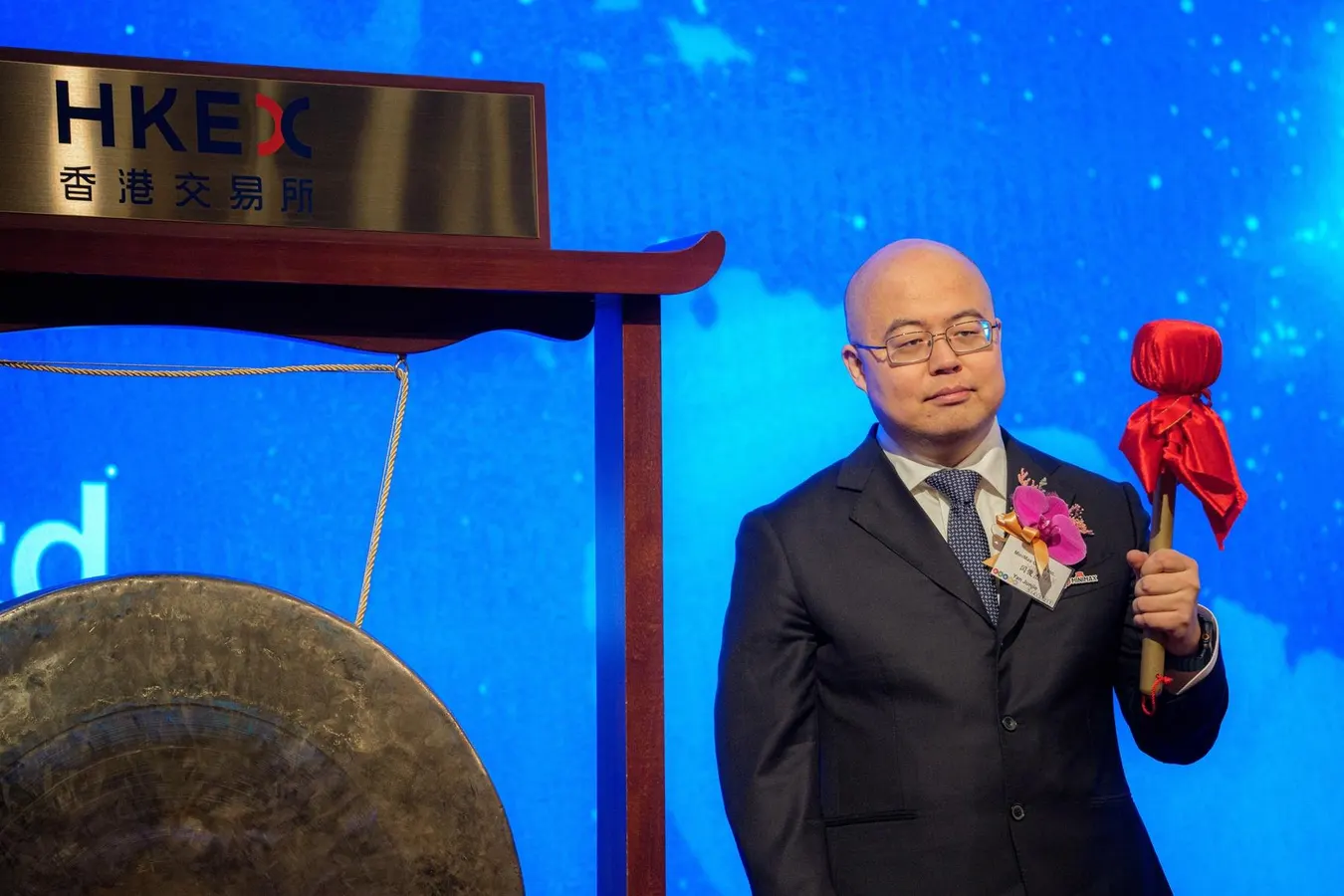
The fast-evolving landscape of artificial intelligence is as much a story of human ambition, fierce rivalry, and staggering financial volatility as it is about algorithms and neural networks. For Yan Junjie, the 37-year-old founder, chairman, and CEO of Hong Kong-listed AI developer MiniMax Group, the reality of this volatile market has hit incredibly hard. Once riding high on a wave of tech optimism, Yan has watched his personal fortune plummet by a staggering $9.3 billion. According to Forbes estimates, his net worth has shriveled from a peak of $12.6 billion down to $3.3 billion, mirroring a broader, devastating $39 billion wipeout in his company’s market value. Since peaking at a historic HK$1,330 ($170) per share in March, following a blockbuster $619 million initial public offering in January, MiniMax’s stock has plummeted over 70%. Though still clinging to a modest 1.6% gain for the year, the company now faces intense skepticism as its once-enthusiastic investor base begins to pull back, raising painful questions about whether MiniMax can truly survive the grueling domestic AI race.
This dramatic shift in investor sentiment stems from a growing perception that MiniMax is falling behind its primary domestic rival, Zhipu (Z.AI), another prominent AI developer listed in Hong Kong. While MiniMax recently launched its flagship M3 model in June—touting its “frontier-level performance” in coding, debugging, and complex agentic tasks like financial analysis—the market has largely remained unimpressed. Analysts point out that despite these technical strides, MiniMax appears to be stagnating when measured against the world’s leading generative models. Shanghai-based technology analyst Charlie Chai of 86Research notes that the market’s pessimistic outlook on MiniMax is deeply rooted in this domestic disadvantage. As global leaders continue to set a breakneck pace, Zhipu has successfully captured the market’s imagination by aggressively closing the gap with Western giants, leaving MiniMax struggling to prove its unique value proposition and casting a shadow over Yan’s ambitious vision.
In stark contrast to MiniMax’s struggles, Zhipu is enjoying a spectacular run of success that has reshaped China’s tech oligarchy. Driven by immense investor enthusiasm, Zhipu’s stock has surged by nearly 1,300% this year. This extraordinary momentum has propelled its cofounder and Chairman, Liu Debing, into the ranks of the ultra-wealthy, securing him the spot of China’s 8th richest man with a net worth of $28.4 billion. His cofounder, Tang Jie—a highly respected computer science professor at China’s prestigious Tsinghua University—has also achieved billionaire status, with a net worth now valued at $6.1 billion. This skyrocketing valuation reflects a deep-seated confidence in Zhipu’s underlying technology, which has managed to capture global attention despite the geopolitical headwinds of being placed on a U.S. trade blacklist due to national security concerns. Tang recently voiced great optimism on social media, confidently asserting that it will not take long for Chinese AI models to fully match the best systems in the United States.
This confidence is far from empty rhetoric, as Zhipu’s latest model, GLM 5.2, has earned genuine praise from some of Silicon Valley’s most influential figureheads. The model is specifically engineered to excel at “long-horizon” tasks—complex, multi-step operations like software coding that require an AI to execute a chain of logic flawlessly without human intervention. Zhipu claims that GLM 5.2 outperforms OpenAI’s GPT-5.5 in coding proficiency and stands shoulder-to-shoulder with Anthropic’s Claude Opus 4.8. This claim received a massive endorsement from American billionaire venture capitalist Marc Andreessen, who publicly declared that AI insiders are recognizing GLM 5.2 as the first Chinese model to match and often beat Western public models with no compromises. Such high-profile validation has caused a massive rotation of capital out of MiniMax and directly into Zhipu, leaving Yan Junjie’s firm increasingly isolated as investors chase the market leader.
To make matters worse, MiniMax is facing an immediate financial hurdle that could trigger even more market turbulence. The company is bracing for the expiration of lockup periods on a massive portion of its shares. This regulatory milestone will release approximately 153.5 million shares into the open market, suddenly boosting MiniMax’s free float from a tiny 4.1% to over 50%. Analysts like Ke Yan, the Singapore-based head of research at DZT Research, remain highly bearish, warning that this sudden influx of supply, combined with an unproven product line, will likely spark severe selling pressure from early cornerstone and pre-IPO investors looking to cut their losses. While Zhipu also faces its own lockup expirations, more than 90% of its shares are locked until next January, shielding it from the immediate market shocks that threaten to drag MiniMax’s stock down even further in the coming days.
Despite these grim forecasts, the door is not entirely closed on a potential comeback for Yan Junjie and MiniMax. The company still retains the powerful backing of e-commerce and cloud giant Alibaba Group Holding, which has expressed long-term confidence in MiniMax’s technological capabilities and a desire to collaborate on enterprise services and cloud computing. Furthermore, some financial analysts see an entry point for contrarian investors, pointing out that the valuation gap between the two rivals has become excessively wide; MiniMax trades at 19 times its projected 2027 sales, whereas Zhipu trades at a premium of 52 times. With a potential inclusion in the Stock Connect Southbound trading link on the horizon—which would allow mainland Chinese retail investors to easily trade the stock—along with the commercial rollouts of the M3 model, there remains a viable, albeit challenging, path for a “catch-up trade.” Ultimately, the fate of MiniMax will depend on whether Yan can translate this corporate support into tangible, market-leading innovation before his company is permanently eclipsed by its rival.