





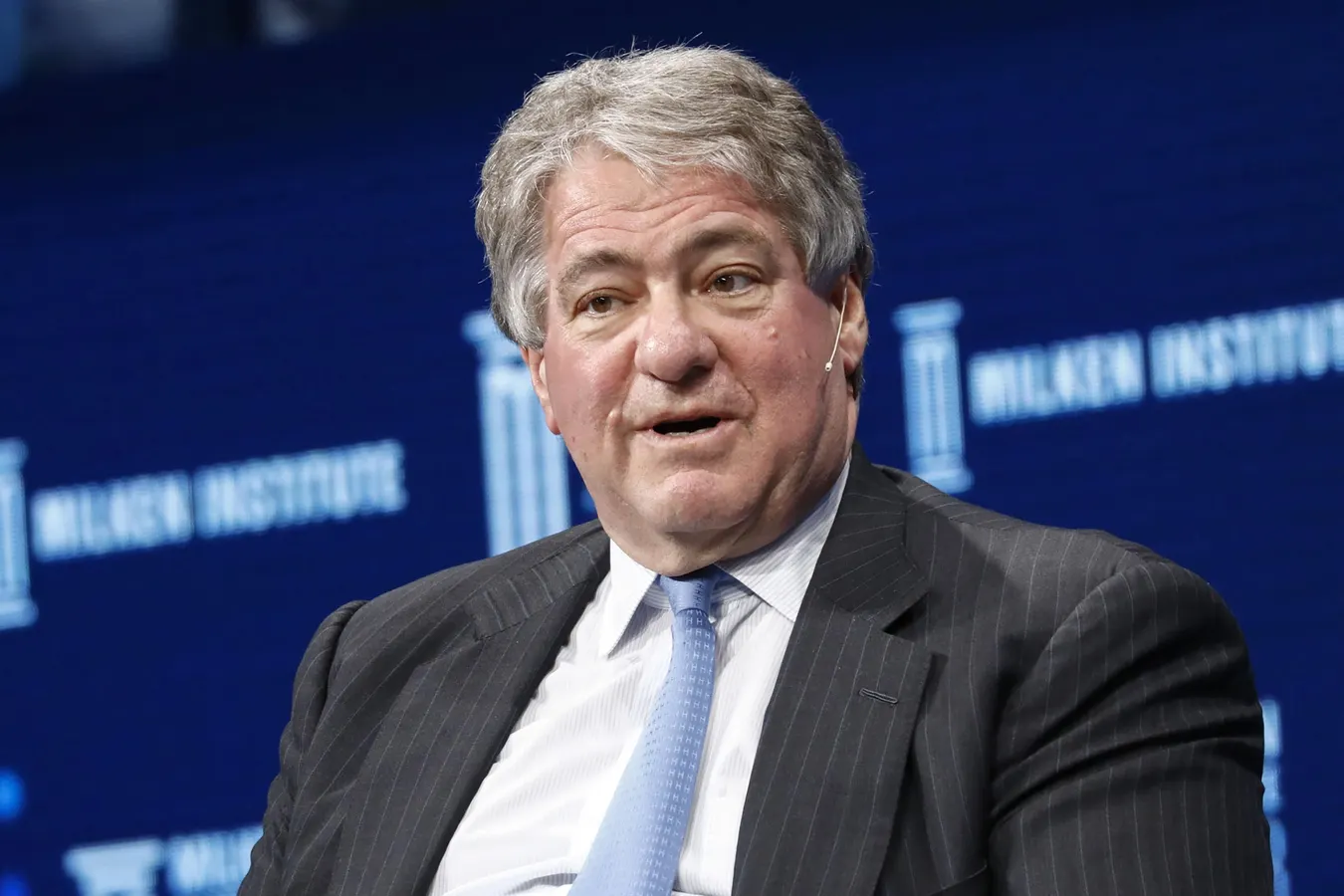
The halls of Congress became the stage for a high-stakes psychological and legal drama on Friday, when billionaire private equity tycoon Leon Black’s voluntary interview with the House Oversight Committee dissolved into an explosive confrontation. Black, the co-founder and former chief executive of Apollo Global Management, had initially agreed to sit down with lawmakers as part of their sweeping investigation into the dark, elite network of the late, disgraced financier Jeffrey Epstein. But what was supposed to be a orderly, transcribed session quickly took a sharp and dramatic turn when the committee’s chairman, Representative James Comer, issued an unexpected mid-interview subpoena to the multi-billionaire. The sudden demand for information and testimony regarding secret non-disclosure agreements (NDAs) reached with Epstein’s victims proved to be the breaking point. Rather than comply on the spot, Black abruptly ended the session, stood up, and walked out of the room, leaving behind a trail of political and legal fallout. His lead attorney, Susan Eldrich, immediately went on the defensive, publicly blasting the move as a highly calculated, “premeditated” political stunt designed for headline-grabbing theater rather than genuine oversight. Yet, for lawmakers like Ranking Member Robert Garcia, the billionaire’s hasty retreat spoke volumes, with the Democratic congressman publicly reprimanding Black for literally running out of the room when pressed to answer for his financial arrangements with survivors of Epstein’s abuse.
This dramatic courtroom-style clash on Capitol Hill marks the latest and most explosive chapter in Leon Black’s long and deeply controversial association with Jeffrey Epstein. For years, the private equity titan has been scrutinized for his uniquely lucrative financial relationship with the predatory financier. Investigators have long pointed out that Black was one of Epstein’s most critical financial lifelines, particularly after other ultra-wealthy figures, such as retail mogul Les Wexner, severed ties with him. Between 2012 and 2017, Black routed an astronomical sum—initially reported as $158 million but later estimated to be closer to $170 million—to Epstein for what was ostensibly tax, succession, and estate planning services. The shear size of these fees, which vastly exceed standard rates for financial and estate advice, triggered intense public and regulatory backlash, ultimately forcing Black to step down from his leadership role at Apollo in 2021. Elite independent reviews, such as one conducted by the law firm Dechert, eventually concluded that Epstein’s complex financial structures had saved Black’s family office billions of dollars, technically validating the legitimacy of the tax work. Yet, the moral taint of keeping an active sex offender financially afloat for years has continued to haunt Black, especially amid persistent allegations and investigative reporting suggesting that some of these massive payments may have been routed to silence or pay off young women on Black’s behalf.
During the opening segments of his testimony, before the atmosphere in the room turned hostile, Black attempted to distance himself from the dark reality of Epstein’s transgressions by painting a portrait of profound personal deception. Borrowing a classic literary metaphor, Black asserted to the committee, “I knew Jekyll. I didn’t know Hyde.” In his prepared opening statement, the billionaire sought to draw a stark and impenetrable line between his professional financial dealings with Epstein and the horrific underworld of human trafficking and abuse that Epstein operated. Black categorically denied any personal complicity, stating unequivocally that he had never abused a woman, had never been involved with underage females, had never engaged in sex trafficking, and had never been blackmailed by Epstein. Furthermore, Black claimed that he, too, was a victim of Epstein’s financial dishonesty, alleging that Epstein lied about the tax-deductibility of his fees. He told lawmakers that he believed he was paying a net total of $95 million over five years, only to later discover that the actual cost was $158 million because the fees were not tax-deductible as promised. Though Black admitted he regretted maintaining a professional relationship with Epstein after his initial 2008 prostitution conviction in Florida—which Black claimed he naively believed was a tragic, isolated mistake—he insisted he was entirely blind to the vast scale of Epstein’s crimes until the federal indictment dropped in 2019.
However, the committee’s focus was not merely on retrospective remorse; lawmakers wanted to dissect the modern mechanisms of silence, specifically targeting the non-disclosure agreements that have shielded powerful men for decades. The flashpoint of Friday’s walkout centered on NDAs that Black had entered into with women who had connected him to Epstein’s abuse legacy. When Black refused to answer questions about these highly sensitive legal settlements, Chairman Comer did not hesitate to exercise his committee’s subpoena power on the spot, demanding the immediate production of the NDAs and scheduling a mandatory follow-up deposition for July 16. The issue of NDAs remains deeply personal and politically charged, as these legal instruments are increasingly viewed by the public and victim advocates as modern tools of coercion used by the ultra-wealthy to buy the silence of survivors. By refusing to speak on these agreements, Black inadvertently heightened the committee’s suspicions that behind the elaborate tax shelters and estate planning lay a darker quiet-money apparatus. His attorney, Susan Eldrich, vigorously defended her client’s reticence, pointing out that lawmakers had weaponized the subpoena before asking a single technical question about the physical bank transactions, messages, and photos they claimed to have in their possession.
This congressional standoff is unfolding against a broader backdrop of intense civil litigation and immense financial vulnerability for the $13 billion-dollar tycoon. Over the past few years, Black has been forced to navigate multiple damaging civil lawsuits filed by women alleging that he sexually abused them in connection with his ties to Epstein. While Black has fiercely denied all these claims—achieving a partial legal victory when one lawsuit was dismissed and another was dropped, and even seeing one of the plaintiffs’ core attorneys sanctioned for falsifying evidence and lying to the court—the legal pressure remains unrelenting. Beyond the individual lawsuits, Black’s desire to keep his name out of formal court depositions has cost him dearly. Just last year, he agreed to pay a striking $62.5 million to the government of the U.S. Virgin Islands to resolve potential legal claims stemming from their sprawling investigation into Epstein’s criminal enterprise on the territory’s islands. He also narrowly escaped a highly publicized deposition earlier this year when a major class-action lawsuit brought by Epstein victims against Bank of America was settled out of court, a lawsuit that explicitly highlighted Black’s massive financial transfers as suspicious transactions that major banks should have flagged and stopped.
Ultimately, the spectacular collapse of Leon Black’s congressional interview highlights a much larger, deeply human struggle regarding systemic accountability, power, and the lengths to which the global elite will go to protect their privacy and legacies. For decades, the survivor community has watched in frustration as the wealthy and powerful used their vast fortunes to build legal fortress walls, employing top-tier defense attorneys, complex corporate shell structures, and ironclad non-disclosure agreements to bury the truth. Leon Black’s dramatic walkout on Capitol Hill represents a physical manifestation of this ongoing tension: a billionaire who is accustomed to dictating the terms of his engagements suddenly finding himself cornered by the raw, coercive authority of public oversight. As the public eagerly awaits the release of the official interview transcript in the coming days, all eyes are now fixed on the looming July 16 deadline. Whether Black will choose to fight the congressional subpoena in federal court, or finally submit to answering the grueling questions about the NDAs and his relationships with Epstein’s survivors, remains to be seen. What is clear, however, is that the era of absolute secrecy for Epstein’s former enablers and associates is rapidly drawing to a close, as the relentless pursuit of transparency continues to dismantle the barriers of wealth and privilege.