

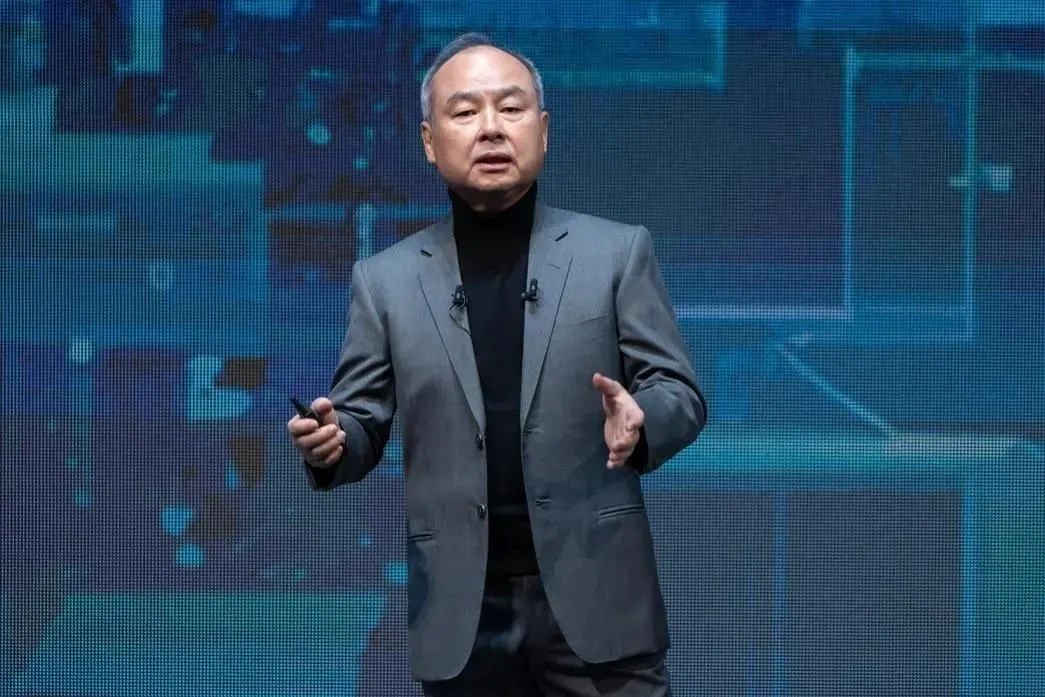
In a bold bet on Southeast Asia’s digital future, Japanese billionaire Masayoshi Son’s SoftBank Group has joined forces with Grab Holdings and Petroleum Sarawak to invest $1.85 billion in AI infrastructure across Malaysia. On the surface, this is a corporate joint venture with big numbers and bigger ambitions. But underneath it all, the deal is about something deeply human: the desire to build the invisible machinery that powers modern life. Data centers are the silent engines behind every ride-hailing trip, every food delivery, every online payment, and every artificial intelligence assistant that people now take for granted. The partnership plans to develop data center capacity of at least 5 gigawatts across Sarawak and Peninsular Malaysia—a staggering amount of computing power, comparable to the electricity needed for millions of homes. The investment is split in a telling way: SoftBank is contributing $1 billion as seed capital, Grab is putting in $750 million, and Petroleum Sarawak is adding $100 million. Each partner brings something different to the table. SoftBank brings global tech vision and financial muscle. Grab brings deep regional knowledge, a massive user base, and years of experience navigating Southeast Asia’s complex markets. Petroleum Sarawak, the state-owned energy company, brings access to power—an increasingly precious resource in the AI era. This is not just a money deal; it is a coalition built around complementary strengths.
Son’s personal enthusiasm is central to the project. “AI infrastructure will power the next wave of growth, and Malaysia has the talent and ambition to help lead it,” he said. “Together with Grab, we will build the capacity needed to support Malaysia’s digital ambitions and accelerate AI innovation across Southeast Asia.” With a real-time net worth of $48 billion, Son is Japan’s second-richest tycoon, and he has built a career on bold, sometimes contrarian bets—from Alibaba to the enormous Vision Fund. This time, he is betting that Malaysia can become a cornerstone of the AI era. The scale of the ambition is hard to overstate. Malaysia had about 1.3 gigawatts of data center capacity as of June this year. The joint venture alone is targeting 5 gigawatts or more in the long term. That means huge construction projects, high-voltage power lines, cooling systems, fiber-optic connections, and thousands of skilled workers. For a country that has often been seen as a manufacturing and commodity exporter, this is a chance to reposition itself as a serious player in the knowledge economy. It is also a bet on the idea that AI is not just a trend but a permanent shift in how the world stores data, processes information, and delivers services. The fact that a notoriously selective investor like Son is willing to put $1 billion into Malaysian soil says a great deal about the country’s rising status.
Malaysia’s emergence as a digital infrastructure hub is no accident. Singapore, long the region’s technology gateway, tightened restrictions on new data centers because of land and energy constraints. Developers naturally looked across the causeway to Malaysia, where land is more plentiful, electricity is cheaper, and the government is eager to attract investment. According to real estate firm Cushman & Wakefield, Malaysia’s data center capacity is expected to reach 6.8 gigawatts by 2030, up from 1.3 gigawatts as of June this year, making it one of the biggest data center hubs in Asia. The choice of Sarawak is particularly interesting. The state on the island of Borneo is rich in natural resources and has significant hydropower capacity, which makes it attractive for energy-intensive data centers. Peninsular Malaysia, meanwhile, offers proximity to Singapore and well-established industrial corridors. By spanning both regions, the joint venture hedges its bets and taps into different strengths. For ordinary people, this growth will show up in subtle but meaningful ways. Faster streaming, more reliable online banking, smarter traffic navigation, and AI services that understand local languages and customs all depend on physical infrastructure. When a data center is built nearby, digital services become faster and cheaper. When it is built far away, latency and costs rise. Malaysia is positioning itself not just as a place where technology is consumed, but as a place where the digital future is physically assembled.
Grab’s role goes beyond writing a large check. As founding shareholder, the company will lead project development and bring in long-term strategic investors as the project scales to diversify its funding base. Further development will be funded at the project level through third-party equity and non-recourse project financing. This is a natural evolution for a company that began as a taxi-hailing app in Malaysia in 2012, co-founded by Anthony Tan and Tan Hooi Ling. Since then, Grab has grown into a Southeast Asian superapp, with operations across eight countries and services ranging from ride-hailing to food delivery, digital payments, and financial services. Anthony Tan, now cofounder and CEO, framed the investment as both a homecoming and a regional mission. “Southeast Asia is one of the world’s fastest-growing digital economies, and Grab is at the forefront of developing AI solutions for the region,” he said. “With SoftBank Group, we plan to build critical AI infrastructure in Malaysia, where Grab began, for all of Southeast Asia. This infrastructure will allow us to accelerate the development of localized AI solutions for our communities.” The phrase “localized AI solutions” matters more than it might seem. AI models built in Silicon Valley do not always understand the languages, traffic patterns, food preferences, payment habits, or social norms of Southeast Asia. Grab sits on a mountain of regional data—millions of daily rides, deliveries, and transactions. With its own AI infrastructure, the company can build tools that are genuinely useful: better route predictions in Jakarta, more accurate delivery estimates in Bangkok, or financial services for small vendors in rural Malaysia. In human terms, this could make everyday services faster, cheaper, and more inclusive for millions of people.
The partnership comes at a delicate moment for both SoftBank and Grab. Last week, China blocked SoftBank’s proposed purchase of ABB’s robotics unit, which has facilities on the mainland—a sharp reminder that geopolitical tensions can disrupt even the most carefully planned corporate deals. In October, Taiwan rejected Grab’s proposed $600 million takeover of Foodpanda’s local unit, a significant setback in the competitive food delivery market. These speedbumps illustrate the risks of operating in a region where politics, regulation, and nationalism intersect with business. Yet the AI infrastructure deal suggests that neither company is retreating. Instead, they are doubling down on a sector where governments want investment and where the long-term need is undeniable. Data centers are the physical foundation of the digital economy. Without them, there is no cloud computing, no streaming video, no AI chatbots, no online payments, no remote work. The announcement also signals a shift in how tech companies think about capital. Building data centers is enormously expensive, and even SoftBank does not want to carry the entire burden alone. By structuring the deal with seed capital from three partners and planning non-recourse project financing later, the group spreads risk and opens the door for pension funds, infrastructure investors, and other long-term players. That is a mature approach, but it also means execution will take years. The first phase will require land, permits, power agreements, and construction; the later phases will depend on demand from cloud providers, AI companies, and regional businesses. There is no quick win here, only steady, expensive, unglamorous building.
What does all of this mean for the people of Malaysia and Southeast Asia? In the short term, it means jobs—construction workers, electricians, network engineers, security staff, and eventually data center operators. It means new roads, new power infrastructure, and new opportunities for local communities in Sarawak and Peninsular Malaysia. It also means that young people in the region may no longer need to move to Silicon Valley to work on cutting-edge technology. The infrastructure will be closer to home, and so will the careers. In the longer term, this deal could change Southeast Asia’s place in the AI economy. For too long, the region has been a consumer of technology built elsewhere, sending profits and intellectual capital abroad. This investment is an attempt to make the region a builder and owner of the infrastructure itself. There are challenges, of course. Data centers consume massive amounts of electricity and water, and communities are right to ask hard questions about sustainability. The involvement of Petroleum Sarawak suggests a continued reliance on hydrocarbons, although Sarawak also has substantial hydropower resources. And there is no guarantee that all 5 gigawatts will be built; ambitious targets often get scaled back as costs rise and market realities set in. But the direction is clear. From a small taxi-hailing start, Grab has grown into a regional powerhouse. Masayoshi Son has built a career on bold bets that look risky until they look obvious. Together, they are placing a bet on Malaysia’s ability to become a hub for the next technological revolution. For the millions of people who use digital services every day—ordering food, hailing a ride, transferring money, asking an AI assistant for help—this investment is a reminder that the future is not abstract. It is being built in concrete, cables, and cooling systems in a corner of Southeast Asia, one gigawatt at a time.