



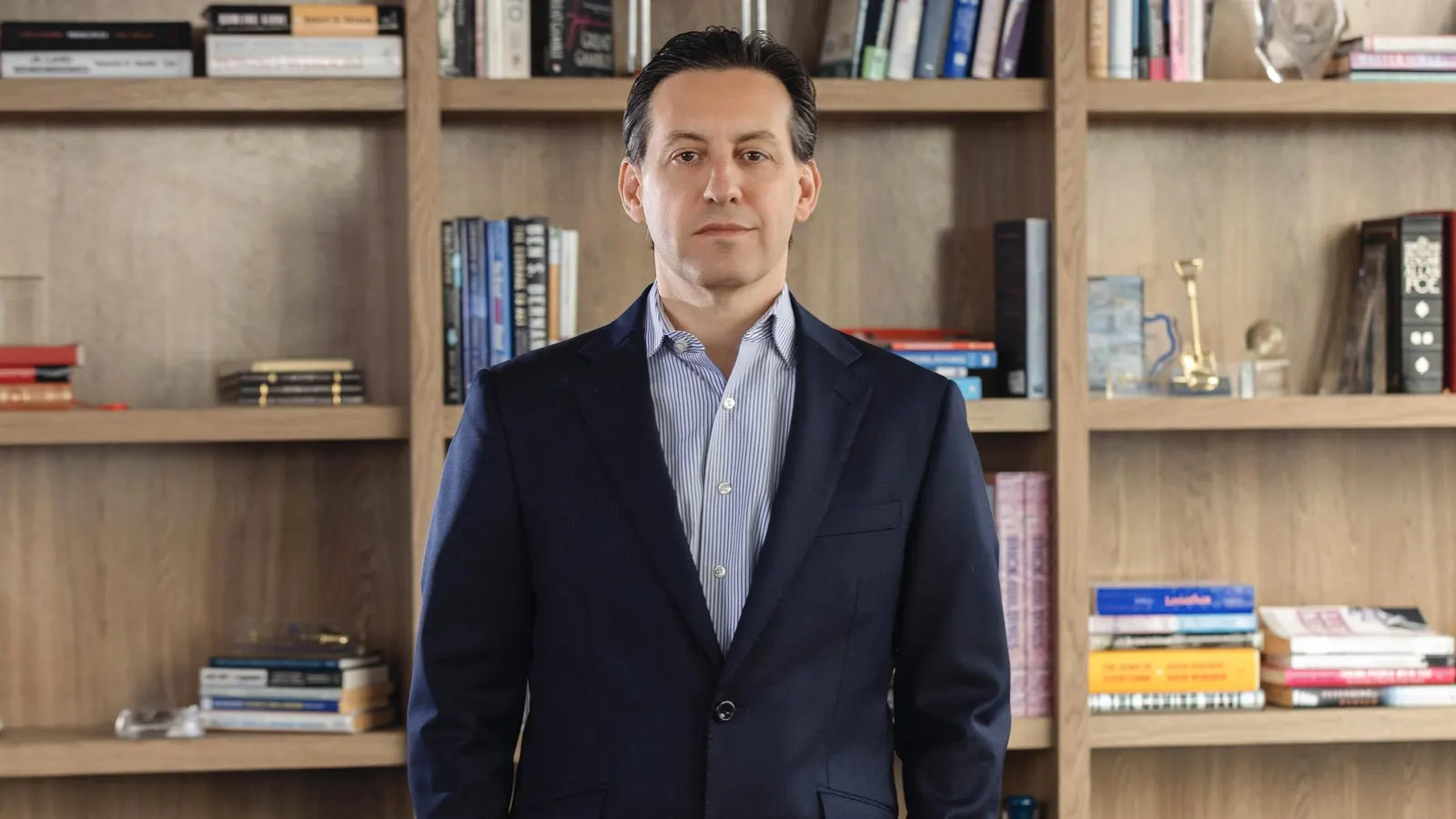
Hours after Texas delivered one of the most stunning election nights in modern American history, Fernando De Leon finally let himself feel the relief. He was not just another wealthy man enjoying a political upset; he was watching his state reject a politics that had made so many people in his community feel unsafe and unwelcome. “I’m so proud of this country,” he told Forbes. “This is an unassailable repudiation of bigotry, division, and bad economics—and a powerful affirmation of decency and the enduring promise of American democracy.” The scale of what happened in the Lone Star State is hard to exaggerate. Every statewide executive office on the ballot went blue, a clean sweep not seen since 1982. James Talarico won a Senate seat, becoming the first Democrat in nearly four decades to do so, and Gina Hinojosa became the first Democrat in almost as long to win the governorship—and the first Latina ever elected to the job. The returns also reset the conversation about Latino voting: two years after roughly half of Texas Hispanic voters supported Donald Trump, about 70 percent voted for Talarico this time, according to the Associated Press. For De Leon, the moment was intensely personal. Hinojosa is his second cousin; their mothers are cousins. She is 52 and he is 48, and both went to school in Brownsville, a border city that has known more than its share of fear over the past few years. They are not close in any regular sense—De Leon jokes that with 54 first cousins, “I can’t keep in touch with all of them”—but he speaks about her with unmistakable warmth, describing her as “new blood and new ideas, versus entrenched ideological monopolies.” Forbes reached out to Hinojosa’s press office but did not hear back. Still, for a man who usually avoids the spotlight, the joy in his voice was impossible to ignore. Something had broken open.
To understand why that joy felt so overwhelming, you need to know where De Leon comes from. He grew up in Mexico, the only one of six siblings born in an American hospital. As a child he crossed the border every day to attend school in Brownsville, and along the way he befriended a border agent who watched him pass year after year. That agent was among the first people De Leon showed when his acceptance letter to Harvard University arrived. This is a man who has known the border not as an abstraction but as a daily fact of life—a line he had to walk across just to get an education. That is why, when De Leon spoke from Dallas on Thursday, he kept returning to the small, human details of the new atmosphere. “In the last two days,” he said, “every single place I’m at—a restaurant, or anywhere where there’s somebody I know is of Hispanic descent, I speak to them in Spanish. And you know what they tell me? ‘Now we can speak Spanish again.’ There’s this feeling of not being afraid anymore of getting hurt or deported or harassed.” The fear, in other words, was never reserved for undocumented people; it spilled over onto citizens, legal residents, schoolchildren, and shopkeepers who had learned to keep their heads down. De Leon sees Hinojosa’s victory as a signal that the climate is changing. “I’m excited that young Latina girls in South Texas and Houston and Dallas can believe that it’s possible to be the next governor now because of her,” he says. For a border-town kid who once had to befriend an agent just to feel safe in his own commute, that is the most meaningful kind of transformation.
De Leon has never tried to be a political kingmaker. “I try not to be overly ideological or political,” he says. “I’m a pretty staunch independent.” That independence is partly a product of his business life. He started Leon Capital in 2006 with very little, building it from the ground up. One of his earliest deals was convincing a homebuilder to give him an equity stake in a development in exchange for shepherding the project through difficult zoning and permitting rules. From that scrappy beginning, his company grew into a sprawling conglomerate spanning real estate, healthcare, and other industries. Forbes now estimates his net worth at $3.1 billion. His whole trajectory has made him a firm believer in the opportunities the United States offers for social mobility, but it has also taught him to judge leaders by their practical impact rather than their slogans. He has occasionally donated to Republican candidates and to the bipartisan Commercial Real Estate Development Association PAC; this cycle, the only contribution he made was a nominal check to Abraham Enriquez, a Republican who lost the primary in Texas’ 19th Congressional District. De Leon says he gave because Enriquez was “young and passionate,” a “young Latino trying to make it in the world” who seemed “reasonably moderate.” He will not say who he voted for in this year’s elections, but he offers a sly smile and says that, given how happy he is with the outcome, you can probably “read the tea leaves.” For De Leon, Tuesday’s victory was not simply about party labels. It was a referendum on the cruelty of policy and the high price of division. He had seen the economic damage firsthand, and he had seen the psychological damage up close. The election result felt less like a defeat for any politician than a restoration of something those in power had tried to steal.
The theft was not only emotional. It was measured in stalled projects, missing paychecks, and half-built houses. The administration’s aggressive immigration enforcement hit the construction industry especially hard, and Texas felt the brunt. Raids and deportations stripped away workers who were essential to building the state’s homes and offices, and the resulting labor shortage pushed homebuilding timelines in South Texas months behind schedule. At the same time, tariffs and war-related disruptions hammered the supply chain. In October, the Associated General Contractors of America reported that the cost of essential materials such as aluminum and steel had jumped more than 25 percent year over year. For De Leon, whose developments depend on large quantities of both people and materials, the economics turned brutal. He estimates that production across his real estate business is down by about 30 to 40 percent, and profitability has taken roughly the same hit. The damage has not been abstract. One or two of his construction sites in Arizona have been hit by immigration raids, he says, and although he does not believe any of his Texas projects were targeted, the sweeps have touched friends and family. “The administration just absolutely went bonkers and started sending people with ski masks into communities in South Texas and terrorizing people,” he says. The effect was a climate where even American citizens and legal residents felt vulnerable. “It’s a feeling of being less than, and ostracized,” De Leon adds. “Americans should not feel like that.” In his telling, the economic and human costs fed each other: when workers disappeared in fear, projects slowed; when projects slowed, families suffered; when families suffered, the whole community turned inward and began to question whether the American dream was meant for them at all.
That is why, in De Leon’s view, Tuesday was so decisive. “Politically, Republicans will pay, generationally, for harassing our people, especially in Texas,” he warns. It was not just one bad policy or a few clumsy operations; it was a sustained pattern of making certain people feel disposable. The raids, the checkpoints, the language of contamination that seeped into public life—all of it taught millions of Texans that their place in their own country was conditional. De Leon saw it in the way neighbors stopped lingering in grocery stores, in the way parents hesitated to speak Spanish in front of strangers, in the way even legal residents flinched at the sound of a car door slamming. The response at the ballot box, he insists, was not a sudden surge of partisan energy but a slow-building rage that finally found a voice. It was also a rejection of the economic philosophy that had failed them. The “bad economics” he mentioned in his initial statement were not abstractions: they were the tariffs that raised the price of steel, the fuel spikes that made every truckload of materials more expensive, and the labor shortage that left construction sites silent. When working people looked around and saw the cost of everything rising while their communities were being terrorized by federal agents, they connected the dots. On Tuesday, they told the country that they had had enough—and that the old politics of fear could not hold forever. The fact that the revolt happened in Texas, of all places, made it even more powerful. The state that had worked so hard to become a laboratory of hard-line politics had just voted to change direction, sending a clear signal not only to leaders in Austin but to the whole country.
Now De Leon is looking ahead. He is enough of a realist to know that one election will not erase years of trauma overnight, and he is enough of a businessman to know that rebuilding a labor force and a supply chain takes time. But he believes the political reset has created something rare: a genuine possibility for renewal. Hinojosa will take office in January as the first Latina governor in Texas history, and Talarico will carry the promise of a new generation into the Senate. For De Leon, that is a proof of the American story rather than a departure from it. A boy born in an American hospital, raised in Mexico, who crossed the border every morning to get an education, can grow up to build a billion-dollar company. A girl from Brownsville can grow up to lead the state. The country that makes those two outcomes possible is the country De Leon says he is proud of. He described the result as “a powerful affirmation of decency and the enduring promise of American democracy,” and he meant it in the most concrete sense: people are no longer afraid to go to the grocery store, to speak their language, to build homes, to hope. He knows the road ahead will be difficult—healing the wounds of deportation, rebuilding the construction workforce, and restoring faith in institutions that betrayed so many. But on this week, in Texas, he saw something he had not seen in years: a state exhaling. “Now we can speak Spanish again” is more than a comment about language. It is a statement that people feel they belong again. For Fernando De Leon, that is the real victory. And once that feeling has returned, he says, there is no going back.