


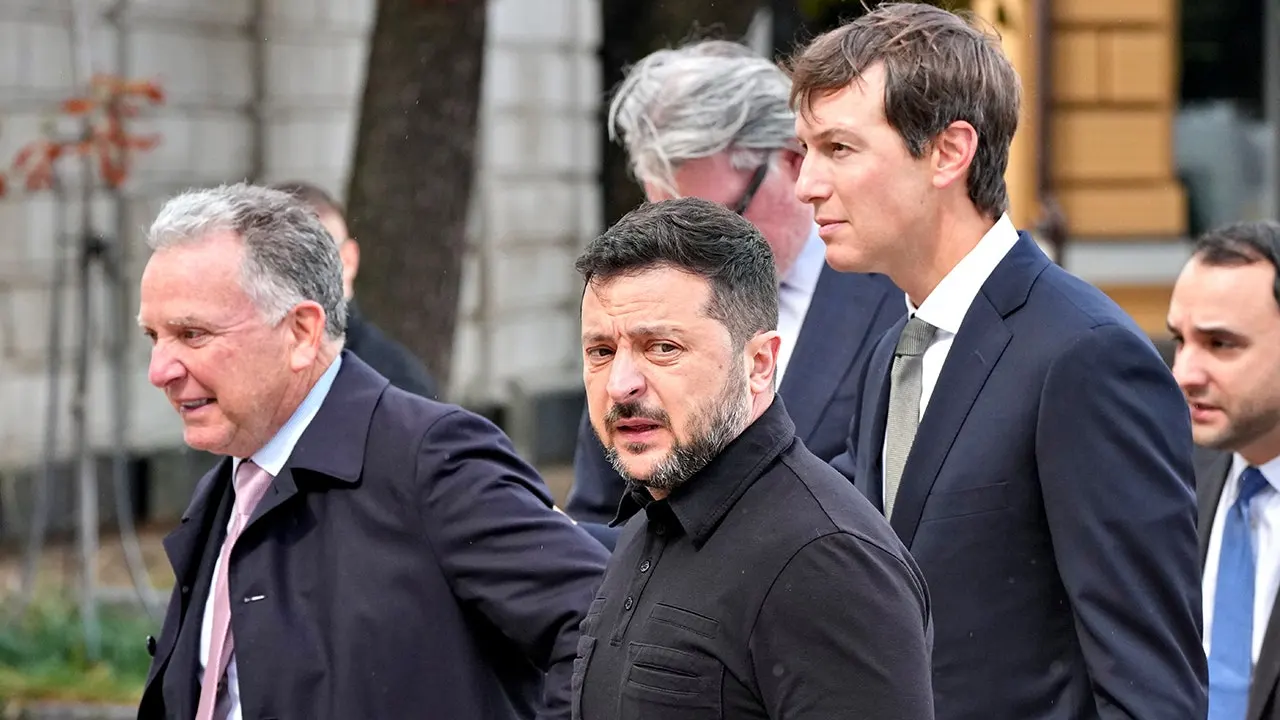
For the first time in nine long, grinding months, the world’s most consequential diplomatic equation is being revisited as representatives from the United States, Russia, and Ukraine prepare to convene in the gleaming, sun-scorched capital of the United Arab Emirates. This trilateral meeting, set to take place over two days in Abu Dhabi, is not merely another bureaucratic wrinkle in a stubborn conflict; it represents a palpable shift in the atmosphere that has surrounded these negotiations since they last collapsed in Geneva in February. The cast of characters is a study in stark contrasts, featuring American envoys Jared Kushner and Steve Witkoff on one side, flanked by Ukraine’s Defense Minister Rustem Umerov, and facing off against Vladimir Medinsky, a seasoned Russian negotiator who has mastered the art of Moscow’s diplomatic gamesmanship. Yet, despite the frosty optics and the accumulated bitterness of a brutal, escalating war, there is a subtle, electrifying undercurrent of hope buzzing in the corridors of the Gulf state. A senior U.S. official, speaking on a background call ahead of the talks, revealed a tantalizing glimmer: both Moscow and Kyiv have privately exhibited “a little bit of flexibility” on the territorial disputes that have stood as the immovable boulder blocking any path to a ceasefire. This shift in posture—however fragile—is the thread upon which a potential breakthrough now hangs, suggesting that the public bluster and maximalist demands of the past year have perhaps worn thin enough to allow for a realistic conversation.
The intellectual core of these negotiations, however, revolves around a delicate and potentially explosive concept: the architecture of postwar security guarantees. In a preview of the American strategy, officials floated a provocative proposition to the Kremlin—an acceptance of a security guarantee for Ukraine that would be structurally “Article Four and an Article Five-like,” effectively mimicking the collective defense pact at the heart of NATO without actually conferring membership upon Kyiv. This is far more than a legalistic nuance; it is a pledge that would theoretically compel the United States and its allies to leap to Ukraine’s defense if it were attacked again, a commitment that a U.S. official candidly described as a “really, really big deal.” Such a promise carries the immense weight of American credibility, strategic resources, and the implicit threat of American blood being spilled in a foreign land. President Donald Trump, however, holds his cards close to his chest, having not yet decided the extent to which the United States itself would underwrite this guarantee, a decision that officials suggest must ultimately be negotiated personally between Trump and Ukrainian President Volodymyr Zelenskyy, as it represents the highest-stakes poker game of the entire ordeal. Adding to the dizzying complexity, Trump himself made a candid, stunning admission in a recent “60 Minutes” interview, suggesting that Ukraine’s borders could inevitably shift in a peace settlement, emerging from the war with “a little bit different shape.” This public acknowledgment breaks a long-standing Western taboo against entertaining territorial concessions, injecting a blunt, uncomfortable reality into the diplomatic discourse. The administration is increasingly operating under the conviction that the nightmare of territorial demarcation and the architecture of security are inseparable twins; neither Russia nor Ukraine will yield a single strategic acre until they have a crystal-clear vision of the security landscape that will exist once the guns fall silent, a landscape still shrouded in fog and uncertainty.
This diplomatic gamble in Abu Dhabi is unfolding against a backdrop of a geopolitical storm that has fundamentally reset the political and strategic priorities of the White House. Since the last round of talks, a new and unexpectedly fierce conflict has erupted between the United States and Iran, drawing American military attention, resources, and strategic bandwidth away from Europe and toward the volatile theaters of the Middle East. This new front creates a powerful, almost desperate, incentive for the administration to decouple the United States from the European quagmire, making a settlement in Ukraine a critical strategic necessity rather than just a campaign promise. Domestically, the political landscape has been utterly transformed by the 2026 midterm elections, which delivered a devastating rebuke to the Republicans in a sweeping “blue wave” that washed over Congress. This electoral earthquake has robbed the President of his legislative dominance and political capital, leaving him searching for a legacy-defining achievement to reclaim the narrative and project an image of resilient leadership. A successful peace deal in Ukraine would serve as a monumental political counterweight to the domestic gloom, legitimizing the administration’s foreign policy approach and silencing critics. Yet, the chorus of public demands remains as rigid and uncompromising as ever: Russia publicly continues its thunderous insistence on controlling the entirety of the Donetsk region, while Ukraine adamantly pushes for a freezing of the conflict along the current, blood-soaked line of contact. However, the private whisperings of flexibility that Washington claims to have heard suggest these public postures are merely a hardened outer shell, beneath which a more pragmatic, softer core is beginning to emerge, ripe for exploration.
The intricate dance in Abu Dhabi is being meticulously choreographed to eventually expand into a much larger, more unwieldy ensemble, far beyond the narrow trilateral configuration. Before the American negotiators even sat down with their Russian and Ukrainian counterparts, they were scheduled to hold strategy sessions with national security officials from the European heavyweights—Germany, France, the United Kingdom, and Italy—alongside the institutional machinery of NATO and the European Union. This pre-meeting coordination is vital, as Washington understands that a durable peace cannot be a purely American brokerage, stitched together in a desert hotel. A senior official was unequivocal in this assessment: “We need Europe at the table.” The long-term strategic vision involves coaxing Moscow into a broader multilateral negotiating process that integrates European governments directly, transitioning from a fragile tri-lateral format into a comprehensive continental settlement guaranteed by a wide swath of the international community. Among the creative mechanisms being floated to thaw the institutional ice is a revival of the long-dormant NATO-Russia Council. The intention is to resurrect this moribund consultative body and re-forge it into a robust, functional forum for communication, de-escalation, and the peaceful resolution of future disputes. Beyond the lofty political statements, officials are actively exploring concrete, actionable mechanisms such as crisis communication hotlines, increased military transparency, and reciprocal confidence-building measures. These are the granular, unglamorous bricks being laid to build a fortress against accidental conflict, aiming to establish a new continental security paradigm that implicitly acknowledges Russia’s existence and interests while simultaneously constructing barriers to its future aggression.
Leverage is the oxygen of any negotiation, and the Trump administration views the vast web of international sanctions as a versatile scalpel that can be wielded with surgical precision, either to punish or to reward, as the talks progress. A U.S. official subtly dangled the prospect of sanctions relief, suggesting that measures against Russia could potentially be eased over time as a tangible incentive for constructive behavior and good-faith progress toward a ceasefire. However, this carrot comes with a menacing stick attached: the legal and administrative capacity to “spring back in place” with startling speed and devastating economic force if Moscow violates the parameters of any eventual agreement. This is a high-stakes game of coercion, offering a path toward the rehabilitation of the Russian economy while maintaining the electronic trigger for its sudden collapse. But beneath the politics and the mechanisms of coercion lies a profoundly human element of psychological exhaustion and shifting perceptions. The officials candidly acknowledged that deep, corrosive distrust remains a near-terminal cancer in the process, a poison accumulated through years of broken ceasefires, shelling of civilians, and international betrayal. Yet, in a startling admission of optimism, one official remarked, “This is the first time I feel like we see real desire on the Russian side to finish.” This perceived Russian fatigue offers a narrow and fleeting window of opportunity, a moment when the pragmatic voices in the Kremlin may finally outmuscle the ideologues. This momentum is already driving high-level activity; Witkoff and Kushner are actively considering direct return visits to meet with Putin and Zelenskyy, while President Trump’s looming trip to China for the APEC summit next week raises the tantalizing possibility of a historic, trilateral encounter with Putin and Chinese President Xi Jinping, a summit that would redefine the global order if it were to materialize.
Yet, for all the grand geopolitical calculations and the soaring rhetoric of ending a war, the immediate test in Abu Dhabi is markedly concrete, achingly modest, and terrifyingly fragile. The American negotiators do not expect to emerge from the Emirates with a binding treaty or a finalized map of a divided nation. Instead, the primary objective is to clear the fog of public posturing, to definitively map out the current stances of Russia and Ukraine on the crucible issues of land and security, and to identify the remaining gaps that separate them in stark relief. Crucially, they aim to begin the delicate, incremental work of exploring compromises that can be taken back to the respective leaders—Putin and Zelenskyy—for ratification. It is a mission of translation, converting the tacit, whispered flexibility into explicit, politically viable concessions, and to establish a cadence of recurring negotiations that can ultimately elevate the process into a broader, permanent forum. The immediate future remains shrouded in profound uncertainty, and the world holds its collective breath. For the millions of ordinary people caught in the crossfire—the families who have lost their homes, the soldiers entrenched in muddy, freezing trenches, the refugees scattered across the continent—the outcome of these whispered conversations in a sterile hotel conference room represents the difference between a future of reconstruction and renewal, and one of endless, grinding attrition. The legacy of this war will be defined not by the thunder of artillery, but by the quiet, painstaking, and often maddeningly slow work of diplomats sifting through the ruins of what was once possible. In Abu Dhabi, a door has been opened a crack, and whether that sliver of light floods the darkness with an enduring peace or slams shut once more, carrying with it the hopes of millions, remains the most profound and agonizing question of our time.