

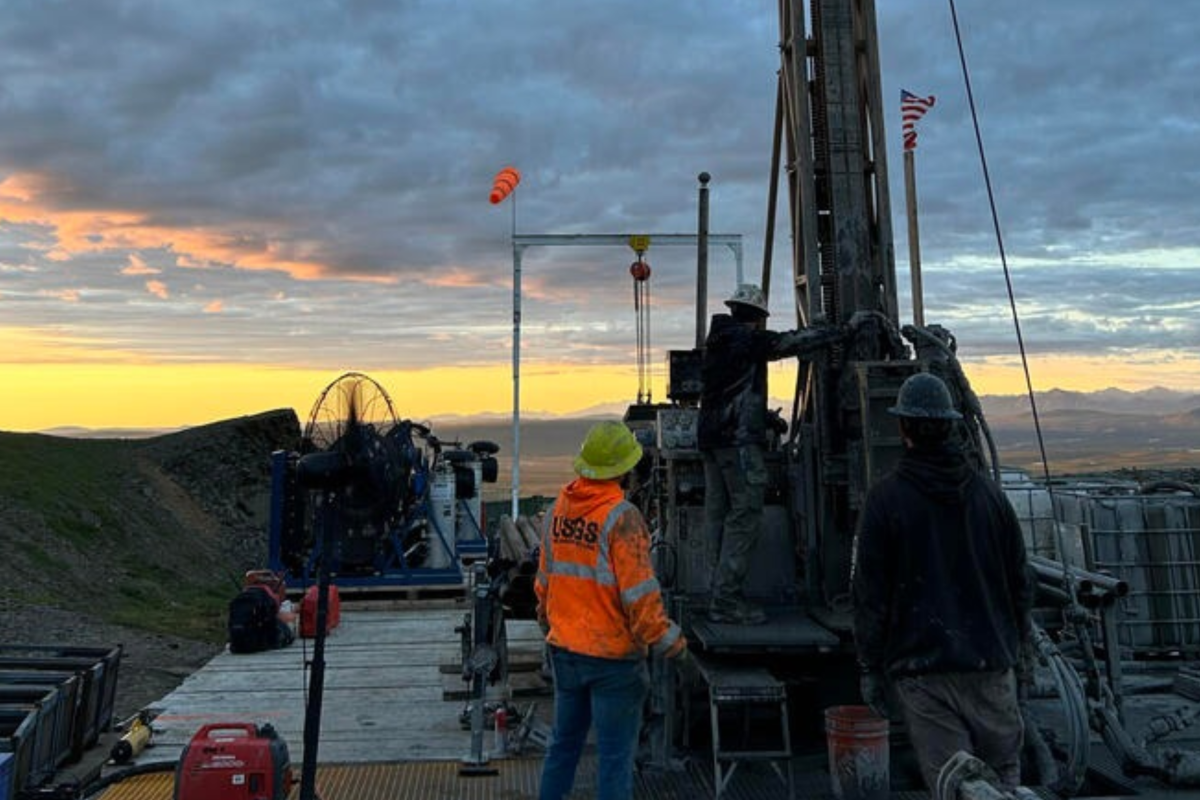
Imagine a place where the ground is frozen for much of the year, where the sun vanishes for weeks at a time, and where the wind blows across vast, open tundra. For most people, that sounds like the last place you would build the future of the internet. Yet Alaska is quietly becoming one of the most intriguing new frontiers in the world of data centers, those massive warehouses of computers that power everything from streaming movies to artificial intelligence. The reason is a surprising combination of nature and necessity. Alaska’s cold climate naturally helps cool the powerful servers that overheat so easily, its wide-open spaces offer room to grow, and beneath the frozen ground lie enormous reserves of natural gas ready to generate electricity. Now, a new federal assessment has thrown fuel on the fire, suggesting that the North Slope could contain as much as 96 trillion cubic feet of undiscovered, technically recoverable natural gas. That is roughly three times the amount of gas already known to exist in the region, and enough, by one measure, to supply the entire United States for about three years at current consumption levels. For a state often seen as a beautiful but remote afterthought, this resource estimate has turned a new page, raising the possibility that Alaska could become a major hub for advanced computing, data storage, and AI development, offering a cheaper and more energy-rich alternative to crowded hubs like Northern Virginia and Texas.
The story behind this shift is not just about geology. It is about human ambition, energy markets, and a changing technological landscape. Alaska already hosts at least six operational data centers, and several more projects have been announced or proposed. The most ambitious of these is Project Aaka, a proposed 3-gigawatt natural-gas-powered data center that is set to become the largest in the state. Developed by STAK Energy, a company rooted in Alaska, the project would sit in an established industrial corridor on the North Slope, far above the Arctic Circle, where oil and gas operations have long been part of daily life. Earlier this year, STAK Energy announced a 15-year agreement with ExxonMobil Alaska Production Inc. to supply natural gas to the facility, giving the project a solid anchor of fuel security. The scale is hard to overstate: three gigawatts is enough electricity to power roughly two million homes, and here it would be dedicated to rows upon rows of servers crunching data for artificial intelligence, cloud computing, and other high-demand applications. The developers say the site will initially draw on existing producing fields, but the new USGS estimate gives them even more reason to dream. Kay Zinngrabe, STAK’s chief development officer, put it plainly: the recent numbers add optimism for future expansion if demand for power generation continues to grow. For a state that has often watched its natural resources leave by pipeline and tanker, this is an opportunity to keep more of the value at home, using Alaska’s own gas to power a new kind of industry right on Alaskan soil.
What makes this moment feel especially human is the way it weaves together the hopes and anxieties of the people who actually live there. STAK Energy is not a distant corporate giant sending in outsiders; nearly everyone on the team was born in Alaska or has lived there for many years, and they speak about the state with a local’s pride. Zinngrabe emphasized that Alaskans want to see both the data center project and the long-planned $55 billion LNG pipeline succeed, because both would benefit the state’s economy in different ways. The pipeline, which would carry North Slope gas south to Anchorage and then to international markets, has been talked about for decades, a constant thread of hope and frustration for Alaskans who have watched other states reap the rewards of their energy riches. Some worry that a giant data center could compete with the pipeline for gas, but the STAK team brushes those concerns aside. The latest USGS gas estimates, they argue, reaffirm that there is enough North Slope gas to support both, and that is exactly why the state should move forward with each. It is an optimistic view, and in Alaska optimism has always been a survival skill as much as a personality trait. The people who choose to live in such a demanding climate tend to believe that the next big thing is just around the corner, whether it is a new discovery, a new pipeline, or a new industry that no one saw coming. Data centers, with their humming servers and exportable digital products, could be that next thing.
But not everyone is cheering. The path from resource estimate to actual data center hub is filled with political and social obstacles, and one of the biggest may be decided at the ballot box. Alaska’s next governor will have enormous influence over how the state handles new development, and the current election race has become a quiet referendum on the future of data centers. Incumbent Mike Dunleavy has been supportive of bringing more computing infrastructure to Alaska, seeing it as a natural extension of the state’s energy abundance. But two of the four candidates hoping to replace him are vocal critics of artificial intelligence and the facilities that power it. Democratic candidate Jonathan Kreiss-Tomkins has said that, if elected, he would seek a temporary ban on new computing data centers in Alaska, worried about the strain on resources and the potential for environmental harm. Republican rival Bernadette Wilson goes even further, declaring that she will never allow Alaska to be “littered with hyperscale data centers that take our resources and spoil our lands.” These are strong words, and they reflect a deeper anxiety that many communities feel when confronted with rapid technological change. Will data centers create good local jobs, or will they be automated, closed-off facilities that consume vast amounts of energy and water while offering little in return? Will they help Alaska diversify its economy, or will they repeat the old pattern of extraction, where outside interests take what they want and leave the state to deal with the consequences? The midterm election is still unfolding, and the outcome could reshape the entire industry before a single new foundation is poured.
On the national level, however, the federal government is clearly leaning into Alaska’s potential. The USGS report was not just a scientific exercise; it was a political statement in favor of energy development. Secretary of the Interior Doug Burgum hailed the assessment as a reminder that Alaska is one of America’s greatest energy frontiers, and he tied the findings directly to broader efforts to strengthen what he called American Energy Dominance. In his remarks, Burgum spoke about affordable, reliable, secure energy for Americans and for allies in the South Pacific, and he framed the scientific work as a way to turn vast resources into practical opportunity. It is a familiar narrative, one that has driven Alaska’s economy for generations: the land holds treasure, and it is our duty and our right to unlock it. That message resonates deeply in a state where oil revenue has paid for schools, roads, and even a dividend check to every resident every year. The question now is whether data centers can become part of that same story. If Alaska can attract the biggest names in technology, if it can build the infrastructure to support huge computing sites, and if it can do so in a way that respects the landscapes and communities that make the state special, then the North Slope could become something more than just another extraction zone. It could become a destination for the future, a place where the coldest, darkest months are spent not waiting for opportunity, but building it.
In the end, the fate of Alaska’s data center dream will depend on more than just gas reserves and cooling breezes. It will depend on the choices Alaskans make about the kind of future they want, and on the delicate balance between economic growth and environmental stewardship. The USGS estimate is a powerful invitation, but it is not a guarantee. Building a data center on the North Slope is not like building one in Texas; it requires solving enormous logistical challenges, from shipping in equipment across frozen terrain to housing a workforce in one of the most remote places on Earth. It requires long-term commitments, patient capital, and a willingness to take risks. And it requires trust, both from local communities who have seen too many promises come and go, and from investors who need to believe that Alaska’s politics and policies will remain stable long enough to see a return. The human side of this story is full of hope and hesitation, of people like the STAK team who believe in Alaska’s potential, and residents who worry about what “progress” might cost them. If the state can navigate those tensions, it could enter a new era of prosperity, powered not just by oil and gas, but by the digital dreams of the entire world. Alaska has always been a place of extremes, of beauty and harshness, of boom and bust. Now, standing at the edge of a new frontier, it has a chance to write a different kind of story. The snow will still fall, the wind will still howl, but somewhere on the North Slope, the faint hum of servers may one day join the natural chorus, a small sound that echoes far beyond the Arctic and into the future of the world itself.