



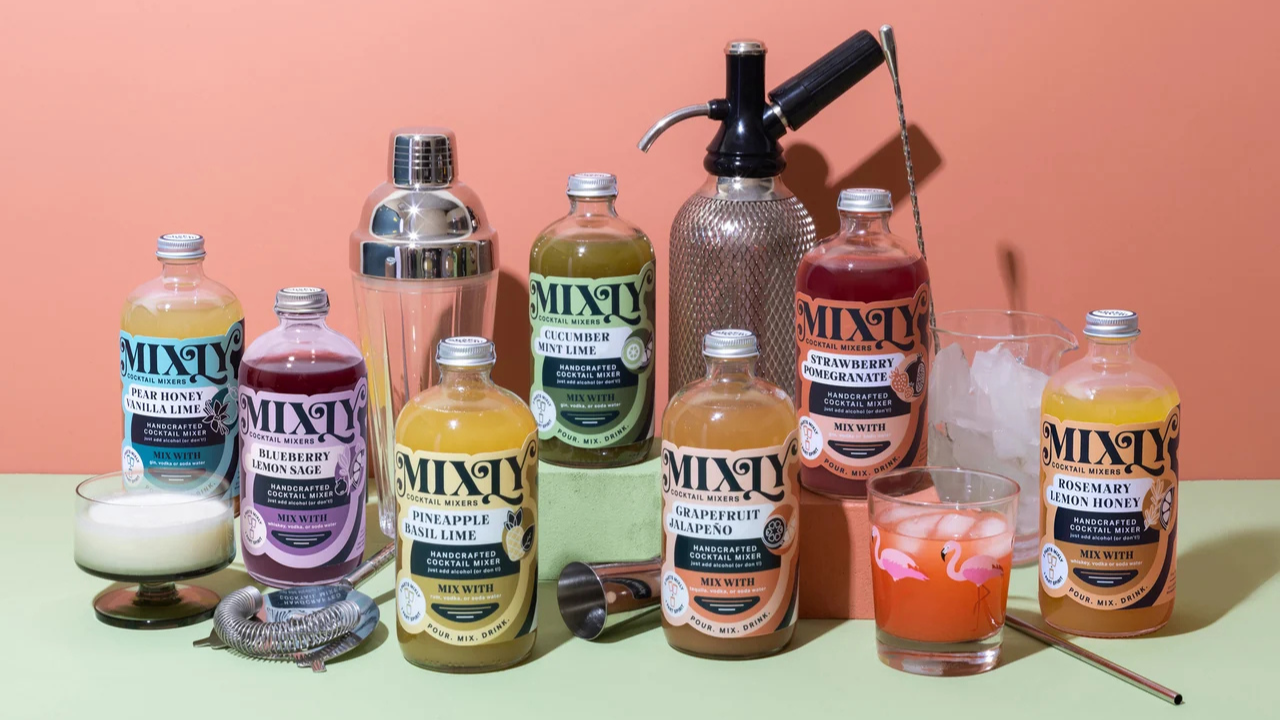
Johnna Rossbach never set out to be an entrepreneur. For fifteen years, she worked in a career that gave her little room for creativity, and she might have stayed on that path indefinitely if not for motherhood. When she looked at her daughters, she realized she wanted to model something different for them: what it looks like to feel empowered, to take ownership of your happiness, and to change the things that aren’t working. That mindset became the spark behind Mixly, a beverage company she built from the ground up. Rossbach loved cocktails, but she was consistently disappointed by the mixers she found in stores. The flavors felt repetitive, the ingredient lists were full of things she wanted to avoid, and the preparation often felt like too much work for a simple drink at home. She wanted something better, and she finally decided to make it herself. Drawing on her background in marketing and communications, she teamed up with Megan Sather, whose design expertise helped shape the brand’s visual identity. Together, they created a line of fruit-forward cocktail mixers made with real ingredients, intentionally crafted to be both delicious and approachable. What started as a personal frustration became a business built on a simple but powerful idea: if you’re not happy with something, you have the ability to change it. That lesson, born in motherhood, became the foundation of everything Mixly would become.
The first night they began working on Mixly, almost everything that could go wrong did. They started at four in the afternoon and didn’t stop until three in the morning, a grueling stretch that tested their patience and their resolve. Their juicer broke early on, leaving them to squeeze limes by hand. Then the labeler stopped working, forcing them to apply every single label themselves. Around midnight, Rossbach looked at Sather and realized they still had hours of work ahead of them. They could have called it a night and tried again the following week, but something told them that giving up then would set the wrong tone for the entire venture. They turned up the music and kept going, making the choice to push through exhaustion, frustration, and the mounting pile of small disasters. That moment became a defining one for their partnership. Rossbach later said it was the moment she knew they made the best business partners, because they shared the same determination and the same willingness to roll up their sleeves and figure things out, even when nothing was going according to plan. That night set the tone for the entire company. It also explains why the co-founders have always insisted on handling their own manufacturing. From the very beginning, they wanted to know exactly how their products were made, and they were willing to put in the hard, unglamorous work to ensure quality. The chaos of that first night taught them that they could handle whatever came their way, and that resilience became a core part of Mixly’s identity.
As the team began developing recipes, they brought in a mixologist friend to help refine the flavors, aiming for a balance that felt sophisticated but still accessible. Then the COVID-19 pandemic hit, disrupting their plans and forcing the founders to figure out production as they went. In an early interview, Rossbach was honest about the reality of those early days: they were still making the products themselves in a rented kitchen while trying to figure out how to scale. There was no map for what they were doing. Rossbach described the hardest part of starting a business as facing the unknown, the constant decisions, the self-doubt, and the possibility of getting things wrong. Every choice felt weighty, and there was no playbook to guide them. The company has been self-funded from the beginning, without outside equity investors. That was intentional. Rossbach and Sather wanted to build something of their own and maintain control over the business, its direction, and its values. But that also meant every dollar mattered, and the stakes felt deeply personal. They were investing their own money, their own time, and countless hours of work into a vision that had no guarantee of success. There were moments of uncertainty, times when the path forward felt unclear, but they kept going. Their willingness to embrace the messy, uncertain process of building something from nothing became one of their greatest strengths, and it allowed them to grow Mixly in a way that stayed true to their original vision.
Cocktails were Mixly’s entry point, but the founders always wanted their products to work for people who weren’t drinking as well. Rossbach was pregnant while the company was taking shape, and the sober-curious movement was just beginning to gain momentum. She and Sather saw an opportunity to create something versatile, a product that could be enjoyed with or without alcohol, so no one at a gathering had to feel left out. They wanted Mixly to be for everyone. That alcohol-free positioning was never a recent response to a trend; the mixers have always been alcohol-free. What has changed is the market around them. More and more consumers are looking for flavorful drinks without alcohol, and retailers are finally beginning to recognize the variety of occasions Mixly can serve. Rossbach noted that the interest in drinking less extends well beyond January or October, and that people want a good option for an ordinary Tuesday, dinner with friends, or a celebration. The mixers are designed to work whether customers add a spirit or pour them over sparkling water, which means they need to offer more than just sweetness. Mixly builds flavor with fruit, acidity, herbs, and bitter botanicals. Its Bitter Orange Cherry mixer, for example, uses gentian root to balance sweetness with a more complex bitter note. Rossbach believes that a good alcohol-free drink does not need to apologize for what is missing, and it doesn’t have to imitate a cocktail to deliver something satisfying. The product stands on its own, offering depth and complexity that appeal to everyone, regardless of whether they’re drinking alcohol.
As Mixly grew, the founders began hearing from customers who were using the products in ways they hadn’t anticipated. One customer told Rossbach she added a mixer to her children’s water for extra flavor. Others mentioned using the products in cooking and marinades. Then Rossbach’s own daughters became regulars at a local dirty soda shop, and after spending about twenty dollars on two drinks, she started thinking about how Mixly’s flavors could work in dirty sodas as well. Her daughters began making the drinks at home, and they even set up a neighborhood stand. That discovery opened up an entirely new occasion for the brand. A single Mixly flavor could go into a dirty soda, a mocktail, or a cocktail. The drink changes, but the mixer stays the same. This versatility became a major driver of growth. In June 2026, the company changed its name from Mixly Cocktail Co. to Mixly Beverage Co., reflecting a broader range of products and occasions beyond the bar cart, including dirty soda and coffee. The expansion brought Mixly into major retailers. Five flavored syrups launched at 685 Walmart stores, and the company expected its dirty soda products to reach nearly four thousand stores by the end of November. Two holiday kits launched at 1,300 Target stores and online, and Mixly’s products became available in approximately 4,600 retail locations nationwide. What began as a small cocktail mixer company had grown into a beverage brand with a much wider reach.
For Rossbach, that growth connects directly back to the idea the founders had from the very beginning: make something flavorful that people can share, whether they’re drinking alcohol or not. The market is finally catching up to that versatility, but it took hand-squeezed fruit, a rented kitchen, and plenty of decisions made without a map to get Mixly to where it is today. Along the way, Rossbach learned an important lesson about flexibility. When she first launched Mixly, she had an ultra-premium product line and a very specific idea of what the business would look like. But she quickly discovered that what you think customers want isn’t always what they actually want. The team listened, made adjustments, and became more comfortable pivoting as they learned what was working and what wasn’t. That willingness to change helped refresh the brand, expand beyond cocktail mixers, and grow into opportunities they never could have imagined when they were squeezing limes in a kitchen at three in the morning. The story of Mixly is not just a story about drinks. It’s a story about motherhood, partnership, resilience, and the courage to build something of your own. It’s about recognizing that the hard moments, the broken juicers, the sleepless nights, and the endless decisions, are all part of the journey. And it’s about the quiet determination to keep going, even when the path ahead is unclear. Rossbach wanted to show her daughters what empowerment looks like, and in building Mixly, she did exactly that. She built a business that reflects her values, her creativity, and her belief that anyone has the power to change the things that make them unhappy. In the process, she created something that brings people together, one drink at a time.