


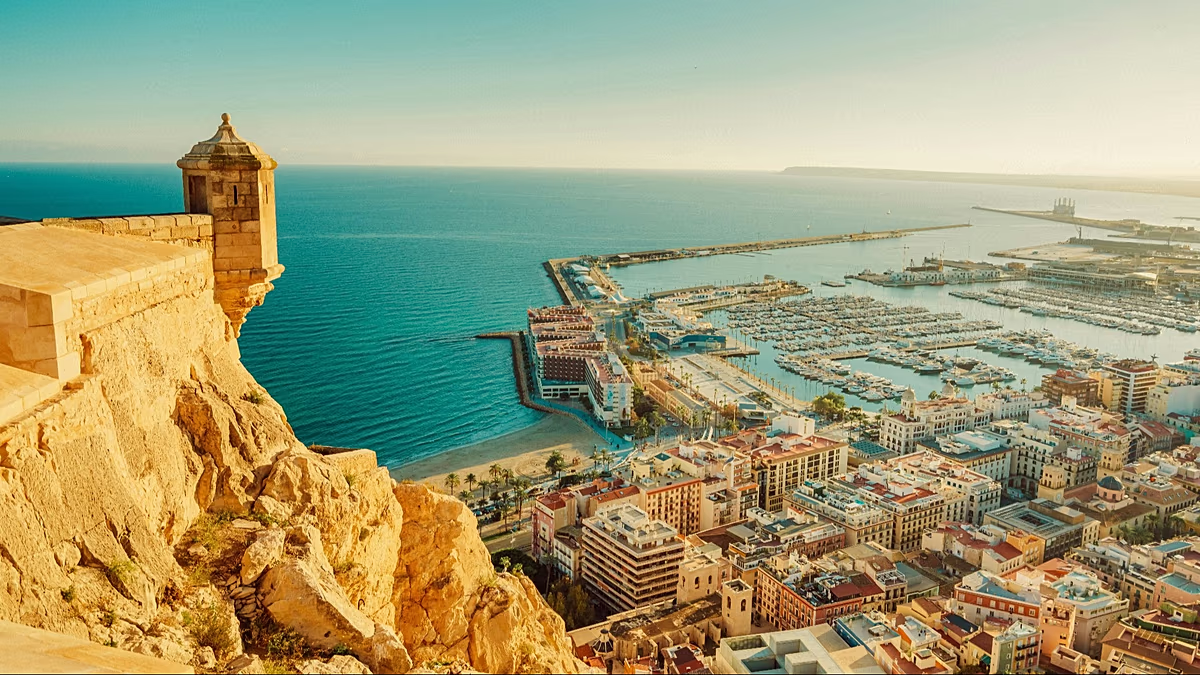
The Region of Valencia has long been one of Spain’s most beloved coastal escapes. For generations, visitors have flocked to the famous shores of Alicante and the bright, energetic streets of Benidorm, drawn by the promise of sun, sea, and celebration. And yet the world of travel is changing. There is a restlessness among modern tourists, a growing desire to do more than simply arrive at a crowded beach and stay there. People want to understand the places they visit. They want to taste real food, meet real people, hear the stories that do not appear in guidebooks. This shift has pushed destinations around the globe to rethink themselves, and the Region of Valencia is doing exactly that. Speaking at World Travel Market in London, José Manuel Camarero Benitez, the regional vice-minister for tourism for the Region of Valencia, explained to Euronews Travel how his team has managed to avoid the overtourism troubles that have affected other parts of Spain. The key, he says, is not to promote endlessly but to manage wisely. “We are not aiming to promote the same places, and telling people to go do the same things at the same time,” he said. Instead, the region is focusing on spreading visitors across seasons and regions. “We try to attract people outside of the peak season. For example, even now in November, we have sunshine and temperatures above 20 degrees so you can enjoy diving, swimming and other activities.” That is a tempting image. While much of northern Europe is grey and cold, Valencia in November can feel like a gift—still golden, still warm, but without the summer crowds. There is space on the sand, room at the table, and a sense of calm that makes the experience feel far more intimate. It is not a rejection of tourism; it is a more thoughtful version of it, one that values quality over quantity and connection over numbers. By gently guiding people away from the same hotspots at the same time, the region is proving that travel can be both joyful and respectful.
That philosophy is beautifully captured in the region’s current tourism campaign, “Could this be happiness?” The question does not point toward grand monuments or extravagant experiences. Instead, it invites visitors to discover joy in the smallest, most everyday moments: feeling the soft, warm sand between your toes, watching the glimmering light dance across the surface of the sea, lingering over a meal that seems to slow time itself. There is something deeply human about this approach. It acknowledges that the best travel memories are often not the ones we planned, but the ones that find us—a sudden burst of sunlight through the clouds, the taste of olive oil on fresh bread, the laughter of strangers in a seaside café. In a world where social media often pushes us toward identical photographs in identical locations, the campaign is a gentle reminder that true happiness cannot be manufactured or forced. It has to be noticed. It has to be felt. And it can be found almost anywhere, if we are willing to slow down and pay attention. For the Region of Valencia, this is not just marketing; it is a way of doing tourism that puts wellbeing at the center, both for visitors and for the communities who welcome them. By encouraging travellers to spread out, come off-season, and engage with local culture, the region is also protecting what makes it special. The joy of a quiet beach, a local festival where you are the only outsider, or a conversation with a shopkeeper who has time to talk—these are fragile things, easily lost under the weight of mass tourism. The campaign recognizes that and asks travelers to become participants rather than consumers. Could this be happiness? It is a deceptively simple question, but one that might just change how you see the world—and yourself. The answer, the region suggests, is waiting not in the busiest moments, but in the ones that feel entirely and authentically your own.
Nowhere is this vision more evident than in the province of Castellón, which Camarero believes is ready for its golden moment. “I always say Alicante has been our success for 60 years in the Valencia region; now Castellón will be the next success,” he said. It is a bold statement, but the region has the depth to back it up. Castellón is particularly known for its gastronomy, and that alone is worth the journey. In the coastal town of Vinaròs, you can sit down to a plate of langoustines so sweet and fresh that you will never forget them, their shells still warm from the sea. Inland, the Sierra de Irta mountainscape offers hiking trails that wind through pine forests and along rocky ridges, with views that stretch out to the Mediterranean like an endless blue horizon. History lovers can wander through Ares del Maestrat, where ancient cave art has been carved into the rock by hands that lived thousands of years ago—an almost humbling reminder that people have been drawn to this landscape for millennia. And for those who crave a little adrenaline, Montanejos is a paradise for canyoning, with turquoise pools hidden between narrow gorge walls and waterfalls that invite you to leap into cool, clear water. The beauty of Castellón is its diversity. You can start your morning hiking through quiet mountains, spend the afternoon exploring ancient rock art, and end the evening with a long, unhurried dinner in a village that feels like it has not changed in centuries. It is not trying to compete with the crowds of Alicante or Benidorm; it offers something different—a slower, more intimate side of the Valencia region. Camarero’s confidence in Castellón is not just about attracting tourists; it is about sharing a place that locals have always loved, and inviting visitors to understand why. For travellers looking to be genuinely moved by a destination, this is the kind of place that stays with you long after you leave. There is a quiet thrill in discovering a place before the world does, and Castellón feels like a secret waiting to be told.
The region is also preparing to welcome the world through an extraordinary year of sport in 2027. Valencia city will become a stage for some of the most exciting competitions in Europe, hosting the Copa del Rey basketball tournament, the European Indoor Athletics Championships, SailGP, and the MotoGP Valencia Grand Prix. Meanwhile, Alicante will once again play host to the start of The Ocean Race, the iconic sailing challenge that captures the imagination of anyone who has ever dreamed of the open sea. For a moment, sport becomes a thread that connects thousands of visitors to the local community, and the region comes alive with energy and celebration. But Camarero is quick to point out that these events are not just about the competition itself; they are opportunities for visitors to discover everything the region has to offer. For golf fans, Alicante will also host the IAGTO European Convention in May, and Camarero is encouraging players to come and explore the region’s many courses. “It’s the best opportunity to come to Alicante to see all 30 sites and discover not only golf as a sport, but golf as a lifestyle, with gastronomy, culture and the other things you can enjoy during your stay,” he said. That phrase—”golf as a lifestyle”—speaks to a broader vision. Sports events are not isolated arenas; they are doorways into the rhythm of daily life. You might come for the MotoGP and leave with a new love for local food; you might travel for SailGP and find yourself walking along the marina at sunset, talking to fishermen and feeling the salt on your skin. The 2027 sports calendar is a celebration of movement, endurance, and joy, but it is also an invitation. It asks visitors to spend a few extra days, explore a little further, and let the region become more than just a destination. In the end, sport is another way of storytelling, and Valencia is eager to share its story with the world.
Underpinning all of this is a commitment to sustainability that is not just a slogan but a way of life. The Region of Valencia has long prioritized responsible tourism, and in 2024 Valencia earned the designation of European Green Capital—a recognition that does not come easily and carries real weight. Now, in 2028, Benidorm will receive the European Green Leaf award, which honors smaller cities between 20,000 and 100,000 inhabitants with outstanding environmental practices. At first glance, Benidorm might seem an unlikely green champion, given its reputation as a bustling resort town. But that is precisely the point: sustainability does not mean turning away from visitors or sacrificing vibrant tourism economies. It means managing them thoughtfully, protecting natural resources, and ensuring that future generations can enjoy the same shining coastlines and lush landscapes. Camarero put it plainly: “Sustainability is not just a word for us, it’s both the present and the future.” That statement carries meaning in every corner of the region—from the urban design of Valencia, where bicycles and green spaces are woven into the fabric of daily life, to the protected wetlands and marine reserves that offer refuge for wildlife and tranquillity for visitors. It is visible in the local farms and fisheries that supply the region’s famous cuisine, in the renewable energy projects that hum quietly in the background, and in the careful balance between development and preservation. For travellers, this means that the beauty they come to enjoy is not being used up. It is being cared for. It also means that tourism can be a force for good, supporting local economies while respecting the environment. In a time when every destination seems to be facing the pressures of climate change and overcrowding, Valencia offers an alternative narrative. It shows that it is possible to welcome the world without losing what makes a place special. Sustainability, in this vision, is not a restriction—it is an invitation to be part of something lasting.
In many ways, the Region of Valencia is charting a path for the future of travel. Instead of trying to be everywhere at once, it is focusing on being somewhere real. Instead of chasing record numbers of tourists, it is seeking a deeper, more meaningful connection with each person who arrives. The strategy is not to turn away visitors but to guide them—toward quieter seasons, toward lesser-known towns, toward experiences that nourish the soul rather than exhaust it. And it seems to be working. Travellers are increasingly drawn to the idea of slow tourism, of places where they can actually breathe, and Valencia is ready to offer that. The balance between beloved destinations like Alicante and emerging gems like Castellón means there is something for every mood. The 2027 sports calendar will bring excitement and adrenaline. The region’s green credentials ensure that its beauty will last. But perhaps the most important thing is the feeling you are left with: that you are not a spectator of a travel brochure, but a guest in a living, breathing place. Camarero’s message, delivered with quiet confidence at World Travel Market, echoes a broader truth about modern tourism. The old model—crowded flights, crowded beaches, identical experiences—is giving way to something better. We want to be moved. We want to be welcomed. We want to find happiness not in the noise, but in the small, luminous moments that make us feel alive. A November swim. A langoustine dinner. A mountain trail with the sky on your shoulders. These are the things that stay with us. The Region of Valencia seems to understand that no campaign can promise happiness; it can only create the conditions for it to appear. And that may be exactly what the world needs right now—a place that does not shout, but simply invites you to look around, take a deep breath, and ask yourself the question that matters most: could this be happiness?