


The evening should have been an ordinary one for an 11-year-old girl in the Mott Haven section of the Bronx. The streets were familiar, the route home from school well-worn, and the hour—around six o’clock—was one that should have still felt safe. But in the late fall and winter months, six o’clock comes with darkness, and with darkness came a sudden, terrifying shift in what should have been a simple walk home. Fatima, a bright and spirited fifth grader, had become separated from her older brother for just a few moments, a small accident that no one could have predicted would put her face to face with danger. As she walked, a stranger passed by in the other direction. At first, there was nothing remarkable about him. But then he spoke. In an emotional interview afterward, Fatima recalled the sickening feeling of realizing that this was not a random, harmless comment. The man began asking questions that made no sense from a stranger—where she lived, whether she was eighteen years old. Her voice, still steady but carrying the weight of what she had been through, told the story of how she tried to ignore him, tried to walk away, tried to make the moment disappear. But he did not let go of the moment. He circled back toward her, and with a persistence that turned her blood cold, asked for something no child should ever be asked to give: a hug. What followed was a test of instinct and nerve that no 11-year-old should ever have to face, and yet Fatima faced it with a resilience that has since made her a symbol of courage in her community.
The details of the encounter, as Fatima described them, are chilling in their simplicity. She had passed him by a little when the man began his questioning. “Where did I live, if I was 18,” she recalled, the questions tumbling out of a stranger’s mouth with an ease that suggested sinister intention. She answered no—she was not eighteen, and she certainly was not going to tell him where she lived—and tried to keep moving. But the man was not ready to let her go. He approached her again, this time with a request that was both bizarre and threatening. “Can I have a hug?” he asked. Fatima’s response was polite but firm, the kind of response that children are taught in safety lessons, the kind of response that assumes the other person will simply accept it and move on. “No, no thank you,” she said. But he did not move on. He asked again. And this time, when she did not answer, the situation exploded into violence. The man grabbed her wrist with such force that it left her shocked and frightened. Fatima later demonstrated the grip by squeezing her own wrist with her hand, her small fingers wrapped around her arm, showing the world exactly what it felt like to be suddenly, brutally restrained by someone who wanted to take her away. In that moment, fear and adrenaline took over. But instead of freezing, Fatima fought. She managed to pull her hand free, then did something extraordinary: she shoved him hard, creating just enough distance to turn and run with everything she had in her body.
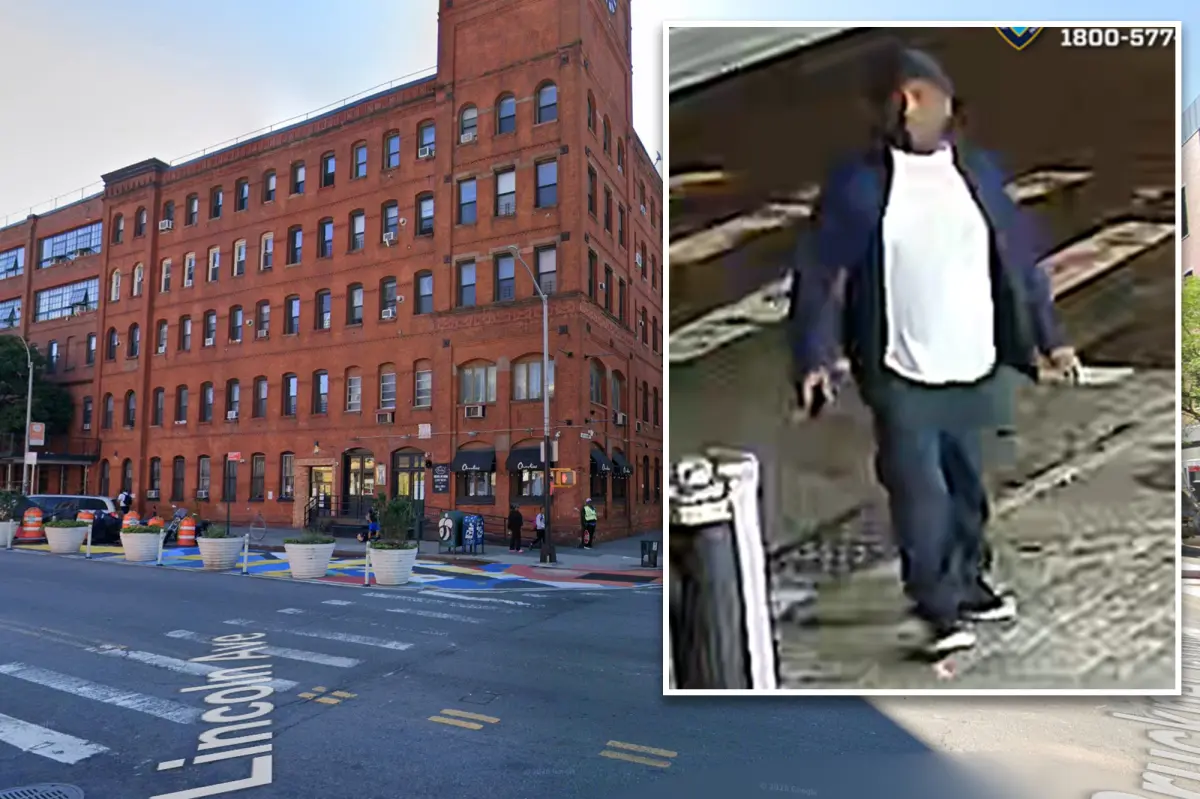
Her mother, Fatoumata Jaiteh, later explained the split second of survival that saved her daughter’s life. Fatima had been able to pinch the man hard on the hand, a small but decisive move that caused him to loosen his grip just enough. Then she freed herself, shoved him away, and sprinted back toward her brother. It was not a trained response or a rehearsed self-defense maneuver; it was pure, primal instinct, the sudden and overwhelming will to live that awakened in a child who had never before needed to fear another human being in that way. She found her brother, and together they rushed back to the school, where a dean immediately contacted the police. The man, a total stranger, slipped away into the evening, but not before being captured on surveillance footage. Still, at the time of the interview, he remained at large, a shadow hanging over the neighborhood, a reminder that the threat did not disappear just because a brave girl had managed to escape. For Fatima, the terror of that moment did not truly subside for hours. She spoke of being nervous, shocked, and scared—words that barely begin to describe what must have been a torrent of confusion and fear. Yet even in the aftermath, as police cars arrived and adults surrounded her with questions and comfort, something inside her held steady. She had done what many grown adults might struggle to do: she had recognized the danger, acted without hesitation, and run toward safety.
For Fatima’s mother, the news of the attack was a gut-wrenching blow that reopened an old wound. Jaiteh revealed that she herself had survived a similar kidnapping attempt when she was in high school, and the memory of that trauma came rushing back with terrifying clarity. “I know what it got me into, so I didn’t want my daughter to go through that and especially on her birthday,” she said. The added detail that this happened on Fatima’s birthday made the ordeal even more heartbreaking. A day that should have been filled with laughter, presents, and celebration nearly became the site of an unthinkable tragedy. Instead, the family chose to reclaim the evening. Despite the shock and the chaos, Fatima went home and celebrated with cake, surrounded by the people who loved her. There was something profoundly human in that decision—a refusal to let fear and darkness completely consume a day that belonged to joy. The cake might have tasted different that night, the smiles might have felt a little strained, and the tears might have come later, but the act of celebrating was itself a form of resistance. It was a way of telling the world that a stranger’s cruelty would not define her birthday, would not define her childhood, and would not silence her spirit. That small, quiet rebellion against fear is perhaps one of the most powerful parts of Fatima’s story.
The broader community has also been shaken by the incident, and the reaction has been a mixture of outrage, grief, and determined solidarity. Parents in Mott Haven and across the city have hugged their children a little tighter, walked them to school a little closer, and reminded them of the safety rules that should never need to be spoken aloud. The school responded quickly and appropriately, with the dean contacting police and likely offering support to Fatima and her family. Law enforcement has continued to investigate, using the surveillance footage to search for the man who tried to take an 11-year-old girl off the street. But until he is caught, a cloud of unease will hang over the neighborhood. Every unfamiliar face might be a suspect; every passing car might carry the same man who asked a child for a hug and then grabbed her wrist when she said no. The fact that he remains at large is not just a statistic or a news update; it is a terrifying reality for families who now know that a predator moved through their streets, targeted a young girl, and disappeared without a trace. For Fatima’s family, the wait for justice is agonizing. They know that while their daughter is safe, the man could do this again—could find another child, on another street, in another moment of darkness. That knowledge weighs heavily on everyone who has heard Fatima’s story and felt the chill of recognition that it could have been any child.
And yet, in the midst of the fear and the unanswered questions, Fatima’s courage stands as a beacon. Perhaps the most remarkable detail of all is what happened the morning after the attack. Despite the terror she had endured, despite her mother’s plea to stay home, Fatima insisted on going to school. “She is one of those kids that don’t like to be absent from school. She was going to school, even though I told her to stay home with me for the day, she said no,” Jaiteh said. That simple act of determination says everything about who Fatima is. She refused to let the man who attacked her take away her routine, her education, or her sense of normalcy. She understood, perhaps not in a grand or philosophical way, that going to school was a way of reclaiming her life. The same child who had shoved a kidnapper and run for safety was now walking through the doors of her classroom, sitting at her desk, and raising her hand to answer questions. There is a profound lesson in that resilience. Trauma does not always leave visible scars, but it changes the way a person moves through the world. Fatima will likely carry the memory of that evening for the rest of her life, and there may be moments when the fear returns, when a stranger’s voice sounds too familiar, when a hand on her shoulder makes her flinch. But she will also carry the knowledge that she fought back, that she was strong enough to escape, and that she refused to be broken. Her story is not just one of danger and near-tragedy; it is one of a child’s extraordinary inner strength, a mother’s fierce love, and a community’s refusal to look away. As the search for the attacker continues, the hope is that justice will come, but no matter what happens, Fatima has already shown the world something powerful: she is not a victim. She is a survivor, a fighter, and a girl who knows that even in the darkest moments, you can shove fear out of the way and run toward the light.