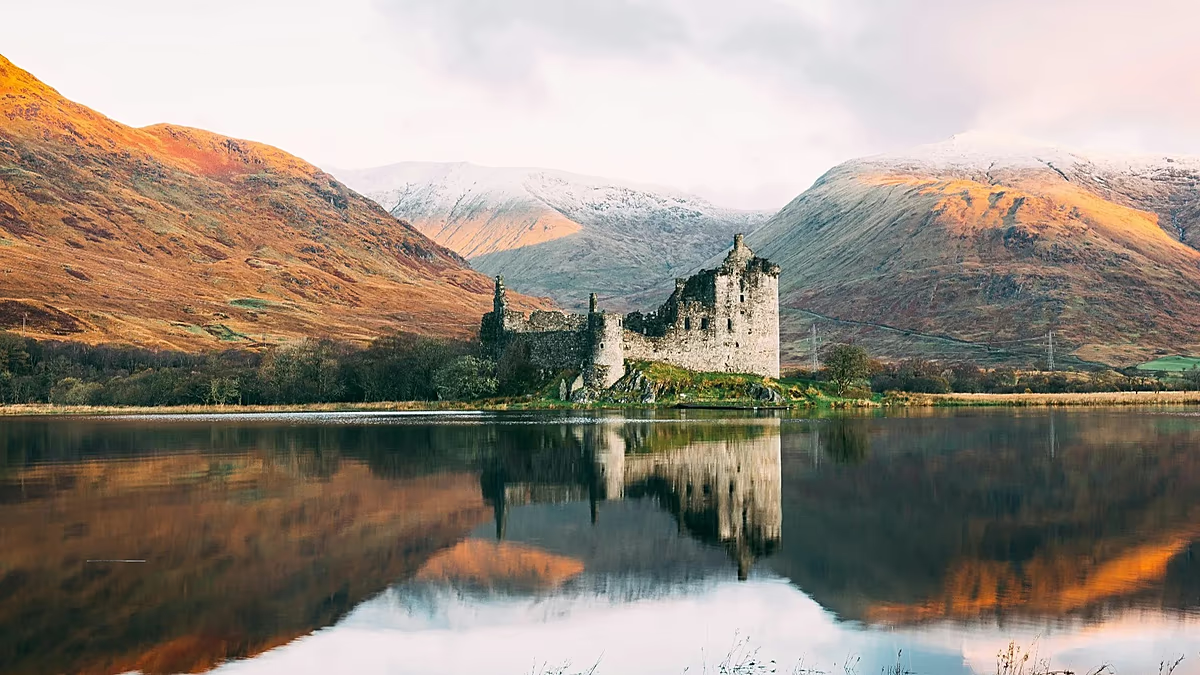




Scotland has a way of staying with you long after you leave. It’s the shimmer of a loch at dusk, the bite of salt wind on a coastal path, the sound of laughter spilling out of a pub on a rainy evening. It’s also the people, and the quiet, unforced hospitality that makes strangers feel like old friends. That is exactly what VisitScotland wants to protect as it looks toward 2027. Speaking at World Travel Market in London, Jill Walker, the organisation’s Director of Marketing, made a simple but profound statement: tourism in Scotland is a “force for good.” For Walker, that phrase is not a slogan but a promise. Tourism must benefit locals as much as visitors, and it must leave the country better than it found it. That is why her focus for 2027 is on immersive experiences, the kind that let travelers touch the real Scotland rather than simply observe it. Take Wigtown, a lovely market town in Dumfries and Galloway, where visitors can stay in an actual, working bookstore through Airbnb. Imagine falling asleep surrounded by shelves of secondhand books, then waking up to the smell of old paper and fresh coffee, and spending the morning “playing shop” alongside local booksellers. It is playful, intimate, and deeply human—the opposite of a manufactured tourist attraction. It is also a perfect example of what Walker means by tourism as a force for good: the money spent by visitors supports a local business, the interaction enriches both sides, and the memory becomes something far more meaningful than a photo. Scotland’s landscapes are magnificent, but its soul lives in the details—the stories, the rituals, the small everyday moments that continue whether or not anyone is watching. By inviting visitors into those moments, VisitScotland hopes to create a deeper kind of connection, one that encourages people to care for the places they visit long after they have returned home. The Wigtown bookstore is a small-scale example of a larger philosophy: tourism should be an exchange, not a transaction. It should leave both the guest and the host richer in something that cannot be counted in pounds or euros. As 2027 approaches, that philosophy will shape everything, from major sporting events to new museums, ensuring that Scotland’s moment in the global spotlight also becomes a moment of genuine, lasting value for its people.
Most tourist boards have a type. They chase the adventure traveler, the luxury seeker, the family on a budget. Scotland rejects that idea outright. “We don’t have anybody that we wouldn’t attract,” Walker says, with a smile. “We’re a very open and inclusive country and destination, and that will always continue.” The message is clear: whether you are a family with toddlers, a young professional on a solo trip, or an older couple looking for a slow and scenic escape, there is a place for you. Scotland’s destinations are wonderfully varied—buzzing cities, remote islands, rolling farmland, wild mountains—and they welcome all kinds of visitors. But Walker does offer a few gentle caveats. “We want people to come in the shoulder seasons and experience Scotland in a responsible way and, if they can stay a bit longer, if they could do a bit of slow travel, all the better.” This is not about limiting numbers or turning people away. It is about encouraging a better rhythm of travel. Come in spring, when the gorse is bright yellow and the lambs are learning to leap. Come in autumn, when the hills are painted in gold and amber and the evenings are made for cozy fires. Stay a few extra days. Wander, linger, get lost. Trade a checklist for a conversation. This philosophy is refreshingly at odds with the tourism industry’s usual obsession with growth, and it reflects a confidence that Scotland does not need to sell itself to everyone at once. Its appeal is timeless. And by inviting people to slow down, VisitScotland is not just protecting the landscape and the communities—it is giving visitors a better, richer experience. It is an invitation to see Scotland not as a series of sights to be ticked off, but as a place to be felt, to be lived in, even if only for a little while. It is a way of traveling that respects the land, the locals, and the traveler alike, and it is a philosophy that may well shape how other destinations think about tourism in the years ahead.
Nowhere embodies this philosophy better than Dumfries and Galloway, the southwestern corner of Scotland that has long been one of the country’s best-kept secrets. In 2027, that secret will be impossible to keep. The region was recently named one of National Geographic’s Best of the World 2027, the only UK destination to make the top 25 global list. For those who know it, the honor makes perfect sense. This is a place of wild beauty and quiet surprises, where forested hills roll down to a dramatic coastline and the night skies are so clear you can see the Milky Way. It is also a playground for adventurous types and thrill seekers. You can spend a morning kayaking on a secluded loch, an afternoon scrambling up a narrow gorge as cold water splashes your face, and an evening flying across the landscape on a high-flying zipline, with hills and valleys spread out beneath you like a living map. But Dumfries and Galloway is not just about adrenaline. It is about discovery. It is home to Wigtown, the bookshop town where Walker’s beloved Airbnb sits, and to a community that has long understood that tourism can preserve heritage rather than dilute it. The National Geographic recognition brings a mix of pride and hope to locals. They have always known their home was special; now the world knows it too. For travelers, the honor is a timely reminder to visit soon—before the crowds descend—and to do so gently, with the same respect that the region’s residents have for their own land. Whether you are seeking adventure or simply a place to breathe, Dumfries and Galloway offers something increasingly rare: a corner of Scotland that still feels untamed, authentic, and wonderfully alive. It is a place where the biggest thrill might be the silence at the end of a long day, and where every turn in the road reveals another reason to slow down. The region’s new international profile is well deserved, but it also comes with a responsibility to preserve the very qualities that earned it that recognition in the first place.
Scotland will also make history in 2027, and for sports fans, it will be unforgettable. Edinburgh will host the Grand Départ of the Tour de France, marking the northernmost start in the race’s storied history. For cycling enthusiasts, this is the stuff of dreams: the world’s greatest riders rolling through the cobbled streets of Scotland’s capital, with Edinburgh Castle looming above and tens of thousands of spectators lining the route. The atmosphere will be electric, a carnival of color, noise, and sheer human endurance. But the Grand Départ is not just for cycling fans. It is a celebration of place, a chance for Edinburgh to showcase its architectural splendor, its hills, its history, and its unmistakable character to a global audience. Then, in September and October 2027, the inaugural Rally Scotland will take place in Aberdeenshire, marking the first time the UK has hosted a round of the World Rally Championship since 2019. The sounds will be very different—the roar of engines, the screech of tyres, the gasp of the crowd as a car slides past a hairpin bend at impossible speed—but the thrill will be just as intense. Rally stages wind through some of Scotland’s most dramatic landscapes, and the contrast between raw machinery and ancient hills is strangely beautiful. These events are about more than sport. They are about welcoming the world to Scotland in a way that celebrates the country’s unique spirit. They also bring a welcome boost to local economies, filling hotels, restaurants, and pubs, and encouraging visitors to linger longer. For the lucky spectators who find a spot along the route, the experience will be visceral and unforgettable. Edinburgh will be buzzing, Aberdeenshire will be alive with excitement, and Scotland as a whole will prove that it can host world-class events with warmth, style, and a distinctly Scottish sense of occasion. It is going to be a year to remember, and long after the roads have reopened and the crowds have gone home, the stories of what happened in Scotland in 2027 will continue to be told.
For those less interested in sports, Scotland has no shortage of new reasons to visit. Perth Museum, a relatively recent addition to the cultural landscape, offers a fresh perspective on Scotland’s story, blending ancient treasures with contemporary art and interactive displays. Inverness Castle Experience officially opened to the public in February this year, after a multi-million pound transformation from a former prison and sheriff court into an immersive visitor attraction. You can now walk through the old cells, climb to the ramparts for sweeping views over the River Ness, and uncover the complex history of the Highlands in ways that are engaging and often surprising. But VisitScotland’s real focus is on hands-on experiences that allow visitors to get under the skin of the country. You can learn to shear sheep on a working farm, your hands deep in wool as a farmer teaches you a skill that has been passed down for generations. You can stay in accommodation right next to Highland “coo” pastures, where shaggy, gentle giants amble over to greet you at the fence, their lowing a soothing soundtrack to your morning coffee. You can cook Cullen Skink, the hearty Scottish soup made with smoked haddock and potatoes, guided by a local who shares family recipes and stories over a steaming pot. These are not attractions you simply look at; they are experiences you participate in, with your hands, your taste buds, and your heart. “We’re always innovating in Scotland,” Walker says. “There’s always lots to do and see, and it’s all very interactive, very hands-on, which is obviously important to see Scotland at its best.” That spirit of innovation keeps Scotland fresh for repeat visitors and newcomers alike. It also turns a trip into something more than sightseeing—it becomes a living, breathing encounter with a place and its people. You leave with new skills, new recipes, new friendships, and a deeper understanding of what makes Scotland tick. And in a world where so much travel is passive, that is a rare and valuable gift.
When it comes down to it, VisitScotland believes that Scotland is the ideal place to improve wellbeing for both the body and the mind. “That comes quite naturally to us because we are that hospitable kind of nation; we love hospitality, we’re brought up to make sure people enjoy themselves,” Walker says. “We’ve got that beautiful landscape, we’ve got that history, integrity and the food, and it’s the way we live. It’s not put on or contrived for people that are coming to visit.” That is perhaps the most beautiful thing about Scotland: its appeal is not manufactured. It is not a carefully curated theme park or a performance staged for tourists. It is simply the way life is lived there. The same hills that draw hikers from around the world are the ones locals have walked for centuries. The same lochs that feature in postcards are the ones where children learn to swim and fishermen cast their lines. The same warmth that makes a visitor feel welcome is the warmth that neighbors show each other every day. Visitors often notice this immediately. They arrive expecting beautiful scenery, and they leave with something more—a sense of being grounded, of being connected to something real. Walker says it best: “When people come to visit Scotland, they say that very thing. It all feels very grounded, very authentic and quite enriching.” In a world that is increasingly fast, loud, and disconnected, that kind of authenticity is rare and precious. Scotland offers a chance to slow down, to breathe, to walk until your legs ache and then sit in a pub and talk with strangers who quickly become friends. It offers landscapes that lift the spirit and stories that deepen the soul. As 2027 approaches, Scotland is not simply preparing to show off its castles and mountains and cities. It is preparing to welcome travelers into a way of being that has always been there—open, inclusive, and deeply human. Tourism, in this vision, becomes a force for good not only for the economy but for the soul. That is a message worth celebrating, and a reason to start planning your own slow, responsible, and enriching journey to Scotland.