


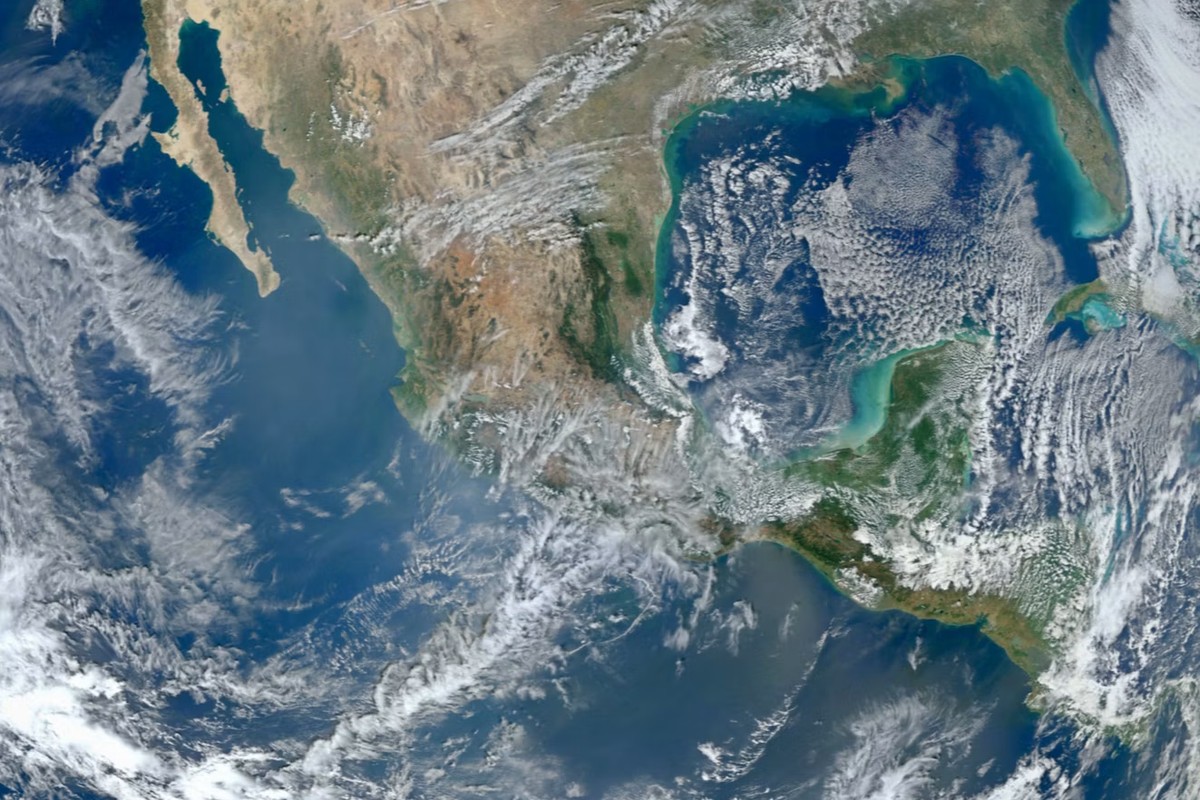
Here’s some news that could quietly reshape how we understand our planet’s future. Google is pouring about five million dollars in funding, plus another 1.8 million in cloud computing credits, into the Allen Institute for AI in Seattle. The goal? To help transform a cutting-edge AI weather model built by Google Research into something far more ambitious: an open-source tool capable of projecting climate change decades into the future. This isn’t just another tech partnership. It’s a recognition that the hardest climate questions we face—how will rainfall patterns shift by 2050? What will happen to water supplies in the Southwest? How will extreme heat settle into cities we haven’t built yet?—require a new kind of modeling. And Ai2, as the institute is known, is one of the few places in the world with the mix of atmospheric science, artificial intelligence expertise, and nonprofit open-research values to pull it off. The project, announced on a Wednesday morning, is funded by Google.org, Google’s philanthropic arm, with technical support from Google Research. It will add four people to Ai2’s eight-person climate modeling team, creating a small but powerful group tasked with building what they call NeuralGCM+.
To understand why this matters, you have to appreciate the difference between weather and climate. Weather is what happens this week. Climate is what happens over decades, the slow accumulation of patterns that shape everything from crop cycles to flood zones. Google’s NeuralGCM model is remarkable at weather, predicting conditions up to a year ahead with surprising skill. But as Oliver Watt-Meyer, Ai2’s director of research for AI climate modeling, explains, Google has less interest in the longer game. Climate projections are, in his words, “a bit more of a public good.” They don’t feed a commercial product the way a weather forecast might. Instead, they inform government agencies, water managers, and planners who need to know: What will the world look like in thirty years? The challenge is that climate models have historically been enormous, slow, and expensive to run, relying on supercomputers to crunch through millions of calculations of physics, chemistry, and ocean currents. NeuralGCM takes a different approach. It blends traditional physics equations with machine learning, letting AI handle the parts that are too complex to simulate from scratch. The result is a model that can run much faster than conventional ones while still respecting the laws of physics. When Google published its research in 2024, Watt-Meyer wrote about it for the journal Nature, praising its performance but also pointing out real limitations. Some of the model’s long runs broke down over time. And when researchers pushed ocean temperatures about seven degrees Fahrenheit warmer than today—roughly the kind of warming we could face in a worst-case scenario—the model’s atmospheric predictions stopped making physical sense. Those are exactly the problems Ai2 intends to solve.
This project is also a homecoming of sorts, and its roots trace back to Paul Allen, the late Microsoft co-founder. Around 2016, Allen started a climate modeling effort at Vulcan, his Seattle-based holding company. The idea from the beginning was to combine physics and AI, a bold vision at a time when most climate scientists relied on traditional simulation models. But the team ran into a wall. The AI couldn’t be trained well inside the older climate models, which were written in Fortran, a programming language that dates back to the 1950s and is notoriously difficult to work with. It’s powerful but clunky, and modern machine-learning tools didn’t mesh with it. So the team set the AI idea aside. Allen died in 2018, and in 2021, two and a half years after his death, the climate group moved to Ai2, the artificial intelligence research institute he had founded in 2014. There, they kept working, building their own family of AI climate models called the Ai2 Climate Emulator, or ACE. But something was still missing. Then Google came along with NeuralGCM, written in modern code that solves the Fortran problem. For Watt-Meyer, this feels like coming full circle. The original vision that Paul Allen had—fusing physics and AI—is now possible, thanks to a different tech giant’s work. But Ai2 is not just adopting Google’s model. They are giving it a new purpose, extending it from weather forecasting into long-term climate projection, and in the process, honoring an idea that began years before the technology was ready for it.
The technical work ahead is substantial, and Ai2 is structuring it carefully. The first big step is releasing the training code for NeuralGCM, which has been locked inside Google’s internal systems. Making that code public is crucial because it will allow researchers everywhere to train their own versions of the model, using common graphics processing units rather than only Google’s custom chips. This democratization matters: climate science shouldn’t be a black box sitting inside one corporation’s cloud. Ai2 expects to release the code within the first year, and in parallel, they’ll be working on connecting NeuralGCM+ to an ocean and sea ice model. This is critical because long-term climate is driven as much by the oceans as by the atmosphere. The ocean stores heat, moves it around, and influences rainfall patterns for decades. Without a functioning ocean model, any projection beyond a few years is incomplete. The other major task is making the model reliable in a warmer world. That means building more established physics into the system and then checking its predictions against the results of traditional climate models. This is, Watt-Meyer admits, the hardest part, and it might take longer than three years. The team is not entirely sure it will work. But they have a strong foundation. Inside NeuralGCM, the laws of physics are baked in, and those laws don’t change as the planet warms. That’s why the hybrid approach could hold up better than purely AI-based models, which are trained only on historical data and can struggle to imagine a climate the world hasn’t seen before. ACE, Ai2’s earlier model, runs much faster than NeuralGCM, but it has that exact weakness. NeuralGCM’s physics anchor could make it more trustworthy for a future that looks nothing like the past.
The timeline for the project is three years, but the team is already finding reasons to be optimistic. One of the most surprising developments is the role of AI coding agents. These are tools that can read, understand, and translate computer code from one language to another, and they are proving to be a real game changer for scientific computing. In the past, converting a model from Fortran to a modern language like Python or Julia was a tedious, error-prone task that could take months or years. Now, an outside group has already used AI to convert a well-known ocean model from Fortran into the same language that NeuralGCM uses. That means Ai2 doesn’t have to build its own ocean model from scratch, saving an enormous amount of time and effort. Watt-Meyer calls this “a golden era for this kind of scientific computing.” It’s not just about speed; it’s about unlocking work that was previously considered too difficult. The two teams, Google Research and Ai2, will continue to collaborate. Google will keep developing NeuralGCM for its original purpose—forecasts from a few weeks to a year ahead—while Ai2 pushes it into climate territory. They’ll share training code, data, and ideas. In fact, one of Google’s lead NeuralGCM researchers is spending three days at Ai2’s Seattle office this week, a sign of how hands-on the partnership is. This kind of collaboration between a tech behemoth and a nonprofit research institute might seem unusual, but it makes sense. Google has the computational resources and cutting-edge AI; Ai2 has the climate science expertise, a mission of open research, and a deep understanding of what society actually needs from climate models. The public good framing is not just token. Ai2 is committed to making the final model available to anyone who needs it, from university labs to government agencies to community groups trying to understand their local water future.
Who will actually use this model? The possibilities are broad and urgent. Watt-Meyer points first to questions like how rainfall could change in the American Southwest, a region already stressed by drought and reliant on the Colorado River system. Lake Powell, one of the biggest reservoirs in the country, could face dramatically different inflows as precipitation patterns shift. Water agencies need to know whether to plan for more conservation, new infrastructure, or harder choices. Insurance and reinsurance companies, which already use Ai2’s ACE models in their research, are another natural audience. They need to price risk for flood, fire, and storm damage decades into the future. There’s also a less obvious, but increasingly important, potential user: data center developers. The frantic rush to build AI infrastructure has created an enormous demand for electricity and water, and those facilities need to know about cooling needs, access to renewable energy, and risks from extreme weather and rising seas. Watt-Meyer and his team are not sure if the industry is paying enough attention. “There’s so much frantic energy to build these things as fast as possible,” he says. “I’m not sure people are really seriously considering this kind of climate data, though maybe they should be a bit more.” That last sentence captures the tension at the heart of this project. We are building powerful new tools at a dizzying pace, while the climate itself is changing beneath our feet. Ai2’s work with Google is an attempt to slow down, look ahead, and build something that helps us understand what we are doing to the planet before it’s too late. It’s not a flashy product launch or a race to the next breakthrough. It’s a slower, quieter effort to answer fundamental questions about our future—and to make sure the answers are shared, not hoarded. In a world where technology often moves faster than our understanding of it, that feels like a genuinely human thing to do. The project may fail. The models may not hold up. But the attempt, rooted in a vision that began with Paul Allen and now carried forward by a new generation of researchers, is a reminder that the best use of artificial intelligence isn’t just to build better machines. It’s to understand the world we live in, and to protect it for the decades to come.