


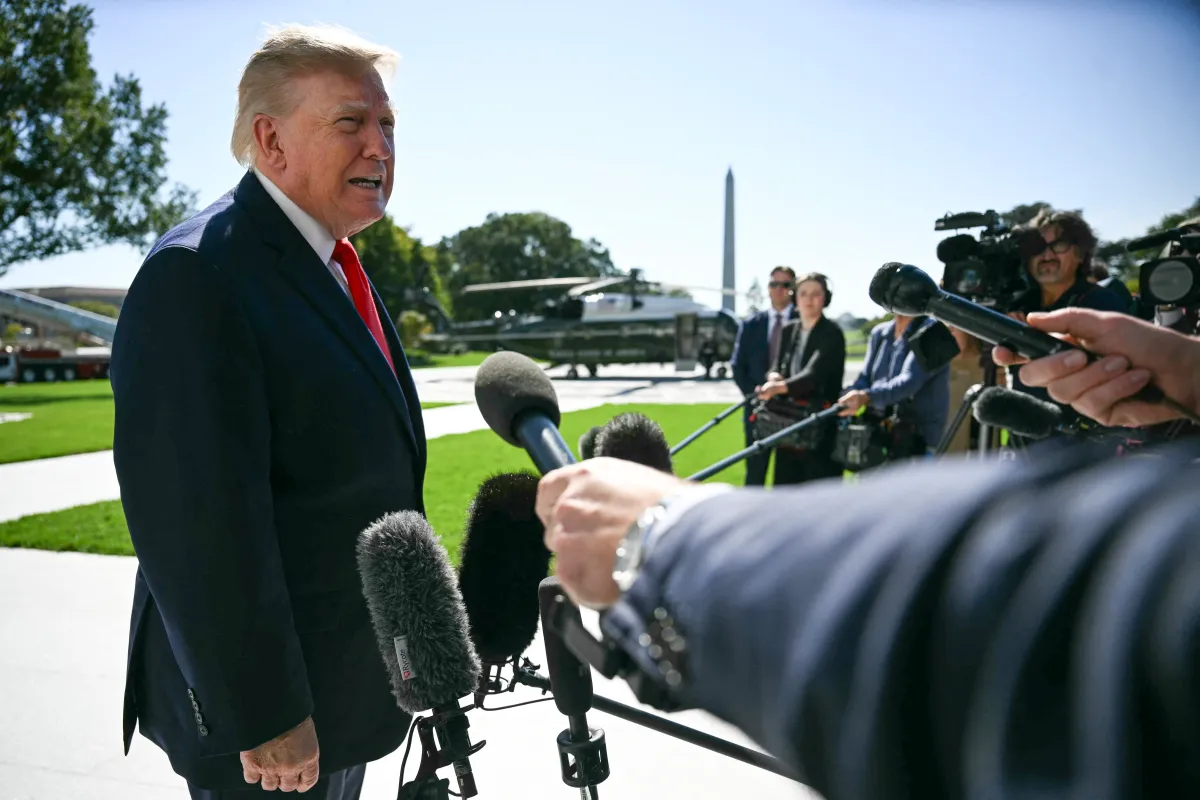
For much of the past year, former President Donald Trump has waged an extraordinary legal war against some of the most powerful news organizations in the United States, filing multibillion-dollar defamation suits that have tested the boundaries of the First Amendment and the resilience of the press. The latest volley in that campaign ended in another defeat. A federal judge in Florida dismissed Trump’s defamation lawsuit against The Wall Street Journal with prejudice, meaning the case is dead in its current form and cannot be refiled. The ruling, issued by U.S. District Judge Darrin Gayles, marks one of the most significant rebukes yet to Trump’s strategy of using defamation law to punish outlets he believes have wronged him. At its heart is the constitutional standard known as “actual malice,” which requires public figures to prove that a media outlet published a falsehood with knowledge it was false or with reckless disregard for the truth. That bar, set by the landmark 1964 Supreme Court decision New York Times v. Sullivan, exists to protect robust, even harsh, criticism of public officials. But as Trump’s lawsuits repeatedly collide with that doctrine, judges are increasingly reminding him—and the public—that the standard is not just a formality; it is a bulwark of democratic speech.
The Journal case offers a textbook example of why defamation suits against the press are so difficult to win. The dispute arose from a July 2025 article about a purported birthday letter Trump had sent to convicted sex offender Jeffrey Epstein. Trump flatly denied authoring the letter and sued the newspaper, its parent companies, and two reporters, alleging defamation. But Judge Gayles, in a scathing order, found that Trump had failed for a second time to plausibly allege that the defendants acted with actual malice. The judge repeatedly invoked Sullivan and its progeny, emphasizing that the cost and effort of defending a lawsuit can chill free speech almost as effectively as eliminating the standard altogether. He also tore into Trump’s central argument: that because Trump personally branded the letter a “fake,” the Journal should have abandoned its entire investigation and spiked the story. That, Gayles wrote, is not what the law requires. Editors and reporters are entitled to weigh a source’s denial against other evidence they have gathered. In effect, Trump was asking the court to make his say-so legally decisive—a proposition that would turn defamation law into a tool of prior restraint, allowing the powerful to suppress unfavorable reporting simply by denying it.
While the Journal case is over, a slew of other suits remain in limbo, each with its own peculiar texture and stakes. Trump’s $10 billion lawsuit against the BBC is still grinding forward, stemming from a Panorama documentary that spliced together portions of his January 6, 2021 speech in a way the BBC later apologized for. The broadcaster denies defamation and is fighting the case; Trump has been ordered to sit for a deposition by December 11, and a judge has warned him that his case could be dismissed if his legal team fails to produce relevant documents or evidence of a diligent search. Meanwhile, three outlets—CNN, MSNBC, and Politico—are not defendants but plaintiffs against Trump. After the White House banned them and escorted their reporters off the grounds, they filed a First Amendment lawsuit, and a federal judge appointed by Trump himself issued a preliminary injunction restoring their credentials. The judge found they were likely to prevail, writing that Trump’s own statements suggested the ban was motivated by displeasure with coverage, which is unconstitutional viewpoint discrimination. Now the outlets are pressing further, asking the court to restore their access to pool assignments in the Oval Office and aboard Air Force One, where the White House continues to exclude them.
Two other high-profile cases illustrate the messy, sprawling nature of Trump’s media litigation. His $15 billion suit against The New York Times, several reporters, and Penguin Random House over the book Lucky Loser was dismissed by a federal judge who sneered that a complaint is not “a public forum for vituperation and invective” or “a protected platform to rage against an adversary.” Yet the judge allowed Trump to file an amended complaint, and the case lingers on. Similarly, Trump’s lawsuit against the Pulitzer Prize Board over a 2022 statement defending journalism awards to The New York Times and The Washington Post has survived initial dismissal attempts. In a striking turn, the Board has demanded Trump hand over his tax returns, financial records, and full medical and psychological files, arguing that if he claims reputational and emotional harm, he must open his life to scrutiny. The case remains active in Florida, with discovery and pretrial proceedings churning ahead—a reminder that libel suits can cut both ways, forcing plaintiffs to expose far more than they anticipates.
Some battles have already ended in quiet settlements rather than courtroom verdicts. Trump settled his $10 billion suit against CBS and Paramount over a 60 Minutes interview with Vice President Kamala Harris for a mere $16 million—a fraction of what he sought, but still a significant payout. In that case, Trump alleged the interview was edited to benefit Harris, constituting “election interference.” Even more striking was the ABC News settlement, in which the network agreed to pay $15 million toward Trump’s presidential library and issue a public apology. That case arose from anchor George Stephanopoulos’s on-air statement that Trump had been “found liable for rape.” In truth, a jury found Trump liable for sexual abuse and defamation in the E. Jean Carroll case, but not for rape as defined under New York law—a distinction that proved costly for ABC. Then there is the Iowa poll case, which was dismissed outright. Trump sued The Des Moines Register, Gannett, and pollster J. Ann Selzer over a pre-election poll showing Harris leading in Iowa, a state Trump ultimately won. An Iowa judge threw out the case, ruling that the poll and related reporting were protected speech. Trump has vowed to appeal, but the dismissal with prejudice means he cannot repackage the same claims.
Stepping back, this legal odyssey paints a vivid picture of the tensions between a former president, the press, and the law. Trump has won some concessions through settlements, but he has lost repeatedly when judges apply the actual malice standard to the facts. The Wall Street Journal dismissal, with its emphatic defense of Sullivan, may be a turning point. It signals that courts are unwilling to let te billion-dollar lawsuits become a backdoor way to intimidate journalists, even when the plaintiff is the most powerful man in American politics. At the same time, the ongoing cases—the BBC deposition, the Pulitzer discovery demands, and the fight over White House pool access—ensure that this clash is far from over. The human dimension is inescapable: reporters facing the prospect of years of litigation, editors bracing for discovery requests, and a president who genuinely believes the media is out to get him. But as Judge Gayles noted, the costs of defending a lawsuit can chill speech just as effectively as censorship. The law has long held that public figures, by virtue of their power and access to megaphones, must tolerate a greater degree of insult and error. That principle is now being tested as never before, and so far, the courts are holding the line. Whether Trump eventually wins a case or settles his way to a different sort of victory, the lasting legacy of this campaign may be the reminder that the right to criticize the powerful—even with mistakes—is not up for sale.