


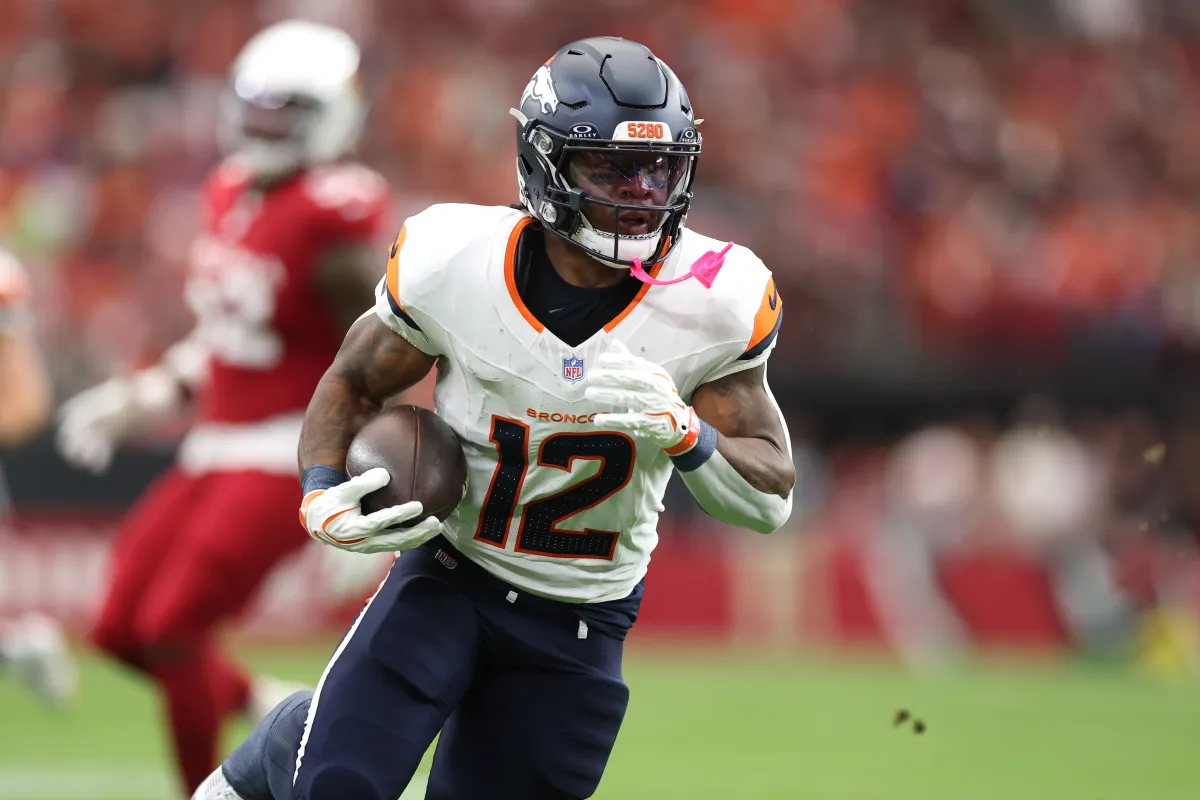
The Denver Broncos walked into practice this week with the kind of energy that only an AFC West showdown can bring. A visit from the Kansas City Chiefs tends to sharpen everyone’s focus, and the weight of the rivalry, the standings, and the division’s pride can be felt in every drill, every meeting, and every glance toward the sideline. But football has a way of delivering tough news in the middle of preparation, and on Saturday the Broncos received a gut-punch that will shape their plans not just for Sunday but for the next several weeks. RJ Harvey, the team’s rising young running back, had been making plays in practice, showing the burst and versatility that made him a fan favorite and a secret weapon in Denver’s offense. Then came the injury to his knee. It wasn’t the kind of collision that usually looks scary on film, but it was enough to force the Broncos to make a difficult decision. According to ESPN’s Ian Rapoport, Harvey will be placed on short-term injured reserve, a designation that officially puts him on the shelf for at least the next four games. Because Denver has its bye in Week 10, the recovery window ends up feeling even longer: five full weeks before he is eligible to return. That means he will miss the upcoming battle with the Chiefs, then games against the Carolina Panthers, Las Vegas Raiders, and Pittsburgh Steelers. If all goes according to plan, the earliest the Broncos can welcome him back is Sunday, Dec. 6, when they host the Miami Dolphins. For a team that has spent the season trying to prove it belongs in the conversation with the NFL’s best, losing a player like Harvey is more than a roster move; it is a reminder of how fragile even the most promising seasons can be.
This is not the first time Harvey has had to fight through an injury this year, and that context makes the timing especially cruel. He already missed a game earlier in the season after pulling his hamstring during the opening matchup against the Chiefs, the same opponent Denver is preparing for now. The fact that he worked his way back, found a rhythm, and then suffered another setback in a routine practice is enough to make even the most hardened football observer wince. Harvey is a young player who has become something of a folk hero in Denver because of the way he runs, the way he catches the ball out of the backfield, and the way he always seems to make something happen when the offense needs a spark. During his rookie season, he was one of the most pleasant surprises in the league, carrying the ball 146 times for 540 yards and seven touchdowns while also showing an advanced feel for the passing game. He hauled in 47 receptions for 356 yards and five more scores, giving him 12 total touchdowns, more than anyone else on the Broncos. Those numbers might not jump off the page in a league filled with 1,000-yard rushers, but they tell the story of a player who can change a game in multiple ways, whether he is taking a handoff through the middle, catching a screen in space, or running a route that forces a linebacker to pick their poison. For a Broncos offense that has often had to manufacture points rather than simply overpower opponents, Harvey’s creativity and toughness were exactly what the team needed. His absence leaves a hole that will not be filled by one player alone.
Harvey’s numbers this season have not matched his rookie production, at least not on the ground, but that only makes his loss feel more significant. Through six games, he had recorded 24 carries for just 87 yards and one touchdown, a modest total that reflects a more crowded backfield and a slightly different offensive identity. But in the passing game, he was thriving. Harvey had 25 catches for 217 yards, the second-most on the team, and he had added one receiving touchdown. Those numbers speak to how much trust the coaching staff had in him on third down and in critical situations. He was not just a running back; he was a matchup piece, someone who could slip out of the backfield and create confusion for defenders who had to account for him on every snap. Even when his carries were limited, his presence on the field made the offense less predictable and more dangerous. Losing that element for the next month forces offensive coordinator Joe Lombardi to rethink how he wants to attack opposing defenses. Other players will have to step up, but few can replicate the exact combination of shiftiness, soft hands, and football IQ that Harvey brought to the huddle. The frustration for Harvey and for the Broncos is not just about stats; it is about the feeling of momentum being interrupted. Every player wants to be out there for the big moments, and watching from the sideline while your teammates face a gauntlet of opponents is one of the hardest parts of the game.
With Harvey out, the spotlight turns to J.K. Dobbins, who has been the team’s primary ball carrier all season. Dobbins has handled a heavy workload, carrying the ball 87 times for 293 yards and three touchdowns, and he has the experience and toughness to anchor the ground game in Harvey’s absence. But the burden on Dobbins will only grow now, and the Broncos will need to manage his snaps carefully so he does not wear down as the season moves toward its most important stretch. Behind him, the depth chart becomes less certain, and Denver will likely lean on practice squad call-ups, situational packages, and perhaps a larger share of touches for the receivers and tight ends. The next man up mentality is one of the oldest clichés in football, but it is also a real test of a locker room’s character. For the Broncos, this is an opportunity for someone to write their own story, to seize a role that seemed out of reach just a few days ago. The coaching staff will challenge the remaining running backs to be sharper in pass protection, more decisive in their cuts, and more reliable in the screen game. It may not be pretty right away, and there will likely be moments when the offense misses Harvey’s explosiveness, but the team has no choice but to adapt. The Chiefs, in particular, are not going to show any mercy because one of Denver’s playmakers is injured. They have their own goals, their own dynasty to chase, and they will attack whatever weakness they see.
The schedule Harvey will miss is not a soft landing spot. The Chiefs are always a heavyweight, and the Panthers, Raiders, and Steelers each present their own challenges. Carolina might not be a Super Bowl favorite, but they have a young, energetic defense that can make life difficult for a shorthanded offense. Las Vegas, as any AFC West team knows, is never an easy out, no matter the records, because divisional games have a way of becoming unpredictable, physical battles. Pittsburgh, with its intimidating defense and tradition of playoff football, will be a bruising test for a Denver team that wants to prove it can win in different ways. Every one of those games matters if the Broncos hope to stay in the playoff race, and every week without Harvey makes the margin for error smaller. But there is also a silver lining in the way this injury has been handled. By placing Harvey on short-term injured reserve now, the Broncos are prioritizing his long-term health over short-term pain. They are choosing to give him the rest and rehabilitation he needs so that when he does return, he can be the playmaker they remember rather than a hobbled version of himself. That kind of decision is not always popular in a league where winning right away is the only thing that matters, but it reflects a maturity in the organization and a belief that Harvey will be an important part of the team’s future, not just for the next month.
The earliest possible return date of Dec. 6 against the Miami Dolphins feels like a light at the end of a long tunnel. By then, the season will have reached its final quarter, and every game will carry even more weight. A healthy RJ Harvey could be exactly the kind of spark the Broncos need for a late-season push, especially if the offense has learned to lean on other players in his absence and can integrate him back into a more balanced attack. The hope is that he will come back refreshed, healed, and even more determined, with the kind of hunger that often follows an extended time away from the game. Fans in Denver know what he is capable of; they have seen him break tackles, make defenders miss, and celebrate in the end zone with a joy that is impossible to fake. They will be waiting for that moment when he returns to the field, not just because of what he means to the offense, but because he represents something deeper: resilience. In a sport that routinely tests a player’s body and spirit, Harvey has already shown that he can overcome setbacks. The knee injury is just another chapter in a story that is still being written. Sunday’s game against the Chiefs will be strange without him, and the next few weeks will require everyone to be a little bit better, a little bit tougher, and a little bit more unselfish. But this is the NFL, where adversity is part of the game and champions are defined by how they respond. The Broncos have no choice but to move forward, and neither does Harvey. For now, the focus is on the teammate still standing in the huddle, the next play, and the belief that by the time December arrives, the offense will have its playmaker back just when it matters most.