

The Pima County Sheriff’s Department released a quiet but significant update Friday night in the search for Nancy Guthrie, indicating that the task force remains in active contact with forensic laboratories and is exploring advanced methods of DNA analysis in hopes of breaking open a case that has grown colder with each passing week. In a statement posted on X, the department said investigators had traveled to Florida earlier this month to sit down with lab scientists and discuss what more could be done to advance the investigation. “A number of ideas were discussed, and we continue to work with all of our partners to solve this case,” the update read. It was not the dramatic development that the public and the Guthrie family have been desperately awaiting, but it was something: proof that the people working the case are still thinking, still testing, still refusing to close the file. The department had previously said the task force would continue to work with labs in an attempt to further DNA analysis, and Friday’s statement made clear that those efforts are ongoing. When reached by Newsweek for additional comment, the sheriff’s department offered no further information. In a missing person case, the absence of news is often its own kind of quiet torment. Every press release is scrutinized for hidden meaning. Every phrase is weighed. For the family of Nancy Guthrie, the promise of continued forensic work may not provide immediate comfort, but it does provide a fragile thread to hold onto—the knowledge that somewhere in a lab, in a test tube, in the tiny genetic markers that most people will never see, there may be a clue that could finally explain what happened on a quiet desert night in January.
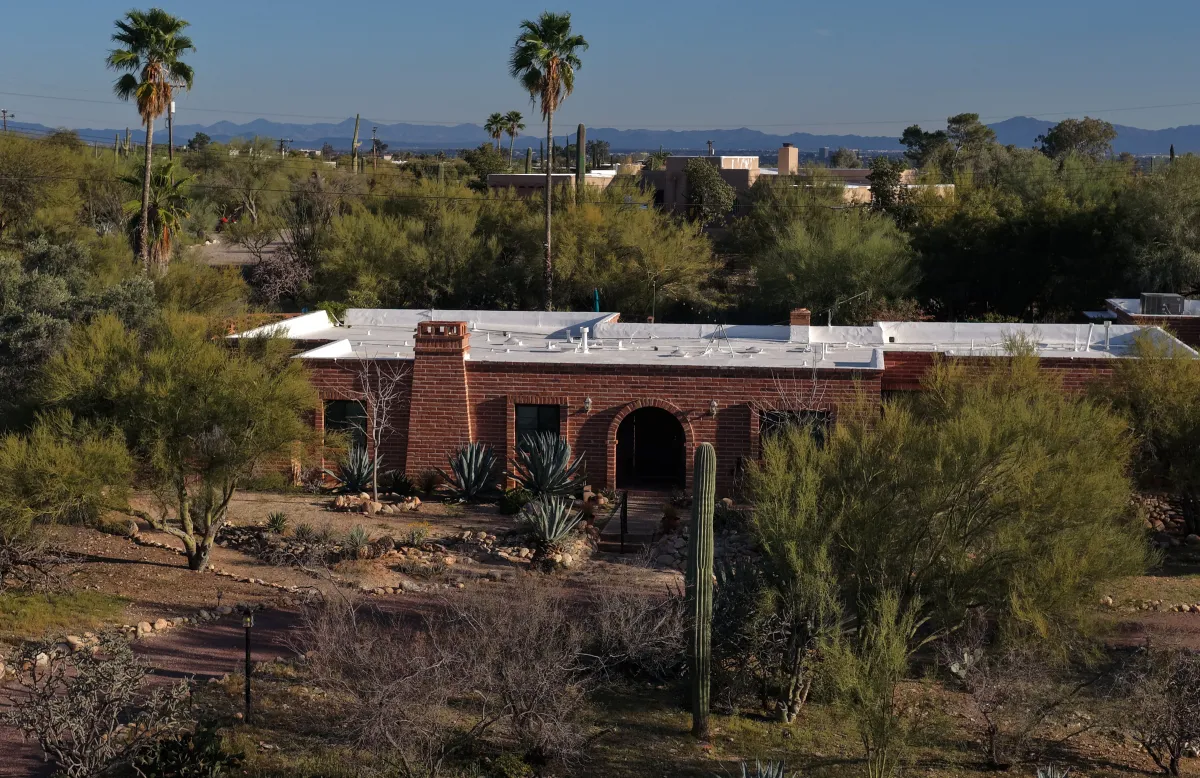
Nancy Guthrie was last seen at her home in the Catalina Foothills near Tucson, Arizona, on January 31. At 84 years old, she was a mother, a mother-in-law, a grandmother, and a private citizen whose life suddenly collided with a national news cycle because of who her daughter is: Savannah Guthrie, co-anchor of NBC’s Today show. The disappearance of an elderly woman is always a tragedy, but the involvement of a television personality’s family brought unusual attention to this case, and with that attention came a public hunger for answers. From the beginning, the details were alarming. This was not a case of someone who wandered away from a memory-care facility or became disoriented on a hike. Nancy was at her own home, a place where she should have been safer than anywhere else in the world. The fact that she vanished without a trace, that her family did not immediately know she was gone, is the kind of thing that keeps neighbors awake. The community around the Catalina Foothills—a region of expansive desert views, luxurious homes, and quiet cul-de-sacs—was transformed in the public imagination from a peaceful retirement haven into the backdrop of a possible abduction. Law enforcement officials have said they believe Nancy was taken against her will, and blood droplets found outside her front door have only deepened the sense that something violent and sudden occurred. It is impossible to know what Nancy’s final moments before her disappearance were like, whether she heard a noise, whether she opened the door for someone she thought she could trust, or whether she was taken by surprise. What remains clear is that her life was interrupted in the most brutal way, and that her family has spent months suspended between fear and hope.
The most visceral piece of evidence to emerge from the investigation is the doorbell camera video that authorities released in the month after Nancy disappeared. In the footage, a masked individual can be seen approaching the home, wearing a ski mask, gloves, and a backpack, before tampering with the doorbell camera. There is something almost deliberately theatrical about the figure’s appearance—the anonymity, the precautions, the silent intrusion into a private space. But the video is not a scene from a movie; it is a lasting record of the moment a stranger came to Nancy’s door, and it raises questions that have haunted investigators ever since. Was the masked person the one who took Nancy, or merely a witness to something even more complex? Was the backpack meant to carry away evidence, or was it packed with tools for a planned crime? Did the individual know that the family would later see this footage, or did the attack on the camera represent a final attempt to erase the last few seconds of visibility? Authorities have described the individual as a suspect, but no match has been made. The video has been viewed by thousands of people, shared on social media, and included in news broadcasts across the country, and still no one has recognized the figure. The lack of identification is confounding. In a world of cameras and selfies and digital proof of every ordinary movement, it seems almost impossible that a person could cover a face and vanish into the desert night without leaving a single thread of identifiable information. But that appears to be exactly what happened, at least for now. For Nancy’s family, the video is an object of obsession and dread. They have watched it over and over, zooming in on shadows, pausing on the shape of the suspect’s shoulders, trying to turn pixels into answers. So far, the footage has given them only a silhouette of a nightmare.
In the weeks and months since Nancy’s disappearance, her children have done everything they can to keep her name and face in front of the public. Savannah Guthrie, who has continued to appear on national television even as she has coped with this private ordeal, has used her platform to make emotional appeals for help. She and her siblings have released videos and social media posts pleading with anyone who might have information to come forward, and they have described their mother as a person who deserves to be found, a woman who was loved deeply and who was taken away from that love far too cruelly. Those pleas have been met with a mix of public sympathy and, at times, frustrating false leads. At some point during the investigation, reports emerged that possible ransom notes had surfaced. The possibility that Nancy might have been taken for money, that she might still be alive and held somewhere, briefly injected a new kind of hope into the case. But last month, authorities determined that one of those notes was not credible. The phrase itself is chillingly matter-of-fact, the kind of language that sounds measured in a press release but that carries enormous weight inside a family. It means the clue was not what it appeared to be. It means another path has closed. It means there is no easy explanation. For the Guthrie family, every dead end is a tiny emotional earthquake. They are asked to be strong in public, to express gratitude for the work of law enforcement, and to thank the public for their prayers and support, all while quietly staring at the unspeakable possibility that they may never know what happened. The resilience they have shown is not a shield; it is a survival mechanism, a way of keeping their minds focused on the next thing, so they do not have to think about the last thing—the sight of a front door, or the sound of a phone ringing too late at night.
The Pima County Sheriff’s Department has been careful not to let the public lose sight of the fact that even the smallest piece of information could be the one that solves the case. In their update, they reiterated that no tip is too small and urged anyone with information to call 88-CRIME or 1-800-CALL-FBI. They have also stressed that the investigation remains active, that the task force is still meeting, still coordinating with partners, and still pursuing every possibility. The trip to Florida to consult with lab scientists is a reminder that the search for Nancy Guthrie is not just a matter of knocking on doors and reviewing surveillance footage. It is also a scientific enterprise, one that relies on the meticulous analysis of biological evidence that may be invisible to the eye. DNA science has advanced to the point where even a handful of cells can provide a genetic profile, and investigators are rightly hoping that technology may be able to do what traditional investigative methods have not yet accomplished. But forensic science is not magic. It requires time, patience, and sometimes the sequencing of samples over and over again. It requires asking the right questions of the evidence. And it requires the cooperation of witnesses, friends, strangers, and anyone who happened to be in the area on the night of January 31. The mother of a famous television journalist should have the best resources available, and in many ways she does. But the reality of a missing person case is that no amount of celebrity can produce a witness who never comes forward, and no laboratory can extract a memory from a person who chooses to stay silent. The public is part of this investigation too, whether they live in Tucson or across the country. A watched video, a shared post, a phone call about a suspicious sighting—these are all contributions to a collective effort to bring Nancy home.
This remains a developing story, and it will continue to evolve as new information becomes available. But in the quiet moments between updates, it is worth remembering the human being at the center of it all. Nancy Guthrie is not simply an 84-year-old missing woman or the mother of a celebrity. She is a person whose life had texture and meaning long before she disappeared—a person who had birthdays, holidays, friendships, and routines, who laughed and loved and probably worried about her children just as any mother would. The publicity that has surrounded her case has been a double-edged sword. It has brought attention and resources, but it has also turned her disappearance into a story, and stories have a way of becoming something you follow rather than something you feel. In reality, her family is not following this story; they are living it. They are the ones who must return to an empty house, must learn to look at a front porch filled with cameras and shadows, must wait for a phone call that could bring either relief or devastation. The investigators have not given up. The public has not forgotten. There are still people in Arizona and beyond who look at every unfamiliar face and wonder, there are still posters on community boards and retweets of old photos and quiet prayers offered by strangers. And while none of that may be enough to find Nancy, it is the only thing her family can hold onto. The search for her is a search for answers, but it is also a search for meaning, a way of insisting that one night of violence should not erase a lifetime of love. Until the phone rings, until the doorbell camera reveals its secrets, until the DNA analysis yields the truth, they wait. And in this waiting, we are all asked to pay attention, to be kind, to be willing to see what others might not, and to believe that even in the darkest stories, the possibility of resolution remains.