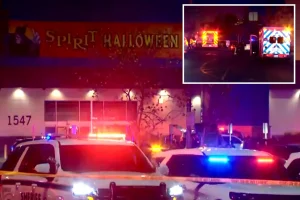


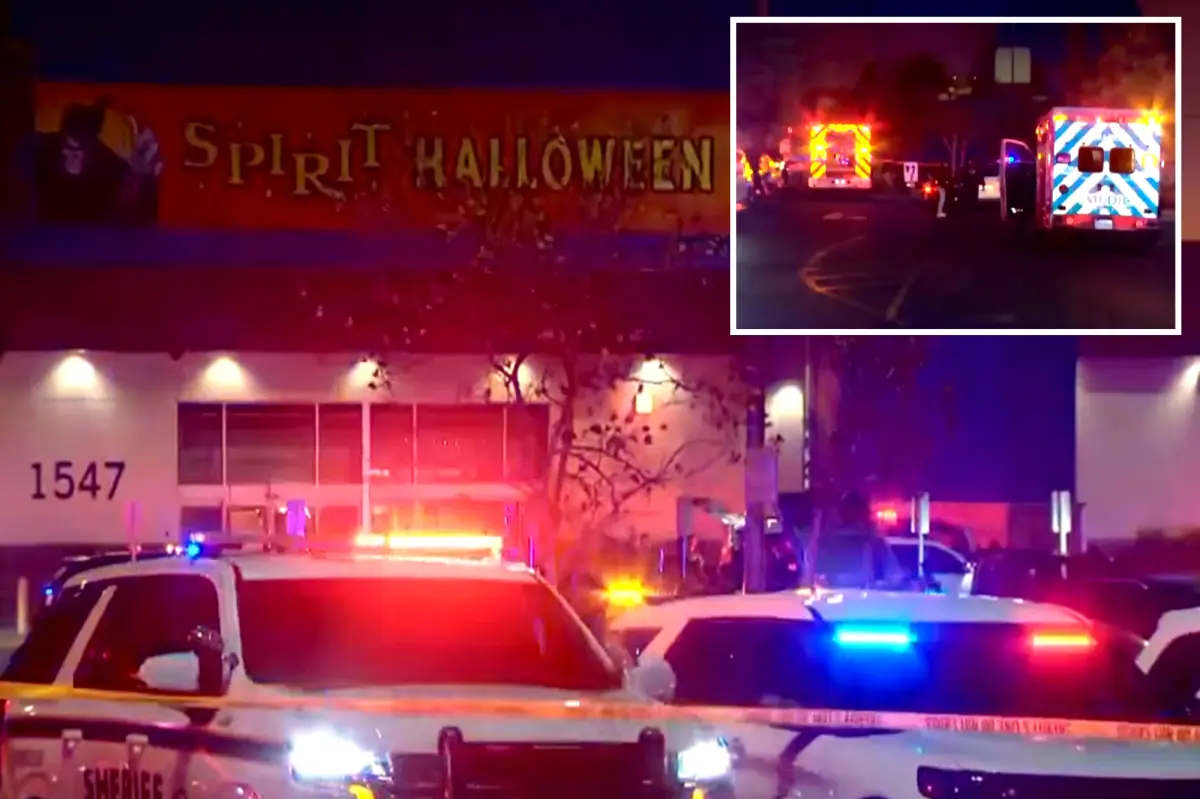
On Friday evening, the day before Halloween, a place designed for harmless thrills became the scene of a devastating act of violence. The Spirit Halloween store at the Solano Town Center mall in Fairfield, California, was filled with customers browsing costumes, masks, and decorations when gunfire rang out around 8:30 p.m. What should have been a festive evening of last-minute shopping turned in an instant into chaos. Shoppers ducked, dropped their purchases, and scrambled for exits as the sound of shots echoed through the building. Police Chief Dan Marshall later described the aftermath: one person had been killed, pronounced dead at the scene, and six others had been wounded. Three of the wounded were so badly hurt that they were listed in critical condition at local hospitals. Families who had expected to meet their loved ones after errands instead faced hospital waiting rooms, their hearts pounding with impossible questions. The victim, whose name had not yet been released, was more than a statistic; a person with plans, people who loved them, and a life that ended in a place as ordinary as a Halloween pop-up store. For the survivors, the holiday will never feel the same. The cheerful orange and black decor, the silly skeletons, and the shelves of candy corn now share space in their memories with sirens, blood, and panic. That one night erased the innocence of a simple errand, leaving a community to reckon with the cruel randomness of gun violence.
The investigation began immediately, but answers did not come quickly. Fairfield police did not release any description of the suspected shooter, nor would they confirm whether more than one person was involved. The motive, too, remained unknown. In a press release, the department described the store as an active crime scene, with detectives interviewing witnesses and working methodically to identify the person responsible. “This is still a very active crime scene,” police said. “Detectives are speaking with witnesses and diligently working to identify the suspect responsible for this horrific shooting.” Every detail mattered, but the silence from officials only deepened the anxiety of the community. Parents wondered aloud if they should let their children go to Halloween events just hours later. Local residents stood near the yellow police tape, staring at the familiar mall entrance, trying to understand how such a thing could happen in their town. Meanwhile, doctors and nurses fought to save the lives of the wounded, and victim advocates moved through the hospital trying to comfort families who had no answers. The police chief’s voice, strained and serious, reminded everyone that these were not just evidence markers and shell casings; they were people whose lives had abruptly collided with violence. As the night wore on, the mall parking lot filled with emergency lights, news vans, and onlookers, all waiting for word that the suspect had been caught. But that word did not come. The sense of safety that community members had taken for granted was now shattered, and the search for a shooter who was still out there left everyone looking over their shoulders.
Eyewitness accounts painted a vivid picture of the terror inside the store. One man described what his wife had experienced to KCRA, his voice still shaky from the retelling. She told him she heard shots, and then suddenly people were running, yelling, and crying. He said she counted roughly seven gunshots before the store erupted into a desperate scramble for safety. It is impossible to imagine the helplessness of being trapped in that chaos—shoppers pushing toward exits, parents grabbing children, strangers grabbing each other’s hands in hopes of staying together. Some hid behind displays of witches and superheroes, their costumes no longer playful but pitifully inadequate as protection. Others ran through the mall corridor, not knowing whether the shooter was following them. The trauma of that moment will not fade quickly. For the woman who stood counting gunshots, every loud noise in the coming days and weeks might trigger a replay of that terrible sound. For the families of the victims, waiting to learn whether their loved ones would survive, the minutes must have felt like hours. And for the people who saw the victim fall, the image is now part of them, a memory they never asked to carry. The human instinct to run, to hide, to survive transformed ordinary shoppers into heroes and victims in the same breath. Their accounts will now become part of the investigation, but they are also the raw material of grief, the personal stories that remind us that behind every police report is a mosaic of broken hearts.
The setting itself added a layer of sorrow to the tragedy. The Spirit Halloween store was a temporary, seasonal business operating in the space formerly occupied by a Best Buy, a giant room usually filled with electronics and appliances now transformed into a sprawling costume bazaar. The Solano Town Center mall is a familiar destination for families in Fairfield, home to roughly 130 stores and bustling with holiday shoppers at this time of year. Halloween Eve is traditionally one of the busiest evenings for such stores, as parents race to find the last mask or accessory before trick-or-treating begins. The festive urgency that brought people to the store on Friday night is exactly what made the shooting so horrifying. There is no logical reason why someone would bring gunfire into a space filled with children and families in silly outfits, with plastic pumpkins and fake webs hanging from the ceiling. Yet that is where the violence happened. The temporary nature of the Spirit Halloween store also means that the community now has a permanent monument to a tragedy, a place that will be remembered not for the fun memories of choosing costumes, but for the emergency vehicles and blood on the floor. The mall, which had always been a neutral ground for teenagers, strolling couples, and grandparents doing holiday shopping, suddenly became a crime scene. When the store reopens eventually, or when the space is transformed yet again, it will still carry this weight, a reminder that violence can breach any boundary, even the boundary of make-believe.
As if the Fairfield shooting were not enough, the same day brought another gun death in a Spirit Halloween store in Michigan, underscoring the horrifying pattern of gun violence in everyday places. In Madison Heights, just after 2 p.m., police found a 21-year-old man suffering from multiple gunshot wounds inside the store. He was pronounced dead later. Another 21-year-old was suspected in the killing, and according to the Madison Heights Police Department, the suspect was attacked by bystanders and taken to the hospital while in police custody. The circumstances of that shooting remained unclear, but the image is unmistakable: two simultaneous tragedies at the same chain of stores, on the same day, in different corners of the country. For the people at Spirit Halloween headquarters, for seasonal workers in costume, and for families who simply wanted to buy some candy and fake blood, the news of a second shooting sent a shudder of horror. These stores are not just retail outlets; they are temporary community gathering places, staffed by teenagers and part-time workers, visited by young parents and grandparents alike. To hear that violence found its way into two such places within hours is a painful reminder of how vulnerable we all are. It also raises difficult questions about why guns continue to turn ordinary spaces into killing fields, and why nothing seems to change after each new tragedy. The Michigan suspect’s actions, alleged though they are, and the bystanders’ intervention, add yet another layer of complexity to a thoroughly devastating day.
In the aftermath, the communities of Fairfield and Madison Heights must now do what grieving communities always do: hold their loved ones a little tighter, struggle to make sense of the senseless, and find a path forward through collective mourning. The one person killed in California and the one killed in Michigan leave behind families who will never again hear their voices. The injured face long recoveries, both physical and emotional. The witnesses face the difficult work of trying to forget what they saw, even as they know they will never fully succeed. And the first responders, hospital workers, and police officers whose jobs forced them into the middle of the bloodshed must process their own secondary trauma. This is not the Halloween anyone imagined—no playful frights, no delighted shrieks at doorsteps, only the raw, unfiltered horror of real life. But even in the darkest hours, there is room for human connection. Neighbors check on neighbors. Parents pull their children away from the television and hold them close. Strangers who fled the store together now share a bond of survival. The community will demand justice for the victims, but justice alone cannot heal the wounds. What is needed is a renewed commitment to each other, and perhaps a deeper reckoning with the ease of access to guns that makes such massacres all too common. For now, the spirits of the fallen are mourned in a season meant for ghosts. May the memories of those lost be honored not with empty words, but with genuine change. And may the families who are now beginning to grieve find strength in the arms of those around them, in the candlelight vigils, in the whispered prayers, and in the quiet stillness that comes after the sirens have stopped. They are not alone. Their loss is our loss, and their pain is our call to action.