


Paragraph 1
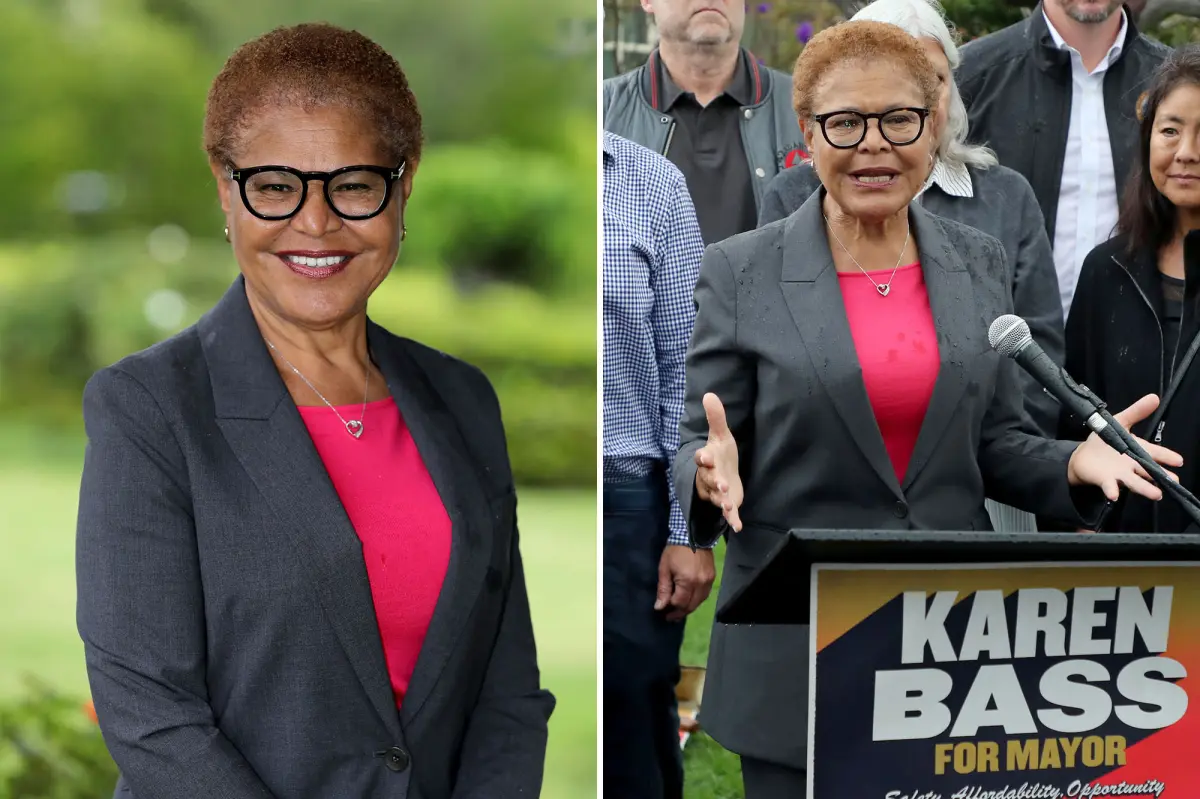
In a moment of rare, unguarded candor, Los Angeles Mayor Karen Bass sat down with The California Post and did something politicians often avoid: she admitted she was wrong. With the city still raw from the catastrophic January 2025 wildfires, with homeless encampments sprawling across sidewalks, and with her own approval ratings sinking to historic lows, the mayor did not reach for a teleprompter or a list of talking points. Instead, she offered a simple, human apology for being absent at the city’s darkest hour—away in Ghana on a diplomatic trip while flames devoured entire neighborhoods. “The biggest regret is most obviously that I wasn’t here,” she said, her voice heavy with the weight of a decision that she knows will define her legacy. The admission was not just about geography; it was about the profound disconnect between a leader’s obligations and the visceral anguish of the people she was elected to serve. In the interview, Bass acknowledged that she had no idea “how profoundly broken” the city’s homeless management system had become, and that her attempts to fix it were hamstrung by legal and bureaucratic restrictions that have since been lifted. Now, with the March 2025 election looming, she is asking Los Angeles voters for something that feels almost antiquarian in this political climate: a second chance. She is not offering stale platitudes; she is offering a gritty, detailed plan to rebuild the police department and to reimagine how the city shelters its most vulnerable residents. Yet beneath all the policy talk, there is a more personal thread: Bass is asking the public to see her not as a distant figurehead, but as a workhorse who paid for her dedication with political capital. “I’m a workhorse and not a show horse, and I’ve paid for it politically,” she acknowledged, framing her missteps not as failures of effort but as failures of perception. It is a message that will resonate with some, but in a city that still aches from the fires, it is a steep hill to climb.
Paragraph 2
The cornerstone of Bass’s re-election pitch is a bold, numbers-driven vow: she wants to rebuild the Los Angeles Police Department to 9,500 officers by the time the 2028 Olympics put the city in the global spotlight. That is a staggering goal, especially when the department currently has about 8,550 sworn officers—its lowest staffing level in nearly a quarter-century, down from roughly 10,000 in 2020. The problem is not just attrition; it is the torturous hiring process, which can take up to a year to bring a single new officer on board. Bass speaks about this with the frustration of a manager who has seen good intentions drown in red tape. “Staffing up the department after years of decline is one of my top priorities. We’re cutting the red tape and streamlining processes to turn that around,” she said. She has already taken action: she replaced the head of the city’s Personnel Department, which oversees hiring, and issued an executive directive aimed at slashing the recruitment timeline to 180 days. The goal is to fill police academy classes faster, speed recruits through training, and hire officers faster than the department loses them to retirement and departures. But the numbers are unforgiving. This year’s budget calls for 510 new hires, but retirements and departures threaten to wipe out those gains entirely. City projections show the force shrinking to just 8,555 officers by summer 2027—well short of Bass’s aspirational target. Yet the mayor remains defiant, describing the challenge not as a burden but as a moral imperative. In her telling, police staffing is not just about crime statistics; it is about a city feeling safe enough to let its children play outside, businesses to keep their doors open, and communities to trust the justice system. She knows that any failure to deliver will be judged harshly, especially when the eyes of the world turn to Los Angeles for the Olympics. But she insists that the groundwork she is laying now—long, slow, and unglamorous—will be the foundation for a safer city. As she said, “We’re cutting the red tape and streamlining processes to turn that around.” Whether that transformation can happen in time is an open question, but for Bass, it is the only question that matters.
Paragraph 3
Beyond the mechanics of hiring, Bass is fiercely protective of her chosen police chief, Jim McDonnell—a decision that has become an unlikely flashpoint in the race. Her chief rival, City Councilwoman Nithya Raman, has pledged to replace McDonnell before his term ends in 2030, arguing that the department needs new leadership to change its culture. Bass does not mince words in response. “I think that she doesn’t have a clue what is needed in terms of recruiting and hiring a police chief,” the mayor said, the dismissiveness in her tone unmistakable. She pointed to the painstaking, 10-month nationwide search that brought McDonnell to Los Angeles—a process that involved vetting candidates from around the country, conducting background checks, and consulting with community leaders. To replace him now, she argued, would be not just reckless but dangerously naive, especially with the Olympics looming. “That’s insanity,” she said, warning that a sudden leadership change could leave LA with a new police chief only six months before the global event, with no time to build trust or establish continuity. The disagreement is more than political; it reflects a fundamental difference in how the two candidates view governance. For Bass, stability and institutional knowledge are paramount. For Raman, the urgency of reform outweighs the risks of upheaval. But Bass’s defense of McDonnell is not merely about policy—it is also about her own instincts as a leader. She hired McDonnell after a rigorous process that she believes produced the right person for a difficult moment, and she is not willing to see that judgment second-guessed by someone she considers inexperienced in the complexities of appointing top law enforcement officials. “I think that she doesn’t have a clue what is needed,” Bass repeated, ensuring the message was clear. The exchange reveals a mayor who, despite her admitted mistakes, trusts her own instincts when it comes to personnel decisions. She is gambling that voters will see her commitment to McDonnell not as stubbornness but as principled leadership—and that they will appreciate 10 months of careful vetting over a rash promise to clean house. It is a gamble, but one she is making with full confidence.
Paragraph 4
On homelessness, Bass’s tone shifts from defensive to confessional. The numbers are stark: the city’s street population has risen to 45,194 from 41,980 when she took office in 2022, with the 2026 count showing a 3.4% annual increase and street homelessness surging 7.9% after two years of declines. Bass does not sugarcoat the failure. “I knew the system was broken, but how profoundly broken it was, I did not know,” she admitted. “The system was never designed to end homelessness. It was only set up to manage.” This is a damning indictment of the existing infrastructure, but Bass argues that she is now armed with the knowledge and the legal authority to fix it. Her solution is a new city-county agreement that gives Los Angeles greater control over city-funded homeless housing. Currently, the embattled Los Angeles Homeless Services Authority assigns housing on a countywide basis, which means that city-funded units can go to people from other areas while thousands of Angelenos remain on the streets. Bass described the absurdity of the situation: “In many, many cases, they (the homeless) were not people from Los Angeles,” she said. The proposed agreement, which was approved in principle by city and county leaders, would give LA access to the regional homelessness database and greater authority over placements into city-funded housing. This, Bass believes, would allow the city to prioritize people living on its own streets, rather than relying on a countywide system that doesn’t automatically give them preference. She is confident that this change could help “end the majority of street homelessness,” including the sprawling encampments that have frustrated residents for years. But her vision extends beyond housing placements. Bass also wants to expand mental health and addiction treatment, arguing that simply moving people into apartments without addressing their underlying traumas is doomed to fail. “If you just take people randomly off the street and put them in an apartment and just expect them to magically heal… it’s naive,” she said. In this, she acknowledges that her first term’s approach was too narrow, and that lasting solutions require a holistic, human-centered approach. The shift is reflective, even humble—but it is also a recognition that the city’s patience has worn thin. Her opponents, including Raman, have argued that she has not done enough, and the polls reflect that discontent. Yet Bass insists that the new agreement represents a structural breakthrough—a turning point that, had it been in place earlier, might have changed the trajectory of the crisis.
Paragraph 5
Perhaps the most revealing part of the interview was Bass’s admission that she spent too little time communicating her administration’s accomplishments. “I didn’t focus on that. That was a mistake,” she said. For a politician, this is a rare and sometimes damaging confession, because it calls into question not just her strategy but her awareness. How could a mayor of a major city—with all the resources of a political machine at her disposal—fail to tell her own story? Bass’s answer is rooted in her self-image: she sees herself as a doer, not a talker, and she has paid for that in public perception. The poll numbers confirm the depth of the problem. A California Post/McLaughlin poll conducted in October found Raman leading Bass 46.7% to 38.8%, with 13.5% undecided. Only 25.5% approved of Bass’s job performance, while a staggering 71.7% disapproved. A subsequent UC Berkeley/Los Angeles Times poll showed the candidates tied at 40%, with 19% undecided, but found that 65% of likely voters viewed Bass unfavorably. These numbers are a brutal verdict on her first term, and Bass knows it. She is now trying to reframe the narrative, asking voters to look beyond the failures and see the structural changes she has put in place—the hiring reforms, the new homeless agreements, the rebuilding efforts after the fires. She points to her trips to Sacramento and Washington to secure aid, her staff helping residents rebuild, and the painstaking work of overhauling city departments. Yet she admits that none of this has won over the public. “I’m a workhorse and not a show horse, and I’ve paid for it politically,” she said. The line is both a confession and a plea. It is an appeal to voters to value substance over style, even though the rules of modern politics often reward the opposite. But in a city with 71% disapproval, that appeal may fall on deaf ears. Still, Bass is not surrendering. She is asking for time—time to see the fruit of her labor, time to complete the reforms she has begun, time to prove that her workhorse ethic can deliver results. Whether the electorate will grant her that time is the most pressing question of this election.
Paragraph 6
As Tuesday’s election looms, Bass is making a final, passionate case to voters: give me four more years, and I will finish what I started. She frames the race as a stark choice between building on her progress and embracing an untested approach. “We are at a crossroads where we can soar into the future,” she said, “or we can throw our city up for experimentation on different theories and ideas.” The rhetoric is bold, but the stakes are personal for the mayor, who has seen her career go from rising star (she was considered a vice presidential contender) to embattled incumbent. She is asking for redemption, but she is also arguing that the path to a better Los Angeles requires patience, not rejection. She points to the foundations she has laid: the streamlined police hiring process, the new homeless agreement that could finally give the city control, the expanded mental health and addiction services that are slowly taking shape. Her message is that these policies are too new to judge, and that the next term will be their true test. “I’m a workhorse and not a show horse,” she repeats, as if to remind voters that the unglamorous work of governance is often invisible but essential. She acknowledges the pain of the wildfires, the frustration of the encampments, and the fear of crime, but she insists that she has the experience and the determination to address them. Whether voters will respond to her call for patience is uncertain. The polls show a deeply divided city, with many voters still undecided. But Bass’s appeal is rooted in a fundamental human truth: we are all imperfect, and we all deserve the opportunity to learn from our mistakes. She is asking the city to show her that same grace—to see her not as a failure but as a leader who fell short, admitted it, and now has a concrete plan to do better. In her voice, there is exhaustion but also resilience; humility but also conviction. The next few days will tell whether Los Angeles believes that a workhorse can still lead, or whether it will turn to a new face with new theories. For Bass, the hope is that voters will see the difference between a flashy experiment and a steady, determined effort to rebuild a great city. Her final message is simple: let me keep working.