


Behind every headline, there is a set of faces, a stack of bills, a bedtime routine, a dream that is either being fulfilled or quietly crushed. That is the part of the news that rarely appears in the first paragraph, the part that cannot be captured in a catchy slogan or a legal footnote. A mother in Colorado looks at her four-year-old’s backpack and wonders why the state will not help pay for the preschool that has become such a safe and loving place for her child. A father in Rhode Island checks his phone for the hundredth time, trying to understand why his child’s school kept something so life-altering from him. A high school athlete in Michigan laces up her shoes and wonders if the rules will let her compete on a team where she feels she belongs. A college freshman sips coffee and explains, in a voice full of conviction, why socialism could save the world—until someone asks her to explain how the budget would actually work. These are not just abstractions. They are people, trying to raise their children, protect their families, and make sense of a world that seems to be changing faster than anyone can keep up with. It is easy to turn them into symbols, to cheer for them or boo for them from a comfortable distance. But to humanize these stories is to remember that they are all connected by the same need: the need to be heard, to be respected, and to have a place in the world without having to surrender the values that make life worth living.
The first story begins in a Colorado kitchen, where a mother is doing what mothers everywhere do: trying to make the best decision for her child. She had signed up for the state’s preschool assistance program, hopeful that the modest funding would let her four-year-old attend a small Catholic preschool near their home. The school had soft morning light streaming into the classrooms, teachers who prayed before lunch, and a curriculum that treated faith and learning as a single, inseparable thing. For this mother, that was the point. She was not trying to force her religion on anyone else; she simply wanted her child to be taught by people who shared her values, in a place where God was not a problem to be hidden but a presence to be loved. Then came the letter. The family’s application for about $12,000 in aid was denied because the preschool was Catholic. The state said, in effect, that public money could not flow to an institution where faith shaped the daily experience. The mother was stunned. She had not asked the state to endorse Catholicism. She had only asked it to help her daughter the same way it would help a child at any other preschool. But now her family was at the center of a case that is heading toward the Supreme Court, and her simple decision had become a constitutional controversy. The legal questions are enormous: May a state exclude religious schools from a generally available public benefit? Does religious discrimination become acceptable when the money is offered through a voucher or scholarship program? How far does the separation of church and state go, and at what point does it become an attack on parents who simply want a say in their children’s spiritual formation? The debate has raged for decades, but in the life of this mother it is not abstract. It is the knot in her stomach at the end of every day, the anxiety she feels when she hears politicians talk about parents’ rights, the uncertainty of whether she can continue to afford the school that has become like family. She did not intend to be a warrior in a culture war. She intended to be a mom. Yet now she is being told that the very faith that gives her family strength is also what makes them unworthy of the same public help available to everyone else. That is more than a legal argument; it is a message that her way of raising her child is not accepted. And no matter what the justices decide, something important is now at stake: whether parents will be trusted to make decisions that flow from their deepest beliefs, or whether those beliefs will have to be checked at the schoolhouse door.
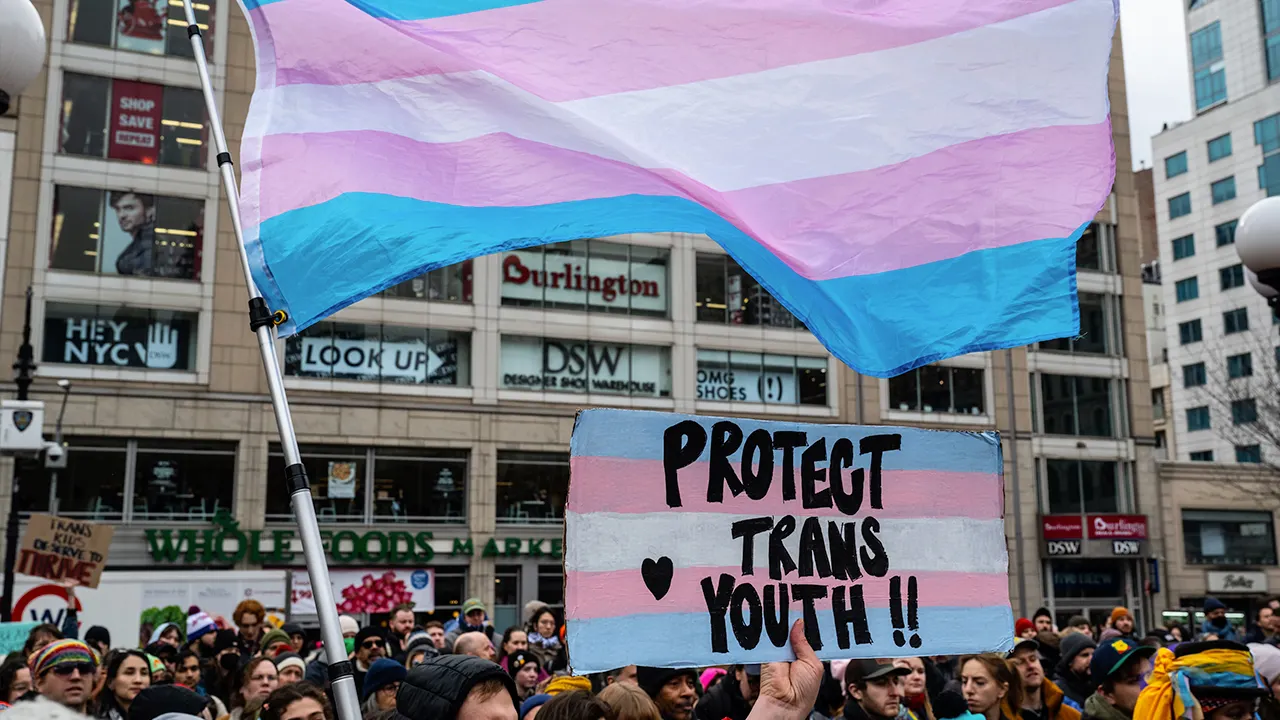
A few states away, in Rhode Island, a different kind of tragedy is unfolding, this one in the hushed hallways of a public school district. According to an exclusive report, the district has been accused of helping children keep their gender transitions hidden from their parents. The specifics are still emerging, but the pattern that parents describe is deeply unsettling. A child goes to a trusted counselor or teacher and shares a new identity—maybe a new name, new pronouns, a new understanding of who they are. The school, acting on its interpretation of student privacy laws or its own internal guidelines, begins to use the new name and pronouns. Teachers are instructed to speak differently in one classroom, while the parents hear nothing at home. The dinner table becomes the place where the secret grows, where the child looks at their mother and father and knows they are living two different lives. When the parents finally find out—usually by accident, through a classmate, a sibling, a misdirected email—their reaction is not what a political stereotype would predict. It is grief. It is shock. It is the overwhelming feeling that they have lost their child, not to a different identity, but to a system that decided their love was not trusted. The school district may argue that it is protecting the child’s safety and emotional health, and in some cases, that argument is genuine. There are homes where a child’s coming out could lead to harm, and a school might reasonably believe that keeping a fragile confidence is the most compassionate choice. But the parents in this story say that the institution overstepped. They insist that no teacher, however well-meaning, can replace a parent’s lifelong bond with a child. They ask how it became acceptable to make such an intimate decision without a single conversation with the people who changed that child’s diapers, drove them to school, and stayed up with them through every illness and fear. What makes this story so hard is that both sides have a version of love they are trying to protect. The school claims to protect the child from a world that might reject them. The parents claim to protect their family from a world that wants to come between them. And in the middle is a teenager, caught between two sets of adults who are both convinced they know what is best. The result is not a debate that can be settled with a policy memo. It is a series of broken silences, of missed moments, of trust unraveling in real time. The school district may have thought it was doing good, but the parents experienced it as a betrayal, and that is a wound that will not heal easily, no matter what the next hearing decides.
Meanwhile, in Michigan, a school board has made a decision that has set off emotional fireworks across the country: a formal vote to ban biological males from competing in girls’ sports. The vote was presented as a necessary correction, a way to protect the hard-won gains of female athletes. Supporters spoke about the obvious physiological differences that remain after gender transition—bigger hearts, greater lung capacity, higher bone density—and argued that allowing those athletes to compete against girls would turn women’s sports into an impossible charade. They told stories of female runners who had trained their entire lives only to be overtaken by someone who had gone through male puberty. They talked about scholarships disappearing, podium spots vanishing, and the quiet resignation on the faces of girls who had learned to work twice as hard just to be told they no longer deserved their own category. For them, the board’s vote was common sense, the kind of policy that seems radical only to people who have never had to fight for fairness. But at the same time, another group of people heard the same vote as something far more cruel. They saw transgender girls, often already fragile and afraid, being told that their bodies exclude them from belonging. They imagined a young person who had finally found the courage to join a team, only to be told that their identity is not welcome on the field. They argued that the number of transgender athletes is minuscule, and that the real threats to girls’ sports are shrinking budgets, outdated facilities, and a culture that still ignores women’s achievements. The school board meeting must have been unbearable. There were probably tears, shouting, moments of silence and moments of applause. A mother who believed her daughter’s future had just been saved might have stood next to a mother whose daughter felt she had just been erased. A coach who thought he was defending the integrity of the game may have faced a player who simply wanted to be seen as the girl she has always known she was. Both sides brought their pain to the podium, and neither side was willing to concede that the other knew what it meant to be hurt. The vote was a major policy shift, perhaps even a turning point in a national fight, but in the lives that matter most, it changed nothing except making everything harder. The girl who wanted fairness still has questions. The girl who wanted acceptance still feels unwanted. And the board members, who will probably live long and comfortable political lives, have returned to their routines, while the people they affected must go to bed with the consequences.
In college towns across America, an entirely different struggle is taking shape, and it is being fought with sharp words and half-finished sentences in lecture halls and coffee shops. Socialism, once dismissed as a stale and failed ideology, has found a fresh audience among young people. They have looked at the inequality all around them, at the crushing weight of student debt, at the impossibility of buying a home, at the sense that the economy is rigged against them, and they have decided that the old rules are not working. There is something genuinely noble in that instinct, a refusal to accept that society cannot do better. When a student says health care should not depend on employment, or that a college diploma should not lead to a lifetime of payments, they are expressing a deep desire for a world that is less cruel. But here is the awkward reality check the article describes: when you ask for the details, the vision begins to blur. The same student who can describe the injustice beautifully often cannot explain how a socialist government would set prices, or who would own the means of production, or what happens in a planned economy to the incentives that produce innovation and hard work. They have not read the history of every socialist experiment, and they are not to blame for the way their education has narrowed the curriculum. But the absence of practical answers is not just a rhetorical problem. It is a sign that idealism alone does not build a country. The phrase “democratic socialism” is thrown around as a shield, a way to keep the old socialist dream alive without taking responsibility for its failures. The students who embrace it are not monsters or traitors; they are human beings who want a world where people matter more than profit. That longing is real, and it deserves a response more serious than mockery. At the same time, anyone who cares about them must be willing to ask harder questions. How do you calculate value without markets? How do you preserve freedom of speech when the state controls the press? How do you keep a revolution from devouring its children? The “awkward reality check” is not a reason to reject all critique, but it is a reason to grow up. On that campus, the debate ended not with anyone admitting defeat, but with something even more important: the beginning of a doubt. And in a society as polarized as ours, doubt can be a kind of opening, a crack through which complexity, humility, and genuine thought can enter. It is there, in that crack, where real conversation begins.
Taken together, these four stories may seem like separate worlds—a Catholic preschool in Colorado, a school district in Rhode Island, a gymnasium in Michigan, a political science seminar on some leafy campus. But they are all variations on the same human question: How do we raise children, build communities, and share a country when we cannot agree about what is true, good, or just? The parents in Colorado want the freedom to pass their faith to their children without being punished by the state. The parents in Rhode Island want to be trusted with the deepest truths of their children’s lives. The female athletes in Michigan want to protect the meaning of the phrase “girls’ sports.” And the students in that campus coffee shop want to imagine a world that does not leave so many people behind. None of these desires is dishonest. All of them come from real pain, real hope, real love. The problem is that our public conversations often fail to make room for that complexity. We turn to courts to settle what should have been settled with patience. We write policy meant to solve one problem only to create another. We treat our neighbors as enemies instead of people who are also scared, also tired, also trying. To humanize the news is not to water it down. It is to remember that every opinion has a biography, every vote has a consequence, every headline has a heart. If we can hold onto that, even when we disagree fiercely, we might find a way to act together instead of against each other. We might still face hard choices, but we would face them as people who know what it is to be loved, to be hurt, to be desperate for a place in the sun. That is not a policy position. It is a way of being alive. And it is the only thing that will save us from the cynicism that makes these fights feel hopeless. The mother in Colorado, the father in Rhode Island, the runner in Michigan, the student in the coffee shop—they are all looking to us for something better. We owe them more than a headline. We owe them our attention, our humility, and the belief that even in a fractured world, we can find a way to care for each other’s children as if they were our own.