


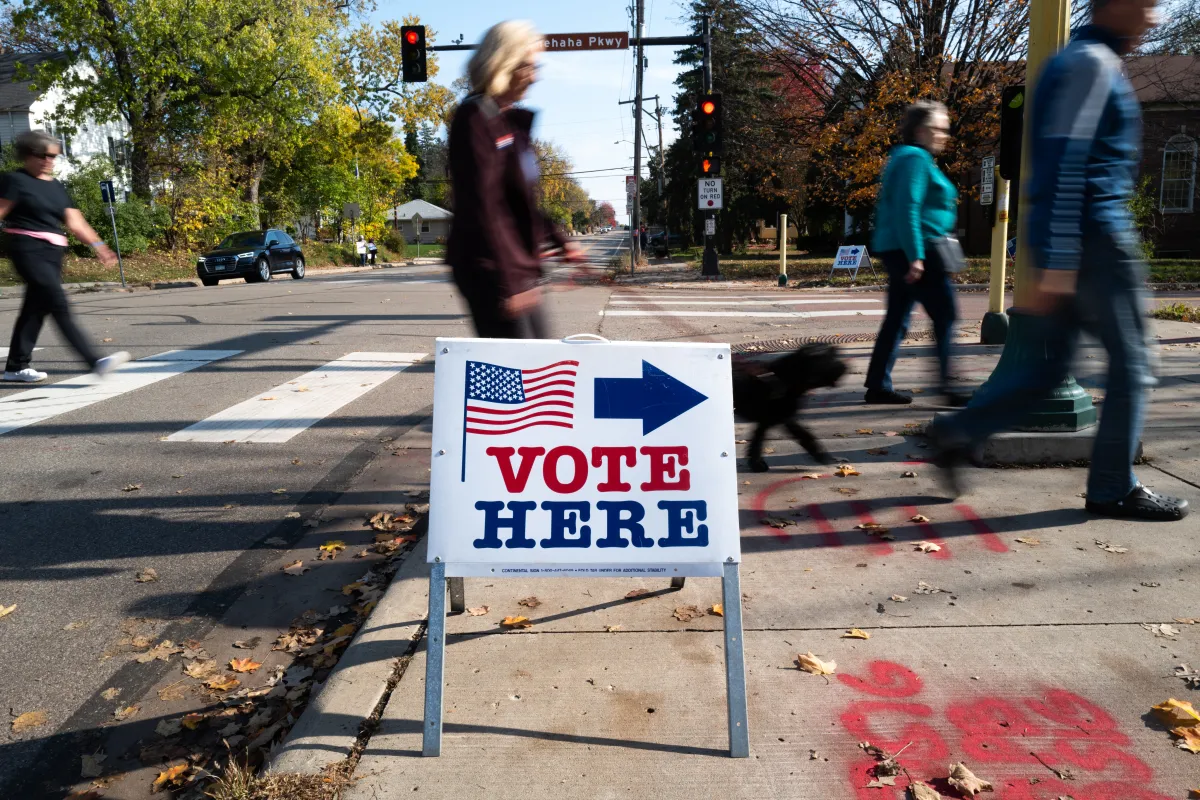
It’s hard to miss the feeling that this election season has been moving faster and louder than usual, and the numbers from the first stretch of voting prove it. According to the University of Florida’s Election Lab, a record-breaking 49.6 million early votes had already been cast as of Friday evening. That total is made up of roughly 22.9 million mail ballots returned and 26.8 million in-person early votes. To put that in perspective, this figure has already blown past the previous midterm record of 45.9 million set during the 2022 elections—and remember, by the end of Saturday, the regular early voting period will have closed in 20 states. So we’re not just seeing a healthy appetite for voting; we’re seeing one of the most dramatic early turnouts in recent memory. For anyone who has followed midterm politics for a while, this is genuinely striking. Midterms usually don’t generate the same kind of excitement as presidential years, but the 2026 cycle is clearly different. Voters are showing up early, in person and by mail, in numbers that suggest widespread enthusiasm, anxiety, or perhaps both. The usual rhythms of election season have been upended: instead of waiting for a single day in November, millions of Americans have already made their voices heard, and their ballots are being counted, or at least securely stored, long before the final weekend of the campaign.
One of the most closely watched patterns in this early vote wave is the partisan breakdown, and so far, registered Democrats are leading the charge. According to the data, Democrats account for 43 percent of the early votes cast, compared with 32 percent for Republicans and 25 percent for voters who are unregistered or affiliated with a smaller party. In raw numbers, the University of Florida’s Election Lab counted 10.3 million votes from registered Democrats, 7.5 million from registered Republicans, and 5.9 million from those with no party affiliation or a third-party registration. That’s a hefty lead on the surface, and it has naturally sparked a lot of speculation about what it means for Election Day. But before we read too much into it, there are some important caveats. Only 27 states track early voting by party registration, meaning the data is not a complete national picture. The other states either don’t collect that information or don’t make it public in a usable way. So while these percentages give us a valuable snapshot of where things stand, they don’t necessarily predict final outcomes. Early voting patterns can be influenced by everything from get-out-the-vote strategies to the simple fact that some voters prefer the convenience of voting early while others like the ritual of showing up on Election Day. Still, the gap is impossible to ignore, and it’s already shaping the narratives both parties are telling in the final days of the campaign. Democrats see it as evidence of momentum; Republicans, meanwhile, tend to argue that their voters are waiting until the last minute or that ballot-matching rules will shrink the gap as counting continues.
Geography adds another fascinating layer to the early vote story. Because of their sheer size, Texas, California, and Florida have seen the most votes so far, with totals of 6.9 million, 5.1 million, and 4.7 million respectively. But when you adjust for population, the numbers from this year’s battleground states are drawing even more attention. Georgia has already seen 2.8 million early votes, North Carolina has logged 2.3 million, Michigan has tallied 1.9 million, and Ohio has reached 1.5 million. These are states where every single vote can tip the balance, and the early turnout there suggests that people are taking this election very seriously. The Associated Press also reported some striking jumps on Friday: Texas saw 50 percent more early votes compared with the 2022 midterms, while Senate battlegrounds like Maine, Michigan, North Carolina, Kansas, and South Carolina all saw sizable increases. South Carolina, in particular, saw early voting soar by 83 percent, an enormous jump that speaks to just how energized voters are in that state. Part of this is undoubtedly due to changes in voting rules and expanded access, but part of it is pure political momentum. Campaigns on all sides have been pushing supporters to cast their ballots as early as possible, and it seems to be working. The early vote map is becoming a kind of treasure map for political analysts, who are trying to figure out where turnout is surging, where it’s lagging, and what that might tell us about the coalitions that will decide control of Congress.
The political fight over early voting itself has become one of the most fascinating subplots of this election. It hasn’t always been so partisan, but in recent years, early voting has become a flashpoint. President Donald Trump has famously branded the practice “ridiculous,” and he has repeatedly blamed mail-in voting for his loss to Joe Biden in 2020. He and his allies have pursued restrictions on mail ballots in various states, arguing that the system is ripe for fraud—even though election officials across the country, including many Republicans, have repeatedly said that claims of widespread fraud are unsupported by evidence. The White House, however, has taken a very different approach in 2026, encouraging voters to “avoid the wait” and cast their ballots as early as possible in the midterms. That contrast is striking, and it highlights the awkward position many Republicans find themselves in: their standard-bearer has cast doubt on early voting, but party operatives know that in a high-turnout environment, encouraging supporters to vote early can be a strategic advantage. Democrats, meanwhile, have fully embraced the practice. Jane Kleeb, chair of the Association of State Democratic Committees, told NBC News in September that the party would be “really pushing people” to vote early in person this year. “This is the best way that we can get Democrats elected is if you vote early in person,” she said. That kind of unified messaging, paired with record-breaking turnout, shows just how much early voting has become a central part of modern campaigns—and how the two parties are wrestling with it in very different ways.
Despite all the excitement about early voting, it’s important to remember that the story is far from over. Close to 50 million ballots have already been cast, but that’s less than half of the 108 million votes that Pew Research Center counted for the 2022 House elections. In other words, for every early voter who has already made a decision, there is likely another voter who hasn’t yet cast a ballot, and many of those late-deciding voters could still swing the outcome. That’s part of why pollsters and forecasters are being careful not to declare this election over. Still, the available polling and modeling currently point in a clear direction for Democrats. According to the most recent generic congressional vote average from RealClearPolling, Democrats lead Republicans by 8.2 points, with 51.4 percent support against 43.2 percent. Election simulations from RacetotheWH give Democrats a 95 percent chance of winning a majority in the House, projecting 236.5 seats—which would mark the largest Democratic majority in the lower chamber since 2016, when Republicans held 241 seats. The same forecaster gives Democrats a 78 percent chance of flipping the Senate, with 53 projected seats. Those are dramatic numbers, and they suggest that the national mood has shifted firmly in favor of the Democratic Party. But forecasts are just forecasts, and the gap between projected and actual outcomes can be large. In recent cycles, polling errors have surprised us on both sides, and with so many votes still outstanding, the only truly safe bet is that the final results will have consequences for years to come.
Public expectations, at least according to one recent survey, seem to align with those forecasts. An Economist/YouGov survey published Thursday, based on a poll of 1,440 registered voters conducted between October 23 and 26, found that 44 percent expect Democrats to win the House, compared with just 31 percent who think Republicans will hold their majority. Expectations for the Senate are closer, with 39 percent expecting a Democratic flip and 36 percent expecting Republicans to hold on. That’s a narrow margin, but it’s still a sign that voters themselves sense momentum shifting. All of this leaves us in an unusual place: record turnout, early vote numbers that have shattered previous records, and a political environment that feels both intensely energized and deeply uncertain. Voters are clearly motivated, and the ballot box is already overflowing with choices made well ahead of Election Day. Whether that early Democratic lead holds, and whether the polling models are right, will become clear only after all the votes are counted—including the millions and millions that haven’t been cast yet. But one thing is certain: this election has already made history, and the way Americans are voting has changed in ways that aren’t likely to reverse. Whether you see early voting as a welcome convenience or a source of concern, it is now a permanent and powerful part of the political landscape. All that’s left is to see what the voters have actually decided—and whether the early wave turns into the wave that determines control of Congress.