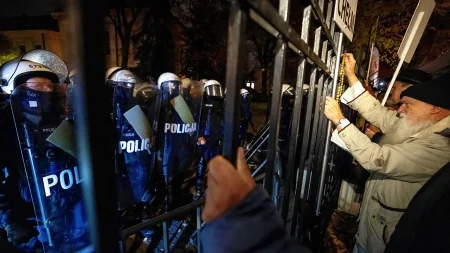


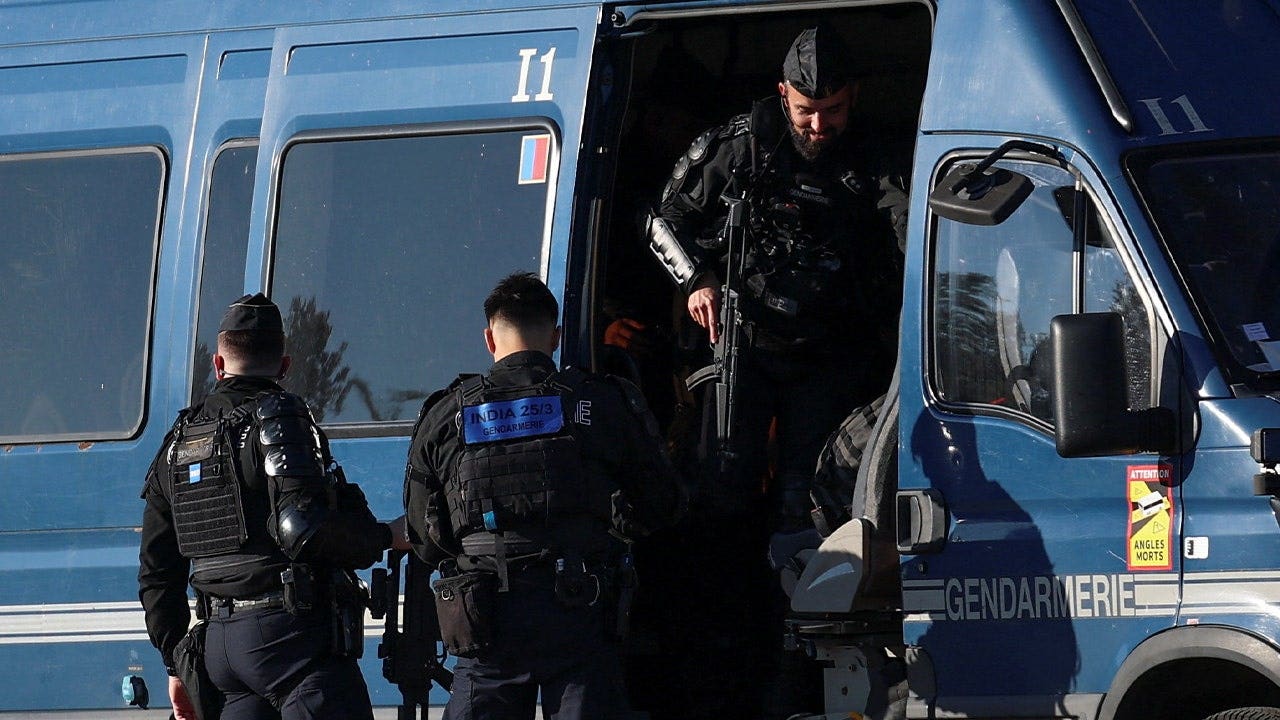
France is holding its breath. As a third consecutive weekend of anti-government protests looms, the country has been transformed into a strange, wary landscape of boarded shop windows, police checkpoints, and quiet streets that once hummed with tourist life. The government has moved with extraordinary force, deploying 70,000 police officers and gendarmes across cities from Paris to Marseille to quell expected unrest. Interior Minister Laurent Nunez delivered the official line with little room for ambiguity: “Everyone is on deck to ensure an extremely firm response to any trouble.” The words were meant to reassure, but they also underline how fragile the situation has become. Over the past weeks, protests over rising costs and opposition to President Emmanuel Macron’s government have repeatedly spilled into looting, arson, and destruction. Shopkeepers have been left sweeping glass, residents have been trapped in their buildings while masked crowds surge below, and the security forces have come to symbolize both order and confrontation. This weekend brings an additional wrinkle: Halloween. Authorities caution that demonstrators may use the holiday’s masks to blend into the crowds and avoid identification. Already, the Interior Ministry has tracked at least 150 planned gatherings. Every public square, every avenue, and every side street in central Paris is now measured by its proximity to trouble. The city that was once the symbol of romance and effortless elegance has been transformed, at least for now, into a barricaded stage for a national crisis. Even holidays no longer feel innocent. Parents preparing children for costume parties find themselves explaining why so many police vans are parked near their schools. The masks that once brought smiles are now, to security officials, instruments of anonymity. For many ordinary citizens, the overwhelming police presence feels less like protection and more like the visible sign of a political breakdown. Yet others welcome the firm hand, weary of nightly images of burning vehicles and shattered windows. “Everyone is on deck” means officers are cancelling days off, working through the weekend, and preparing for the kind of standoff normally reserved for terrorism or civil war. The mood is not panic, but it is close to a collective state of suspense—everyone waiting to see where the sparks will fly next.
The roots of this uprising run deeper than any single policy. It began in classrooms and university corridors, where young people called attention to crumbling infrastructure, underpaid teachers, and schooling conditions that fell far short of the ideals of the French Republic. But protest, once it starts, rarely stays in its original lane. Economic anxieties soon fused with educational grievances, and the movement grew into a wide-ranging complaint about the price of fuel, the squeeze on household budgets, the cost of borrowing, and the sense that government was working for the privileged rather than the ordinary. President Macron’s promise to reform education and reduce energy costs has not soothed the anger. On the contrary, it has become part of the problem; protesters argue that those promises are late, vague, and inadequate. The scenes on the streets are not simply the work of a few troublemakers, although undoubtedly some have come prepared to vandalize. Rather, they are the voice of a society where the young feel they are inheriting an empty bank account, and the middle-aged feel they can no longer keep up with the bills. Aaron Berthier de Grandry, a 15-year-old high school student who said he planned to protest over the weekend, expressed this bleak generational mood with heartbreaking clarity. “When I was little, I was told young people were the future,” he told Reuters. “Well, if we, as the future of France, lack resources, that means France will end up collapsing.” His words are not the rhetoric of an extremist; they are the sentiment of a teenager who has somehow begun to carry the weight of a broken system. There is no need to agree with every protester’s method to understand why Aaron and thousands like him are willing to stand in cold weather, face tear gas, and risk police records for a promise of something better. They do not see themselves as enemies of the state; they see themselves as its abandoned children. The French government, focused on securing buildings and preventing violence, may not have the time or patience for that message this weekend, but it is still there, below the surface, waiting to be heard.
The configuration of this weekend’s protests is as complicated as the anger driving them. The Interior Ministry has counted at least 150 planned events across the country, and police have drawn up detailed maps of choke points, sensitive sites, and escape routes. In Paris, a major planned march between the Place de la République and the Place de la Bastille was banned by the country’s top administrative court; organizers were forced to reroute the gathering to boulevards on the city’s eastern edge, far from the gleaming shopping districts. For many, the decision symbolized a government trying to hide the conflict from view. It also concentrated the mood in certain neighborhoods, making the police cordons even more tense. The holiday factor has not been overlooked: Halloween means masks, and masks mean anonymity. While families might see the festival as harmless fun, security officials worry that activists will use costumes to vanish into crowds, and that ordinary people, caught in a clash by accident, might be mistaken for rioters. Social media, as ever, has become a real-time battlefield. On Saturday, journalist Oliya Scootercaster posted a video to X showing an object flying toward a phalanx of riot police in Paris; she described it as a Molotov cocktail. Another account, Bleu Blanc Rouge, shared footage from Marseille of a crowd pressing around the entrance of a residential building, apparently attempting to break in. Each such video acts as an accelerant: for the authorities, proof that violence is organized and inexcusable; for protesters, evidence of state aggression and exclusion; for ordinary viewers, a nightly horror show that makes them feel trapped in their own homes. The thud of helicopter blades, the smell of tear gas, the sudden screech of sirens—these are not coming from a distant war zone, but from the middle of a European capital. For residents, there is no easy way to sort the heroes and villains; there is only the practical problem of staying safe while the Republic argues with itself.
The economic consequences of the unrest are already severe and still mounting. According to the French Chamber of Commerce, retail losses from looting and property damage have surpassed $1 billion. If the lost sales, missed wages, canceled tourism trips, and long-term damage to the city’s brand are added, some estimates put the eventual bill at double that. The properties behind the headlines are often luxury labels—the Hermès boutiques and Louis Vuitton stores whose shattered windows make dramatic television—but the real burden falls on the invisible staff of the economy. Cleaning crews work overnight to remove spray paint and broken glass. Hotel workers face empty lobbies during what should be a festive season. Small cafés near protest routes have seen their terraces empty, their supplies unsold, and their staff sent home. The famous avenues of Paris now look like a fortress, with boards covering hundreds of windows. To stroll down the Champs-Élysées is to see a parody of a once-proud commercial avenue: golden letters still mark the stores, but behind the temporary plywood, the light has gone out. The mood among shopkeepers is not dramatic anger but weary exhaustion; they wonder how many more weekends they can survive. Small businesses have no national bailout. Insurance may cover some losses, but premiums will rise, and claims may be strenuously contested. Meanwhile, the government’s proposed law to punish rioters by making them personally liable for damages—with fines of up to €10,000, roughly $11,000—offers symbolic justice but scarce consolation to a baker whose delivery van has been burnt. Punishing offenders is necessary, but someone has to clean the streets and pay the rent. The issue has moved beyond street clashes into the broader economy, and there is no decree that can instantly repair that.
Politically, France seems to be oscillating between the desire for order and the need for understanding. President Macron has used some of his strongest language yet, blaming the unrest on “ultra-left groups whose aim is to bring down the republic.” For many who witnessed masked rioters destroying stores, this diagnosis makes sense; there is a violent minority that wants only chaos. Yet for the protesters who started with peaceful demands, the label is both insulting and dangerous. By focusing on alleged instigators, the government risks failing to hear the broader grievances that made those instigators possible. The proposed restitution law is popular with shopkeepers and homeowners, but it raises uncomfortable questions. How will it distinguish between a hardened vandal and a teenager swept up by emotion? Will the poor face fines they can never pay, while true ideologues escape justice? More fundamentally, can a justice system really solve a crisis born from inequality, distrust, and exhaustion? These questions are being asked in kitchens and classrooms, but the public debate is often drowned out by the sound of helicopters overhead. The government wants to reassure the middle that it is winning the war on street violence; opponents want to show that a state worried about its legitimacy cannot simply fine its way to loyalty. With each passing weekend, the middle ground shrinks. People who once avoided politics are now taking sides, and the empty spaces between protest and order are filling up with anger. Citizens who are not in the streets watch the news in amazement, trying to decide whether the people on their screens are misguided criminals or the only honest voices left. It is a painful internal argument, and it cannot be settled by batons alone.
What happens next is as much a question of national character as of police strategy. The United States Embassy has told travelers to avoid areas where large gatherings are taking place, and that official caution mirrors the mood of many French citizens, who have begun planning their weekends around protest routes. The challenge is not only to end the violence but to decide what France is for. It is a country that has given the world the Declaration of the Rights of Man and of the Citizen, universal ideals of liberté, égalité, fraternité. On a cold autumn evening, though, those ideals seem far away to a student who cannot afford school supplies or a parent who must choose between heating and food. Macron’s government, and indeed all political parties, will need more than police cordons and fines; they will need the courage to sit across from people who have lost faith and actually listen. That does not mean surrendering to looters or excusing physical violence. It means remembering that behind every mask is a face, and behind every face is a story. The teenagers on the streets have been called a lost generation, but they are only lost if the adults in power refuse to find them. If the current tension can be transformed into a new social contract, the wheel of history may turn from destruction to rebuilding. But that will require more than a firm law-enforcement response; it will require an honest conversation about resources, fairness, and the meaning of a shared republic. For now, the boarded windows stand as proof of a crisis, and the question hangs in the air: what kind of France will emerge when the shouting stops? No one can answer that yet. But the answer, whatever it is, will belong to everyone—the police and the protesters, the tourists and the shopkeepers, the government and the children who are, after all, the future.