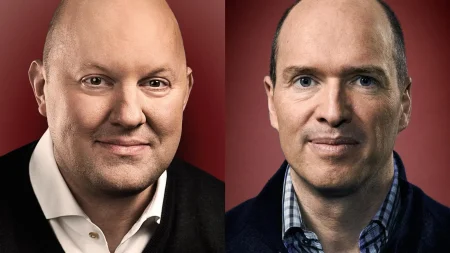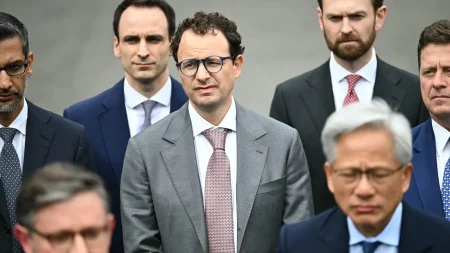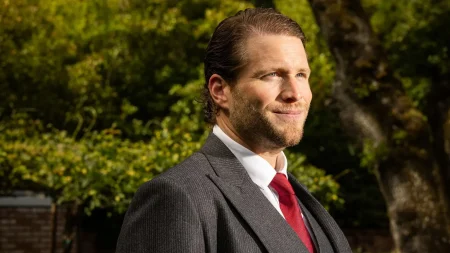



Valencia CF has always been a club of passion, potential, and paradox. For generations, football in Valencia has been the heartbeat of a city that loves with a rare intensity, filling stadium seats with cries of hope, whistles of frustration, and unshakable devotion through years of triumph and turbulence. Yet for much of the last decade, that same passion has been tested by uncertainty: ownership questions, financial struggles, unfinished projects, and the nagging sense that a giant of Spanish football was somehow underperforming its own rich history. Now, however, comes a story that feels like the beginning of a new chapter, a genuinely human and hopeful moment in a sport often defined by cold balance sheets and transactional pragmatism. A consortium called Pitchwise Holdings, backed by the cofounders of the American private equity giant KKR, has agreed to buy a 42% stake in Valencia CF. The deal values the club at a staggering €1.25 billion, roughly $1.4 billion, and includes a fresh injection of €100 million into the club itself. That money is meant to strengthen the teams, improve training facilities, and give Valencia the kind of breathing room that elite competition demands. It is not a takeover in the aggressive sense, nor a quick rescue deal. It is a meeting of old footballing soul and new institutional money, an arrangement designed to preserve the club while lifting it.
The people behind Pitchwise Holdings are not faceless financiers hiding behind numbers and spreadsheets. They are names that carry weight in the worlds of sports, business, and family legacy. The group is led by Ann Rodriguez and Corey Woolfolk, two respected sports executives who have spent their careers learning how big clubs tick, how stadiums fill, how players develop, and how communities connect with their teams. Alongside them is Penner Sports, the investment vehicle of Walmart chairman Greg Penner and his wife Carrie, whose family lineage includes Sam Walton, the founder of Walmart. That background matters because the Waltons have long been associated with long-term thinking, philanthropy, and a sense of stewardship that goes beyond quarterly returns. For a club like Valencia, which has always drawn strength from its identity as a people’s club, having owners with that kind of values-based approach is meaningful. At the same time, the deal includes continuity. Meriton Holdings, the Singapore-based entity controlled by billionaire Peter Lim, will retain the majority stake, and his son, Kiat Lim, will remain as president. That helps avoid the chaos of a sudden overhaul. The club is not being handed to strangers; it is being opened to partners. And in football, where trust and stability are as valuable as goals, that sense of continuity matters enormously.
Reading between the lines, this partnership did not happen overnight. Kiat Lim’s public statement carries a personal tone that is easy to overlook in the headlines. He said there had been no shortage of interest in Valencia, meaning plenty of investors had circled the club, tempted by its history, its fan base, its potential. Yet he was specific about why Pitchwise stood out. “The Pitchwise team was the only partnership I was keen to pursue,” he said. “They bring long-term investment expertise and sports acumen, and we have gotten to know each other very well.” That last phrase is important. In a financialized age, football deals are often done through intermediaries, with barely a handshake between faces on screens. But here, Kiat Lim appears to be speaking as someone who has invested time in relationship building, who has listened, weighed options, and ultimately chosen partners he trusts. That human element is often missing from sports business stories, and it is exactly what makes this announcement feel different. It is the difference between a cold transaction and a marriage of interests. There is also a family dimension to the story: Kiat is not just a caretaker but the son of the majority owner, carrying responsibility not only to shareholders but to the club’s extended family of supporters, employees, and players. The decision to bring in partners is, in many ways, an act of humility, an acknowledgment that even those with deep pockets and good intentions cannot succeed alone.
The most tangible symbol of this new optimism is Nou Mestalla, the long-promised, much-delayed new stadium in Valencia. For years, the project has hovered over the club like a beautiful but unfinished dream. When completed, the 70,000-seat arena is expected to open next year, and it is difficult to overstate what that would mean for the city and the club. A stadium of that scale is not merely a venue; it is a landmark, a home for collective emotion, a place where generations gather to cheer, to suffer, to celebrate, and to feel part of something larger than themselves. Valencia took on €322 million in debt last year to bankroll the project, a heavy burden that explains why investment was so desperately needed. But the stadium also carries enormous promise. It could even become a venue for the 2030 Men’s FIFA World Cup, which Spain will co-host along with Portugal and Morocco. Imagine the world’s spotlight shining on Valencia, with a gleaming new stadium at its center, hosting matches watched by billions. That is the kind of future the club’s new partners are betting on. It is not just about football matches; it is about becoming a European destination, a city that draws visitors and talent and investment. The stadium is a symbol of the club’s ambition, and now, finally, there is money behind the vision.
Kiat Lim framed that vision in language that goes beyond corporate jargon. “Together we will build a modern club whose men’s and women’s teams compete consistently in Europe, whose academy produces world-class talent, and whose new home at Nou Mestalla becomes a landmark for the city and the entire region of Valencia,” he said. These are not just words. Each element represents a real need for a club of Valencia’s stature. The men’s team has a glorious history but has struggled for consistency in recent seasons, sliding in and out of European contention. The women’s team has been growing, but female football has historically been underfunded in too many places; the promise of investment is a genuine opportunity for progress. The academy, which has produced players like David Silva, Isco, and many others, is a source of pride and financial necessity, and nurturing young talent is always the most sustainable path to success. And the stadium, of course, is the architectural heart of the project. Valencia said the transaction with Pitchwise reflects the full value of the club’s assets, including both the men’s and women’s teams and the stadium, and that the fresh capital will be invested in training facilities. That phrase, “full value,” signals something important: the club believes it is finally being seen for what it is worth, not measured by its recent failures but by its enormous potential. For long-suffering fans, that recognition can feel personal.
There is one more voice in the deal that deserves attention. George Roberts, co-executive chairman of KKR, offered a short but telling endorsement: “We have gotten to know Kiat very well and believe that this new partnership and Valencia represent the most exciting opportunity in European football. We look forward to supporting Ann, Corey and Kiat as they take the club into a bright future.” Coming from a man who has spent decades building one of the most successful investment firms in the world, the excitement is not empty enthusiasm. It is a calculated judgment that Valencia, with the right partners, patient capital, and a shared vision, can reclaim its place among Europe’s elite. That matters because European football is crowded, cutthroat, and increasingly expensive. To compete with state-backed clubs and billionaires who treat trophies as toys requires more than passion; it requires intelligence, strategy, and a willingness to invest over years, not weeks. That appears to be exactly what Pitchwise brings. This is not a story about a sudden magical fix. It is a story about alignment: owners who want to hold on, partners who want to help, executives who know how to run clubs, and a city that desperately wants its team to shine again. When all those interests move in the same direction, wonderful things can happen. The goal is not merely to avoid relegation or to scrape into a cup run. The goal is to build a modern, sustainable, ambitious Valencia that respects its past while embracing its future. With the stadium rising, the capital flowing, and new leadership stepping forward, the long wait for good news may finally be ending. For the fans who have never stopped believing, that is the most beautiful result of all.