


Few things in travel sting quite like the moment your flight status changes to “delayed.” You’ve already packed, rushed to the airport, taken off your shoes at security, and bought a lukewarm coffee just to have something to do. Then the announcement comes, and your carefully planned day starts to unravel. You missed a connection, or a meeting, or a friend’s wedding dinner. The anger is real, but there is one bright spot that many European passengers don’t fully understand until they need it: EU Regulation (EC) No 261/2004. This law guarantees compensation for passengers whose flights are delayed, provided the disruption is the airline’s responsibility. The amounts are not symbolic. If your flight is under 1,500 kilometres and arrives more than two hours late, you get €250. If it’s between 1,500 and 3,500 kilometres and arrives more than three hours late, you get €400. And for any other flight that arrives more than four hours late, you get €600. This is not a voucher for a future flight, not a measly drink coupon, but real money that the airline is legally required to pay. It sounds wonderful, and in principle it is. But there are limits, time limits, exceptions, and endless fine print. The key phrase is “airline’s responsibility.” If the delay was caused by extreme weather, air traffic control strikes, or other extraordinary circumstances, the airline can often avoid paying. Still, for a surprisingly large number of cases, the responsibility falls squarely on the airline, which means you have a genuine legal right to ask for compensation.
The problem is that there is a big difference between having a legal right and actually getting paid. In theory, you could file a claim directly with the airline, wait a few weeks, and receive your money. In practice, the process can be confusing, exhausting, and deliberately slow. Airlines know that many passengers will give up if they are ignored long enough. You might have to chase them with emails, send reminders, track down the right legal department, and argue about the exact wording of the regulation. Even when you do everything correctly, some airlines simply reject the claim or go silent. That is why companies like AirAdvisor have built an entire business around helping passengers claim what they are owed. They handle the paperwork, negotiate with airlines, and if necessary, take legal action on your behalf. Between January and June 2026, AirAdvisor helped passengers make 68,283 claims against 59 different airlines. That enormous pool of data allowed them to see exactly which airlines are honest and cooperative, and which ones make passengers fight for every cent. The ranking they created is based on two important things: the claim resolution rate, meaning how many claims were actually resolved successfully, and the court referral rate, meaning how many claims were so badly handled that they had to be sent to court after being rejected or ignored. That combination tells a much richer story than a simple headline number.
At the very top of the list, the most honest and reliable airline in Europe, according to this data, is TAP Air Portugal. That may surprise people, because national carriers are not always known for customer-friendly behavior. But when it comes to compensation claims, TAP resolved 88.7% of cases successfully, and only 0.6% of claims ever had to be referred to court. Even better, the average passenger received their payment in just ten days. That is an exceptionally smooth experience, especially compared to the nightmare stories that circulate in the travel community. Second place goes to LOT Polish Airlines, which is even more impressive in some ways because none of its claims had to go to court at all. The successful claim rate was 82.8%, which means that when LOT received a claim, they almost always paid, and they never forced passengers into litigation just to get what was right. Third place is Wizz Air, an ultra-low-cost carrier that people often love to hate. But the data does not lie: Wizz Air resolved 72.4% of claims, and only 1.2% of them went to court. For a budget airline with notoriously strict fees, that shows a surprisingly mature approach to passenger rights. The top five are rounded out by Iberia in fourth place, with a resolution rate of 67.3%, and Brussels Airlines in fifth, which again had no cases sent to court. What these airlines understand is that paying a legitimate claim early is not charity; it’s simply what the law requires.
The rest of the top ten is made up of familiar European names. Air France occupies sixth place, followed by Aegean Airlines in seventh, KLM in eighth, ITA Airways in ninth, and SAS in tenth. The exact percentages for these airlines were not broken out in the same detail, but their placement in the ranking tells us that their resolution rates were high enough to beat every other carrier in the study, while their court referral rates remained low enough not to drag them down. For passengers, this is useful information. If you have a choice between two airlines and both have similar prices, it might be worth thinking about what happens when something goes wrong. A ticket on KLM or Air France may cost a little more in some cases, but if your flight is delayed, you are more likely to get your compensation without a long legal battle. There is also a deeper point here. Airlines at the top of the list are not just being kind; they are being smart. When a company consistently pays compensation, it has a stronger incentive to avoid delays in the first place. Delays cost money, and if an airline has to pay out hundreds of euros to every passenger, it will think twice about tight scheduling, overbooking, or maintenance problems. In that sense, a healthy compensation culture benefits everyone, including passengers who never file a claim.
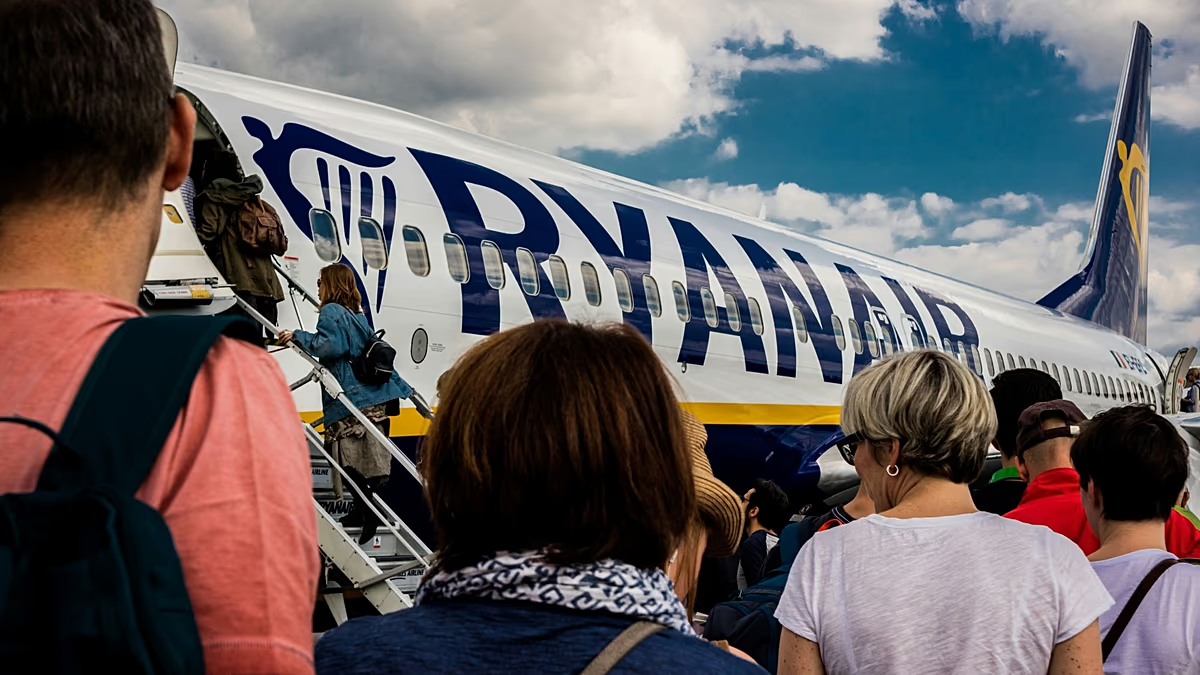
On the other end of the spectrum, the situation is very different. The absolute worst airline for compensation claims, according to AirAdvisor’s data, is TAROM, Romania’s flag carrier. The numbers are genuinely hard to believe. Of the 122 claims handled by AirAdvisor, only 3.3% were successful. Nearly half, 46.7%, had to be sent to court because TAROM rejected them or simply ignored them. And for the few passengers who did eventually get paid, the average wait time was a staggering 110 days. That is not compensation; that is a second punishment. Next up is Aeroitalia, a much smaller Italian airline, with a claim resolution rate of just 0.6%. In other words, out of a large number of claims, almost none were resolved voluntarily. More than a quarter of the claims, 28.2%, ended up being referred to court. And in third place among the worst is Europe’s biggest airline, Ryanair. This is a significant finding because Ryanair carries millions of passengers, so the sheer scale of the problem is bigger. Of 991 qualified claims, only 2.1% were successfully resolved, and 17.8% were sent to court. That suggests a deliberate strategy. These airlines seem willing to bet that the average passenger will not have the patience, knowledge, or energy to take the matter further. They make the process as difficult as possible, hoping that you will eventually give up. If you do push them, they may eventually pay, but only after months of frustration, not because they want to respect your rights.
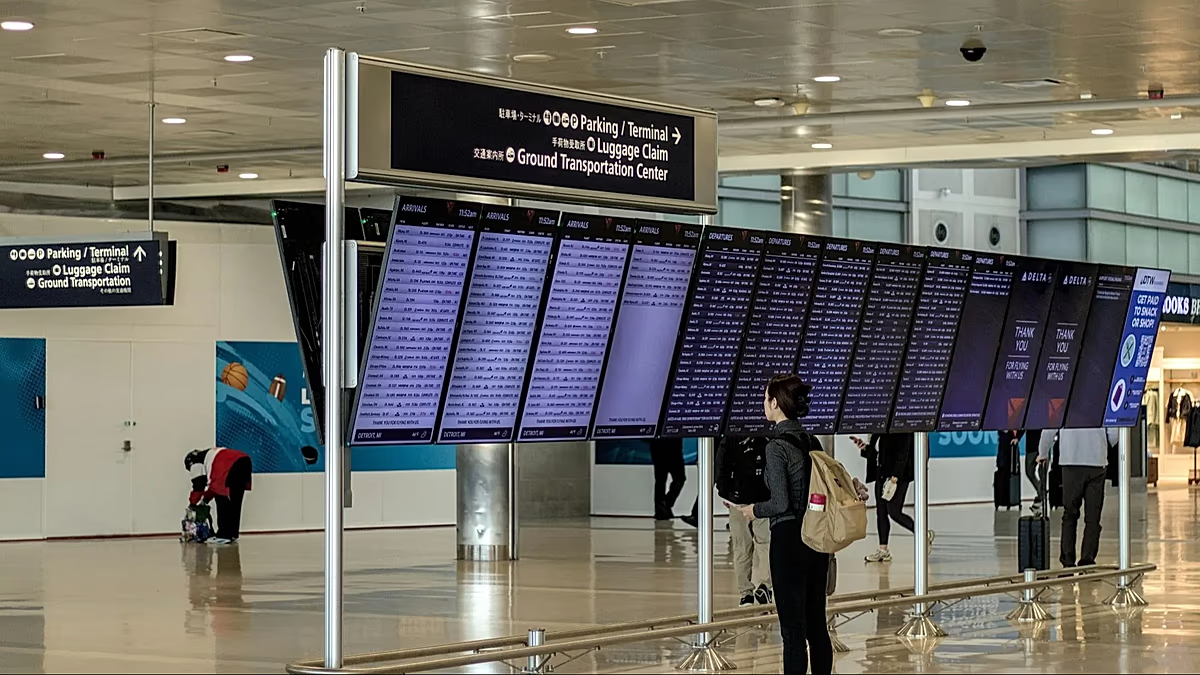
Of course, the ranking should be read with a careful eye. The data comes from claims made through AirAdvisor, so it does not include every claim made directly to every airline. There are millions of passengers who might have successfully claimed without the help of a third-party company, and those cases are simply not represented. The ranking also only included airlines that had more than 100 claims submitted during the period, which limited the final list to 22 carriers. That means some small airlines could be far better or far worse than what the data shows, but they were excluded simply because there was not enough evidence to draw a reliable conclusion. Even with those caveats, the ranking is still a powerful piece of information. It shows which airlines treat passengers with respect when something goes wrong, and which ones treat compensation as a battleground. The lesson for every traveler is simple: know your rights, and don’t be afraid to enforce them. EU Regulation 261/2004 exists for a reason, and the money is not a favor. It is an obligation. If you are delayed, start by making your claim directly. If that does not work, keep pushing. And if you still get nowhere, you can always turn to a service like AirAdvisor, which has the expertise, the data, and the legal capacity to do the fighting for you. The next time you are sitting in an airport terminal, watching the departure board and wondering whether your day will ever go back to normal, remember that you are not completely powerless. The law is on your side, at least in Europe. Sometimes all it takes is knowing how to use it.