


For years, the story of Microsoft and OpenAI was mostly about potential. This week, it became about something much more concrete: cash. In the quarter ended September 30, OpenAI generated $10 billion in revenue for Microsoft, or about 11 percent of the Redmond company’s total revenue. That is a striking number for a partnership that began as a $1 billion bet on an ambitious research lab and eventually grew into a $13 billion commitment. The $10 billion figure is sharply higher than the roughly $6 billion per quarter Microsoft averaged from its OpenAI business in the fiscal year that ended in June. The total includes both revenue-sharing payments from OpenAI and fees that OpenAI pays to use Microsoft’s Azure cloud to train and run its AI models. Microsoft did not break down how much came from each source, but the overall number is enough to grab anyone’s attention. To put it in human terms, OpenAI alone brought in nearly twice as much money to Microsoft as Xbox did in the same quarter, which was $5.4 billion. It also surpassed Microsoft’s search and advertising business, including Bing, which generated $6.6 billion. And it was far bigger than the $3.6 billion Microsoft collected from Windows licenses sold through PC makers, plus Surface and other devices. A single partner, one that didn’t even have a widely known product five years ago, is now outearning some of Microsoft’s oldest and most recognizable franchises. That is not just a footnote in an earnings report; it’s a sign of how completely artificial intelligence has reshaped the center of gravity in the technology industry.
Why is Microsoft suddenly reporting this number? The short answer is accounting rules. Because Microsoft owns about 24 percent of OpenAI, the startup is considered a “related party” under financial reporting standards, which means Microsoft is required to disclose the business they do together. Microsoft first disclosed the full-year figure in its annual report in July. This quarterly report is the first time it has given investors a clean quarterly number. The timing is also meaningful because Azure, Microsoft’s cloud platform, is the engine underneath much of this growth. Azure revenue rose 48 percent to $33.2 billion in the quarter, beating Wall Street’s expectations and even Microsoft’s own forecast of 44 to 45 percent growth. While Microsoft didn’t say exactly how much of that growth came from OpenAI, the $10 billion figure suggests that the relationship is a major driver. But here’s an important nuance: the $10 billion doesn’t include every dollar Microsoft makes from OpenAI’s technology. Microsoft also sells access to OpenAI’s models to its own business customers through the Azure OpenAI Service, and those models became the foundation for Microsoft’s Copilot products. That revenue comes from Microsoft’s own customers, not from OpenAI, so it’s not part of the $10 billion. That means OpenAI’s actual contribution to Microsoft’s AI story is even larger than the headline number suggests. For investors, this is both exciting and slightly uncomfortable. It’s exciting because AI is clearly paying off in real revenue. It’s uncomfortable because a large chunk of that revenue depends on a single partner that Microsoft doesn’t fully control, and whose ambitions have increasingly diverged from Microsoft’s own.
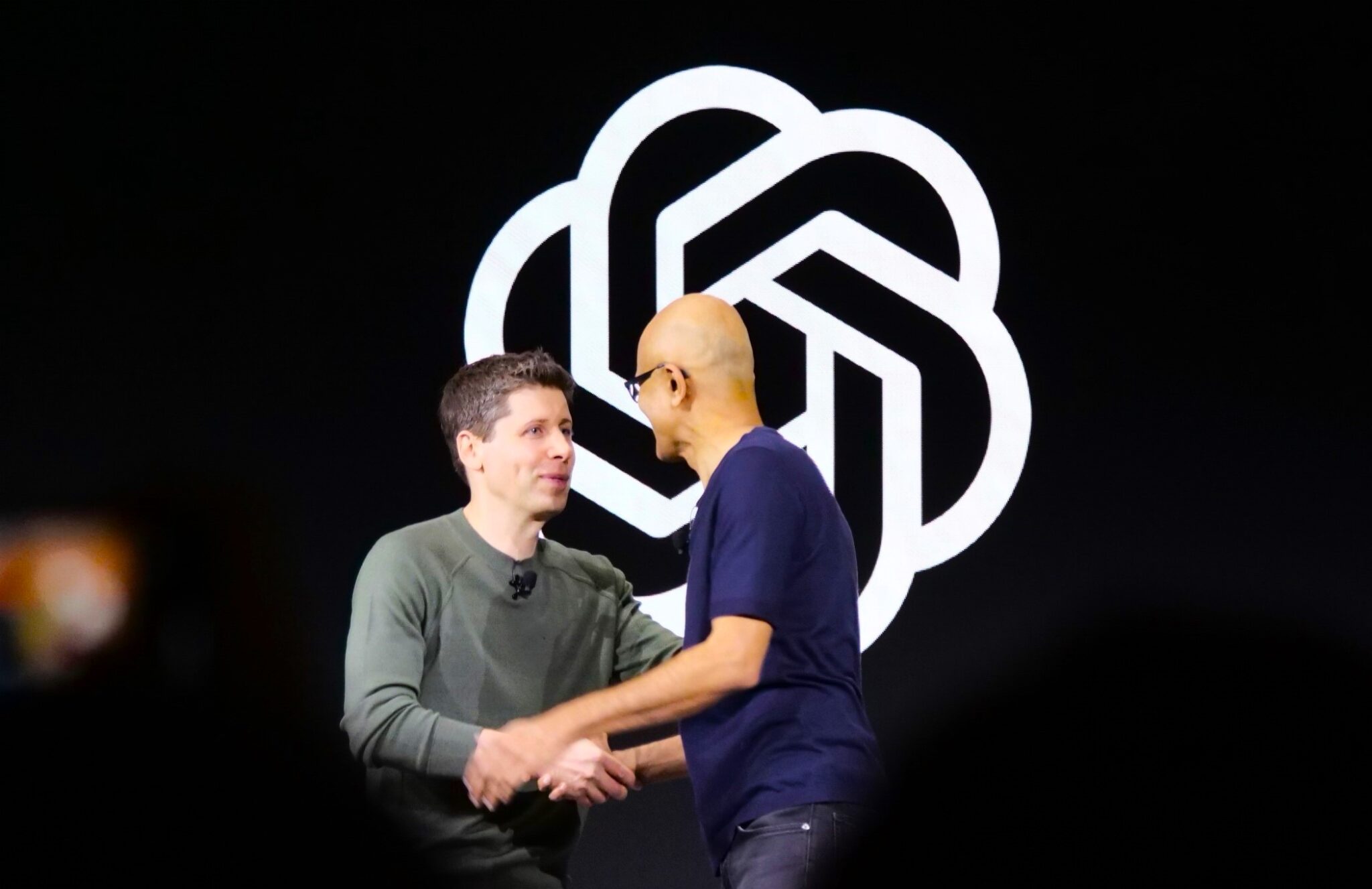
To understand how Microsoft and OpenAI got here, it helps to look back at the original deal. Microsoft first invested in OpenAI in 2019, eventually committing $13 billion, and in return became OpenAI’s exclusive cloud provider. When ChatGPT launched in late 2022, it ran on Azure, and that moment effectively launched the generative AI boom. For a long time, the relationship seemed simple: Microsoft provided the computing power and distribution, OpenAI provided the breakthrough models, and both companies got rich. But the relationship has evolved, and in some ways loosened, over the past year. OpenAI restructured as a public benefit corporation in October 2025, a move that reduced Microsoft’s influence. Microsoft gave up its right of first refusal to supply OpenAI’s computing capacity, meaning OpenAI is no longer obligated to come to Microsoft first when it needs more servers. At the same time, OpenAI committed to buy an additional $250 billion in Azure services, so the financial ties remain enormous. An April 2026 agreement gave OpenAI broader freedom to use other cloud providers, and OpenAI has also agreed to keep sharing revenue with Microsoft through 2030. Meanwhile, Microsoft has been quietly building its own AI models and now offers models from Anthropic and other companies as well. So this is no longer a simple exclusive partnership. It’s a deeply wired business relationship that both sides are actively diversifying. Microsoft still wants to be OpenAI’s biggest backer and cloud supplier, but it no longer wants to be dependent on OpenAI. And OpenAI, for its part, clearly wants more room to grow on its own terms. The $10 billion quarter is proof that the partnership still works financially, but the structure around it is much more complicated than it was in 2023.
On Microsoft’s latest earnings call, the company’s leaders were asked directly about how much of Azure’s AI growth was tied to OpenAI, and their answers were revealing in a different way. Bernstein Research analyst Mark Moerdler asked whether Azure’s AI growth was coming from big businesses or AI-native companies. Microsoft CEO Satya Nadella didn’t mention OpenAI by name. Instead, he made a point of saying that he doesn’t want Azure’s AI business to depend on a few big customers. He described the current moment as “a decade-long thing” and contrasted it with relying on “four customers who buy a lot of capacity from you” just to show a few quarters of growth. That, he said, “is not a business as far as I’m concerned.” He added that Microsoft has large customers who want to buy capacity, and “as long as the pricing is right, we may sell them some. If not, we will be patient.” It was a subtle but important message: Microsoft is happy to have OpenAI as a huge customer, but it doesn’t want to build its cloud business on the back of one or two giants. Later in the call, Goldman Sachs analyst Gabriela Borges brought up the fact that OpenAI made up 11 percent of Microsoft’s revenue. Nadella didn’t address that number directly, but he praised OpenAI’s latest models and said customers are increasingly mixing models from different companies, or even training their own. He pointed to Microsoft’s tools for routing each task to whichever AI model handles it best. If you use AI coding agents, Nadella said, you want Anthropic and OpenAI “to compete for your workload, not like once a quarter, but for every task.” In other words, Microsoft loves the revenue, but it’s determined not to become a landlord for a single tenant. It wants to be the marketplace where all AI models compete, and it’s willing to let OpenAI be one of the biggest sellers in that marketplace without becoming the only one.
Then there’s the fine print. In its quarterly filing, Microsoft expanded its warning about the risks of depending on outside AI providers. This is the kind of language that usually gets ignored, but it’s worth reading carefully because it shows how Microsoft is thinking about its own vulnerability. Microsoft builds products such as Copilot on AI models from outside companies, including OpenAI and Anthropic. It now says it has “limited visibility into or control over” how those models are designed, trained, secured, and tested. That’s a significant admission. Microsoft is essentially telling investors that some of its most important products are built on technology it doesn’t fully understand or control. The filing goes further, without naming OpenAI or Anthropic, noting that some of these AI partners are also “significant customers of Azure.” It says the benefits Microsoft expects from those relationships “may not be realized or sustained.” It also says those partners could change how much they buy, and that Microsoft itself may change how it allocates scarce data center capacity or prices it. This is the language of a company that is deeply intertwined with partners it both needs and worries about. It’s a bit like an investor acknowledging that the company it’s betting on could one day become a competitor, or at least a less enthusiastic partner. The mutual dependence is real, but so is the mutual risk. If OpenAI decides to move more workloads to other clouds, or if Anthropic builds models that make OpenAI less essential, Microsoft’s AI revenue story could change quickly. At the same time, if Microsoft decides to prioritize its own models or allocate capacity to other customers, OpenAI could face its own constraints. The relationship is profitable, but it’s also a delicate balance of power.
Finally, the ownership side of the story adds another layer. Microsoft is not just a cloud provider and distribution partner; it’s also a major investor in both OpenAI and Anthropic. According to the latest filing, Microsoft owns about 24 percent of OpenAI, down from about 25 percent in June and about 27 percent after OpenAI’s restructuring a year ago. Microsoft has put $12.0 billion of a promised $13.0 billion into OpenAI, so it remains deeply committed. In addition, Microsoft agreed last year to invest up to $5 billion in Anthropic, and its results for the June quarter included a $3.2 billion gain on that investment. Microsoft hasn’t disclosed the exact size of its Anthropic stake, and Anthropic’s IPO filing earlier this week didn’t specify it either. What all of this means is that Microsoft is simultaneously a partner, a customer, a supplier, an investor, and a potential competitor to the very companies driving its AI boom. That’s an incredibly complex position. On one hand, Microsoft benefits enormously from the success of OpenAI and Anthropic. On the other hand, it has to protect itself against the possibility that one of them becomes less friendly, less successful, or too powerful. The $10 billion quarterly figure is a milestone, but it’s also a reminder that Microsoft’s future is now tied to partners it doesn’t fully control. The company has worked hard to create an ecosystem where it can profit from AI no matter which model wins, but the latest disclosures show that this strategy comes with its own risks. For now, the numbers look great, and Microsoft is clearly at the center of the AI revolution. But the fine print, and Nadella’s careful words, suggest a company that knows it’s riding a wave it can’t entirely steer. It’s a profitable embrace, with both partners keeping their arms at a carefully negotiated distance.