

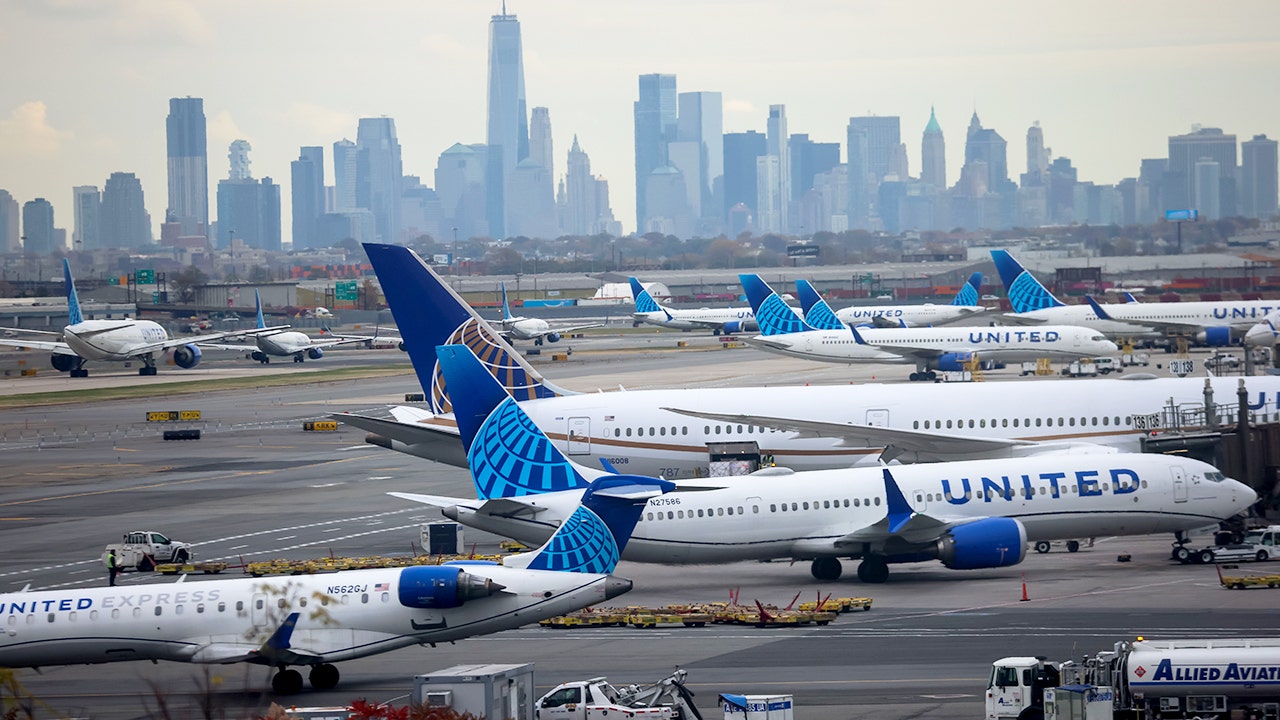
On a Saturday evening, a routine flight from Las Vegas to Newark became the setting for a moment of reckless judgment that would upend a young man’s life. Dante Milne, a 25-year-old New Jersey resident, was returning home after spending three days in Las Vegas for an apprenticeship training program in underwater welding. He had enjoyed a few drinks at an airport bar before boarding United Airlines Flight 1681, a Boeing 737 carrying 150 passengers and six crew members. Somewhere in the haze of alcohol and exhaustion, he allegedly sent a text message to a coworker that read, “I’m gonna hijack this b—- and crash ur row only.” What Milne later described as poorly worded banter between colleagues was interpreted by a flight attendant as a credible threat. Within moments, the ordinary rhythms of a cross-country flight—seatbelts, drinks, conversations, half-watched movies—were shattered by a chain of events that would divert the plane back to Las Vegas, involve federal authorities, and leave a young man facing a terrorism-related charge. It is a story that sits at the uncomfortable intersection of human stupidity, post-9/11 security culture, and the immense weight of words spoken or typed in the wrong place at the wrong time.
The flight attendant who spotted the alleged text did not hesitate. After seeing the threatening message on Milne’s phone shortly after departure, she immediately alerted the captain. The cockpit was secured, and the crew made the decision to turn the aircraft around and return to Harry Reid International Airport. Air traffic control audio later captured the pilot calmly explaining the situation to controllers on the ground. “The passenger does not know anything is going on,” the pilot said. “The flight attendant saw him texting that he was going to hijack the aircraft and called me and we went lockdown. … No restraint, passenger is compliant because he’s unaware.” That last detail is particularly striking: Milne was apparently asleep or oblivious while the plane he was on reversed course, surrounded by an invisible tension that he had caused. The flight landed safely at approximately 11:05 p.m. For the other 149 passengers and crew, what should have been a straightforward red-eye became a disorienting, stressful detour. There was no screaming, no physical struggle, no dramatic takedown—just the quiet, chilling realization that a threat had been made, and that everyone on board had been vulnerable to whatever it might have meant. The flight was delayed overnight because the crew reached its permitted working hours, and the plane finally departed for Newark the following morning. United Airlines later said only that the flight had returned to Las Vegas to address a “potential security concern,” and the Federal Aviation Administration confirmed that the crew reported a “passenger disturbance.”
When investigators questioned Milne, his account painted a picture of a young man who had made a terrible mistake, not a calculating terrorist. He admitted to drinking a beer and several shots at the airport bar before boarding. He said he then fell asleep aboard the plane and woke up to discover that the aircraft was returning to Las Vegas. At first, he acknowledged that he had been texting someone on the flight but said he could not remember the content of the messages. When detectives pressed him on the specific hijacking threat, he described it as poorly worded “banter between coworkers.” He insisted that he never intended to take control of the aircraft and apologized for what had happened. He explained that he was heading home after participating in an apprenticeship training program for underwater welding, a demanding and skilled trade that hardly fits the profile of a would‑hijacker. There is something deeply human in this explanation: a tired, intoxicated young man, perhaps trying to sound tough or funny in a text to a colleague, never pausing to consider how his words might look to a stranger with a responsibility to protect an airplane full of people. In his mind, it was a joke. In the eyes of the law and the airline industry, it was a threat. That gap between intention and perception is exactly why the incident spiraled so quickly beyond his control.
Legally, Milne now faces serious consequences. Authorities charged him with one count of making threats or conveying false information concerning an act of terrorism. He was arrested and later released on $10,000 bail. His attorney told a judge that he intended to plead not guilty, and he is due back in court on January 5. The charge itself carries the weight of federal and state terrorism statutes, which are intentionally severe in the wake of past attacks and attempted attacks on commercial aviation. Even if the court ultimately accepts that Milne’s message was a foolish joke, the fact that a terrorism-related charge was filed shows how prosecutors and law enforcement view any threat against an aircraft in the modern era. The legal system is designed to send a message: you cannot say these things, even in jest, because the cost of being wrong is too high. For Milne, a young man at the beginning of a career in underwater welding, this incident could mean a criminal record, potential prison time, and a permanent stain on his reputation. The momentary thrill of a crude text message—or whatever impulse drove him to type those words—has now placed his entire future in jeopardy. One can only imagine the horror he felt waking up on a plane that was no longer heading to Newark, slowly realizing that the chaos around him was his own doing.
Beyond the individual story, this incident is a powerful reminder of how seriously airlines and security agencies take any mention of hijacking or violence. In the decades since September 11, 2001, the entire culture of commercial aviation has been reshaped around the idea that every threat must be treated as real until proven otherwise. Flight crews are trained to notice suspicious behavior, to take every comment seriously, and to err on the side of caution. Passengers are encouraged to “see something, say something,” and the system is built to respond quickly and decisively. In this case, that response included securing the cockpit, diverting a plane with 150 people on board, and forcing an overnight delay for everyone. It is easy to view such measures as overreactions, especially when the person involved is a drunk 25-year-old making a tasteless joke. But the people on that plane did not know Milne’s intentions. They did not know whether he was a terrorist, a troubled individual, or just a fool. All they had was a text message threatening to hijack the aircraft, and in a world where a single lapse in judgment can lead to catastrophe, the crew chose to act. That choice may have been inconvenient, but it was also responsible. The airline and the FAA have both confirmed that the incident remains under investigation, and the protocols that turned a text message into a national security matter are unlikely to change.
Ultimately, the story of Dante Milne is a cautionary tale about the power of words and the fragility of good judgment. It invites a certain amount of empathy—here is a young man, far from home, tired and intoxicated, who made a staggeringly bad decision and now faces the full weight of the law. It also demands accountability, because his words caused fear, disruption, and a cascade of serious consequences for everyone aboard that flight. There is no easy answer to the question of whether he deserves forgiveness or punishment, because both are true in different ways. He deserves to be judged on the totality of his life, not just this one moment of idiocy. But he also must understand that in a world shaped by real threats and real violence, the line between a joke and a crime is not always visible until it is too late. The passengers who were delayed, the crew who had to secure the cockpit, and the investigators who had to determine whether a hijacking was truly imminent—they all paid a price for one foolish text. Milne’s apology, assuming it is sincere, cannot undo the fear or the lost hours. It can only serve as a reminder that our words matter, especially when we are tired, intoxicated, or trying to impress someone with a joke that was never really funny to begin with. As he prepares to face the court in January, he will have to live with the consequences of that single, poorly worded message—a message that turned an ordinary flight home into a moment that could define the rest of his life.