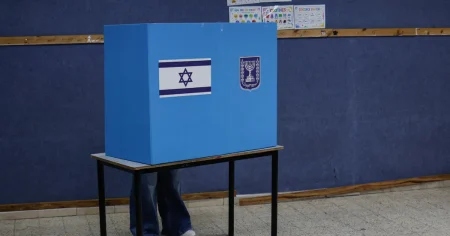




The Department of Justice’s announcement on Monday landed like a stone in still water: more than 400 noncitizens had been illegally registered to vote in Washington state, and some of them had cast ballots in multiple elections stretching back decades. The numbers are cold and statistical, but behind them are people—people with green cards, legal residency, families, jobs, and, in many cases, a long history inside the United States. Federal investigators did not uncover a coordinated conspiracy of undocumented voters sneaking into polling places. Instead, many of the names on the list are lawful permanent residents who, according to the U.S. attorney’s offices for both the Eastern and Western Districts of Washington, had somehow ended up on the voter rolls. They voted in local races, state races, and national elections, often assuming the ballot that arrived in the mail was theirs to cast. Neil Floyd, the acting U.S. attorney for the Western District of Washington, put it bluntly: “We have identified over 400 noncitizens who are registered to vote and have voted in multiple elections. This is only the tip of the iceberg.” His statement carried the weight of a warning—that the problem is broader than one state, and that more investigations are coming. The announcement also builds on earlier federal legal action against Los Angeles County, where the DOJ sought to set aside roughly 20,000 mail-in ballots sent to individuals whose citizenship status was in question. Together, those moves signal a major escalation in the federal government’s effort to scrutinize voter rolls and remove anyone who is not a citizen. But the human reality is more complicated than a simple crackdown: some of these people may have had no idea they were doing anything wrong, and their lives could now be upended by a single checkmark on a registration form.
The investigation unfolded quietly through government records. Federal officials reviewed U.S. Citizenship and Immigration Services data, cross-checking the names of people who had applied for immigration benefits against state voter rolls. What emerged was a pattern of repeated participation: some individuals had voted only once or three times in past elections, but one person had voted twenty-seven times. In all, Floyd’s office counted roughly 1,500 instances of noncitizens casting ballots in Washington state. That is not a small error or a one-time glitch; it is a systemic breakdown that has persisted for decades. The earliest documented case, Floyd said, dates to 1984—before Washington transitioned to its current vote-by-mail system. That detail matters because it suggests that the problem is not brand new, nor is it confined to one era of election administration. For decades, people who were legally present in the United States but not citizens were somehow receiving ballots and returning them, year after year, perhaps unaware that their participation was illegal. Floyd was careful not to speculate about the upcoming midterms; he said he had not checked whether anyone on the list had voted in the current election cycle because he did not want to “interfere with the current election.” That restraint reflects the delicate balance election officials must strike between enforcing the law and protecting the integrity of an ongoing democratic process. But the sheer volume of votes involved raises serious questions: How did these individuals get on the rolls in the first place? Why weren’t the errors caught earlier? And what does this mean for public confidence in elections?
For many of the green card holders on the list, the path to voter registration appears to have run through Washington’s Motor Voter program, a system designed to make voting easier by integrating registration into the Department of Licensing. Federal officials explained that some green card holders were registered without their knowledge when they went to obtain or renew a driver’s license or state ID. They signed documents, answered questions, and walked away thinking they had simply completed a routine administrative transaction. Then, days or weeks later, a ballot arrived in the mail. For a person who has lived in the United States legally for years, who pays taxes, works, and contributes to the community, receiving a ballot can feel like recognition—evidence that they belong. They fill it out and mail it in, assuming that if the government sent it, they must be allowed to cast it. That assumption, however understandable, is false. According to Washington’s secretary of state, eligible residents are automatically registered to vote only if they provide proof of U.S. citizenship during the driver’s license or ID card process. Somewhere between the licensing office and the elections office, that safeguard seems to have failed. Floyd said federal officials have begun identifying patterns in how the process broke down, and they are now asking Washington to set aside ballots cast by the identified individuals until their citizenship status can be confirmed. The notice to state officials was unambiguous: “Washington is now on notice that noncitizens are voting. It is up to the state to take action to make sure that they are not allowing these noncitizens to vote illegally.”
The consequences for the individual immigrants caught in this situation are severe, and they extend far beyond the silent removal of a name from a voter list. Voting as a noncitizen is a federal crime, and for those seeking to become U.S. citizens, a single illegal vote can derail the entire naturalization process. Potential charges include making false statements in a naturalization application, which alone can lead to deportation proceedings, as well as fraudulent voter registration. For someone who came to America seeking safety, opportunity, or a better life, the stakes are almost impossible to overstate: years of paperwork, fees, interviews, and waiting can be wiped out by one act that many never even understood was illegal. It is easy to view these cases from behind a desk as straightforward examples of people breaking the rules. But humanizing the situation requires recognizing that some of these individuals were never trying to steal an election. They were simply living their lives, going to the DMV, renewing a license, and trusting that the government would not send them a ballot unless they were entitled to one. That trust has now become a trap. A green card holder may not appreciate the legal difference between permanent residency and citizenship, especially if they have spent decades in the United States, built a home, raised children, and paid into the same tax system as their neighbors. For them, the realization that they committed a crime by doing what seemed like a civic duty is not just shocking—it is terrifying. Federal officials have made clear that they intend to pursue charges where appropriate, and that the law will be applied without regard to a person’s background or intent. That may be legally correct, but it is also a reminder of just how much damage an administrative error can do to a person’s life.
The Washington findings are not an isolated incident; they are part of a much broader federal crackdown on noncitizen voting. Immigration officials told Fox News Digital on Tuesday that dozens of noncitizens had been arrested across the country in recent weeks, and that at least eighteen of them had voted in at least one federal election. The arrests swept up individuals from a strikingly wide range of countries, including Mexico, Somalia, Honduras, Guyana, Cuba, Germany, Nicaragua, Venezuela, Vietnam, El Salvador, Cambodia, Guatemala, Portugal, and Italy. Some of those arrested were not accused only of election-related violations; many faced additional charges for other alleged crimes, including counterfeiting, fraud, kidnapping, DUI, sexual offenses, assault with a dangerous weapon, drug possession, and burglary. That detail complicates any simple narrative. This is not a picture of a single type of offender or a single path to wrongdoing. Some of the people caught up in the enforcement effort appear to have been deeply entangled in criminal activity, while others may have simply registered to vote and cast a ballot without realizing they were ineligible. The Department of Homeland Security confirmed that numerous illegal aliens had admitted to unlawfully registering to vote or casting ballots in U.S. elections, which suggests that at least some of the arrests were based on voluntary statements or documentation rather than just data mining. Taken together, the Washington case and the nationwide arrests paint a portrait of an election system that has allowed too many people to fall through the cracks—some maliciously, some accidentally, and some through a mix of confusion, assumption, and inadequate oversight.
The challenge moving forward is not simply to punish those who have voted illegally, but to rebuild the system in a way that makes such mistakes impossible without turning immigrant communities into targets. Federal officials have made clear that they intend to keep investigating, that they believe this is only the beginning, and that states like Washington must take responsibility for maintaining accurate voter rolls. That is a legitimate and necessary demand. The integrity of elections depends on the basic rule that only citizens can vote, and when noncitizens slip through the system, every lawful voter’s confidence is shaken. An illegal vote is not a victimless act; it dilutes the voice of every person who followed the rules and cast a ballot legally. At the same time, the human dimension cannot be ignored. Some of the people identified in Washington did not wake up with a plan to defraud the government; they were failed by a registration system that sent them ballots they should never have received. They made a mistake, yes, but it was the same mistake a citizen might make after moving to a new state and receiving a ballot before fully understanding the registration requirements. The answer is not to ignore the law, but to make the law easier to understand and harder to accidentally break. Clearer signs at licensing offices, stricter verification of citizenship before ballots are sent, and better communication between state agencies and federal immigration databases could all help prevent future errors. As the investigations continue, both the enforcers and the public must hold two truths at once: the right to vote is sacred and reserved for citizens, but the people caught in these tangled cases are not all criminals in the deepest sense. Some are just immigrants who believed they were acting as good neighbors and good Americans—until the mail turned out to be a trap.