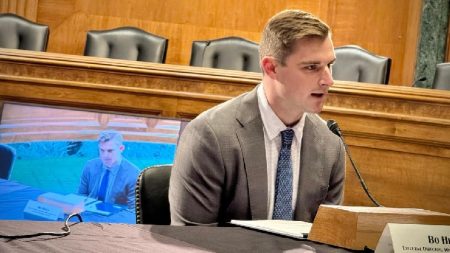




Pentagon Warns Military Personnel Against Betting on War Outcomes as Soldier Faces Insider-Trading Charges
The Pentagon has issued a sweeping internal memorandum warning service members and civilian personnel against engaging in prediction market trading tied to military operations — a directive that lands as federal prosecutors pursue an active-duty soldier accused of turning classified intelligence into a six-figure profit. The memo, circulated through the Department of Defense’s chain of command, argues that financial interests linked to the outcome of combat missions could corrode professional judgment and undermine the core values of discipline, operational readiness, and the singular focus required to win military engagements. Officials familiar with the directive say it was drafted in response to a convergence of growing concerns: the explosive popularity of online prediction platforms, the increasingly blurred lines between public information and operational secrecy, and a nagging fear that even the perception of financial entanglement could erode public trust in the armed forces. According to defense officials, the memo outlines potential administrative and disciplinary consequences for violations, including possible courts-martial for service members who fail to report financial interests in platforms that facilitate such trading. It also encourages commanders to initiate conversations about financial ethics during routine briefings, treating the issue not merely as a compliance matter but as a component of operational readiness. One senior defense official, speaking on condition of anonymity, described the memorandum as “a shot across the bow” for anyone tempted to treat operational knowledge as a personal financial asset. “The message is simple,” the official said. “You cannot serve the mission and speculate on it at the same time.” The memo stops short of naming specific cases, but its timing has not gone unnoticed in national security circles, where questions have been mounting about who is watching the watchers when real-time odds on global events begin to move in lockstep with classified decision-making. The directive is also being read as a preemptive measure, a signal to the ranks that the Pentagon is aware of the temptation and intends to address it head-on before it becomes a systemic problem.
The directive arrives amid intensifying scrutiny of prediction markets — platforms that allow users to buy and sell contracts tied to the likelihood of future events, from election outcomes to geopolitical flashpoints. These markets have exploded in both popularity and controversy, with Polymarket emerging as the dominant player in a space that regulators and lawmakers have circled warily for years. While proponents argue that such markets aggregate collective wisdom and provide valuable forecasting data for researchers and policymakers, critics have warned that they create dangerous incentives, particularly when the information being monetized is supposed to be shielded from public view. The Pentagon’s memorandum reflects a broader unease within the federal government about the intersection of financial speculation and state secrets, an issue that has gained urgency as more cases surface involving individuals with access to sensitive information allegedly cashing in on the very outcomes they are positioned to influence. The Department of Justice, for its part, has signaled that it views certain prediction market trades as a new frontier in insider trading enforcement, particularly when the underlying knowledge derives from classified materials. Legal scholars have noted that the application of traditional securities law to prediction markets remains legally unsettled, but the government’s aggressive posture in recent cases suggests it is willing to push the boundaries of existing statutes. Meanwhile, the Commodity Futures Trading Commission has been grappling with its own regulatory role, at times seeking to block event contracts it deems contrary to the public interest, only to face legal challenges from platforms and free-market advocates. The result is a patchwork of oversight that many experts say is ill-equipped to handle the speed and scale of modern prediction trading, leaving institutions like the Pentagon to fill the gap with their own internal rules. The stakes of that regulatory vacuum were underscored in late 2025, when analysts documented unusual trading patterns on multiple platforms in the days leading up to major military announcements — patterns that, in hindsight, appeared to track closely with classified developments. While correlation is not causation, the episodes fueled speculation that individuals with inside knowledge were already testing the boundaries of the system.
At the center of that enforcement push is the case of Gannon Ken Van Dyke, a US Army soldier whose alleged actions have become a cautionary tale for the digital age. In April 2026, federal prosecutors charged Van Dyke with exploiting information he obtained while participating in the planning and execution of Operation Absolute Resolve, the United States military operation that culminated in the capture of Venezuelan President Nicolás Maduro. According to court documents, Van Dyke did not merely possess the knowledge — he allegedly weaponized it, translating access to sensitive operational details into a series of bets on a commercial prediction platform. The charges paint a portrait of a service member who recognized the value of what he knew and decided, in the government’s telling, to monetize it in real time as the world watched events unfold in Venezuela. The case has drawn attention not only because of the alleged crime but because of the extraordinary nature of the underlying operation: the dramatic capture of a sitting head of state, a mission that would have been among the most closely guarded secrets in the US government. That a soldier allegedly involved in such an operation would turn around and bet on its outcome has shocked many within the military community, where the notion of profiting from one’s own mission is viewed as a profound betrayal of the profession of arms. Prosecutors have described the case as one of first impression, noting that it appears to be among the first instances in which a service member has been charged with insider trading based on classified operational information used to place bets on a prediction market. “This is a case about a soldier who allegedly sold out his oath for a payout,” a senior Justice Department official said during a press conference announcing the charges. “The information he held was not his to trade.” The Army has declined to comment on Van Dyke’s current status, though officials have confirmed that he remains subject to military jurisdiction in addition to the federal criminal proceedings.
The specifics of the alleged scheme are striking in their precision. Prosecutors say Van Dyke placed approximately 13 bets totaling $33,034 on Polymarket, wagering on the likelihood of US military activity in Venezuela and the removal of Maduro from power. The wagers, placed over a period that coincided with his involvement in the operation, were structured to pay off if the events he knew were coming actually came to pass. They did. Following Maduro’s capture in January, the bets reportedly generated an alleged profit of approximately $409,881 — a return of more than twelvefold on the initial outlay. That figure, which would represent a life-changing windfall for many soldiers, has become central to the government’s case, which hinges on the argument that Van Dyke’s access to classified intelligence gave him an unfair and illegal advantage in markets where other traders were operating on incomplete information. The timing of the bets, outlined in the criminal complaint, aligns closely with key milestones in the operation’s planning and execution, a detail prosecutors are likely to emphasize at trial. Investigators reportedly began looking into Van Dyke after noticing a pattern of unusually well-timed trades on his account, which they later linked to his military assignment. The alleged profits were traced through a series of cryptocurrency transfers, which prosecutors say were an attempt to obscure the origin of the funds. Van Dyke’s attorneys have not yet filed a substantive response to the charges, though they have indicated that they intend to challenge the government’s interpretation of the law and the sufficiency of the evidence. The defense is expected to argue that prediction market trades, unlike traditional securities transactions, are not governed by the same insider trading prohibitions, and that Van Dyke’s bets were no different from those placed by countless other users who were simply following public reporting on Venezuela. Legal analysts, however, note that the government’s case is likely to focus less on the mechanics of the market and more on the source of the information, arguing that classified intelligence obtained through military service carries an inherent duty of confidentiality that transcends the specific financial instrument involved.
The case has reverberated far beyond the courtroom, raising profound questions about the ethical obligations of military personnel in an age of ubiquitous financial speculation. Legal experts say the prosecution represents a novel application of insider trading laws to the prediction market space, where the traditional definitions of securities and material non-public information are still being tested. National security analysts have also weighed in, noting that the integrity of military operations depends on trust — trust that service members are focused on the mission, not their portfolios. The Pentagon’s memo, in this context, reads as both a warning and a reassurance: a clear statement that the Department of Defense will not tolerate financial conflicts that could compromise operational security, and a signal to the broader public that the institution is taking the threat seriously. But some observers argue that the memo, while necessary, may not go far enough. Ethics experts point out that the vast majority of prediction market trading does not involve classified information, and that the real danger may lie in more subtle forms of influence — service members adjusting their behavior or recommendations based on how it might affect their personal financial positions. “The problem is not just the soldier who bets on a mission and wins,” said one military ethics scholar. “It’s the culture that allows financial thinking to creep into operational decisions.” The Pentagon’s directive, by drawing a bright line around prediction markets, may be an attempt to address that culture before it takes root. Whether it will succeed depends on enforcement, education, and the willingness of service members to internalize the message. Some lawmakers have called for hearings to examine the broader implications of the Van Dyke case, with several members of the House Armed Services Committee expressing interest in whether additional safeguards are needed to protect classified information from financial exploitation. “Every new technology creates new vulnerabilities,” one committee staffer said. “The question is whether we adapt quickly enough to close the gaps before they are exploited.”
Looking ahead, the convergence of prediction markets, classified intelligence, and military service is likely to remain a volatile mix. Lawmakers have begun floating proposals to explicitly criminalize certain types of bets based on government information, while platforms like Polymarket are facing mounting pressure to strengthen their own surveillance and reporting mechanisms. For the Pentagon, the challenge is twofold: ensuring that service members understand the gravity of trading on operational knowledge, and building systems capable of detecting misconduct before it becomes a headline. The Van Dyke case, whatever its eventual outcome, has already accomplished one thing — it has forced a long-overdue conversation about the ethics of betting on war, and the price of that bet may extend far beyond a single soldier’s fortune. In the coming months, the Department of Defense is expected to release additional guidance, potentially including updates to the Uniform Code of Military Justice that would explicitly address the use of classified information in financial markets. The broader prediction market industry, meanwhile, finds itself at a crossroads: as it grows in influence and legitimacy, it must also reckon with the reality that its tools can be used for harm. Observers note that the coming months will be critical in shaping the legal landscape. A conviction in the Van Dyke case could embolden prosecutors to pursue similar charges, while an acquittal might prompt Congress to step in with clearer statutory language. Either way, the issue is not going away. As prediction markets continue to expand into every corner of global affairs, the question of who is allowed to trade on the future — and with what knowledge — will only grow more urgent. For now, the Pentagon’s message is clear: the business of war is not a business. And for the men and women who serve, the line between duty and profit has never been more sharply drawn.