


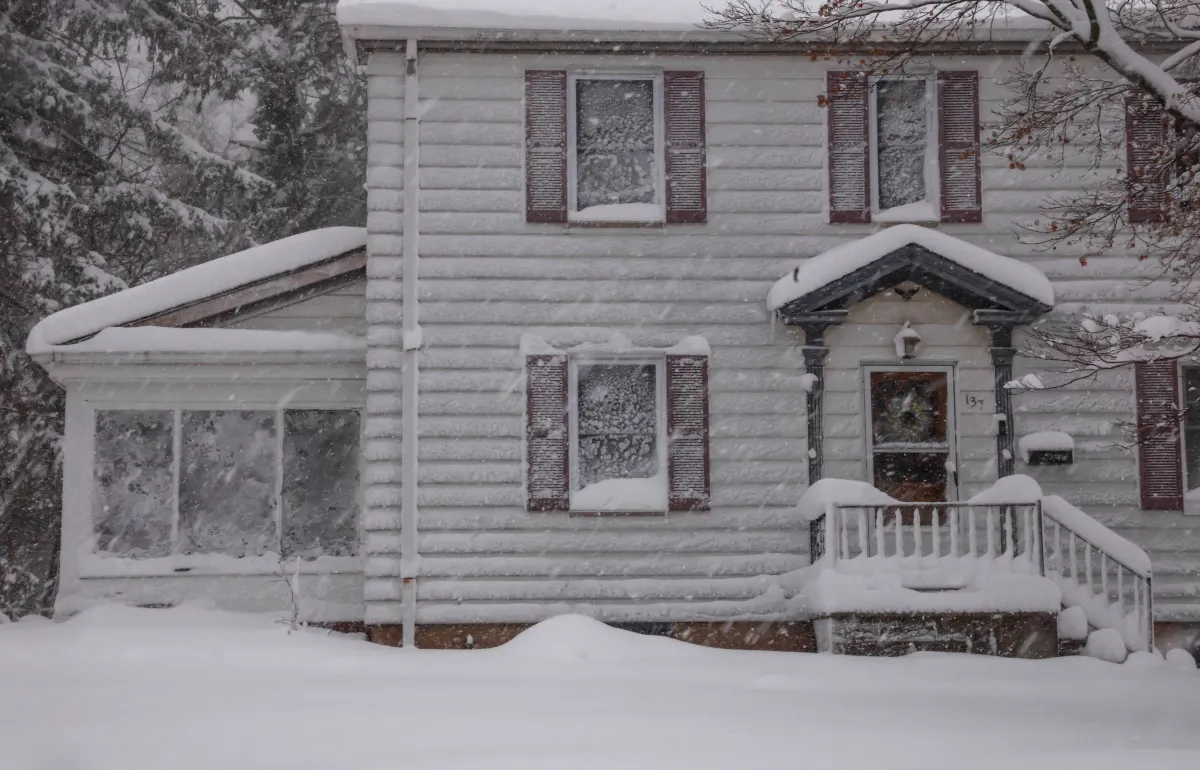
As the days grow shorter and the first chill creeps into the air, millions of homeowners across the Northeast are bracing for a winter that feels less like a season and more like a financial siege. Heating oil prices, already stretched thin by global instability, have remained painfully high after surging in the months following the outbreak of conflict in the Middle East in late February. While the vast majority of American households—over 90 percent—warm their homes with natural gas or electricity, heating oil is still a lifeline in the country’s coldest corner. According to the Energy Information Administration, only about four percent of households nationwide rely on heating oil as their primary heat source, and another five percent depend on propane. But those numbers tell a deeper story: the overwhelming majority of the 4.8 million households that burn heating oil are clustered in the Northeast, where freezing temperatures are not a passing inconvenience but a months-long reality. As one energy expert put it, “Real crunch time comes with dead-of-winter since diesel and heating oil are essentially the same molecules.” The average price for home heating oil has now climbed above six dollars a gallon, a jump of more than seventy percent from this time last year. Behind these figures are real families, many of them older residents in rural towns, who are now staring at their oil tanks and wondering how many times they can afford to fill them before the snow flies. It is a gnawing anxiety that settles into kitchens and living rooms, forcing hard conversations about whether to turn up the thermostat or keep the grocery budget intact.
The burden of this crisis falls unevenly across the map, and the states that lean most heavily on heating oil are also the ones that know winter best. In Maine, roughly half of all homes rely on heating oil as their main heat source, the highest share in the nation. New Hampshire, Vermont, Connecticut, Alaska, and Rhode Island follow close behind, with shares ranging from 37 percent down to 25 percent. Massachusetts, New York, and Pennsylvania are next, with between 20 percent and 12 percent of households dependent on oil to keep warm. Even in Delaware, Maryland, and New Jersey, where the percentages are smaller—somewhere around six or seven percent—the impact is keenly felt, because the people who use heating oil often live in older, draftier homes that demand more fuel. This isn’t a matter of choice or luxury; it’s a matter of geography and infrastructure. In many of these communities, natural gas pipelines never reached, and heating oil has been the standard for generations. The fuel arrives by truck, stored in tanks in basements and backyards, and it is paid for by families who know the price per gallon the way they know their own phone numbers. When prices spike, they cannot simply switch to another source. They are locked into a system that is practical, familiar, and now painfully expensive. For a retiree in northern New England, a working family in upstate New York, or a small business owner in rural Pennsylvania, the rising cost of heating oil is not an abstract talking point. It is the difference between a warm home and a cold one, between comfort and fear, between making it through the season and falling behind.
The numbers this autumn are nothing short of staggering. As of mid-October, the nationwide average price for heating oil stood at $6.14 per gallon, roughly $2.59 more than it was just one year earlier. The highest prices are concentrated in the Northeast corridor, with New York leading at $6.335 per gallon, followed closely by New Jersey, Delaware, Rhode Island, and Maryland. But the sharpest year-over-year increases have struck even harder in places like Kentucky, Pennsylvania, Michigan, Indiana, and Maine, where prices have jumped by nearly three dollars a gallon in just one year. These increases translate into thousands of dollars of additional cost over a single winter. Energy analysts point out that a typical Northeast household that depends on heating oil can burn through 800 to 1,000 gallons during a heating season. At today’s prices, that means a bill of roughly $6,000—compared to perhaps $3,500 or $4,000 in years past. The federal government’s own projections confirm the squeeze: the Energy Information Administration expects average heating oil spending to rise 21 percent compared with last winter, with the typical household paying around $2,115 from now through March. For families already struggling with inflation, higher grocery costs, and stagnant wages, this is a brutal hit. There is no way to sugarcoat it. People are not just worried about their heating bills; they are worried about whether they will be able to pay them at all. Some are already making desperate choices: turning down thermostats, wearing coats indoors, closing off rooms, and hoping for a mild stretch of weather to give them a break. Every degree matters, and every gallon counts. The security of a warm home, something so many take for granted, has become a quiet emergency for millions.
This geographically narrow crisis is beginning to spill onto the national stage in ways that could shape politics as much as household budgets. Rising fuel prices and stubborn inflation have already soured many Americans on the current administration, and the president’s approval rating has sunk to historic lows since late February. In cold-weather battleground states like Maine and New Hampshire, where the cost of heating oil is becoming a kitchen-table issue, the political stakes are especially high. Maine is hosting a closely watched Senate race, with Democrat Troy Jackson challenging longtime Republican Senator Susan Collins, and recent polling suggests the contest is tight. New Hampshire, meanwhile, has an open Senate seat after Democrat Jeanne Shaheen announced she would not run again, and Democratic Representative Chris Pappas is facing Republican John Sununu in a fight that could go either way, though Pappas has held a steady lead in recent surveys. Democrats are hoping to flip four Republican-held seats to win control of the Senate, and these two races could prove decisive. The frustration over heating oil prices is not just about economics; it is about a sense of being overlooked. Voters in these states often feel that Washington does not understand their needs, and when they see the cost of staying warm soaring out of control, that sentiment hardens into anger. A crisis that affects only a small percentage of the nation’s households can become a powerful political weapon in a region where those households are everywhere. Every cold snap, every delivery truck, every glance at an oil gauge becomes a reminder of what feels like official neglect. For politicians, the message is clear: the price of heating oil is no longer just a regional issue. It is a political storm that could arrive with the first blizzard.
Yet there is a glimmer of hope on the horizon, and it comes from an unexpected source: the Pacific Ocean. Forecasters are predicting a “very strong” El Niño this fall and winter, a climate pattern that historically tilts the odds toward a warmer, drier winter across the northern United States and a cooler, wetter one in the South. If that pattern holds, it could provide at least some relief to homeowners in the Northeast who are dreading their heating bills. Erik Smith, a climate data specialist at the nonprofit research institute EPRI, explains that El Niño typically alters atmospheric circulation in ways that reduce heating demand across the northern tier of the country. The last time the world saw an El Niño of this magnitude, during the winter of 2015-16, the contiguous United States experienced a season that was 15 percent warmer than the previous year. That warmth had a measurable effect: demand for propane fell by 16 percent, heating oil demand dropped by 18 percent, residential electricity use declined by 6 percent, and natural gas storage in April was 69 percent higher than a year earlier. A milder winter would not erase the problem of high prices, but it would mean fewer gallons burned, shorter cold spells, and a lighter burden for families who are stretched thin. Still, experts caution against expecting a miracle. Climate patterns are not guarantees; a single severe cold outbreak can offset weeks of mild weather and send heating bills soaring again. As Smith notes, the 2015-16 example is best understood as an illustration of scale rather than a forecast. The warming of the climate system since then may even amplify the effect, but no one can say for certain what will happen when January arrives. So the hope is real, but it is tempered with uncertainty, much like the season itself.
In the end, this winter will be defined not just by weather and prices, but by the choices people make when they are squeezed between necessity and affordability. For millions of families in the Northeast, heating oil is not a luxury or an investment portfolio; it is the quiet machinery of daily survival. The crisis has revealed a deeper fragility in how we heat our homes and care for one another. It has also exposed the distance between those who make policy and those who feel its consequences in their bones. Whether the winter turns out to be brutally cold or mercifully mild, whether prices ease or climb even higher, the human cost is already real. Parents will worry. Elders will endure. Some will fall behind on other bills just to keep the heat on. The coming months will test not only the strength of our homes but the strength of our communities. What is needed now is both immediate support and long-term thinking—help for those who cannot afford to fill their tanks, investment in efficiency and alternative heating options, and a broader recognition that energy security is a shared responsibility. The story of heating oil in America is, at its heart, a story about resilience. It is about people who have weathered hard winters before and will weather this one too, often by leaning on neighbors, faith, and sheer grit. But resilience should not be a substitute for action. No family should have to choose between warmth and food, between safety and solvency. As the temperature drops and the oil trucks roll through icy streets, let us remember that behind every gallon and every dollar is a life, a home, and a future worth protecting.