


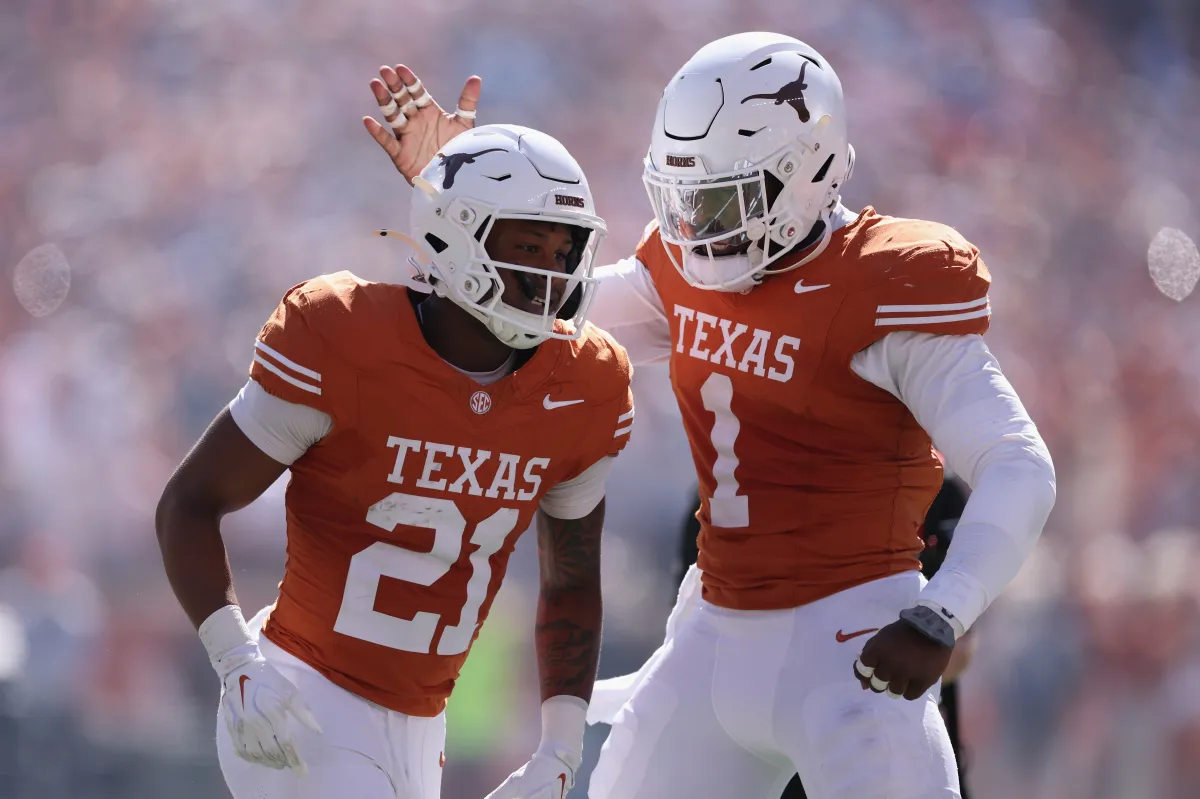
There is something uniquely cruel about the way a college football season can flip on you. Texas opened this season looking like a team possessed, riding a wave of confidence that made Longhorn Nation believe again. They came out white-hot, winning their first four games in a row, but it was the way they won that really got people’s attention. Beating then-No. 1 Ohio State by a single point, 24-23, felt like a statement to the entire sport. It said: Texas is back, and this time it’s real. Then, just two weeks later, they went on the road and knocked off Tennessee 20-17 in a hostile environment, proving that the Buckeyes win wasn’t just luck or catching a team on an off night. That was a team that could win anywhere, against anyone, in any kind of weather. The offense was making plays, the defense was flying around, and the playoff conversation didn’t feel like a stretch; it felt like an inevitability. But football has a way of humbling everyone, no matter how talented you are. The Longhorns have since fallen off that mountaintop with back-to-back 27-24 losses to Oklahoma and Florida. The same score both times, as if the football gods were messing with them, two gut-punches separated by a few weeks of practice and hope. Now Texas sits at 4-2 overall and 1-2 in SEC play, and the swagger from September has been replaced by something much more fragile. The dream season isn’t dead yet, but you can hear the panic in every conversation about the program. What happened to the team that looked unstoppable just a few weeks ago? That’s the question everyone is asking, and Saturday might tell us the answer.
And what a Saturday it is. Texas is set to host No. 7 Ole Miss in a game that carries more weight than just winning a big matchup in October. This is the kind of game that defines a season, even if no one wants to admit it. A win at home would do more than just improve the Longhorns’ record; it would restore momentum, calm the nerves of an entire fanbase, and give the coaching staff a reason to believe the slide is over. It would also do wonders for their chances of making the College Football Playoff, which was always the goal when this season began. But another loss would be catastrophic, not just in the standings but in the psyche of the program. At 4-3, with a genuinely difficult stretch still ahead of them, Texas would be clinging to hope with their fingernails. The path to the 12-team playoff would still exist mathematically, but it would feel empty, like a theoretical possibility rather than a real plan. For the players, there’s no way to escape the pressure, no matter how much they insist they’re taking it one game at a time. They know what’s on the line. They see the rankings, they hear the criticism, and they feel the weight of every missed tackle and every dropped pass. The coaches talk about staying even-keeled, but sports are not even-keeled. They are built on swings of emotion, on high-fives and silent buses, on the euphoria of a walk-off win and the hollow sting of another close loss. Texas is living in that sting right now, and the only cure is a victory. The Longhorns need to beat Ole Miss the way a drowning man needs air, not because it’s automatic, but because their season depends on it.
If the matchup wasn’t hard enough, the injury report has made things even more complicated. Texas may have to face the Rebels without two of their best players, and that is a devastating reality no matter how much backup depth you think you have. Running back Hollywood Smothers, who has been the Longhorns’ most dynamic and reliable rusher this season, has been downgraded to doubtful while dealing with an upper-body injury, according to On3’s Pete Nakos. That is a tough blow for any team, but especially for one that has been searching for offensive consistency in its biggest moments. Smothers, in his first season at Texas after transferring from NC State, has been a revelation. Right now he leads the team with 289 rushing yards and two rushing touchdowns on 65 carries, averaging 4.4 yards per carry. But he is not just a ground-and-pound running back; he has also racked up 79 receiving yards and a receiving touchdown in just five games, showing that he can hurt defenses in multiple ways. Watching him play is like watching a kid who loves football more than anyone else on the field, and the thought of losing him for a game this big stings deeply. If he cannot go Saturday, Raleek Brown will have to take on a much larger role. Brown showed a flash of his ability against Florida, rushing for 47 yards and a touchdown on just eight carries, but asking him to replace Smothers in a game of this magnitude is a lot. Meanwhile, the absence of Colin Simmons is even more damaging, and it is hard to overstate what that means for the Texas defense. Simmons, the star edge rusher, has been ruled out after suffering a high ankle sprain in last week’s loss to Florida. That is not a minor bump; that is an injury that eats away at your explosiveness, your ability to plant and cut, and your ability to be the relentless playmaker he has been all season.
On the field, Simmons has been nothing short of spectacular, and watching him play has been one of the few pure joys of Texas football this fall. Through just six games, he leads the country with 10.5 sacks and 16 tackles for loss, numbers that sound like they belong in a video game. His 5.5-sack performance against Tennessee was one of the most dominant individual defensive displays in recent memory, and it sent a clear message to every offensive line that had to line up across from him. Against Florida, even before he went down, he was still making an impact with eight tackles, four tackles for loss, and one sack. That is the kind of consistency elite teams are built on, and losing him now hurts more than just the stat sheet. Simmons is the kind of guy offenses have to game-plan around, the kind of player who changes the way quarterbacks set their feet and the way running backs choose their lanes. Without him, Texas will need other pass rushers to step up and generate pressure in ways they haven’t had to before. Names like Lance Jackson and Zina Umeozulu will become suddenly important, and they will need to play the best games of their lives to keep the defense functional. But pressure isn’t just about sacks; it’s about making quarterbacks uncomfortable, about forcing them to throw early, about turning third-and-long into fourth-and-long. Simmons could do all that by himself, and now the Longhorns will have to manufacture that chaos collectively. It’s a challenge that will demand creativity from the coaching staff, and a response from the players that cannot be coached: pure effort, pure desire, pure will. The locker room is heartbroken for their teammate, but heartbreak can either break a team or ignite it. That is the choice in front of Texas right now, on the field and in the huddle.
The playoff math is still there, but you have to squint to see it clearly. Texas has a path to the 12-team College Football Playoff, but that path has become much more treacherous than anyone imagined when the season began. The wins over Ohio State and Tennessee are still shiny trophies, and they will not be erased by a rough October. But losing two straight games to SEC rivals is a bad look, and another loss could do them in completely. It’s not just about the record; it’s about the story. Every week in college football is a new chapter, and the narrative right now is of a team slowly sliding backward. The schedule doesn’t offer any kindness either. After Ole Miss on Saturday, Texas will host Mississippi State, which seems manageable, but then they travel to No. 22 Missouri and No. 18 LSU. They’ll close out the regular season against Arkansas and then go on the road to face Texas A&M, which is already circled on every calendar in the state. There are no easy weeks left, no breathers, no games where they can rest starters and get healthy. A 10-2 finish would give them a good chance of making the postseason, but 9-3 would likely not be enough in a season this deep and this crowded. That means every game from here on out is essentially a playoff game, and the margin for error is gone. The Longhorns have to be nearly perfect in November just to have a chance, and that pressure is a heavy thing to carry, especially with key weapons on the sideline. But this is also where seasons are made. Nobody remembers the teams that cruised to an easy path; they remember the teams that found a way when the sky seemed to be falling.
The broader college football landscape has its own chaos swirling around it, from Notre Dame being told to look in the mirror after a loss to BYU, to Michigan State dealing with concerning quarterback injury news before UCLA, to Oregon getting a double blow ahead of their crucial matchup with Illinois. Every program is one bad week away from a full-blown crisis, and that shared anxiety is part of what makes this sport so compelling. But for Texas, all of that is just background noise. The Longhorns are fighting for their own identity right now, not just a playoff spot. They have a choice: they can let the injuries and the losses define them, or they can use them as fuel for a comeback. That is the human side of football, the part that cannot be measured in yards or sacks. It’s about a group of young men who just lost their best edge rusher and might be down their best running back, standing together in a hostile moment and deciding they are not going to let go of the season without a fight. The game against Ole Miss is more than a test of talent; it’s a test of character. By Saturday night, Longhorn Nation will know whether their team is the one that marched into Ohio Stadium and stunned the world, or the one that let October slip away. But win or lose, the measure of this team will not be just one score. It will be how they respond, how they recover, and whether they can still believe in themselves when the whole world is counting them out. That is the real story, and it is still being written.