


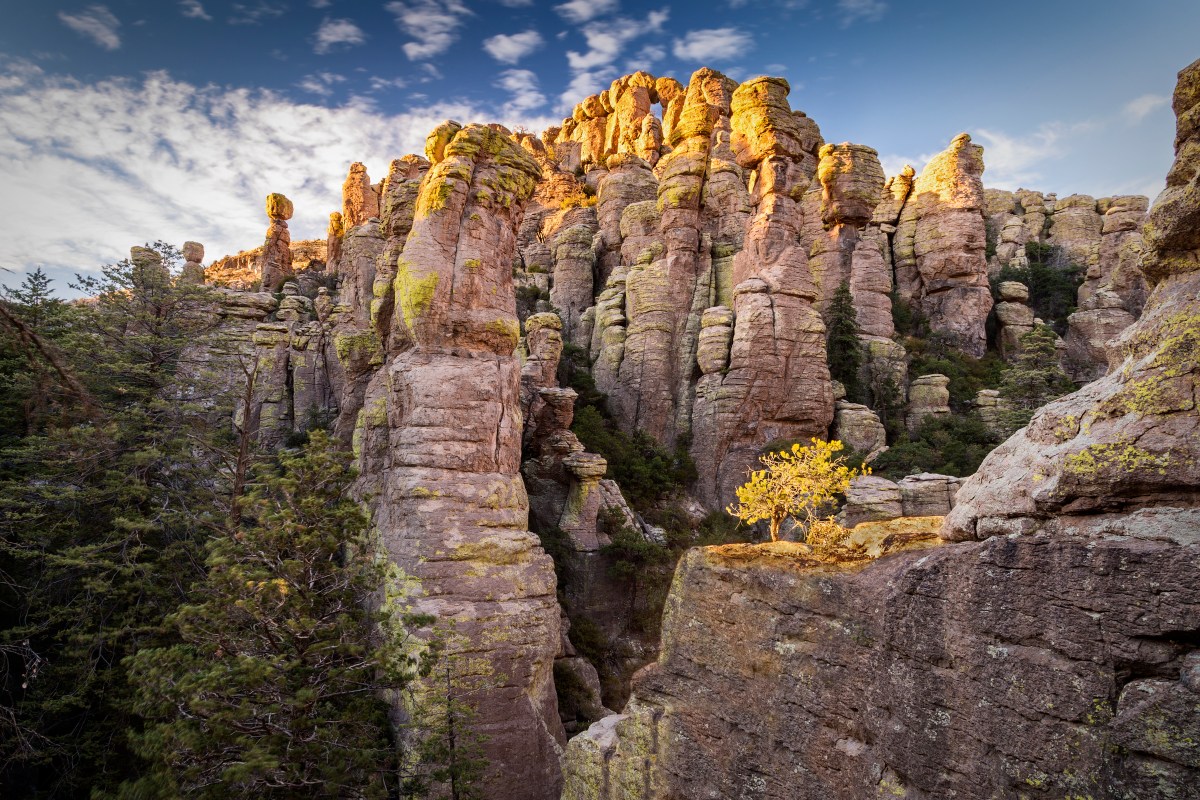
Six months ago, almost no one outside Arizona had ever heard of Chiricahua, a remote, rugged landscape tucked away in the state’s southeastern corner. This week, that all changed. President Donald Trump signed the Chiricahua National Park Act into law, formally redesignating the former national monument as the nation’s 64th national park and Arizona’s fourth. For decades, Chiricahua had been something of a secret, a place beloved by hikers, birdwatchers and astronomers, but rarely mentioned alongside the Grand Canyon or Yosemite. Now, with the stroke of a pen, it has been granted a new kind of status, one that carries with it not just a name change but a promise of greater visibility, more funding, and a wave of visitors eager to see what all the fuss is about. Interior Secretary Doug Burgum captured the moment beautifully in his announcement, describing the park’s towering rock spires, rich Apache heritage and remarkable biodiversity as “one of America’s most extraordinary landscapes.” He called Chiricahua a hidden gem, and he was right. The designation is a profound recognition of a place that has always mattered deeply to those who knew it, and now, it is a place the entire country can claim as its own.
Chiricahua National Park sits about 45 minutes south of Interstate 10 in the small town of Willcox, Arizona, a region that feels a world away from the crowded corridors of more famous national parks. The landscape rises dramatically between the Sonoran and Chihuahuan deserts, creating a unique ecological crossroads where species from both ecosystems mingle among rhyolite cliffs and forested canyons. The park is perhaps best known for its extraordinary rock formations, thousands of pinnacles, spires and balancing rocks that look as though they were sculpted by a particularly imaginative giant. These formations, shaped by millions of years of volcanic activity and erosion, have long drawn comparisons to the hoodoos of Bryce Canyon, though Chiricahua has a wildness all its own. The National Park Service has always called it a hidden gem, and that quiet, understated reputation is exactly what made it so special to the dedicated travelers who made the journey. The new law does not change the boundaries of the site; the national monument’s existing borders simply become the national park’s borders. What has changed is the level of attention. Chiricahua now joins Arizona’s three other national parks, Grand Canyon, Petrified Forest and Saguaro, in a lineup that already made the state a heavyweight in American natural beauty. But for all the excitement, there is also a sense of bittersweetness among longtime visitors, who wonder whether the secret is out for good. The truth is, national park status brings with it both opportunity and consequence. More visitors mean stronger local economies and a larger constituency for preservation, but they also mean more traffic, more pressure on fragile ecosystems and the ever-present challenge of balancing accessibility with wilderness. Chiricahua will have to navigate that delicate dance, as every national park has before it.
The path from monument to national park is never simple, and Chiricahua’s journey reflects the peculiar way American public lands are created. The power to establish a national park rests entirely with Congress. A bill must be introduced, work its way through committees, pass both the House and the Senate, and finally land on the president’s desk for a signature. It is a long, messy, often political process, and many worthy places never make it through. National monuments, by contrast, can be created much more quickly, by presidential proclamation under the Antiquities Act, which is why so many landscapes find their first layer of protection that way. Chiricahua was designated a national monument in 1924, thanks in large part to the tireless advocacy of a Swedish immigrant named Neil Erickson and his wife, Emma, who settled in the region and spent years lobbying to preserve its dramatic scenery. The monument designation protected the land, but it did not carry the same prestige, or the same level of congressional investment, as a full national park. That distinction matters in practical ways. National parks tend to receive more federal funding, more staffing and more attention in the international tourism marketplace. They also carry an emotional resonance that monuments, for all their beauty, simply do not have. The word “park” suggests something welcoming, something made for people, while “monument” can feel static, even forbidding. This week’s law changes that perception for Chiricahua, and conservation advocates hope it will set a precedent for other deserving places. The conversation about which landscape should be next has already begun, and it is happening with renewed energy.
In Georgia, the case for the next national park is already sitting before Congress. The Ocmulgee Mounds National Historical Park in Macon, southeast of Atlanta, is the strongest contender, with active legislation known as the Ocmulgee Mounds National Park Redesignation Act currently under consideration. The site is sacred to the Muscogee Creek Nation, whose ancestors built the enormous earthen mounds that still rise above the floodplain of the Ocmulgee River. These mounds, some of which date back nearly a thousand years, are among the most significant Native American archaeological sites in the southeastern United States. They are not as visually dramatic as Chiricahua’s spires, but they tell a story that is just as powerful, one of civilization, resilience and the deep roots of Indigenous people on this continent. For supporters of the redesignation, the issue is not just about tourism or economic development, though those are important. It is about honoring a sacred landscape and giving it the national prominence it deserves. The push has attracted bipartisan support, including from Georgia’s senators and representatives, and it fits neatly into a broader trend in American conservation, a movement away from purely scenic preservation and toward a more inclusive understanding of what makes a place nationally significant. Ocmulgee may not have granite peaks or geysers, but it has something arguably more profound: a direct connection to the people who lived on this land long before the United States existed. That story, advocates argue, is just as worthy of the national park label as any mountain range. The legislation has not yet passed, but its momentum is real, and many observers believe it is only a matter of time before Ocmulgee takes its place alongside Chiricahua in the national park system.
Farther north, a different kind of campaign is underway, one driven not by a congressional bill but by ordinary citizens who love a landscape and want to see it protected. The Delaware Water Gap National Recreation Area, which stretches across the border between Pennsylvania and New Jersey, has become the focus of an active grassroots movement to redesignate it as a national park and preserve. The roughly 70,000-acre area is defined by the free-flowing Delaware River as it cuts through the Appalachian Mountains, creating a gap of breathtaking natural beauty that attracts around four million visitors each year. It is a landscape of lush forests, quiet waterfalls, historic villages and river beaches, a place where generations of families from the New York and Philadelphia metropolitan areas have escaped the heat of summer and the noise of the city. But the recreation area’s origins are rooted in failure. In the mid-twentieth century, the federal government proposed building a dam at Tocks Island to create a reservoir for flood control and water supply. The project would have flooded the valley, displacing thousands of residents, many of whom fought back fiercely. Ultimately, the dam was never built, and in 1965, Congress established the recreation area to preserve the land instead. Now, the same landscape that was nearly drowned is being championed for the highest designation America can offer. Supporters argue that the Delaware Water Gap’s stunning scenery, recreational opportunities and proximity to millions of people make it an obvious candidate for national park status. The lack of formal legislation has not dampened their enthusiasm. They have organized, petitioned and lobbied, building a movement that feels very much like the grassroots efforts that protected so many of America’s most beloved places more than a century ago. Whether or not their campaign succeeds, it is a reminder that national parks are not just created from the top down; they are demanded from the bottom up.
Out west, in Idaho, a similar dream is stirring around Craters of the Moon National Monument and Preserve, a landscape so surreal it feels like another planet. The site is known for its vast volcanic fields, a sea of dark, roiling lava that stretches across the Snake River Plain. Supporters describe it as having some of the most diverse dormant lava flows in the country, and they are not exaggerating. Walking through Craters of the Moon is like walking across the surface of the moon, which is exactly how it got its name. There are no trees here, no rivers, no meadows. Instead, there are cinder cones, lava tubes and twisted basalt formations, a stark and otherworldly beauty that has fascinated scientists and visitors for generations. Idaho lawmakers first urged Congress to consider redesignating the monument as a national park back in 2017, but that effort did not lead to active federal legislation. The idea has never fully faded, however, and Chiricahua’s success has given advocates new hope. They point out that Craters of the Moon already has national park-like qualities, including a strong visitor center, established trails and a rich ecological story that emerges from the seemingly barren rock. The challenge is political. National park designations require broad consensus, and not every community is eager for the increased visitation and federal oversight that come with the label. Some local residents worry about restrictions on grazing, hunting and other traditional uses. Others simply prefer the quiet, understated nature of a monument. The debate is a healthy one, a reflection of the complex relationship Americans have with their public lands. We want to protect these places, but we also want to use them, and we want local communities to thrive alongside them. There is no perfect answer, but the conversation itself is a form of stewardship. As Chiricahua takes its place in the national park family, it joins a long and storied lineage of places that were once overlooked, once undervalued, and ultimately recognized for the irreplaceable treasures they are. The next park could be a sacred mound in Georgia, a river valley in the Northeast, a volcanic plain in Idaho, or somewhere no one is even talking about yet. That is the beautiful unpredictability of conservation. There will always be another landscape worth saving, another story worth telling, another hidden gem waiting for its moment in the sun.