


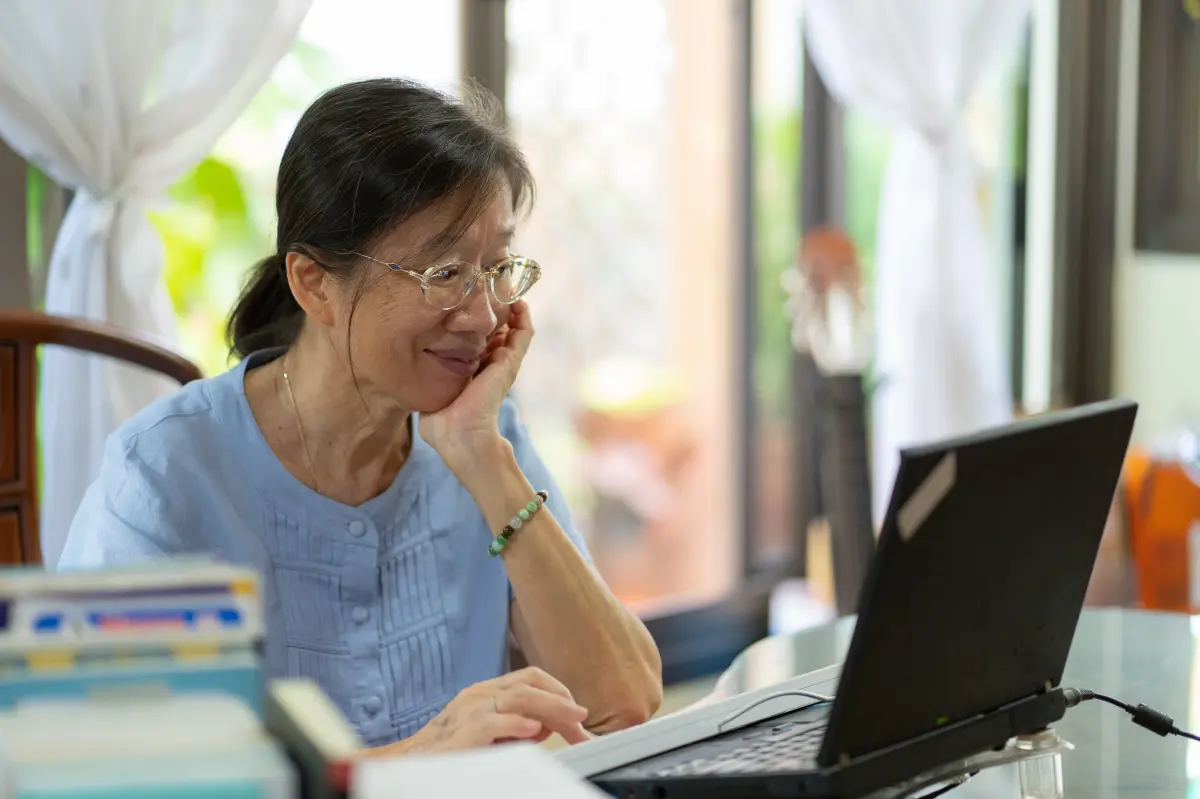
When you lose a partner after thirteen years of shared life, grief becomes more than an event; it becomes a quiet companion that follows you through ordinary days. Losing someone to pancreatic cancer, especially, is a particular kind of loss—the illness tends to move quickly, leaving little time to ready yourself for the emptiness that follows. For two years, the woman behind the first letter has done what many widows and widowers do: she has kept her head down, built routines, and convinced herself that romantic love was a chapter of her life that had closed for good. She had been prepared to never care for anyone again, not out of bitterness, but out of a kind of protective exhaustion. Then, out of nowhere, the internet delivered a voice from forty-four years ago: her first love. What began as a curiosity became a correspondence, and with each email she felt something she had almost forgotten—a quickening heartbeat, a flush of warmth, a flutter of anticipation that belongs to the young. It surprised her, and the surprise brought guilt. She wondered if feeling this way meant she was betraying the spouse she had stood beside through good and bad times. But what she was really feeling was not betrayal; it was the proof that her heart had not hardened into stone. Love had marked her, and love had left its signature deep enough that someone from her youth could still wake it. She was scared, too—scared of making a fool of herself, scared of being clumsy at a dance she had not performed in decades, scared that at sixty-something she no longer knew how to trust new beginnings. Her question, asked by so many people after loss, was simple and profound: Is it still possible for someone to love me?
The answer, if we are honest with ourselves, is yes—more than possible, and far more common than we think. It is possible because the human heart is not designed to love only once, and it is possible because the very emotions she described are evidence that she is not broken. People in their sixties, seventies, eighties, and beyond fall in love every day, often with more openness and maturity than they had in their younger years. They know loss, so they know what it means to treasure presence. They know time, so they are less likely to waste it on games and posturing. The advice she received was gentle but wise: do not push this relationship forward faster than it wants to go. Let it unfold at its own pace, the way it naturally would if she had met him over coffee decades ago. If the emails bring her joy, let them bring joy. If her heart beats faster when he writes, that is not something to apologize for. Guilt can be acknowledged and placed down; it does not need to dictate her path. She is not supposed to have all the answers right away. She is not supposed to know whether this first love will become a lifelong partner, a friendship, a summer romance, or just a beautiful reminder that she is still alive. She only needs to remain open, patient, and gentle with herself. The fear of making a fool of oneself is universal—it is the price of caring. But a life lived without risk of foolishness is a life lived in a very small room. She has already been brave once, loving someone through illness and death. If anything, she has proven that she has the capacity for deep and loyal love. That capacity did not die with her spouse. It is simply waiting to be given again, if she chooses to give it.
A different sort of loneliness shapes the second letter, and it cuts just as deeply. This father was five years old when his parents divorced, and his father moved away—far away, eventually settling in Alaska. For much of his childhood, the old man was a voice on the phone, a letter in the mailbox, a birthday greeting that never failed to arrive. He was present, but in a distant, almost ghostlike way. He missed the wedding, the college graduation, the everyday moments that build a parent-child bond. The son grew up, became a father himself, and now lives only an hour and a half away from his dad. He wants to build a bridge before it is too late. He wants his children to know their grandfather, to have memories of sitting beside him, not just reading his texts. He has invited him to events, offered to drive, made the effort clear. But his father is a hermit, content to stay home, and he has declined even the invitation to his youngest grandson’s graduation. The pain in this letter is not anger; it is a quiet, persistent ache of not being chosen, of being the one who always reaches out while the other waits. There is also a sense of responsibility—the son knows he cannot force his father to be more involved, and he wonders if continuing to try is just setting himself up for more disappointment. He loves his father, but love alone does not guarantee presence. And presence, after all, is what children want more than words of pride sent through a screen.
What can be said to a heart like that? The counsel given was compassionate and practical: unless the father seems genuinely bothered by the invitations, keep sending them. Missed graduations and holidays may be disappointing, but every invitation is a small announcement of love. It says, “I still want you here.” The father’s texts to his grandchildren suggest he is not indifferent; he pays attention, he notices their milestones, he tells them he is proud. That is not nothing. It may be that the older man’s comfort zone has shrunk with age, that long drives feel physically daunting, or that accepting a ride from his adult son feels like admitting weakness. Many seniors would rather miss an event than be a burden, and ninety minutes in a car—even with a kind chauffeur—can feel like a mountain. The advice acknowledged this and offered a creative alternative: instead of asking Dad to come to the family, take the family to Dad. Plan an announced day trip to his town. Do not invade his home or demand he entertain; just create a low-pressure opportunity to gather. Let him see the kids at a park, at a diner, in his own neighborhood. That may be the best way to get him out of his shell, not with a formal invitation but with a gentle, ordinary presence. It may not fill all the gaps of the past, but it can build something for the future. The goal is not to change a hermit into a social butterfly. The goal is simply to leave room for him, without losing one’s own peace in the process.
Reading these two letters side by side, we see a common thread: love is rarely neat. It exists in long gaps, in missed ceremonies, in emails that make hearts race, in texts that say “proud of you” but not “I’ll be there.” We expect the people we love to show up in the same ways we would show up, and when they cannot, we often take it personally. But people carry invisible weights. The widow’s guilt is invisible; the father’s hesitation is invisible. The first love who reconnects after forty-four years may have his own fears and complicated history. The hermit father may have reasons he cannot articulate, whole landscapes of memory and stubbornness and pride. What both letters share is a longing for connection in the face of uncertainty. In one, there is hope after grief, a possibility that love can bloom again at a stage when society often tells people to expect less. In the other, there is the hope of a grown child who still wants his father to know his grandchildren, even though the window may be narrowing. The advice is essentially the same: keep the door open, but do not stand in it blocked. Let relationships move at their own rhythm. Accept that some people will never attend the graduation, but may still love the graduate from across the room of their own limitations. Accept that falling in love at sixty can feel like being sixteen, with all the awkwardness and wonder intact. And accept that in every family, there are people who express love in calls and texts rather than in person, and that this is imperfect but not always insufficient.
Perhaps the deepest truth of this whole exchange is that none of us ever finish learning how to love. We enter our sixties with the same fears, hope, and clumsiness we had at twenty, only with more history and less time for nonsense. The Florida woman who wonders if anyone can love her in her early sixties is not asking a question about age; she is asking whether she is still worth choosing, still capable of joy. She is. Every person who has loved and grieved is. The son who wonders whether to stop trying with his father is questioning his own worth too—whether he is important enough to make his father leave the house, whether his children’s grandfather will ever fully see them. But the measure of his worth is not his father’s attendance record. It is the love he keeps offering, the invitations he keeps sending, the care he shows by not giving up entirely. There are no guarantees that the first love will blossom into a second marriage, or that the hermit father will suddenly appear at a school play. But relationships are not only about outcomes; they are about the open heart that keeps showing up, even when the answers are uncertain. The widow can allow her heart to beat faster and see where it leads. The son can take his children on a day trip to his dad’s town and let the simple act of being together do what arguments and invitations cannot. And both can let go of the idea that they are responsible for making someone love them, or show up for them, in a way that person cannot. Love is not a contract. It is a river that moves at its own speed, carving new paths, sometimes disappearing underground, and always resurfacing somewhere we did not expect. The only real mistake is to stand on the bank and refuse to get in again.