

Dating apps once sold a dream that felt almost too good to be true: that finding love could be as easy as a swipe. They promised to remove awkwardness, expand the pool, and use clever algorithms to put the right person just a thumb movement away. For a while, that promise was genuinely thrilling. People who had struggled to meet others suddenly had endless arrays of faces, each one a tiny spark of possibility. But the thrill has worn thin. A 2026 Harris poll found that three-quarters of Americans now believe dating apps have made romance feel transactional. Instead of intimacy, they deliver inventory; instead of chemistry, they deliver choices. Boston University professor Marshall Van Alstyne captured the core problem: “The apps took the friction out of finding someone, but they also took the friction out of exiting, which means that you weren’t getting the depth of the experience.” When leaving a conversation is as easy as swiping away, no one invests enough to build anything. The result is a strange new loneliness: people surrounded by options who feel more disposable than ever. Singles are sick of being judged like products, sick of the small talk that never goes anywhere, and sick of the hollow feeling that follows what should have been a moment of connection. They are leaving in droves, and the apps that once seemed unstoppable are now forced to reckon with a painful question: did they ever really understand love at all?
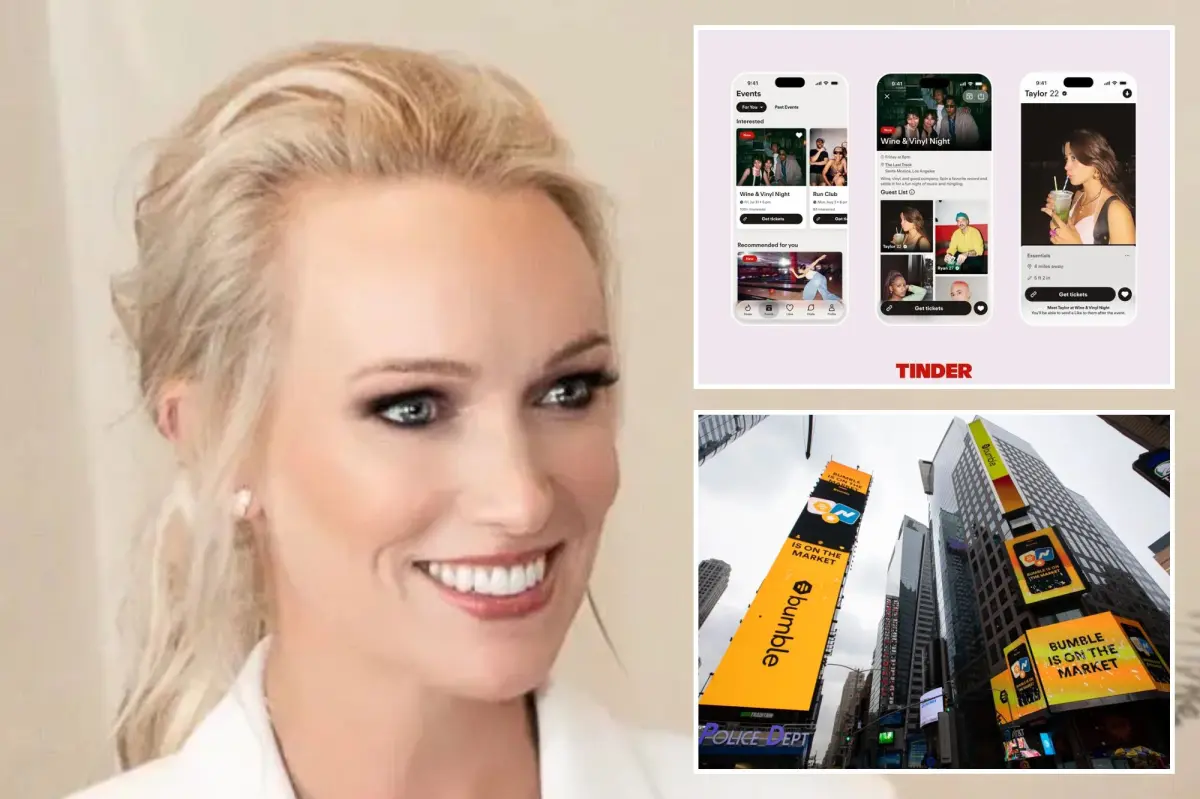
The business numbers tell the same story in cold, hard terms. Match Group, which owns Tinder, Match.com, OkCupid, and a host of other platforms, laid off 13 percent of its workforce last year. Bumble cut 30 percent of its staff last June. Bumble once had 12.5 million users who spent an average of 100 minutes a day swiping, but those days are fading fast. Its paying users fell by almost 17 percent year over year, and revenue dropped 15 percent in the same period. Since going public in 2021, Bumble has lost 90 percent of its market value. Last Tuesday, the struggling company made a deal to go private for $1.3 billion—a stunning collapse from its $14 billion valuation at its initial public offering. New York City matchmaker Maria Avgitidis believes part of the problem was going public in the first place. Once shareholder returns became the priority, the apps had to find an impossible equilibrium between providing a good product and lining investors’ pockets. As she put it, “Sometimes those things are not going to align.” The tragedy is that Bumble began with a genuinely different vision. Founded in 2014 as a feminist alternative to Tinder, it put women in control by requiring them to send the first message. It was led by a female CEO, Whitney Wolfe Herd, and it felt like a real correction to the toxicity of early app culture. But as of August, Bumble has turned its back on that founding premise: now anyone can send the first message, making it virtually indistinguishable from every other app. Even Wolfe Herd herself is stepping aside to make room for two incoming male CEOs as the company goes private. The story is painfully familiar: a company that once promised to change dating ended up sacrificing its soul in the chase for growth, and the people who loved it are left feeling betrayed.
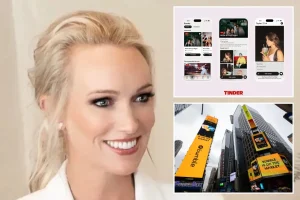
Tinder, the king of swipe culture, is now frantically trying to reinvent itself. Its monthly active users declined 7 percent year over year as of March, and its parent company Match Group has responded by increasing Tinder’s marketing budget by $50 million this year. Yet the bigger shift is not about ads—it’s about admitting that the original product is no longer enough. After nearly fifteen years of facilitating seamless online meetings through a swipe, Tinder is moving into the events spacecars and offering users in-person gatherings through a new tab in the app. Tinder told The Post that it has already facilitated over 1,700 events and hopes to reach 75 cities by the end of the year. The symbolism is almost too perfect: the app that taught a generation to swipe from the comfort of their couches is now asking them to put down their phones and show up in person. Tinder has also tried to encourage group connections rather than pressure-filled one-on-one dates. It launched “double date mode” in 2025, and last month added group hangouts to its offerings. A spokesperson said, “We’re building ways to lower the pressure on Tinder. Ultimately, our goal is to make finding a spark feel more fun, authentic and connected to real life.” It is a remarkable admission that the private, screen-mediated, hyper-optimized version of dating left people feeling more isolated than excited. The apps have reached an unlikely conclusion: staying alive in the online dating space might require recreating the very social scenarios the apps were originally designed to replace. They are no longer just matchmakers behind a screen; they are becoming event planners for a world that has forgotten how to mix and mingle.
Disillusioned singles have already jumped ahead of them. They are flocking to old-school methods of finding partners: joining running clubs, pickleball leagues, book clubs, and community groups in hopes of meeting someone the natural way. They are asking friends to set them up, dusting off the ancient tradition of the blind date, and showing up to in-person singles events in record numbers. Eventbrite reported that singles events hosted on its platform literally doubled between 2022 and 2025. It seems people are hungry not just for a partner but for a more human way of getting there. They want to see someone laugh, watch how they treat a waiter, and feel that unmistakable electric charge that can never be captured in a profile picture. They also want the reassurance that the person across from them is actually interested—not just one of eleven tabs they have open. Chris Kumar, CEO of Tawkify, the country’s largest online matchmaking service, says his platform has grown 30 percent year over year. He credits the upswing to “dating app fatigue” and the desperate search for something more substantive. “The apps lost the elegance of what it means to be online and have that spark of connection with someone who swipes on you,” he said. “That just isn’t exciting anymore. So the apps are trying to find ways to reinvigorate that hope and that excitement from singles.” But the excitement, it seems, is no longer coming from algorithms. It is coming from the messy, unpredictable, gloriously real experience of being in the same room as another human being.
Amy Andersen, the self-described matchmaker of Silicon Valley, has watched this shift from close range. She says she has noticed a “huge exodus from the apps” that has escalated in the last three years—and surprisingly, it includes the very techies who founded them. “I have had clients literally be the ones who have built the app, but they’re not using it when it comes to their own personal lives,” she said. “The machine professionally dominates their lives, yet when it comes to the intricacies of their personal lives, they’re choosing the human.” That is a profound indictment. If the people who created the most successful dating platforms in the world do not trust those platforms to find their own partners, what does that say about the entire enterprise? It says that love is too complex, too nuanced, and too deeply human to be reduced to a data set. An algorithm can suggest a person you might like based on similar interests and mutual friends, but it cannot tell you whether their laugh will make you want to hear it every day for the rest of your life. It cannot tell you whether their arms will feel like home when you are grieving. It cannot tell you whether you will still be fascinated by them in forty years, when the novelty has worn off and all that is left is who they truly are. Those are the things that matter, and those are the things that can only be discovered through time, patience, and the kind of vulnerability that no app can manufacture looking at a photo album.
So the future of dating may look very different from the recent past. The apps are not disappearing entirely—they are too big, too wealthy, and too deeply embedded in modern life for that. But they are being forced to take a back seat. The transformation points to an uncomfortable conclusion: the future of dating apps may be one where the apps themselves step aside and let singles find one another on their own terms. Tinder’s pivot to in-person events and double dates is one sign. Bumble’s abandonment of its feminist identity is another, even if that change feels less like evolution and more like surrender. People are still going to use apps, but they are no longer expecting apps to solve their love lives. They are using them as a starting point, an introduction, a way to cast a wider net—but they are insisting on bringing the humanity back into the process. The clearest proof yet is the simple fact that the most effective matchmakers are not machines; they are people. The most meaningful connections are not optimized; they are stumbled upon. And the most enduring love is not designed; it is discovered, slowly, through shared silences, bad jokes, and the patient work of two imperfect people choosing each other over and over again. Cupid’s mysterious ways cannot be distilled into an algorithm; true love remains as unpredictable and sometimes elusive as it has always been. That may be frustrating, but it is also beautiful. If dating apps taught us anything, it is that convenience is not the same as connection. We do not need better swipes, smarter filters, or faster matches. We need to look up, log off, and remember that the most human thing in the world—love—has always required a little faith, a little courage, and a willingness to be truly seen.